
Hokkaido in Bloom: Spring Snow, Hot Springs and Rural Food Trails
Steam, sakura, and seafood: spend 6–9 days tracing Hokkaido’s late spring from Sapporo’s parks to Furano’s fields and Noboribetsu’s healing baths, with markets and onsen in between.
Trip Length
6–9 days
Best Time
Late April to late May; lowlands bloom late April–early May, higher elevations into mid–late May.
Mood
Wellness / Culinary
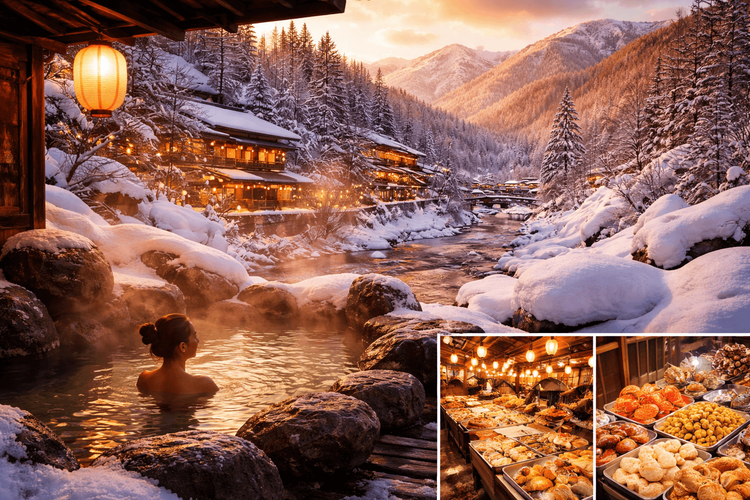
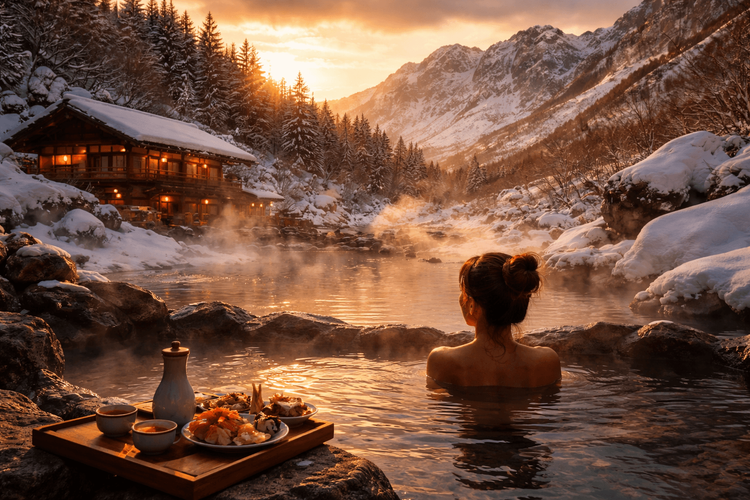
Steam curls off an outdoor onsen as a few stubborn snowflakes land on the basalt rim and vanish into warmth. Beyond the fence, cherry buds tighten against a blue sky, ready to open with the week’s first thaw. This is the delicious in-between of Hokkaido spring travel: mornings that taste like winter, afternoons that smell like new grass, and evenings spent in mineral-rich baths while the last snow recedes from the hills.
The Season Turns: From Powder to Petals
Late spring in Japan’s northern island is a slow, cinematic reveal. April often keeps a soft coat of white on the highlands while rivers run fast with meltwater. In the lowlands, sakura creep north and up in elevation, usually arriving in Sapporo around late April or early May and lingering at higher altitudes later still. You can stand in a park under blushing boughs at lunch, then drive twenty minutes and see ski lines etched across distant mountains.
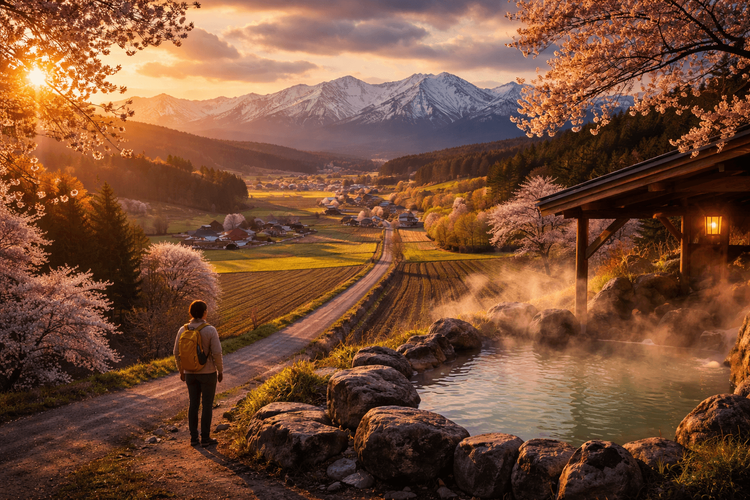
This shoulder season flatters Hokkaido’s landscapes: the fields around Furano begin to show their patchwork, with dark, tilled rows and the first pastel bands of tulips and shibazakura (moss phlox). Forest paths smell like earth again. Farm stands pull up their shutters. The countryside takes a long, contented stretch.
Sapporo: Parks, Bowls and City Warmth
Sapporo, the island’s friendly capital, is the sensible first stop. The airport train rolls into the central station in under an hour, and from there the city rewards a walking pace. In spring, locals bring picnic sheets to broad city parks and riverbanks for hanami, the easy ritual of eating and lingering beneath cherry trees. If the air still pricks your cheeks, slip into a steaming bowl of miso ramen or a counter-serving of sushi that tastes like the sea at arm’s length—Hokkaido’s cold waters keep the fish firm and sweet.
Between meals, duck into a museum or ride a tram up a nearby viewpoint to watch the snowline retreat. Evening is for the modern izakaya glow: charcoal smoke, skewers, and friendly clatter. Sapporo’s markets, both indoor and open-air, offer a study in northern abundance—crabs with outspread legs, milky sea urchin, plump scallops, and seasonal greens. Pick up snacks for the train north.
Furano and the Quiet Drama of Spring Fields
Two to three hours inland by rail or car, Furano and neighboring farm villages swap city edges for wide horizons. Lavender steals the summer headlines here, but spring has a subtler palette that’s just as satisfying. You’ll find early tulips and pansies in neat ribbons, orchards waking up, and dairy herds released to graze. On clear days, the Daisetsuzan range backstops everything with a jagged line of snow.
This is where farm-to-table feels authentic rather than announced. Cafés attached to greenhouses serve set lunches that change weekly—think asparagus when it arrives in May, eggs from down the road, milk so fresh the soft-serve leaves a clean finish. Cyclists follow quiet lanes past potato sheds and windbreaks; photographers perch on gentle rises to frame the curling geometry of newly turned soil. If the weather flicks back to chill, an afternoon in a winery’s tasting room or a cheesemaker’s shop is easy therapy.
Noboribetsu: Volcanic Medicine and Forest Paths
Head south to Noboribetsu for the island’s most theatrical hot spring town. The landscape shifts to steam, moss, and mineral—valley floors venting sulfur, ocher pools that look like alchemy experiments, and conifer forests crisscrossed by boardwalks. Stay in a ryokan or a modern onsen hotel, and you’ll move from one bath to another like a tasting flight: milky sulfur water, iron-rich rust, silky sodium chloride, each with its own weight and scent.
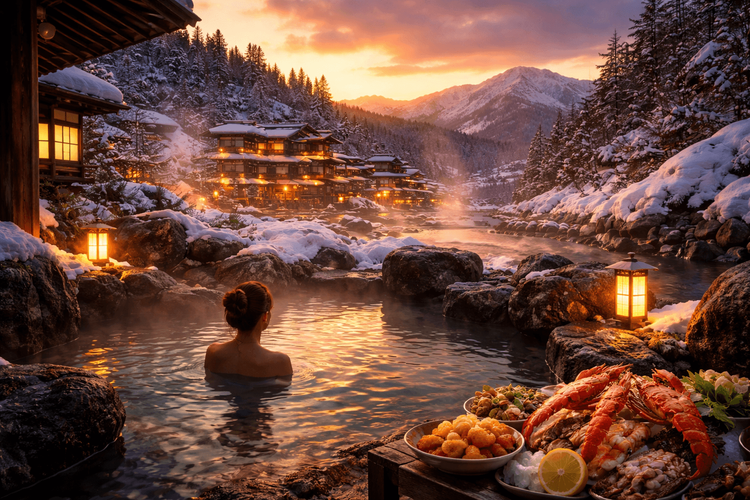
On spring mornings, the pathways through the geothermal valley are cool and quiet. You can follow them to fumaroles that exhale steadily, then to a footbath creek where mineral warmth carries away the day’s miles. After dark, soak outdoors—rotenburo steam rising into star-pricked skies, the treeline still frosted in places. Dinner is often a grand local spread: seafood courses, seasonal mountain vegetables, and rice grown not far from the coast. The island’s ingredient-driven cuisine does the talking.
Eating the Season: Sea, Field, and Fire
Hokkaido’s pantry is generous without showiness. In spring, scallops are plump, sea urchin is briny and sweet, and crab appears in tanks like armored sculptures. Chefs treat these with restraint—grill, steam, salt—while letting farms fill in the edges with asparagus, greens, and dairy that tastes like actual grass.
Seek out: a morning market for sashimi over warm rice; a countryside bakery with loaves you tear apart in the car; a simple miso soup flecked with local seaweed; a soft-serve cone that resets every taste bud; and, when you can, a multi-course inn dinner where the sequence feels like a map of the region. Pair it with Hokkaido’s lively craft beers or a crisp local white wine when offered. Nothing here shouts; everything hums.
A 7–8 Day Flow Through Spring
- Days 1–2: Sapporo. Land, settle into the city’s rhythm. Hanami in central parks if timing aligns, a market breakfast, an afternoon museum or viewpoint, and a ramen counter on a cool night.
- Day 3: Day trip or transfer through the foothills. If lifts are still spinning at nearby ski areas, consider a few late-season runs in the morning; otherwise, walk riverside trails where the thaw is in motion.
- Days 4–5: Furano and surrounds. Drive or take the train inland. Explore farm cafés, early flower fields, and gentle cycling routes. Warm up in a local bathhouse at day’s end.
- Days 6–7: Noboribetsu. Soak, walk the geothermal valley, and let time stretch between baths. Dine on local seafood and mountain vegetables.
- Optional Day 8–9: Loop back toward Sapporo with a pause at a lakeside onsen town or coastal port for a final sea-forward lunch before your flight.
Build in slack; Hokkaido rewards the unhurried traveler. For Hokkaido spring travel, six to nine days is a sweet spot that lets you feel the season’s shift without racing it.
How to Plan Your Hokkaido spring travel
- Getting there: Fly into New Chitose Airport, south of Sapporo, with frequent domestic connections and select international flights. The airport rail link reaches Sapporo Station in about an hour. From Sapporo, trains and highway buses serve Furano and Noboribetsu; rental cars add freedom in the countryside.
- Getting around: Roads are well signed. In April, highland routes can still see overnight frost; some rental agencies keep winter tires on into spring. Trains are comfortable and scenic but less frequent in rural areas—check schedules ahead.
- On arrival: Signage and ticket machines commonly offer English. Convenience stores are ubiquitous and reliable for quick snacks, hot drinks, and ATMs. In smaller towns, staff may speak limited English but hospitality runs deep; a few gestures and smiles go far.
- Onsen etiquette: Wash and rinse thoroughly before entering shared baths. Towels stay out of the water. Some facilities have private or family baths that can be reserved if you prefer privacy. Policies on tattoos vary; check ahead or ask at reception.
- Weather and packing: Expect a real mix—chilly mornings, soft afternoons, and the odd snowfall at altitude. Layers, a packable rain shell, and footwear that can handle damp trails will keep you in the sweet spot between comfort and spontaneity.
When to Go and What to Expect
Late April to late May is prime for the island’s spring crossfade. Lowland cherry blossoms usually appear from late April into early May; higher elevation blooms and moss phlox fields often carry into mid–late May. Farm cafés, flower gardens, and cycling routes ramp up as the month progresses. In exchange for a bit of meteorological moodiness, you get quiet trails, room to linger in baths, and markets brimming with the season’s firsts.
Why This Season Sings
What makes late spring here so compelling is the juxtaposition. You’ll sip hot tea in a robe on a ryokan balcony while a melting snowbank glitters across the lane. You’ll bite into a spear of asparagus that tastes like sunlight, then watch your breath in the cool air walking back to the bath. You’ll press a palm to the handrail of a lookout and feel it still cold from winter, even as the valley below flashes green. The island is both exhale and inhale—release and renewal.
As the last ice loosens its grip on the north, start sketching your route. Book the inn with the outdoor pool you can’t stop thinking about. Time your days for markets, farms, and long soaks. Hokkaido spring travel favors the traveler who lingers—and rewards you with color, clarity, and meals that taste exactly like where you are.
Where to Stay

La'Gent Stay Sapporo Odori Hokkaido
La'Gent Stay Sapporo Odori is a 4-star hotel in central Sapporo by Odori Park, offering a convenient base for exploring Hokkaido, including Furano and Noboribetsu, and holding a 9/10 guest rating.

Vessel Hotel Campana Susukino
Vessel Hotel Campana Susukino is a 4-star hotel in Sapporo's Susukino district offering modern rooms, easy access to nightlife, dining and public transit, and ties to sister properties in Furano and Noboribetsu; guests give it a 9/10 rating.

karaksa hotel Sapporo
karaksa hotel Sapporo is a 4-star property in Sapporo, part of a Hokkaido group with locations in Furano and Noboribetsu; guests rate it 9.1/10, and it offers comfortable rooms and practical amenities as a convenient base for exploring the city and region.

GRANBELL HOTEL SUSUKINO
Granbell Hotel Susukino is a 4-star, design-oriented hotel in Sapporo’s Susukino district with an 8.8/10 guest rating, offering modern rooms, an on-site restaurant and easy access to public transport and nightlife, with sister properties in Furano and Noboribetsu.

Vessel Inn Sapporo Nakajima Park
Vessel Inn Sapporo Nakajima Park is a 3-star hotel with a 9/10 guest rating, located steps from Nakajima Park and providing a convenient base for exploring central Sapporo and day trips to Furano and Noboribetsu.
Gallery