Seoul's Hanok Revival: Where to Sleep, Eat and Shop in Korea's Old Neighborhoods
Design-led stays, quiet courtyards, and gallery-hopping: a spring guide to Bukchon, Ikseon-dong, and Seochon for travelers seeking authentic hanok experiences in Seoul.
Trip Length
3–5 days
Best Time
March–May (spring)
Mood
Cultural / Design
A paper door slides, morning light washes a courtyard of polished wood, and steam rises from a simple breakfast tray—rice, kimchi, a soft tofu stew. You’re barefoot on warm ondol floors, wrapped in the quiet geometry of timber beams and hanji screens. This is why people come to Seoul’s restored neighborhoods in spring—and why this hanok stay Seoul guide matters. In a city racing toward the future, the most revelatory nights are happening in houses that have stood for generations.
Why the Hanok Revival Feels So Right Now
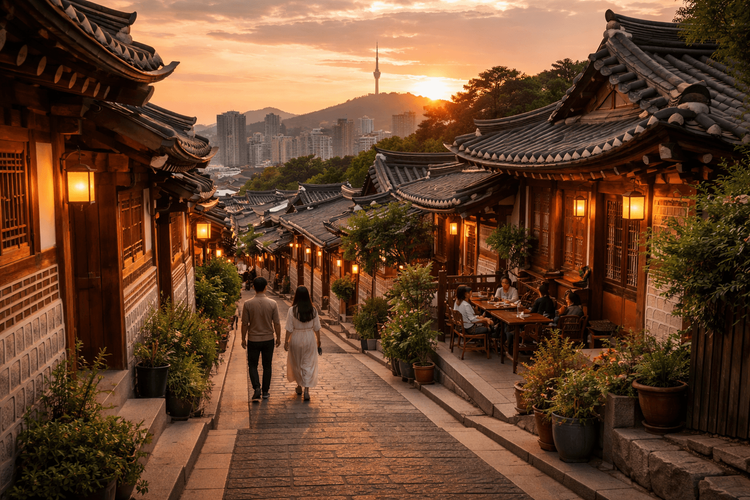
Across Bukchon, Ikseon-dong, and Seochon, meticulous restorations and sensitive redesigns are turning hanok—traditional Korean homes—into guesthouses, tea rooms, studios, and small galleries. Architects keep the bones: low, tiled roofs (giwa), courtyards aligned to catch light and breeze, and those warm floors that make you linger. The updates are quiet and clever: discreet underfloor heating systems, insulation that holds spring’s mild air, modern baths tucked behind sliding panels. The result is a living conversation between centuries-old craft and contemporary design.
Spring is the season these neighborhoods shine. Plum and cherry blossoms flutter over walls; gingko buds unfurl; the air has a crisp, mineral clarity after winter. Daylight stretches long enough for unhurried wandering—precisely what hanok lanes ask of you.
Your hanok stay Seoul guide: 3–5 days through Bukchon, Ikseon-dong & Seochon
This itinerary blends slow architecture-gazing with small cultural stops and plenty of time to sit in courtyards and watch shadows move across wood.
- Day 1–2: Bukchon for orientation and craft
- Day 2–3: Ikseon-dong for design-forward dining and indie shops
- Day 3–4: Seochon for intimate galleries and everyday Seoul life
- Optional Day 5: Palaces and temple courtyards that frame the hanok story
Days 1–2: Bukchon — Rooflines and Rituals
Tucked between two royal palaces, Bukchon is where you learn the language of hanok: low eaves, clay roof tiles, stone foundations, and courtyards that act like lungs for the home. Start early, when the lanes are quiet and you can hear door latches click and kettle lids whisper. Pop into a heritage house-turned-exhibition space (there are several) to see carpentry up close: peg joints, lacquer, and paper stretched over latticed frames.
Plan your breaks the hanok way. Sip green tea or a lightly toasted grain tea in a courtyard cafe where persimmon trees hold the last of winter fruit. Seek small ateliers: a brush-maker’s studio, a hanji paper workshop, a jeweler shaping silver into clean-lined rings. Bukchon remains residential, so voices carry; walk with courtesy, step lightly, and keep cameras discreet.
Evening is for the bath’s steam and a futon rolled out on warm floors. Expect to sleep more deeply than you do in high-rise hotels; something about the wood, the measured stillness, slows the heart.
Day 2–3: Ikseon-dong — Design in a Labyrinth
Ikseon-dong’s alleys are narrow enough to force intimacy, and that’s part of the thrill. Early 20th-century hanok form a low-slung maze filled with thoughtful reuses: floral courtyards turned into dessert salons, minimalist brunch nooks with clay cups and local ceramics, tiny perfume studios that smell like pine needles after rain. Shop for textiles dyed with indigo or persimmon, small-batch pottery, and paper lamps whose glow feels like spring dusk.
Lines can form at popular spots; go mid-morning or late afternoon. As the sun drops, fairy lights thread eaves and the lanes shift into a theater of silhouettes—tile roofs against a violet sky. If you’re eating in a converted hanok, watch the transition from day to night through a courtyard window; it’s the perfect slow show.
Day 3–4: Seochon — Lived-in Charm and Small Galleries
West of the main palace, Seochon feels less staged, more apartment-house-and-studio than postcard. Here, hanok tuck into side streets beside low-rise apartments. This is where I browse tiny galleries showing emerging painters and ceramicists, then drift into a market street where lunch is assembled from a row of counters—choose a few banchan, a warm main, and carry your tray outside.
Seochon’s food scene evolves quickly, but the constants are comforting: seasonal set menus in refitted hanok, courtyard coffee roasteries with soft jazz, and makgeolli poured in teacups alongside savory pancakes. For a design palate cleanser, walk the palace’s western walls at golden hour, then duck back into the lanes for a nightcap in a courtyard bar glowing like a lantern.
Optional Day 5: Framing the Story
A hanok doesn’t exist in isolation; it’s part of a city shaped by court ritual and Confucian planning. Spend a day among grand palace halls and a wooded rear garden; follow it with a temple courtyard where monks tend potted pines. End in a street known for calligraphy shops and antique dealers, thumbing through brushes and old seals—objects that feel at home in a hanok’s measured calm.
Sleep, Eat, Shop: How to Choose Well
Use these criteria to sort the refined from the merely trendy.
Sleep: Look for rooms that open directly to a courtyard (even a pocket-sized one). Ask about true ondol heating, soundproofing between rooms, and whether bedding is futon-style or platform beds. In restored houses, private baths vary—some are tiled wet rooms behind sliding doors; others are compact and modern. Clear house rules matter: quiet hours, no candles (fire risk is real), and shoe etiquette.
Eat: Prioritize seasonal menus served in hanok spaces that keep windows and doors at their original proportions. A good sign: natural materials, simple ceramics, and a menu that changes with spring greens and roots. In tea houses, watch for tea heated over charcoal or induction in the courtyard—both give a sense of ceremony.
Shop: Seek studios where you can meet the maker. Hanji lamps, hand-thrown cups, lacquer trays, linen jackets dyed with plant pigments—these travel well and carry the neighborhoods’ design DNA. Packaging that references traditional motifs (dancheong patterns, latticework) without kitsch is a plus.
When to Go and What Spring Feels Like
Spring (March–May) balances clear light with comfortable temperatures. Early March can still feel brisk in the shade; by late April, blossoms turn the lanes into a soft confetti walk. Light layers suit courtyard living; mornings can be cool on stone pathways. Air quality can fluctuate in spring, so check the day’s index if you’re sensitive.
Getting There & Around
Airports: Incheon International is the main gateway, with frequent airport trains and buses into the city. Gimpo handles many regional flights and connects to the subway network.
Into the city: The airport express train gets you to central stations quickly; airport limousine buses fan out to key neighborhoods and are luggage-friendly. Taxis are widely available at both airports—look for official stands.
Subways to the hanok zones: Anguk Station (Line 3) places you at the edge of Bukchon; Jongno 3-ga (Lines 1, 3, 5) is the best jump-off for Ikseon-dong; Gyeongbokgung Station (Line 3) serves Seochon on foot via its western exits. All three neighborhoods are compact; you’ll walk more than you ride once you arrive.
Getting between them: It’s a short hop by subway or a pleasant walk linking Bukchon and Seochon along palace walls; Ikseon-dong sits a few stops east, easy to fold into the same day.
On Arrival: What to Expect in a Hanok
Check-in: Many hanok guesthouses operate like small inns. You’ll likely arrange arrival time in advance; hosts often greet you in the courtyard and show how doors and latches work.
Shoes off: Expect to leave shoes at the threshold. Slippers are typically provided.
Quiet carries: Wood and paper aren’t soundproof. Keep voices low at night; close doors gently.
Heating and bedding: Ondol floors are radiant and comfortable; bedding is usually a foldable mattress with thick quilts. Some houses offer hybrid setups with low platforms; ask ahead.
Bathrooms: Layouts vary—from compact wet rooms to polished modern suites. If a tub is important, confirm before booking.
Weather: Courtyards are open to the sky; spring showers pass quickly but bring an umbrella for the hop between rooms.
Respect the Neighborhoods
These districts are lived-in. Step aside for residents’ cars, avoid blocking doorways or stoops, and keep tripods off private steps. Many homes display polite signage asking for quiet—heed it. Photography is welcome on main lanes; be considerate in side alleys. No smoking in hanok courtyards—wood and paper are unforgiving.
How This Guide Helps You Book the Right Stay
Think of this hanok stay Seoul guide as a filter. Target houses with:
- A courtyard-facing room and morning light
- Clear house rules and responsive hosts
- Real wood-and-paper details alongside subtle, modern upgrades
- Proximity to craft studios, galleries, and tea rooms rather than major roads
Reserve early for spring weekends; weekdays can be calmer and often more rewarding.
The Spring Case for Going Now
Seoul’s hanok neighborhoods reward unhurried time: an hour in a courtyard watching sparrows hop across tiles, a slow lunch served in honest pottery, a gallery visit that turns into a conversation about glaze and grain. If you’re after design that breathes and culture you can feel under your feet, plan the trip while blossoms still hang in the air. Close the laptop, choose your courtyard, and let a wooden door slide you into the city’s quietest future. This hanok stay Seoul guide is your map—spring is the moment to follow it.
Where to Stay

Roynet Hotel Seoul Mapo
Roynet Hotel Seoul Mapo is a contemporary 4-star hotel in central Seoul, close to Bukchon, Ikseon-dong and Seochon, offering comfortable rooms, practical services and easy access to cultural neighborhoods, and holds a 9/10 guest rating.

Dormy Inn SEOUL Gangnam
Dormy Inn SEOUL Gangnam is a 3-star hotel in Seoul, conveniently located for exploring Bukchon, Ikseon-dong and Seochon, offering practical, comfortable rooms and a 9/10 guest rating that reflects reliable service and easy access to city sights.

GLAD MAPO
GLAD MAPO is a 4-star hotel in Seoul, centrally located for Bukchon, Ikseon-dong and Seochon, offering contemporary rooms, on-site dining and a 9/10 guest rating as a convenient base for exploring the city.

NINE TREE BY PARNAS SEOUL INSADONG
NINE TREE BY PARNAS SEOUL INSADONG is a 4-star hotel in central Seoul, steps from Insadong and within easy reach of Bukchon, Ikseon-dong and Seochon, offering contemporary rooms, on-site dining and convenient transit access, and holding an 8.9/10 guest rating.

Hotel Skypark Kingstown Dongdaemun
Hotel Skypark Kingstown Dongdaemun is a 4-star hotel in Seoul with an 8.7/10 guest rating, located near Dongdaemun and within easy reach of Bukchon, Ikseon-dong and Seochon, offering convenient access to shopping, historic neighborhoods and transport connections.
Gallery