
Tokyo neighborhood guide: 48-hour micro-adventures beyond the crowds
Skip the crowds with a 48-hour Tokyo neighborhood guide through Kagurazaka, Shimokitazawa, and Yanaka—artisans by day, tiny izakayas and jazz bars by night.
Trip Length
48 hours (weekend)
Best Time
Year-round; especially March–May and late September–November for mild weather and soft light
Mood
Urban / Cultural
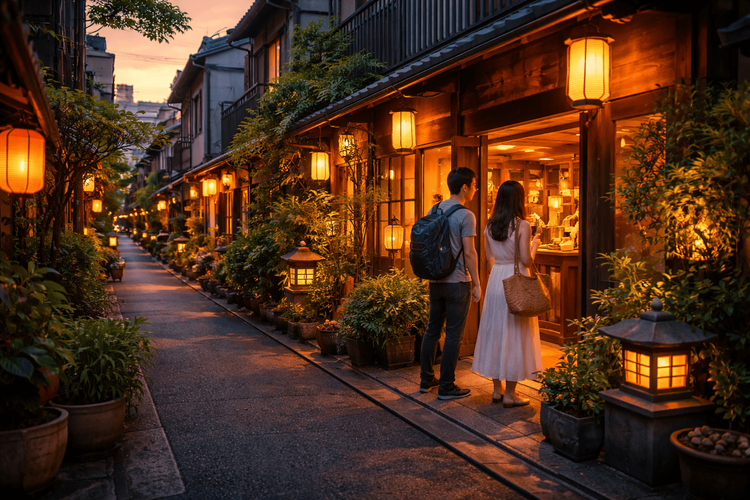
You step into Kagurazaka at first light, where stone lanes climb a quiet hill and pale noren sway in a breeze scented with dashi. A lone delivery bike rattles past. It’s the Tokyo you hoped still existed—intimate, precise, human-scale—and the perfect prologue to a Tokyo neighborhood guide built for repeat visitors with only a weekend to play.
Tokyo neighborhood guide: 48 hours beyond the icons
This plan trades neon boulevards for side-street character: Kagurazaka’s alleyway artisans, Shimokitazawa’s thrift-and-vinyl sprawl, and Yanaka’s time-capsule calm. Think small counter izakayas, hands-on craft studios, late-night jazz bars, and morning coffee poured by people who remember your face by day two. You won’t tick every box; you’ll let the city work at eye level.
Day 1 Morning: Kagurazaka’s lanes and craftsmanship
Start early while the neighborhood still whispers. Pop into a kissaten for toast and a meticulous pour-over, then wander the narrow backstreets that braid up the hillside. Wooden facades hide tiny dining rooms; tiled doorways hint at former geisha houses; a compact Shinto shrine crowns the ridge, its courtyard catching a sliver of sun.
Kagurazaka rewards unhurried curiosity. Peer into shopfronts where washi paper stacks like pastel geology and ceramic bowls gleam on cedar shelves. If you’ve booked ahead, this is a good place for a short workshop—wagashi confectionery shaping, basic calligraphy, or an introduction to indigo dyeing are often offered in small studios around the hill. Sessions in English are limited and intimate, which suits the tone of the area.
Lunch lightly. A standing soba counter gets you back outside in minutes, or follow your nose to a homestyle deli box assembled with seasonal vegetables. The flavors are delicate and grounded—fuel for an afternoon change of scene.
Day 1 Afternoon: Shimokitazawa for thrifts, beans, and a slow clock
Hop the train west to Shimokitazawa, where the buildings stay low and the tempo loosens. The lanes here snake between vintage racks, record crates, tiny theaters, and micro-roasters with two stools and one earnest barista. If your idea of shopping bliss is flipping through denim with a soundtrack of soft jazz, this is your hour.
Work in a caffeine intermission—light-roast pour-overs show up on menus like tasting notes for wine—then graze: a curry joint with a secret spice blend, a bakery whose crumb sells out by mid-afternoon, or skewers fired over charcoal that perfume the alley. Again, keep it small. The joy is in pacing. Shimokitazawa’s grid dissolves into cul-de-sacs and shortcuts; let your route be set by whichever window display hooks you next.
If you want another hands-on note, look for short sessions in basic leathercraft or screen printing—several ateliers host casual introductions, and you’ll leave with something you’ll actually use.
Day 1 Night: Tiny izakayas and late-night jazz
As the lights come up, trade shops for counters. Shimokitazawa’s evening scene scatters into snug rooms: whiteboard menus chalked for the day, a handful of seats, clinking highballs, the hush of rice landing in bowls. Order a range of small plates—grilled fish collar, crisp chicken, pickled greens—and let the host guide you. Solo diners are common; conversation comes easily if you leave time for it.
Finish with a jazz bar—Tokyo’s “jazz kissa” tradition lives on in spaces where an owner tends shelves of vinyl like a library and every record has a story. The room may be standing-only, the turntable a shrine, and the volume set for listening, not shouting. Last trains can slip away before midnight; if you plan to stay late, aim for bars within walking distance of your bed or confirm late-night routes in advance.
Day 2 Morning: Yanaka’s easy stride
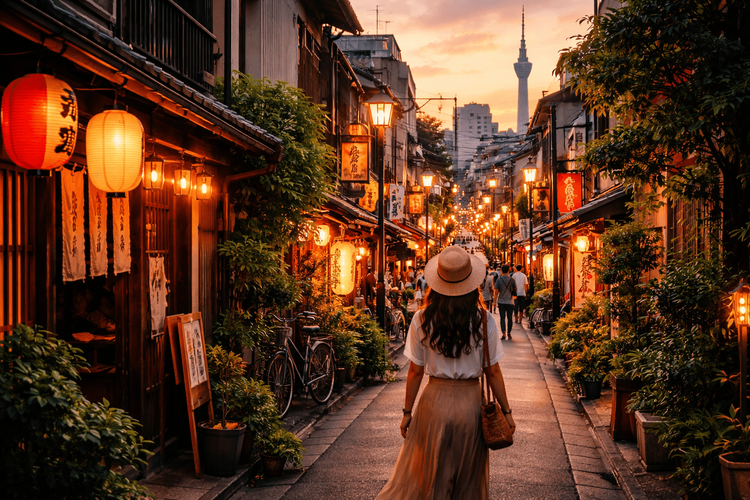
Trade west for northeast. Yanaka rises slowly, and that’s the point. Mornings here feel like a neighbor’s street: cats on stoops, bicycles against shuttered facades, the smell of something sweet baking. Follow the gentle slope toward the shopping street where snack stands, tea sellers, and kitchenware merchants set out for the day. You’ll see families making a ritual of weekend strolls and photographers framing weathered wood against modern skylines.
This is a fine place to collect objects with a story: indigo-dyed tenugui cloths, hand-carved chopsticks, small ceramics in pale glazes. If you’ve timed it, nearby studios in the wider Yanesen area (Yanaka, Nezu, Sendagi) sometimes open for short experiences—intro pottery wheels, brush-making demonstrations, or simple ink painting. Workshops are small; book early.
Slide into a quiet temple precinct for a moment—the gravel crunch, a bell’s single strike—and then break for lunch: grilled skewers at a corner stand, a vegetable-forward set meal, or onigiri wrapped to-go for a park bench.
Day 2 Afternoon: Backstreets and a final lap in Kagurazaka
Spend your last hours by design: either linger in Yanaka, tracing lanes that loop past hidden ateliers and pocket gardens, or swing back toward Kagurazaka to see the neighborhood at a different hour. Mid-afternoon brings a second wind—coffee houses refill, and sweet shops stack seasonal mochi in neat rows.
If you crave one last craft fix, consider a short tea primer or a calligraphy brush lesson; if you crave motion, drift down the slope and take the riverside path for a closing walk. Your 48 hours end not with a skyline, but with the detail of grain in an old door or the patina of a well-used kettle.
Practicalities: Getting there and getting around
- Airports: Haneda places you closer to the center; trains via the monorail or Keikyu lines connect swiftly. From Narita, the Narita Express routes to major hubs, while the Keisei Skyliner drops you at Nippori—useful for Yanaka.
- Neighborhood access: Kagurazaka sits on the Tozai Line (Kagurazaka Station) and near Iidabashi, a major interchange. Shimokitazawa is served by the Odakyu and Keio Inokashira lines. For Yanaka, target Nippori on the JR Yamanote Line, or the Chiyoda Line for Sendagi/Nezu.
- IC cards: Pick up a Suica or PASMO (physical or mobile) and tap through trains, subways, and many cafés. Most small bars still welcome cash; ATMs in convenience stores typically work with foreign cards.
- Transfers and timing: Tokyo trains run with clockwork precision, but tiny venues fill early. If a place catches your eye at 5 p.m., don’t assume a seat at 8. The best approach is spontaneous focus: choose a lane, then commit.
What to expect on arrival
- Space is intimate: Many izakayas and jazz bars seat fewer than a dozen. Be ready to queue politely; lines move, and the reward is worth the wait.
- Quiet neighborhoods: You’re walking residential streets. Keep voices low at night, and stand to the side when you stop for photos.
- Trash etiquette: Public bins are rare. Carry a small bag for wrappers and bottles until you spot a convenience store or station receptacle.
- Late nights: Last trains are earlier than you think. If you plan to savor a second set at a jazz spot, confirm your route home—taxis are easy to hail on main roads.
When to go for this itinerary
The beauty of this circuit is that it holds year-round. Spring and late autumn bring soft light and comfortable temperatures; summer evenings replace crisp air with electric energy; winter mornings deliver crystal-clear views and fewer crowds. Rain brightens cobblestones and deepens the aroma of coffee. Whenever you land, there’s a mood to match your pace.
Why this 48-hour plan works
Two days can feel like a compromise in a city as layered as Tokyo, but this route turns constraint into clarity. By drawing a triangle—Kagurazaka, Shimokitazawa, Yanaka—you spend less time underground and more time present. It’s a Tokyo neighborhood guide designed not to conquer the city, but to let it meet you on corners where life hums gently.
Extend or swap, if you must
If you’re returning for a third or fourth visit, the same rhythm translates: trade Shimokitazawa for Koenji’s guitar shops, or swap Kagurazaka’s craft studios for the galleries of Kiyosumi-Shirakawa. The logic holds—choose a cluster, walk it deeply, end with a bar where the playlist matters.
The takeaway
In 48 hours, you’ll collect small, precise moments: steam fogging a soba window; a stamp of indigo on your fingertips; the lift of a horn over vinyl crackle. If you were looking for a Tokyo neighborhood guide that privileges detail over spectacle, this is your map. Book the flight; the lanes will take care of the rest.
Where to Stay

Hotel Villa Fontaine Grand Haneda Airport
Hotel Villa Fontaine Grand Haneda Airport is a 4-star Tokyo property offering convenient access to Haneda Airport and nearby neighborhoods Kagurazaka, Shimokitazawa and Yanaka, with modern rooms, free Wi-Fi, an airport shuttle and business facilities; guests rate it 8.9/10.

Asakusa Tobu Hotel
Asakusa Tobu Hotel is a 3-star Tokyo city hotel offering comfortable rooms and direct access to Asakusa's temples and transport links, making it a convenient base for exploring Kagurazaka, Shimokitazawa and Yanaka, and carrying a 9.2/10 guest rating.

Grand Nikko Tokyo Bay Maihama
Grand Nikko Tokyo Bay Maihama is a 4.5-star hotel with a 9.1/10 guest rating that places guests within easy reach of Kagurazaka, Shimokitazawa and Yanaka, offering upscale rooms, multiple dining options, event facilities and convenient transport links to central Tokyo.

Hotel Gracery Shinjuku
Hotel Gracery Shinjuku is a 4-star modern city hotel in Tokyo that places guests within easy reach of Kagurazaka, Shimokitazawa and Yanaka, offering practical city-oriented amenities and an 8.7/10 guest rating for comfort and convenience.

Hotel Sunroute Plaza Shinjuku
Hotel Sunroute Plaza Shinjuku is a 4-star Tokyo hotel rated 8.6/10, offering modern rooms and easy access to Kagurazaka, Shimokitazawa and Yanaka; it functions as a convenient base for exploring local neighborhoods and transport links with practical amenities.
Gallery