
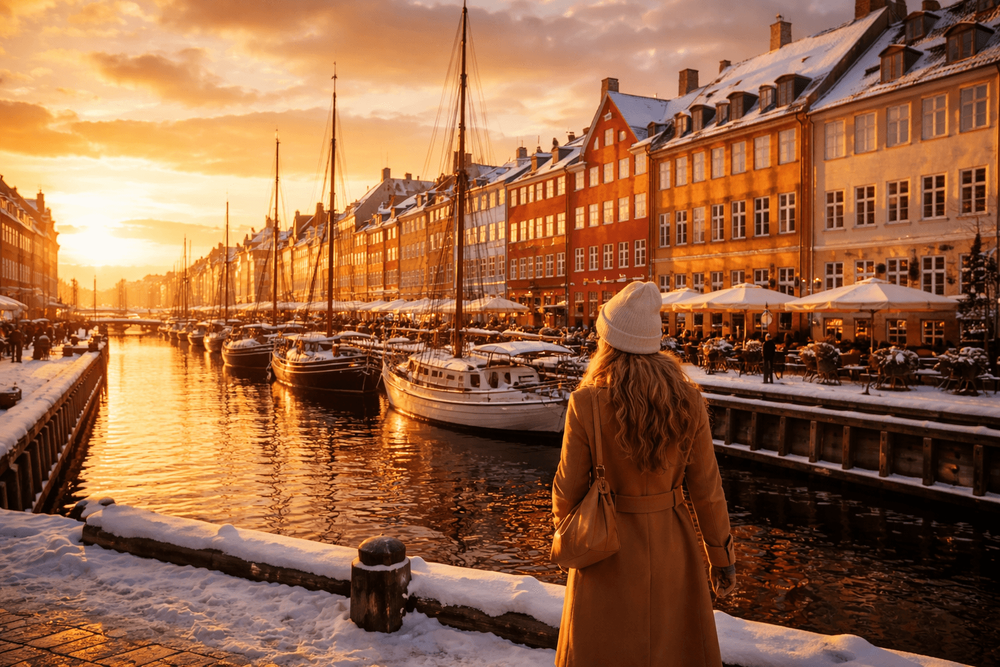
A Design Lover’s Winter Escape to Copenhagen’s Creative Waterfront
Architecture, harbor baths, and hygge: plan a 3–4 day Copenhagen winter escape along the creative waterfront with saunas, design museums, and slow-lit walks.
Trip Length
3-4 days
Best Time
November–February; December for festivities, January–February for quieter stays
Mood
cultural
The first snow skims across the harbor as steam curls from a cedar sauna raft, and a swimmer climbs a ladder grinning—pink-cheeked, alive. Twenty minutes later you’re wrapped in wool under the glassy cantilever of the Royal Danish Playhouse, watching lights flicker on across the water at Holmen. This is the season when the city’s edges feel intimate, when a Copenhagen winter travel guide is really a lesson in light: how it’s framed by architecture, reflected on canals, and welcomed inside with candles and oak.
Why the waterfront shines in winter
Copenhagen’s harbor has been cleaned and reimagined over the past two decades, turning former shipyards and warehouses into promenades, cultural spaces, and contemporary housing. In cold weather, the water reads like polished slate, doubling silhouettes of the Royal Danish Opera, the Black Diamond (the striking waterside extension of the national library), and the boxy panes of BLOX. Cafés along piers glow by midafternoon; locals lean into the season with blankets, heat lamps, and a civilized pace that makes winter not something to fight, but to choreograph.
Design lovers, especially, will appreciate how elegantly the city negotiates dark and cold: generous windows, human-scaled streets, and public spaces that invite lingering. Walkable bridges thread the harbor—Inderhavnsbroen, Bryggebroen—so you can drift from neighborhood to neighborhood without losing sight of the water.
Copenhagen winter travel guide: 3–4 perfect days
Here’s how to shape an extended weekend that celebrates architecture, harbor baths, concept hotels, and hygge done right.
Day 1: The theatrical harborfront
- Start along Nyhavn’s canal and wander toward Ofelia Plads, the broad pier beside the Royal Danish Playhouse. From here, watch ferries cross to the Opera’s sculptural overhang on Holmen. If the harbor bus is running on a convenient route for you, hop on; it operates as part of the city’s transit network and offers a ringside tour of quays and ship masts.
- Trace the promenade south toward the Black Diamond. Step inside to see how granite and glass usher in low winter sun—then duck back out for a walk across the canal bridges toward Christiansborg’s spire.
- As twilight falls early, let the golden hour do its work along the quay. Find a warm nook overlooking the water and lean into the evening: candlelight, ceramics, and the gentle thrum of cyclists passing by.
Day 2: Harbor baths and sauna culture
- Copenhagen’s harbor baths are a point of pride. Islands Brygge and Kalvebod Bølge on opposite shores are among the most photogenic, with sculpted timber decks, diving platforms, and ladders that make the water feel inviting even in January. In winter, many facilities switch to reduced hours or are reserved for organized winter-swimming clubs; check posted schedules and book a sauna slot where available.
- The ritual is simple and addictive: a hot sauna, a bracing dip, repeat. You’ll emerge clear-headed, ready for a slow amble through Christianshavn’s canals—cobblestones, pastel facades, and the occasional whiff of woodsmoke.
- Reward yourself with a late lunch near the waterfront. You don’t need a checklist—just follow the locals to bars and bakeries tucked into old sheds, or to modern dining rooms with big windows and honest, seasonal menus.
Day 3: Architecture and design, indoors and out
- Morning at BLOX, home to the Danish Architecture Center, is a perfect winter call. Exhibitions probe the city-making that makes Copenhagen tick, and the building itself is a geometry lesson of green-tinted glass and stacked volumes perched at the water’s edge.
- Continue your design immersion at Designmuseum Danmark, where you can trace the curve from classic chairs to contemporary ceramics. The museum shop is a tasteful shortcut for gifts—think wool, wood, glass, and restrained color.
- Dedicate the afternoon to Refshaleøen, the former industrial island that now mixes ateliers, climbing walls, and casual food halls. Even on grey days, there’s an energy here—wind riffles the flags, gulls skid across the chop, and art spaces hide behind corrugated doors. Bring your curiosity; the point is to wander.
Day 4 (bonus): North along the new waterfront
- If you’ve got an extra half-day, aim for Nordhavn. Boardwalks wrap brand-new canals, and sculptural bathing zones at Sandkaj and around the harbor draw hardy swimmers even in winter. Architecture fans will enjoy the interplay of brick, copper, and glass, plus inventive courtyards that feel like shared living rooms.
- Alternatively, take a straightforward train ride up the coast for a coastal museum fix and sea air, then be back in the city by late afternoon for one last harbor stroll.
Where design lovers sleep: concept hotels by the water
Copenhagen’s hospitality scene leans into a specific kind of comfort: tactile, light-suffused, unforced. Along the waterfront you’ll find a few broad categories that fit the winter brief nicely:
- Converted warehouses and granaries in Christianshavn and Holmen, where rooms frame timber beams, moorings bob outside, and lobbies feel like living rooms with a concierge.
- Eco-forward new builds in Nordhavn that double down on natural materials and energy smarts, often with harbor views and in-house saunas.
- Intimate townhouse-style properties near Nyhavn that let you step from canal to candlelit lounge in minutes.
Look for features that matter most in cold weather: generous windows, thick duvets, proper task lighting, and thoughtful public spaces. Breakfasts tend to favor grainy breads, good butter, and coffee that cuts through the grey.
Harbor baths: how to do it safely
- Winter access varies. Some baths operate limited public hours or only through membership clubs; others pair swimming zones with bookable saunas. Read the signage on site.
- Ladders can be slick; neoprene booties or gloves make transitions easier. Keep dips short, warm up fully between plunges, and skip the water if you’re not feeling well.
- Many saunas require advance reservations and go cashless; plan ahead.
Practicalities for a smooth winter stay
The beauty of a Copenhagen winter travel guide is that the logistics are wonderfully simple.
When to go
- November to February is the sweet spot. December sparkles with markets and Tivoli’s lights. January and February trade festivities for calm, making museums and saunas feel like your personal ritual.
Getting there
- Copenhagen Airport sits on the metro line; trains and the driverless metro whisk you to the center in well under half an hour. If you’re arriving from southern Sweden, the train over the Øresund Bridge brings you directly into Copenhagen’s main stations.
What to expect on arrival
- Cash is increasingly rare; contactless cards are widely accepted on transport and in shops.
- English is commonly spoken, and signage is clear. The harbor bus operates as part of the city’s transit network—use it like a moving viewpoint.
- Cycling remains the quickest way to slip across districts, but winter winds can be sharp. Wrap well, ride carefully, and consider the metro for longer jumps.
- Days are short, which is part of the mood. Book timed entries for major exhibitions, aim for late-morning museum starts, and save the blue hour for waterfront walks.
- You’ll find cloakrooms at most cultural institutions, meaning you can arrive layered and shed down to comfort.
The design-forward hits you shouldn’t miss
- The Royal Danish Playhouse: a masterclass in waterside siting with deep eaves and theatrical interior views.
- The Opera House: align yourself across the harbor to appreciate its hovering roofline.
- The Black Diamond: step inside for the atrium and staircase; step outside for reflections.
- Bridges of the inner harbor: watch for the playful sweep of Bryggebroen and the everyday poetry of cyclists threading past.
Hygge, calibrated for winter
Hygge isn’t about props; it’s about a state of ease. In Copenhagen that means a candle on your café table at noon, wool blankets on outdoor chairs, and the quiet pleasure of watching the city go by through glass. It’s lingering on a boardwalk while snow starts to fall, or choosing the seat beside the radiator in a tiny wine bar. The architecture helps, shaping pockets of calm and framing light so it lands exactly where you need it.
Plan the return before you leave
By the time your shoulders settle into the rhythm of the harbor—walk, steam, dip, repeat—you’ll understand why winter is many locals’ favorite season. The city rewards unhurried attention: morning fog lifting off canals, a perfect chair silhouette against a museum wall, the soft clap of a ferry docking. Start penciling in the next trip before the plane even lifts; this Copenhagen winter travel guide has a way of becoming a ritual.
Where to Stay

CityHub Copenhagen
CityHub Copenhagen is a 3-star stay in Copenhagen offering compact, modern rooms and a central base for exploring the city, with a guest rating of 9.1/10.

Comwell Copenhagen Portside Dolce by Wyndham
Modern 4-star hotel in Copenhagen’s Portside district, Comwell Copenhagen Portside Dolce by Wyndham offers contemporary rooms, a restaurant, bar, fitness center, and easy access to the city center and waterfront.

Hotel Kong Arthur
Hotel Kong Arthur is a 4-star Copenhagen hotel with easy access to the city center, offering modern rooms, a spa, sauna, and multiple dining options. Guests rate it 8.8/10 for its comfortable stay and convenient location.

NH Collection Copenhagen
NH Collection Copenhagen is a 5-star hotel in central Copenhagen, offering contemporary rooms, city views, and easy access to major attractions, dining, and waterfront areas, with a 9/10 guest rating.

Scandic CPH Strandpark
Scandic CPH Strandpark is a 4-star Copenhagen hotel near the airport and waterfront, with modern rooms, a restaurant, bar, fitness center, sauna, and meeting facilities for business or leisure stays.