
A Slow Boat, a Few Great Meals, and the Best of Vietnam’s Central Coast
A culinary-and-history week from lantern-lit Hội An to Huế’s royal kitchens, with a slow Perfume River boat and heritage stays. Best from February to May.
Trip Length
1 week
Best Time
February to May
Mood
culinary
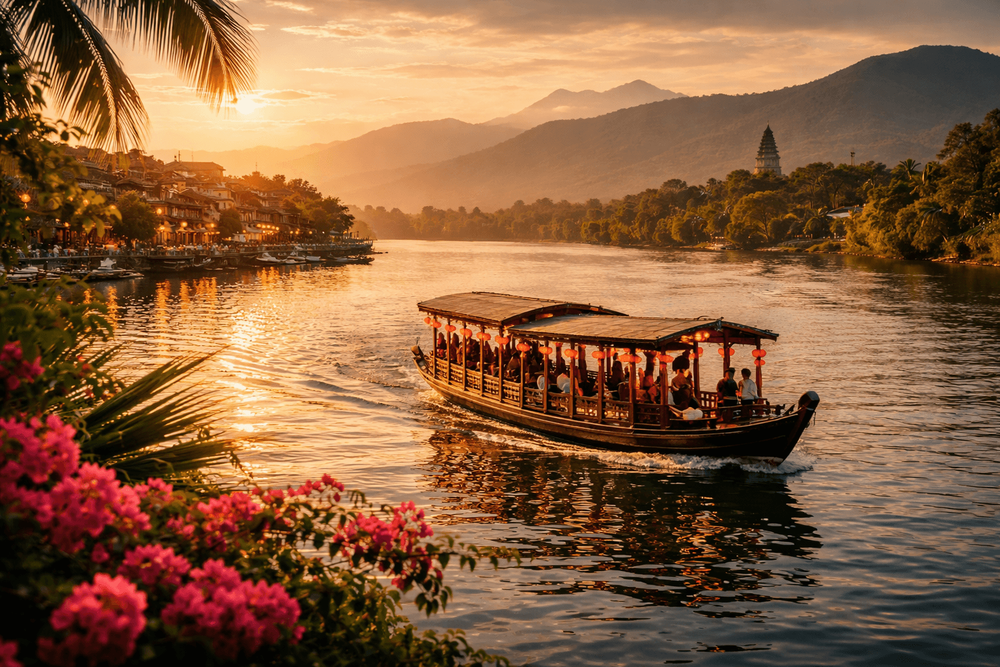
Dusk slides over the Perfume River like silk, and the wooden boat keeps an unhurried rhythm. Incense curls from a riverside shrine, cymbals chime in the distance, and the air carries ginger, lemongrass, and river-cool breezes. This is where a week along the heartline of Hội An and Huế truly begins—a central Vietnam travel guide written in bowls and broths, heritage and waterlight.
Central Vietnam travel guide: how to plan a perfect week
This route favors flavor and memory over speed. Start with three nights in lantern-lit Hội An, cross the Hai Vân Pass or ride the coastal train to Huế with a lagoon-side pause, then spend three nights along the Perfume River. You’ll trace royal cuisine and street-side specialties, wander UNESCO-listed quarters and imperial ramparts, and rest in heritage hotels that keep the region’s textures intact.
- Days 1–3: Hội An Ancient Town and countryside for markets, cooking, and sea-breezed afternoons
- Day 4: Travel north via the Hai Vân Pass or the train through Đà Nẵng; arrive in Huế by evening
- Days 5–7: Huế for the Imperial City, garden houses, pagodas, and a slow boat on the river
Hội An: lanterns, tailors, and a table set by the river
By day, Hội An’s timber-fronted shophouses glow with mustard and teak; by night, silk lanterns paint the Thu Bồn River in saturated color. Settle into a riverside stay inside or just beyond the pedestrian core—many small properties occupy renovated merchants’ homes with creaking staircases, tiled courtyards, and quiet balconies. Evenings invite long, ambling dinners: cao lầu noodles with their signature chew and greens, delicate white rose dumplings, and smoky grilled river fish. In the morning, the market hums: stacks of fresh herbs, baskets of clams, and rice paper drying like moons in the sun.
Reserve a half-day for Hội An’s countryside. Cycle toward the herb gardens, watching farmers water with paired metal cans—an old technique still practiced—and taste the peppery edge of the harvest in a simple lunch. Or head to the coast for an hour of sea air before the heat builds. Late afternoon is for tailoring if you wish—fittings can still be an artful process here—or for a lantern workshop where you learn why the town glows the way it does.
Over the Hai Vân Pass: the coastal hinge of the trip
The road to Huế climbs into cloud-scraped views on the Hai Vân Pass, a sinuous cut of tarmac where mountains step down to the sea. Hire a driver who allows unhurried photo stops, or board the northbound train that threads the same dramatic coastline, all windows and wave-crash panoramas. Midway, brackish lagoons glint with fishing nets; small eateries cluster along the water with the day’s catch on display. Keep lunch simple and local—grilled seafood, rice, a salad bright with herbs—and then continue to Huế as the light softens.
Huế: royal cuisine, river rituals, and a citadel of quiet power
Huế carries its history with a kind of restraint. Walk the Imperial City’s courtyards and layered gates in the early hours, when shadows are long and the breeze finds the lotus ponds. The past is tangible but not theatrical—weathered lacquer, drumbeats in the distance, a scholar’s garden tucked behind a wall. Later, visit a garden house for tea or a quiet meal; the city’s culinary heritage grew from courtly kitchens into neighborhood favorites, and you can taste that lineage in refined broths and measured seasonings.
Food in Huế rewards curiosity. Bánh bèo—steamed rice cakes—arrive like porcelain petals with a scatter of dried shrimp and crispy shallots. Bánh nậm is wrapped and steamed in banana leaf, a soft, savory comfort. In the morning, a bowl of bún bò Huế carries lemongrass perfume and a gentle heat that builds but never bullies. Vegetarian cuisine is thoughtful and abundant, much of it rooted in the city’s pagoda traditions. Ask for small plates meant for sharing, and let the meal unfold.
A slow boat on the Perfume River
Devote one afternoon to the river itself. Hire a traditional wooden boat and drift past islets, pagodas, and riverbank villages where incense sticks dry in radiant bundles. The pace is part of the pleasure: you’ll feel the city ease away as the boat noses upriver toward gateways and moss-bright pavilions. Many travelers choose to stop at a prominent pagoda on a bluff; from there, it’s a short walk to bell towers, prayer halls, and views that straighten the spine.
Go near sunset if you can. The river turns metallic, then softens into rose and slate while the city lights begin to thread the banks. It’s the day’s cleanest pause—and the moment that will tug you back long after you’ve left.
Practicalities for the corridor
- Getting in: Fly into Đà Nẵng International Airport for the smoothest start. It’s the primary air gateway for both Hội An (about an hour by road) and Huế (roughly two to three hours by car, depending on route and traffic). Trains on the north–south line connect Huế and Đà Nẵng; seats by the window reward patience with coastline views.
- Moving around: Ride-hailing apps and metered taxis are widely used in Đà Nẵng, Hội An, and Huế. In Hội An’s pedestrian core, walking and cycling are the simplest ways to move; in Huế, short rides link the river, markets, and the Imperial City.
- Arrival feel: Đà Nẵng’s airport is compact and efficient, with ATMs, SIM counters, and coffee within steps of arrivals. In both towns, hotels can arrange transfers; drivers often wait with name boards, and bag handling is matter-of-fact and swift.
- Money matters: The currency is the Vietnamese đồng (VND). Cash remains useful at markets and small eateries; many hotels and established restaurants accept cards. Keep small notes for boats, bikes, and market snacks.
- Cultural cues: Shoulders and knees covered is a good baseline for pagodas and family shrines. Inside the old quarters, ask before photographing artisans at work; most will nod yes with a smile.
When to go: the spring window
February through May is the sweet spot for this route—the air is clearer, sea breezes feel kind, and evenings along the river invite long walks and longer meals. Hội An’s lantern-lit nights are especially photogenic under drier skies, and Huế’s gardens are at their leafiest. Late summer brings heat that slows your afternoons; October and November can be wet. Spring keeps the rhythm smooth.
Where to stay: heritage texture, modern ease
This corridor is rich with character properties. In Hội An, many small hotels occupy restored merchant houses, where you’ll sleep under wood beams and wake to the clink of tea cups in tile-floored courtyards. Near the river in Huế, colonial-era villas and garden houses have been refitted into discreet retreats—frangipani over verandas, ceiling fans, cool tiles underfoot. Along the way, a simple beachside room or a contemporary tower in Đà Nẵng can serve as a reset between chapters. Choose places that feel grounded in their neighborhoods; the architecture and morning soundtrack are half the story.
What to eat: a week of bowls, broths, and bánh
- Hội An staples: cao lầu with local greens and crisp pork; mì Quảng with turmeric-tinted noodles and roasted peanuts; river prawns grilled over charcoal.
- Huế signatures: bánh bèo and bánh nậm as a sharing duo; bún bò Huế with lemongrass and chili oil; delicate sweet soups for dessert.
- Market finds: fresh herbs by the handful, grilled rice crackers, young jackfruit salad, seasonal tropical fruit eaten out of hand.
The route at a glance
- Day 1: Arrive Đà Nẵng; transfer to Hội An; lanterns and riverside dinner.
- Day 2: Morning market and cooking class; afternoon tailoring or beach; night walk under silk-lit balconies.
- Day 3: Countryside cycling to herb gardens; sunset on the river.
- Day 4: Travel to Huế via Hai Vân Pass (car) or coastal train; lagoon-side lunch; evening stroll along the Perfume River.
- Day 5: Imperial City in the morning; garden house lunch; street snacks in the evening.
- Day 6: Slow boat on the Perfume River; pagoda visit; tea at day’s end.
- Day 7: Markets, museum or tombs at your own pace; late flight or train.
Why this central Vietnam travel guide works
Because it respects scale. The distances are short and the flavors concentrated. You aren’t skimming headlines; you’re learning a region by appetite and light—lantern glow to incense smoke to the gleam of lacquer in a citadel courtyard. By keeping spring as your canvas and the river as your guide, the week becomes coherent and generous.
Plan it now, while the evenings are still cool and the boats unhurried. A few great meals, a slow stretch of water, and two cities that reveal more each time you return—this is central Vietnam at its most persuasive, and this central Vietnam travel guide is your invitation to go.