
Adventure Travel: How to Plan Epic, Responsible Trips Around the World
From gentle treks to multi-week epics, this definitive guide maps out how to plan adventure travel that’s thrilling, safe, and genuinely responsible.
Mood
Epic Outdoor Quest
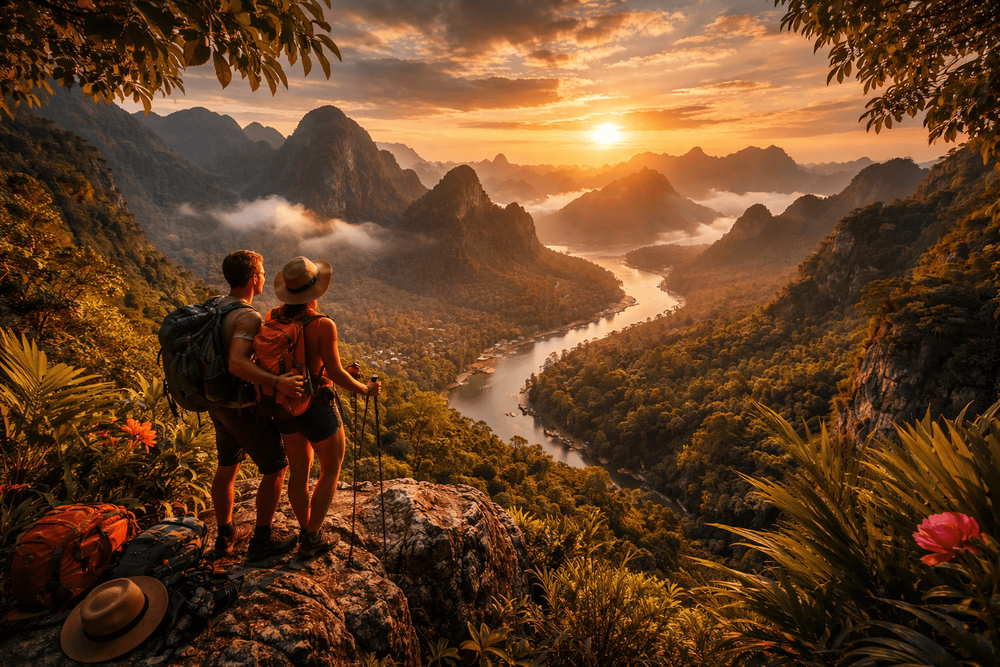
At dawn, the air along the ridge is thin and electric. Frost clings to tufts of grass, a stove hisses to life, and the horizon kindles from slate to rose. The day ahead could be a paddle across glassy water, a bike climb that winds through pine and switchback, or a narrow footpath threading past stone shrines and the clang of village bells. This is adventure travel at its most compelling: a blend of movement, landscape, and culture that leaves the senses sharpened and the map soon smudged with stories.
Adventure travel spans everything from a half-day kayak along a calm coast to multi-week crossings of high, windy passes. What unites it is a spirit of curiosity, a willingness to be surprised, and the hum of purposeful effort. Travelers will find it not only in distant ranges, but in city stairwells, quiet rivers, and the soft light of a desert morning.
What Is Adventure Travel?
Adventure travel is often defined by three intertwined elements: physical activity, time spent in the natural world, and meaningful cultural connection. Trips sit on a spectrum from “soft” to “hard,” with plenty of nuance in between.
- Soft adventure: Low to moderate exertion with manageable risk—think coastal day hikes, cycling vineyard lanes, snorkeling in sheltered coves, or joining an urban food-and-street-art ride. Comfortable lodgings, expert guides, and well-trodden routes are common. It’s ideal for families, first-timers, and anyone returning to fitness.
- Moderate adventure: Multi-day trekking with altitude gains, sea kayaking between islands, hut-to-hut ski touring, or backcountry cycling. Expect variable weather, more remote settings, and a need for sound navigation and self-care skills.
- Hard or technical adventure: Climbing glaciated peaks, multi-week expeditions in deserts or the polar regions, Class IV–V whitewater, or deep cave systems. These demand high fitness, specialized equipment, and trained partners or professional guides.
Adventure travel isn’t a contest of hardship. It’s a calibrated challenge—enough uncertainty to sharpen focus and heighten joy, balanced by preparation and respect for place.
Types of Adventure Trips and Who They Suit
Trekking and Mountaineering
From Spain’s Camino routes and Japan’s Kumano Kodo to Nepal’s Annapurna region and Peru’s Andes, trekking remains the classic adventure. Daily rhythms are simple: lace boots, follow the path, let the day’s light set the tempo. Lodge-to-lodge options suit soft-to-moderate travelers; camping-supported treks and high-altitude ascents demand greater fitness and acclimatization. Mountaineering adds rope, ice axe, and crevasse awareness; a qualified guide is essential for technical terrain.
Best for: Walkers who relish steady endurance, cultural encounters in villages and tea houses, and landscapes that change with every saddle and valley.
Sea and River Adventures
Water reframes a map. Sea kayaking between Greek Cyclades, Croatia’s islets, or British Columbia’s Gulf Islands offers close-up encounters with coastlines—salt spray, kelp forests, and the wind’s texture across a channel. On rivers, rafting blends team rhythm with the pulse of rapids, while canoe trips trace mirror-still lakes at dawn. Scuba and snorkel trips open different worlds; currents, visibility, and wildlife briefings matter as much as buoyancy.
Best for: Swimmers comfortable in open water, families seeking guided paddles in protected bays, and travelers keen on wildlife and campfire camaraderie.
Wildlife and Safari
Tracking wild creatures is one of travel’s most humbling privileges—from gorillas in the Virunga massif to leopard spoor on Kalahari sand or whales feeding along a Patagonian coast. Ethical operators prioritize distance, time limits, and habitat protection; the most memorable encounters often come from patience, silence, and respect rather than proximity.
Best for: Naturalists at heart, photographers with long lenses and long attention spans, and travelers willing to trade certainty for wonder.
Cycling and Bikepacking
Few modes grant such range and immediacy. Rail-trails and towpaths ease beginners into motion; e-bikes flatten hills for mixed-ability groups. Road cyclists might trace alpine passes made famous by grand tours, while bikepackers follow gravel and singletrack to rolling camps beneath unpolluted skies. Luggage transfers and supported itineraries lower barriers to entry.
Best for: Travelers who like covering ground under their own power, with the freedom to stop for farm stands, chapels, and viewpoints on a whim.
Urban Adventure
Cities reward curiosity and stride. Think stairway safaris in Lisbon, rooftop via ferrata in Norway, sunrise runs along Tokyo’s rivers, or culinary cycling tours that double as neighborhood anthropology. Urban adventure collapse the distance between culture and movement; museum afternoons can alternate with canyoning or climbing gyms.
Best for: Time-pressed travelers, families, and those who want culture-forward days with a pulse of activity.
How to Choose the Right Adventure for Your Skill, Time, and Budget
Start with intent. What feeling is the trip chasing—solitude on wind-polished ridges, skill progression, close-up wildlife moments, or the delight of stringing together trains, trails, and meals in new neighborhoods? Then map constraints.
- Time: Weekend, one week, 10 days, or a multi-week arc? Add buffer days for weather, acclimatization, and logistics.
- Fitness and skills: Be candid. If hills still sting, plan a training window before committing to a high-mileage trek. For water trips, swimming competence and comfort in chop matter more than bravado.
- Risk tolerance: Consider objective hazards (weather, altitude, remoteness) and subjective ones (experience, decision-making). Choose itineraries that leave margin for learning.
- Seasonality: Many routes hinge on snowpack, monsoons, migration patterns, or wind. “Shoulder seasons” can mean quieter trails and softer light, but also colder nights and closed facilities.
- Budget: Variables include guiding, permits, transport, accommodation style, and gear. Trekking with huts or tea houses stretches funds; chartered boats and fly-in lodges are premium.
A practical framework:
- If you have 2–4 days and moderate fitness, choose a hut-to-hut or supported cycle route near a gateway city, or a protected coastal paddle with professional guides.
- With 7–12 days, look for regionally classic routes with simple permitting and consistent infrastructure (tea houses, refuges, or supported camps). Consider Nepal Trekking Seasons or Patagonia Best Time to Visit.
- For 3–6 weeks, build a connected route with rest days and cultural stops. Consider alternating hard and soft days to manage fatigue and amplify discovery.
Planning Essentials: Permits, Guides, Fitness, Gear
Permits and Permissions
- Research national park quotas, trekking and conservation permits, and seasonal closures well in advance. Kilimanjaro, the Inca Trail, and certain gorilla treks book out months ahead.
- Understand visa requirements, border crossings, and special regulations for drones, satellite devices, and protected heritage sites.
- Respect sacred places and local governance. In some regions, community permissions complement government permits. When in doubt, ask locally and early.
Guides and Operators
- When to hire: Technical terrain, wildlife-specific trips, river grades beyond your experience, polar or desert environments, and routes with complex logistics.
- How to vet: Look for guide certifications relevant to the activity, transparent safety protocols, small group sizes, fair labor practices, and local ownership or partnerships that keep revenue in the community.
- Red flags: Vague itineraries, unclear inclusions, no emergency plans, wildlife “guarantees,” and pressure to book fast.
Consider supporting locally rooted operators—the knowledge depth and cultural fluency can transform a trip. See Choosing Local Guides for questions to ask before booking.
Fitness and Training
Match training to terrain, not just time on a treadmill.
- Trekking: Weekly elevation gain, back-to-back day hikes, and pack carries that build load tolerance. Practice with the footwear and pack you plan to use.
- Cycling: Endurance rides, hill repeats, and cadence drills. If bikepacking, include rides with weight and uneven surfaces.
- Paddling: Technique sessions on calm water, bracing and rescue practice, and shoulder strength.
- Altitude: You can’t “bank” acclimatization, but you can arrive fitter, hydrate, and follow a gradual ascent plan.
Gear Basics
Think systems: layers that manage heat and moisture, shelter and sleep that match nighttime lows, and navigation backed by redundancy.
- Clothing: Breathable base layers, insulating mid-layers, and a windproof/waterproof outer shell. Don’t neglect sun protection and a warm hat.
- Footwear: Fit matters more than fashion. Break in boots or test trail runners well before departure. Wool socks and blister care are non-negotiable.
- Sleep system: Rating for the expected low, plus a sleeping pad with sufficient insulation.
- Water: Carry capacity for the longest dry stretch; treat with filters, purifiers, or tablets depending on context.
- Navigation: Map, compass, and GPS/apps with offline maps; know how to use all three.
- Emergency: Headlamp, repair tape, cord, multi-tool, first-aid kit, and a communication device appropriate to remoteness.
Packing Checklist (Adapt to Trip and Season)
- Essentials: Passport/ID, permits, insurance documents, cash/cards, phone with offline maps, charging cable, universal adapter.
- Clothing: Wicking base layers, insulating fleece/puffy, shell jacket and pants, hiking pants/shorts, sun shirt, gloves, warm hat, buff, underwear, sleepwear, swimwear.
- Footwear: Trekking shoes/boots, camp shoes/sandals, cycling shoes (if applicable), water shoes (for paddling).
- Technical: Helmet (cycling/climbing), harness and via ferrata set (if required), trekking poles, dry bags, headlamp + spare batteries, lightweight repair kit.
- Water and food: Bottles or bladder (2–3L capacity), treatment method, energy snacks, electrolyte tabs.
- Sleep/camp: Tent or bivy (if camping), sleeping bag and pad, stove and fuel (as allowed), lighter/matches, mug/bowl/spoon.
- Health and safety: Personal first-aid kit, any prescriptions, blister care, sunscreen (reef-safe where applicable), insect repellent, lip balm, hand sanitizer, compact hygiene kit.
- Leave No Trace kit: Trowel, waste bags, biodegradable soap, microfiber cloth, refillable containers.
- Electronics: Camera, power bank, e-reader or notebook, satellite messenger (for remote routes).
Pack for self-sufficiency but resist overpacking. Every item should earn its place by function or joy.
Safety, Risk Management, and Travel Insurance
Adventure heightens the senses in part because the stakes rise with remoteness, weather, and movement. Good planning keeps risk in proportion to reward.
- Pre-trip assessment: Identify the big variables—altitude, temperature swings, wind, river levels, and wildlife. Study maps and recent trip reports; set conservative daily targets.
- On-trip decisions: Use turnaround times and “if/then” plans. If weather builds early, then shorten the day; if a teammate shows altitude symptoms, then descend.
- Health: Train with the pack you’ll carry. Hydrate, eat early and often, and carry a compact first-aid kit you know how to use. For high elevation, ascend gradually and heed symptoms such as headache, nausea, or unusual fatigue.
- Communication: In remote areas, consider a satellite messenger or PLB. Share your itinerary with a home contact and set check-in times.
Travel insurance is a non-negotiable for many adventure trips. Read policies closely.
- Emergency medical: Covers treatment for illness and injury. Confirm coverage for adventure sports and altitude.
- Evacuation: Should include transport to the nearest facility capable of treating you, not just the closest clinic.
- Trip cancellation/interruption: Typically covers non-refundable costs for covered reasons (illness, severe weather, some strikes). Understand exclusions.
- Gear coverage: Limited but useful; keep receipts and document serial numbers.
- Pre-existing conditions: Some policies require purchase within a set window after initial trip payment.
Always verify your specific activities—scuba depth, mountaineering above certain elevations, or whitewater grades—are covered. For a deeper dive, see Travel Insurance Guide.
Sustainable and Ethical Adventure Travel
Adventure depends on intact ecosystems and living cultures. Leave places richer in story, not poorer in resources.
- Community benefit: Book local guides and homestays, eat seasonal food, and buy directly from artisans. Fair wages and transparent tipping matter—especially for porters, cooks, and camp staff.
- Wildlife ethics: Keep respectful distances, limit time at sightings, never bait or touch animals, and avoid rides or shows that compromise welfare. Choose operators who follow strict viewing codes.
- Low-impact travel: Follow Leave No Trace principles—plan ahead, travel and camp on durable surfaces, pack out all waste, leave what you find, minimize campfire impact, respect wildlife, and be considerate of others. See our Leave No Trace Tips.
- Carbon awareness: Favor trains over flights where feasible, cluster multiple activities into one longer trip, pack lighter, and consider credible offset programs after reducing emissions first.
- Cultural respect: Ask before photographing people, learn greetings and basic phrases, dress appropriately near religious sites, and heed community-specific customs. Free, prior, and informed consent applies to more than land—it includes stories and images.
Adventure that listens—to guides, to land, to local rhythms—tends to be welcomed back.
Sample Trip Outlines
Weekend Micro-Adventure: Hut-to-Hut in Slovenia’s Julian Alps (2–3 Days)
- Base: Kranjska Gora or Bled, with easy access to Vršič Pass.
- Outline: Day 1 climb from Vršič to a mountain hut overlooking limestone towers; Day 2 traverse to the Triglav Lakes Valley; optional Day 3 summit of a non-technical peak or descent through forested switchbacks to a lake-side village.
- Highlights: Karst ridgelines, edelweiss meadows, mountain hut culture (hearty stews, clinking mugs), and clear alpine tarns.
- Difficulty: Moderate; daily elevation gains of 600–1000 meters, rocky paths.
- Season: Late June–September, when huts are open and snow has retreated.
- Logistics: Reserve huts ahead in peak months; bring cash for meals; carry layers for fast-changing weather. A short bus or taxi links trailheads. For gear, see What to Pack for the Alps.
10-Day Regional Expedition: Morocco’s High Atlas and Sahara
- Base: Marrakech arrival and departure. Consider a pre-trip day to explore the medina and gather last-minute essentials. See Where to Stay in Marrakech.
- Outline: Day 1–2 acclimatize in Marrakech and transfer to an Atlas village; Days 3–5 trek through Berber hamlets, spending nights in simple guesthouses; Day 6 ascent of a non-technical high point (conditions-dependent); Day 7–8 descend to valleys lined with walnut and poplar, then overland via kasbah-dotted oases; Day 9 camel-supported camp on Sahara fringes with dawn dunes and stargazing; Day 10 return to Marrakech for a hammam and farewell dinner.
- Highlights: Mint tea on rooftop terraces, the call to prayer at sunset, stone villages where bread bakes in earth ovens, dawn light over dunes.
- Difficulty: Moderate; altitude lower than the Himalaya but with steep switchbacks and heat management.
- Season: Spring (March–May) and autumn (September–November) for cooler trekking temps.
- Permits and Guides: Not complex, but a local mountain guide deepens safety and cultural context. Respect community norms; ask before photographs in villages.
Multi-Week Trans-Continental Plan: Trans-Patagonia by Trail, Road, and Fjord (3–4 Weeks)
- Base: Fly into Bariloche (Argentina) and out of Punta Arenas (Chile), or reverse.
- Outline: Week 1 hike the lake district—lenga forests and volcanic cones, with refuges and ferry links between trailheads; Week 2 bus-and-bike segments along Chile’s Carretera Austral, stitching together short treks to hanging glaciers and turquoise rivers; Week 3 Torres del Paine’s classic circuit or “W” trek with a weather buffer; Optional Week 4 sea-kayak day trips in the fjords near Puerto Natales or a wildlife-focused extension to the Strait of Magellan.
- Highlights: Condors wheeling above basalt walls, milky-blue glacial lakes, estancias where smoke scents the air and stories travel far on the wind.
- Difficulty: Moderate to strenuous depending on route choice; notorious winds require sturdy tents and steady pacing.
- Season: Austral summer (December–March) with shoulder-season calm in November and April.
- Logistics: Mix buses with occasional flights to save time; book refuges and campsites months in advance for Torres del Paine. Check border formalities for food and gear. See Patagonia Best Time to Visit.
Booking and Logistics: Choosing Local Operators, Timing, and Arrival
Before You Book
- Read deeply: Trip dossiers should list daily distances, elevation profiles, technical requirements, group size, guide-to-guest ratios, and emergency protocols.
- Ask specifics: Water sources, resupply points, sleeping arrangements, expected weather ranges, and contingency days.
- Match season to objective: Alpine huts and river levels hinge on precise windows; wildlife migrations follow calendars not marketing copy.
- Compare value, not just price: Look for local ownership, fair labor, environmental commitments, and included transport that reduces stress on fragile areas.
Seasonal Timing
- Alpine and high desert: Short windows, snowmelt-dependent.
- Tropics and monsoon belts: Watch shoulder seasons for fewer crowds, but expect rain and leeches in forests.
- Polar and subpolar: Brief summers, long twilights, insects in some regions—pack head nets.
- Urban adventure: Year-round, with heat and holiday crowds shaping daily rhythms.
What to Expect on Arrival
- Cash and connectivity: Withdraw local currency at the airport or a reputable ATM and install an eSIM or local SIM for maps and messaging.
- Gear checks: Test stoves (if permitted), adjust packs, and do a short shake-out walk or ride.
- Briefings: Meet guides, review route and safety plans, confirm dietary needs, and cross-check permits.
- Cultural cues: Learn greetings, tipping norms, and mealtime customs. Starting a trip with the right cadence earns goodwill and eases the way.
Adventure travel thrives on the interplay between readiness and surprise. The map holds its lines, but light, wind, and welcome change daily. What lasts is the feel of grit and granite underfoot; the quiet thrill of a whale’s exhale at dusk; the warmth of tea pressed into a cold hand; the sense that the world is larger, kinder, and more intricate than yesterday. Pack well, walk lightly, listen intently—and let the days open.