
Bite into Belarus: What to Eat, Where to Find It, and How to Enjoy the Best Street Food
Crisp draniki, jammy syrniki, and sizzling kaŭbasa—discover Belarus’s best street food, where to find it, and how to eat like a local across Minsk, Brest, and Grodno.
Mood
Foodie Adventure
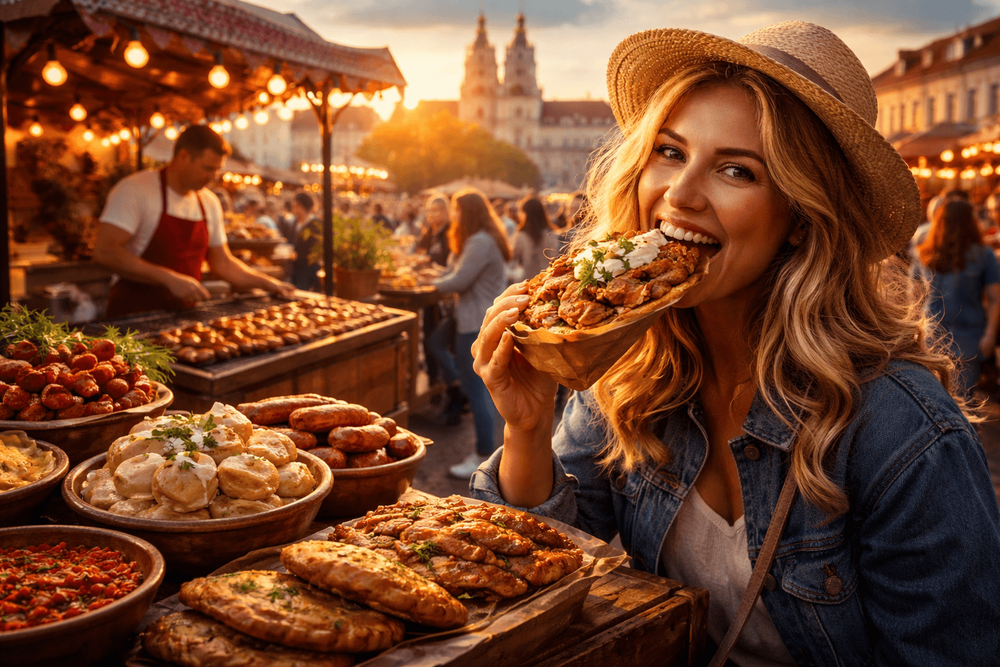
On a crisp Minsk morning, steam spirals from a griddle, and the scent of butter and potatoes drifts across a market lane. Vendors call out prices over the soft thud of dough against a wooden board; a ladle of tangy smetana lands with a hush across golden pancakes. This is the best street food in Belarus—unpretentious, rib-sticking, and rooted in fields, forests, and farmhouse kitchens—served fast, eaten standing, and remembered long after the last bite.
Best Street Food in Belarus: The Essentials
Belarus’s street food is a portrait of its terroir: potatoes and dairy, gentle aromatics, and a respect for honest, well-seasoned cooking. Start with these must-try staples.

Snow Peak Titanium Sporks, Lightweight Titanium Cutlery for Camping & Hiking, Compact & Portable Utensil for Easy Packing, Durable Camping Cookware Accessories
View on AmazonDraniki (дранікі)
The national favorite, these crisp-edged potato pancakes fry to a latticed gold, tender inside and freckled with salt and black pepper. On the street they arrive blistering-hot on a paper plate, typically dolloped with smetana (sour cream) or mushroom sauce. They represent Belarusian street food at its most essential: humble ingredients, masterful technique, and the kind of warmth that chases off a northern wind.
Pirozhki (пирожки/піражкі)
Hand-sized, yeasted buns—baked or fried—pirozhki come stuffed with cabbage, mashed potato, mushrooms, minced meat, or sweet cottage cheese. Bite through a shiny, egg-brushed crust to the savory-sweet steam within. Sold from market counters and station kiosks, they’re the commuter’s snack of choice and a direct line to the Soviet-era canteen culture that still shapes Belarusian comfort food.
Syrniki (сырники/сырнікі)
Pan-fried patties made from tangy tvorog (quark), syrniki are lightly sweet, crisped at the edges, and custardy inside. Dusted with sugar and served with jam, honey, or smetana, they taste like breakfast turned street treat. Expect the perfume of vanilla and butter, a soft squeak from the curd, and a satisfying heft despite their dainty look.
Kolduny (калдуны)
The name means “little sorcerers,” and there’s a magic to these potato dumplings. Grated potato forms a tender shell around a core of garlicky minced meat, often seared on a griddle and finished in butter. Street-side, they arrive with golden skirts from the pan and a pool of mushroom cream—hearty, earthy, and deeply Belarusian.
Chebureki (чебуреки)
A Crimean Tatar classic embraced across the region, chebureki are deep-fried half-moons of thin dough encasing juicy ground meat and onion. The first crackly bite releases a savory torrent—carry napkins. Belarusian versions often lean pork-beef with black pepper and a hint of cumin; look for a splash of vinegar or adjika on the side.
Grilled Sausages and Shashlik (каўбаса/колбаса; шашлык)
At fairs and evening markets, smoke drifts from braziers where kaŭbasa (sausage) sizzles alongside skewers of pork shashlik. Expect coarse-ground links with a garlic-dill profile, brushed with mustard or horseradish, and tucked into a soft roll. The char speaks of birchwood embers; the snap gives the street its soundtrack.
Where to Find the Best Street Food in Belarus
Belarus’s appetite gathers where the people are: central markets, underpasses near stations, pedestrian streets at dusk, and seasonal festivals that turn squares into open-air kitchens. Here’s where the hunt becomes a pleasure.
Minsk: Markets, Murals, and Morning Griddles
- Komarovsky Market (Kamarouka/Комаровский рынок) is the capital’s belly. Inside, dairy counters gleam with tvorog for syrniki; just outside, griddles crisp draniki to order. Seek out the alleys where queues form—Belarusians know their pancakes.
- Along Kastryčnickaja (Oktyabrskaya) Street, Minsk’s mural corridor mixes food trucks, craft beer, and pop-up grills in warmer months. Evenings bring chebureki and kaŭbasa perfumed with smoke.
- Around Minsk-Passazhirsky railway station, underpasses host kiosks with pirozhki, meat pies, and sweet buns ready for the next departure.
Those basing themselves in the Upper Town will find dawn-to-dusk snacking within easy walks. The Monastyrski Hotel (booking-url) occupies a converted monastery with a tranquil courtyard—ideal for a late-morning return after syrupy syrniki and coffee.
For deeper dives into local flavors beyond the curb, see Savoring Belarus: How and Where to Find Authentic Local Cuisine (/experiences/finding-local-cuisine-in-belarus).
Brest: Border Breeze, Pedestrian Strolls
- Sovetskaya Street turns pedestrian from late afternoon, with carts and kiosks hawking chebureki, sausages, and warm pirozhki. In winter, look for hot sbiten (spiced honey tea) to cradle between gloved hands.
- Brest Central Market supplies a steady stream of dairy and produce; outside, courtyard stalls fry up potato specialties by the plate.
- Near Brest Fortress, seasonal vendors sell shashlik and chebureki to visitors making a day of memorials and river walks.
Overnighting near the action makes evening grazing effortless. The Hermitage Hotel (booking-url) pairs empire-style glamour with a quiet-luxe bar—polished enough for a nightcap after street snacks.
Grodno (Hrodna): Castle Views, Corner Kiosks
- Around Sovetskaya Square and the pedestrian old town, kiosks peddle warm buns and grilled meats as dusk paints the Old and New Castles amber. Linger for a sausage and mustard while street musicians tune up.
- Grodno Central Market is compact but generous. Follow the smell of frying butter to kolduny counters; you’ll spot locals returning trays to a central point—a sign of quick turnover and fresh pans.
For a well-situated base, Semashko Hotel (booking-url) offers easy walks to the old town’s snack corridors and the Neman riverfront.
Hubs, Highways, and Seasonal Pop-Ups
- Train and bus stations across the country—Vitebsk, Baranavichy, Hrodna—feature underpass bakeries and mobile kiosks selling pirozhki, samsa, and coffee. Early trains mean freshly-baked buns pushing steam through hand-warm paper.
- Summer brings lake life to Narach and Braslaw Lakes, where beachside shashlik stands and corn-on-the-cob vendors pop up beside birch groves.
- In Minsk, winter holiday markets near the Palace of Sports and October Square dish out draniki, sausages, and mulled drinks under fairy lights. During Maslenitsa (pre-Lent Pancake Week), look for blini griddles in city squares.
Budget-focused travelers who want a hostel near markets will find smart picks across cities in Best Hostels in Belarus: Top Picks, Practical Tips, and Local Experiences (/experiences/best-hostels-belarus-top-picks-practical-tips-local-experiences). And for value strategies—what to order, when to go—scan Budget Bites in Belarus: Where to Eat Cheap and Eat Well (/experiences/cheap-eats-in-belarus).
What You’ll Taste: Ingredients, Methods, Variations
Belarusian street cooking translates cottage-kitchen staples into grab-and-go form.
- Core ingredients: potatoes (grated or mashed), wheat flour for doughs, tvorog (quark), smetana (sour cream), eggs, onions, garlic, and mellow herbs like dill and parsley. Pork and beef dominate; mushrooms star in sauces. Sunflower or rapeseed oil is common for frying.
- Palate: gently seasoned rather than spicy. Expect black pepper, bay leaf, and the occasional caraway. Heat comes more from horseradish and mustard than chilies.
- Frying vs. baking: draniki, syrniki, and chebureki are pan- or deep-fried for speed and texture; pirozhki can be fried or oven-baked, the former glossy and crisp, the latter soft and bready.
- Regional notes: in the forested north, mushrooms creep into gravies; near the Polish and Lithuanian borders, you’ll find more rye breads and tangy dairy touches. Urban stalls sometimes offer chicken or turkey fillings as lighter alternatives to pork.
- Texture expectations: syrniki should be tender with a browned crust; draniki thin enough to lace at the edges; chebureki blistered and audibly crisp; sausage with a snap, not a crumble.
Street-Smarts: Prices, Phrases, Hygiene, Timing
A little local know-how makes street snacking seamless.

Purell Advanced Hand Sanitizer Refreshing Gel, Clean Scent, 1 Fl Oz Travel Size Flip-Cap Bottle with Display Bowl (Pack of 36), 3901-36-BWL
View on Amazon
Lonely Planet Russian Phrasebook & Dictionary: Lonely Planet, Jenkin, James, Taylor, Grant
Order the right meal with our menu decoder Never get stuck for words with our <strong>3500-word two-way dictionary</strong> We make language easy with shortcuts, key phrases & common Q&As Feel
Check Price on Amazon- Prices: street portions are generally wallet-friendly. Expect typical single items like pirozhki, syrniki (2–3 pieces), or a cheburek to range from budget to mid-range for Belarus—often a fraction of a sit-down meal. Combo plates of draniki with sauce or a grilled sausage with sides cost more but remain good value. Prices shift with season and venue; markets and station kiosks are usually cheapest.
- Paying: many vendors now accept cards and contactless, but small cash notes are handy, especially at pop-ups and rural fairs.
- When to go: mornings for syrniki and freshly-baked pirozhki; late lunch to early evening for grills and chebureki. Weekends bring the most variety at markets; winter stalls wind down earlier.
- Ordering phrases:
- “One portion, please.” RU: «Одну порцию, пожалуйста.» BY: «Адну порцыю, калі ласка.»
- “With/without sour cream.” RU: «Со/Без сметаны.» BY: «З/Без смятаны.»
- “To go.” RU: «С собой.» BY: «З сабой.»
- “How much is it?” RU: «Сколько стоит?» BY: «Колькі каштуе?»
- “I don’t eat pork.” RU: «Я не ем свинину.» BY: «Я не ем свініну.»
- “I’m allergic to … [milk, nuts, wheat].” RU: «У меня аллергия на … [молоко, орехи, пшеницу].» BY: «У мяне алергія на … [малако, арэхі, пшаніцу].»
- Hygiene cues: favor stalls with visible griddles, steady queues, and food cooked to order. Hot foods should be hot; oil should be clear rather than dark and smoky. Look for tongs and gloves at busy counters; avoid pre-cut garnishes sitting uncovered. Carry tissues and hand sanitizer, and bin waste—market crews work hard to keep lanes clean.
- Allergy and dietary notes: gluten is common in doughs; dairy pervades sauces and syrniki; pork appears in many fillings. Vegetarian options exist (mushroom, cabbage, potato pirozhki; plain draniki), but cross-contact is likely at mixed griddles. Vegan choices are limited outside major cities.
Culture on a Napkin: Origins, Pairings, Etiquette
Street food here is less “fad” than continuation: markets were public dining rooms long before food trucks became fashionable. Potatoes, introduced widely in the 18th century, became Belarus’s culinary backbone; draniki evolved where grating met butter and cast iron. Syrniki speak to a centuries-old dairy culture, farm-made quark bound with egg and flour for a portable cake. Pirozhki and chebureki reflect imperial and Soviet-era migrations—recipes that traveled along rail lines and stayed. Kolduny’s name, “sorcerers,” nods to their sleight-of-hand filling, a cook’s trick that still delights.
To drink:
- Kvass: a lightly fermented rye-bread beverage, mild and malty, poured from barrel-like kiosks in summer. It’s the classic partner to hot, salty snacks.
- Compote and mors: fruit infusions (think cherry, blackcurrant, cranberry) that cool the palate and please children and non-drinkers.
- Local beer: Alivaria (Alivaryja) and Lidskoe are easy finds; lagers and light ales pair especially well with sausages and chebureki.
- Seasonal sips: sbiten in winter for warmth; birch sap in early spring—pale, refreshing, faintly sweet.
Street etiquette is simple: order, step aside for the next guest, and claim a standing ledge or high table. Sharing a plate is common; offer the first piece to companions. There’s no haggling; tipping at a kiosk isn’t expected, though rounding up small change draws smiles. Ask before photographing people at their stalls—most say yes, proud of the craft they’re keeping alive.
As the day closes on a Minsk square or a Grodno side street, a last plume of grill smoke fades to evening. Fingers warm from a paper cup of kvass, travelers carry the flavor of Belarus in the way it’s meant to be carried: simply, generously, and on the move.
Recommended Travel Gear
Lonely Planet Russian Phrasebook & Dictionary: Lonely Planet, Jenkin, James, Taylor, Grant
Order the right meal with our menu decoder Never get stuck for words with our <strong>3500-word two-way dictionary</strong> We make language easy with shortcuts, key phrases & common Q&As Feel
Purell Advanced Hand Sanitizer Refreshing Gel, Clean Scent, 1 Fl Oz Travel Size Flip-Cap Bottle with Display Bowl (Pack of 36), 3901-36-BWL
By adding to office reception areas or breakrooms, these travel-sized <strong>1 fl oz Personal Flip-Cap bottles</strong> show visitors and employees that you care about their well-being in the workpla
Snow Peak Titanium Sporks, Lightweight Titanium Cutlery for Camping & Hiking, Compact & Portable Utensil for Easy Packing, Durable Camping Cookware Accessories
Lightweight Titanium Spork: Snow Peak's durable and versatile flatware utensil for outdoor and camping adventures; perfect addition to any outdoor cookware set