Cairo After the Grand Museum: A New Era on the Nile
Cairo is in a new mood: museums reborn, heritage hotels revived, and Nile nights that stretch past midnight. Here’s how to spend 5–7 days diving into culture, from Giza and Fustat to downtown arcades—plus the river life that ties it all together.
Trip Length
5-7 days
Best Time
October to March
Mood
cultural
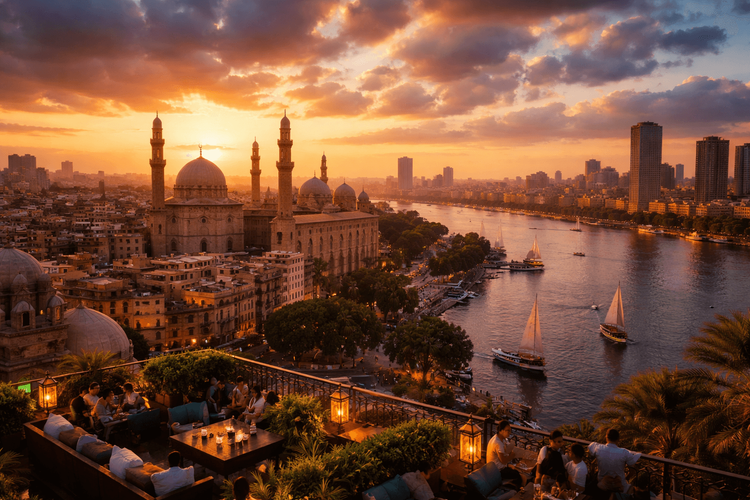
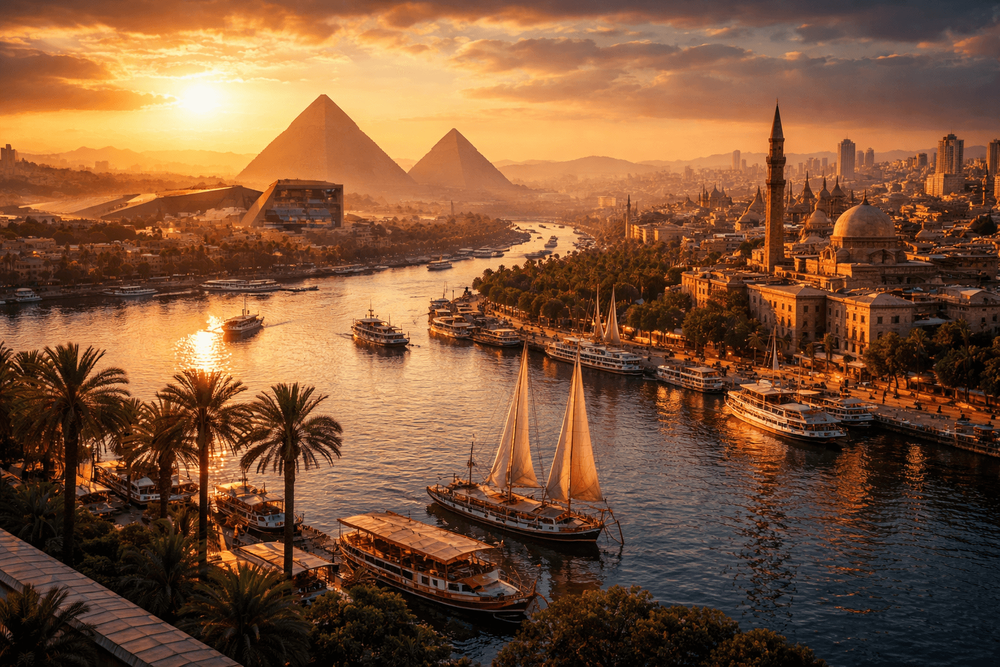
You catch it at midnight: the river slipping past like pressed silk, feluccas tilting under strings of lanterns, bridge lights sketching gold ladders on the water. Cairo feels awake in a new way. The Grand Egyptian Museum gleams out by Giza; downtown’s belle époque facades are scrubbed and lit; heritage hotels pour fresh life onto their terraces. It’s the moment when your list of things to do in Cairo quietly expands—beyond pyramids, beyond clichés—into a city that’s remixing its own past.
A city rewriting its story along the Nile
Cairo has always held multitudes—Pharaonic wonders, Fatimid alleys, Coptic sanctuaries—but lately the city has sharpened the focus of its cultural lens. The Grand Egyptian Museum near the Giza Plateau has drawn global attention back to the capital’s western horizon, while the National Museum of Egyptian Civilization in Fustat anchors a new museum district beside Old Cairo. The venerable Egyptian Museum on Tahrir Square continues to surprise with its atmospheric galleries, and the Museum of Islamic Art’s collection rewards unhurried eyes with woodwork, metalwork, and calligraphy that decode a millennium of design.
The reboot isn’t just about museums. Downtown’s arcades and theaters have been steadily restored, revealing stucco cherubs, iron balconies, and marble staircases that hint at Cairo’s late-19th-century grandeur. Grande dames along the river have reopened their lobbies, bars, and gardens after renovations, and Zamalek’s embassies-and-art galleries rhythm returns with openings that slide into night. Even the way the city socializes has shifted back to the water: promenades are busier, felucca captains linger longer after sunset, and floating venues turn the Nile into a stage.
Essential things to do in Cairo now
Open the day among stone and shadow. Time an early start on the Giza Plateau, when the sun lifts and the crowds haven’t yet gathered. Pair it with an afternoon at the Grand Egyptian Museum, where colossal statuary, intricate funerary art, and contemporary scenography connect the desert’s silhouettes to the civilization that raised them. If you have another half-day, add Saqqara to trace the architectural leap that made pyramids possible.
Stitch two eras in Fustat. Old Cairo concentrates layers of faith: the Hanging Church and the Coptic Museum hold early Christian art and carved screens, while nearby mosques unfurl courtyards and minarets. The National Museum of Egyptian Civilization sits just south, its celebrated hall of royal mummies calibrated for quiet, respectful pacing.
Walk the geometry of Islamic Cairo. The historic core rewards a slow line beneath mashrabiya windows and beneath stone vaults cooled by centuries. Thread past the Mosque of Ibn Tulun and sip a mint tea within sight of a minaret; explore the Khan el-Khalili souq for metalwork, spice pyramids, and perfumes; time a terrace stop to hear the overlapping adhan ripple across domes at dusk.
Read downtown’s architecture like a book. Start at Tahrir, then wander Talaat Harb and its side streets to find restored theaters, high-ceilinged bookstores, and galleries tucked behind colonnades. Pause at a cafe that still serves on heavy white china, and look up—much of the drama is on the second and third floors.
Let the river set the agenda after dark. Sunset glows into live music on floating stages, families stroll the corniche with paper cones of nuts, and feluccas slide out with birthday cakes and drumbeats. Cairo’s late-night Nile culture isn’t about spectacle; it’s about being part of the city’s rhythm, a drifting salon where conversation stretches past midnight.
Taste the city’s everyday cuisine. Follow the lunchtime queue for a bowl of koshary built in layers; share grilled meats with flatbread and tahina; order fried mullet or tilapia at a simple seafood joint overlooking the river. Coffee culture is alive—strong, dark, sometimes cardamom-laced—and juice stands turn pomegranate and sugarcane into fuel for another museum, another stroll.
Make time for the small museums and mansions. The Gayer-Anderson Museum, attached to the Mosque of Ibn Tulun, preserves two linked houses dressed in Syrian wood panels and Ottoman curios; the Islamic Art Museum and the Coptic Museum deserve unhurried visits. Across Heliopolis and Garden City, restored palaces occasionally open for tours—check locally for current access.
A one-week cultural rhythm
If you have 5–7 days, Cairo rewards a pace that alternates depth with drift.
Day 1–2: Anchor yourself with antiquity. Start with Giza at dawn, then take your time at the Grand Egyptian Museum in the afternoon, breaking for coffee on a terrace with a line on the river. On day two, head south to Saqqara and Memphis in the morning; return to Zamalek or Garden City for a gallery hop and an evening felucca.
Day 3: Fustat and Old Cairo. Pair the Coptic quarter and the Coptic Museum with the National Museum of Egyptian Civilization. Linger over lunch in nearby neighborhoods, then climb up to a panoramic park in the late afternoon to watch the city glow as the call to prayer rolls like a wave.
Day 4: Islamic Cairo on foot. Start at Ibn Tulun, loop into the Khan el-Khalili area, and step inside historic mosques where permitted (dress modestly). Choose one restored caravanserai or sabil-kuttab to understand how water, trade, and learning flowed through the medieval city. As night falls, find a cafe that faces a minaret and let time slow.
Day 5: Downtown details. Explore the early-20th-century grid: theaters, arcades, and courtyards where salons once argued about poetry and politics. Pop into a bookshop that has weathered every chapter of modern Egypt and catch an evening performance if timing aligns.
Day 6–7: Choose your Cairo. More art and design in Zamalek; a pottery workshop in Fustat; a morning food walk; a day trip to the newer archaeological work around Dahshur; or simply more river time. The best things to do in Cairo are not a checklist; they’re a series of conversations—with craft, with stone, with water.
How to get there and around
Flights: Cairo International Airport (CAI) is the primary gateway, served by a wide network of carriers from Europe, Africa, the Middle East, and beyond. Many long-haul flights arrive late evening or early morning, which can make for a smooth city transfer.
Arrival: Immigration is straightforward; many nationalities use an e-visa system or obtain visas on arrival—verify requirements with official sources before you fly. ATMs are inside the arrivals hall, and local SIMs and eSIMs are widely available from major providers. Official airport taxis, pre-arranged hotel cars, and ride-hailing apps operate 24/7.
Moving around: Traffic is real but navigable. The Metro is efficient for hops between key central districts, and ride-hailing works well when you want door-to-door. For short river crossings, consider the bridges on foot at sunset; for the scenic route, private feluccas can be hired by the hour from docks on both banks.
What to expect on arrival
Cairo moves with confidence. Security screening is standard at major museums, metro stations, and malls—plan a few extra minutes. Friday is the main congregation day; opening hours can shift, and some cafes wake later. Dress is diverse; modest clothing eases entry at religious sites. Credit cards are accepted in many hotels, larger restaurants, and museums, but small purchases are easier with cash. Tipping is part of the service culture; keep small bills handy.
Why Cairo now
Because the city has learned to speak in harmony with its own layers. The pyramids still scratch the horizon, but the conversation has widened: galleries inside belle époque shells, museum halls that reframe old narratives, river nights that feel like a soft reset. The current list of things to do in Cairo reaches from dawn over limestone to midnight on the water—and it keeps growing.
Come in the cool, clean light between October and March. Wake early, walk slowly, and let the Nile decide your evenings. Cairo is rewriting itself in real time; the only way to read it is to go.
Where to Stay

Steigenberger Hotel El Tahrir
Steigenberger Hotel El Tahrir is a 4-star Cairo stay near Tahrir Square and the Egyptian Museum, offering modern rooms, an outdoor pool, fitness facilities, and easy access to the city center.

Le Méridien Cairo Airport
Le Méridien Cairo Airport is a 5-star hotel next to Cairo International Airport, offering modern rooms, a pool, fitness center, multiple dining options, and a convenient stay for transit travelers and business guests.

Fairmont Nile City
Fairmont Nile City is a 5-star Cairo hotel on the Nile, close to downtown and major sights, with elegant rooms, multiple dining options, a spa, outdoor pool, and river views.

Cairo Marriott Hotel
Set on the Nile in central Cairo, Cairo Marriott Hotel offers historic palace-style accommodation with multiple dining options, a pool, spa, and fitness center, placing guests close to the city’s main attractions.

Le Passage Cairo Hotel & Casino
Le Passage Cairo Hotel & Casino is a 5-star stay in Cairo with easy airport access, offering modern rooms, multiple dining options, a casino, outdoor pools, a spa, and shuttle service for transit and city stays.