
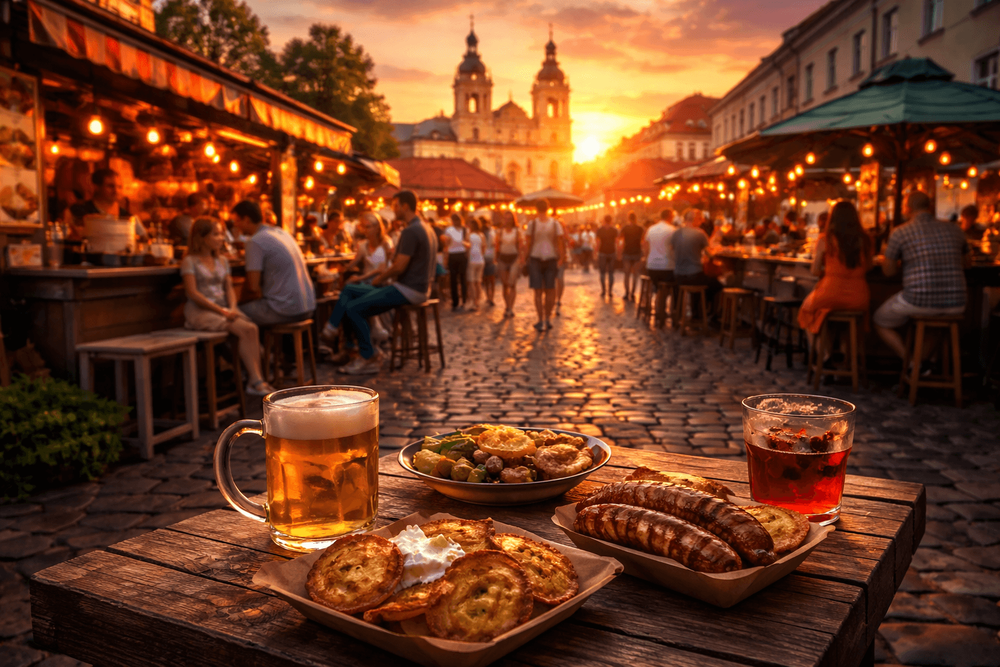
Budget Bites in Belarus: Where to Eat Cheap and Eat Well
A city‑by‑city guide to cheap eats in Belarus—signature dishes, real prices, market hotspots, phrases to order like a local, and smart tips to eat well for less.
Mood
Budget Foodie Adventure
The scent of dill and sizzling butter hangs over a market aisle as a vendor flips golden potato pancakes on a cast‑iron griddle. A frosty plastic cup of kvas beads in the morning sun. Nearby, a grandmother in a floral scarf tucks syrniki into a paper bag, still warm. This is the everyday romance of cheap eats in Belarus—honest food, served fast, for coins that jingle rather than notes that crinkle.
Cheap Eats in Belarus: What to Order and Where to Find It
Belarusian cooking was built for hearty appetites and lean budgets. The national pantry—potatoes, beets, mushrooms, buckwheat, cabbage, cottage cheese—translates into filling plates that rarely dent a wallet. To eat well for less, look to these staples and the venues that specialize in them.
- Draniki: Crisp‑edged potato pancakes, often pan‑fried with onion and served with sour cream (smetana) or mushroom sauce. In cafeterias and market stalls, a plateful arrives fast and hot.
- Borscht: A beet‑bright, herb‑rich soup, sometimes studded with beans or shreds of beef. Even in winter, a steaming bowl stays an unbeatable budget order.
- Kulebyaka and pirozhki: Stuffed pies—bready or flaky—filled with cabbage, potato, mushroom, or minced meat. Eaten by hand, they’re perfect walking snacks.
- Syrniki: Tangy cottage‑cheese pancakes, sweetened and browned, typically served with sour cream or berry jam. An inexpensive breakfast or dessert.
- Kvas: A lightly fermented, malty drink poured from barrels or taps; summer’s answer to a soda, with old‑world character.
Where to find them cheaply:
- Stolovayas (canteen cafeterias): Institutional‑looking, yes; beloved, absolutely. These self‑service lines—often near universities, offices, and factories—ladle out soups, salads, and hot mains at prices designed for the lunch rush. Trays slide, portions are honest, and staff move with military precision.
- Market stalls and food counters: In every city, the central rynok (market) hides griddles and soup pots among the produce. High turnover keeps food fresh, and counter seating nudges conversation with locals.
- Railway station canteens and bufets: At major stations, look for a cafeteria upstairs or tucked near ticket halls. Expect classic plates, early opening hours, and prices aimed at travelers.
- Kiosks and street stands: From hot pirozhki to shaurma, kiosks keep late hours and low margins. If a line forms, the value’s there.
For a deeper primer on flavors and traditions—before narrowing to budget picks—see Savoring Belarus: How and Where to Find Authentic Local Cuisine (/experiences/finding-local-cuisine-in-belarus).
Prices, Portions, and Smart Tactics
Expect prices to vary by city and venue, but these ballpark ranges will keep a budget on course. Amounts below are approximate and can shift; always check posted menus.
Lonely Planet Russian Phrasebook & Dictionary: Lonely Planet, Jenkin, James, Taylor, Grant
Order the right meal with our menu decoder Never get stuck for words with our <strong>3500-word two-way dictionary</strong> We make language easy with shortcuts, key phrases & common Q&As Feel
Check Price on Amazon- Soups (borscht, sorrel, chicken noodle): BYN 3–6 per bowl
- Draniki (2–4 pancakes, with sour cream): BYN 6–12 per plate
- Pirozhok (hand pie), per piece: BYN 1–3
- Kulebyaka slice: BYN 4–7
- Syrniki (2–3 pieces): BYN 4–8
- Kvas, compote, or mors: BYN 1.5–3 for a cup
- Shaurma or stuffed lavash: BYN 7–12
- Cafeteria lunch set (soup + main + bread, weekday): BYN 9–15
Money‑saving moves that locals swear by:
- Chase the set lunch: Look for “комплексный обед” (kompleksny obed) or “бизнес‑ланч” (business lunch) on weekday menus, usually 12:00–16:00. A soup‑plus‑main combo undercuts ordering à la carte.
- Share starch, split proteins: Canteen mains can be generous. Order one meat dish and one side—buckwheat (grechka) or potatoes—and split across two plates.
- Add bread, skip extras: Bread may be free or a token add‑on. Sour cream and sauces can add up; request “сметана отдельно” (smetana otdel’no—sour cream on the side) and use lightly.
- Go early or right at turnover: Fresh trays land at 12:00 and 18:00. Show up then for the best choice.
- Student menus: Some canteens near campuses post a “студенческое меню.” If asked for ID and you don’t have it, pivot to the standard lunch set—it’s often just a few rubles more.
Useful menu and ordering phrases (Russian first, then Belarusian; both widely understood):
- Hello/please/thank you: Здравствуйте / Пожалуйста / Спасибо (Zdravstvuyte / Pozhaluysta / Spasibo); Добры дзень / Калі ласка / Дзякуй (Dobry dzen’ / Kali laska / Dzyakuy)
- How much is this?: Сколько это стоит? (Skol’ko eto stoit?); Колькі гэта каштуе? (Kol’ki heta kashtue?)
- Card or cash?: Оплата картой? (Oplata kartoy?); Аплата карткай? (Aplata kartkay?)
- To go / for here: С собой / Здесь (S soboy / Zdes’); З сабой / Тут (Z saboy / Tut)
- Without meat: Без мяса (Bez myasa); Без мяса (Bez myasa in Belarusian as well)
- I don’t eat pork: Без свинины (Bez svininy); Без свініны (Bez svininy)
- Half portion (if offered): Полпорции (Polportsii); Паўпорцыі (Pauportsyi)
Minsk, Brest, Grodno, Vitebsk: Where to Eat Well for Less
Belarus’s cities each have a beating, budget‑friendly heart. Follow the markets and the office‑hour cafeterias, and the rest falls into place.
Minsk
- Komarovsky Market (Komarovka): Minsk’s great pantry. Outside, wooden barrels of kvas and kiosks hawking pirozhki; inside, dairy counters groan with tvorog and farmers’ cheese. A handful of cooked‑food stands serve borscht, stuffed cabbage, and salads by weight. Go mornings for first pick; bring cash for the quickest transactions.
- Railway Station (Minsk‑Passazhirsky) area: In and around the station, look for a stolovaya or bufet upstairs—reliable for early soups and cutlets at commuter prices. Nearby underpasses shelter kiosks with hand pies and hot böreks.
- Self‑service chains: Lido (Лидо) remains the city’s best‑known cafeteria line—trays, glassed‑in counters, and Belarusian classics for modest sums. Vasilki (Васількі) leans homier, with potato pies, draniki, and compotes; at lunch, the tab stays friendly.
- Neighborhood canteens: Business districts ringed by concrete blocks hide excellent stolovayas. A line of workers is the only sign you need.
Where to stay near the action: A clean, social base like the Trinity Hostel Minsk puts travelers a quick tram ride from Komarovka and the railway canteens, with a communal kitchen for market‑fresh breakfasts. For more on budget‑friendly stays across the country, see Best Hostels in Belarus: Top Picks, Practical Tips, and Local Experiences (/experiences/best-hostels-belarus-top-picks-practical-tips-local-experiences).
Brest
- Central Market (Brestskiy Rynok): A block or two from Sovetskaya Street’s promenade, this market combines produce with hot counters selling stuffed pancakes, buckwheat cutlets, and steaming borscht. Expect fair prices and quick turnover.
- Station Canteen: Brest’s station area has long catered to through‑travelers; look for a no‑nonsense cafeteria for early, hearty plates before trains depart for Poland.
- Sovetskaya Street kiosks: In the evening, walk the lantern‑lit street and follow your nose to stalls turning out savory crepes and pies.
Stay smart: The Sovetskaya Street Guesthouse occupies a modest townhouse near the promenade—simple rooms, warm hosts, and proximity to market snacks that make late‑night arrivals painless.
Grodno (Hrodna)
- Central Market by the Old Castle: Shoppers come for berries and smoked fish; budget eaters come for stuffed cabbage, beet salads, and mushroom‑studded buckwheat sold by weight. Cash keeps the line moving.
- Old Town side streets: Between Sovietskaya Square and the river, small cafeterias do brisk lunch trade—look for signage reading “Столовая,” and step in for rotating daily menus.
Value base: Old Town Apartments Grodno offers kitchenette‑equipped studios in handsome pre‑war buildings. With the market nearby, dinner might be a basket of chanterelles, fried up at home.
Vitebsk
- Vitebsk Central Market (near Victory Square): In summer, it’s all cherries and cucumbers, with counters pouring chilled kvas and ladling beet soup. Year‑round, expect hot mains, dumplings, and syrniki to go.
- Around Kirova Street: A few straightforward canteens sustain office workers with cutlets and soups. Arrive just before the lunch rush to beat the queue.
Festival note: During Slavianski Bazaar, pop‑up kiosks mushroom around concert venues. Prices edge up, but variety blooms—grilled meats, potato pies, and frozen treats. For seasonality and timing tips, When to Visit Belarus: Best Months for Weather, Wildlife, Festivals & Low‑Season Travel (/experiences/best-time-to-visit-belarus) keeps the calendar in focus.
Reading the Board: How Cafeterias Work
- The flow: Grab a tray and silverware; point or name dishes at the glass counter. Salads and cold starters come first, soups next, then hot mains and sides, and finally breads and desserts.
- Pricing: Mains are usually per portion; salads and sides may be by weight. If ordering by weight, you’ll see the per‑100g price: “за 100 г.”
- Condiments: Bread may be self‑serve; sour cream, mustard, and pickles sometimes cost extra. Ask “Хлеб включён?” (Is bread included?).
- Seating: Pay at the register, take a seat, and bus your tray. In many stolovayas, diners return cutlery to bins and sort waste after eating.
Dietary Workarounds on a Budget
- Vegetarian: Look for mushroom soups, potato pancakes without meat sauce, buckwheat with sautéed mushrooms, vinegret (beet‑potato salad), cabbage pies, potato‑and‑cheese vareniki, and syrniki. Say “Без мяса, пожалуйста” (Bez myasa, pozhaluysta—without meat, please).
- Vegan: Options narrow but exist—draniki without egg (ask), boiled potatoes with dill, pickled salads, cabbage stews, mushroom‑buckwheat plates, and vegetable pirozhki. Confirm “Без молока и яиц?” (Bez moloka i yaits?—without milk and eggs?).
- Gluten‑light: Rely on potatoes, buckwheat (grechka), rice, and grilled meats. Pirozhki and kulebyaka are wheat‑based; soups sometimes contain noodles or flour thickeners, so ask “Без муки?” (Bez muki?—without flour?).
- Allergens: Mayonnaise is a frequent guest in salads. If avoiding, say “Без майонеза” (Bez mayoneza).
Payment, Safety, and Street‑Smart Tips
- Currency and cards: The Belarusian ruble (BYN) rules. In markets and kiosks, cash is fastest and sometimes required; larger cafeterias and chains typically accept local bank cards and often international ones, but connectivity and sanctions can affect acceptance. Carry a cash cushion for small vendors and backup.
- ATMs and exchange: Use bank ATMs for withdrawals and official exchange offices for currency swaps. Avoid street moneychangers.
- Hygiene: Choose stalls with steady lines and hot turnover. Soups should steam; mayonnaise salads should stay chilled. If a dish sits under heat lamps past its prime, pivot.
- Water: Tap water is generally safe in cities, but locals often prefer filtered or bottled. A 1.5‑liter bottle runs about BYN 1–2 in shops.
- Late nights: Kiosks near stations and in underpasses stay open late, serving shaurma, pies, and tea. Keep valuables close and stick to lit, busy stretches.
Amazon.com | VENTURE 4TH Neck Wallet for Women & Men – RFID Blocking Passport Holder for Travel, Hidden Neck Pouch with 6 Compartments, Slim Lightweight Travel Organizer with Adjustable Strap (Beige) | Passport Wallets
View on Amazon
Amazon
View on AmazonEtiquette and Tipping—Eating Like a Local
- Queues are respected: Hold your place, point politely, and don’t hover at the counter. A nod and “Спасибо” goes a long way.
- Self‑service rhythm: Return trays, separate cutlery, and wipe a crumb or two—small courtesies that keep prices low and lines flowing.
- Sharing is normal: One soup, one main, two spoons; no one will blink. Just don’t occupy a table long after you finish during peak hours.
- Tipping: Not expected in markets, kiosks, or classic stolovayas. In sit‑down restaurants or modern cafes, 5–10% is appreciated for good service. There’s rarely a service charge.
For readers wanting to contextualize table manners within broader custom and tradition, Authentic Cultural Experiences in Belarus: Traditions, Castles, and Contemporary Life (/experiences/authentic-cultural-experiences-in-belarus) offers useful background.
A Sample BYN 15 Day
- Breakfast at a market counter: Syrniki with jam (BYN 5) + tea (BYN 2) = BYN 7
- Lunch at a stolovaya: Borscht (BYN 4) + buckwheat cutlet (BYN 6) + bread (included) = BYN 10
- Afternoon recharge: Cup of kvas (BYN 2)
- Dinner on the move: Pirozhok (BYN 2) + cucumber‑tomato salad by weight (BYN 3) = BYN 5
Total: BYN 24 for a well‑fed day. Trim by splitting mains, skipping the salad at dinner, or catching a lunch special, and the number falls into the teens.
Chains and Signs You Can Trust
When in doubt, follow the cafeterias that locals trust. Lido and Vasilki sit at the top of the self‑service pyramid, but independent stolovayas—often named simply “Столовая №…”—are where the best bargains hide. Menus scribbled on chalkboards, the day’s soups posted by the door, trays clattering at noon—these are the signals.
Travelers angling for an even leaner overall budget can fold dining savings into a bigger plan—see What’s the Cheapest Country to Visit in 2026? An Insider Budget Travel Guide (/experiences/cheapest-country-to-visit-2026-guide) for macro‑level tips that dovetail nicely with Belarus’s value.
The Image to Take Away
A winter day ends with snow squeaking underfoot and the comfort of a cafeteria tray: beet soup breathing steam into the air, potato pancakes crackling at the edges, dill scattering like confetti. Cheap eats in Belarus aren’t about compromise. They’re about a kitchen logic—simple ingredients, seasonal instincts, and a culture that understands how to feed people well—that turns a handful of coins into a warm memory.
Recommended Travel Gear
Lonely Planet Russian Phrasebook & Dictionary: Lonely Planet, Jenkin, James, Taylor, Grant
Order the right meal with our menu decoder Never get stuck for words with our <strong>3500-word two-way dictionary</strong> We make language easy with shortcuts, key phrases & common Q&As Feel
Amazon
DURABLE - tough enough to survive ... as a spout cover to protect the mouthpiece · HEALTHY - made of 100% food-grade materials; <strong>free of BPA, BPS, PVC, phthalates, lead, and latex</strong> · VE
Amazon.com | VENTURE 4TH Neck Wallet for Women & Men – RFID Blocking Passport Holder for Travel, Hidden Neck Pouch with 6 Compartments, Slim Lightweight Travel Organizer with Adjustable Strap (Beige) | Passport Wallets
VENTURE 4TH RFID Blocking Travel Neck Wallet - <strong>Security Neck Pouch Passport Holder with Nylon Lining (Red)</strong>