Crete in Spring: Wildflowers, Village Taverns and the Island’s Return to Slow Travel
Swap summer crowds for wildflowers, village taverns, vineyard tastings, and gentle hikes. A one-week cultural guide to Crete in spring with practical tips to plan now.
Trip Length
1 week
Best Time
March–May
Mood
cultural
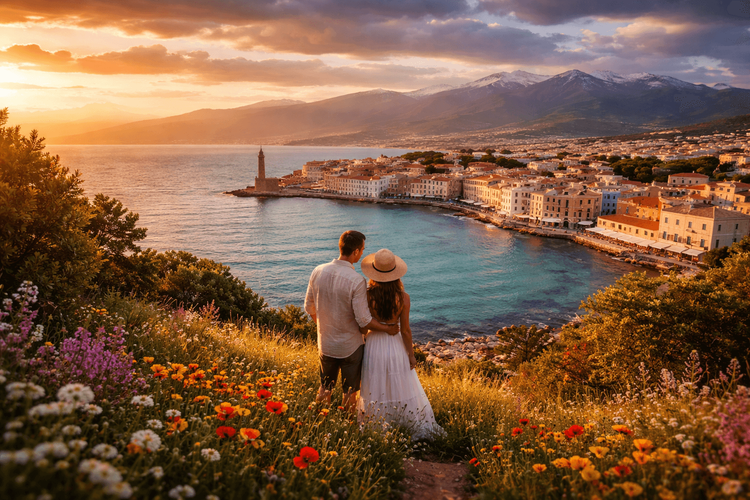
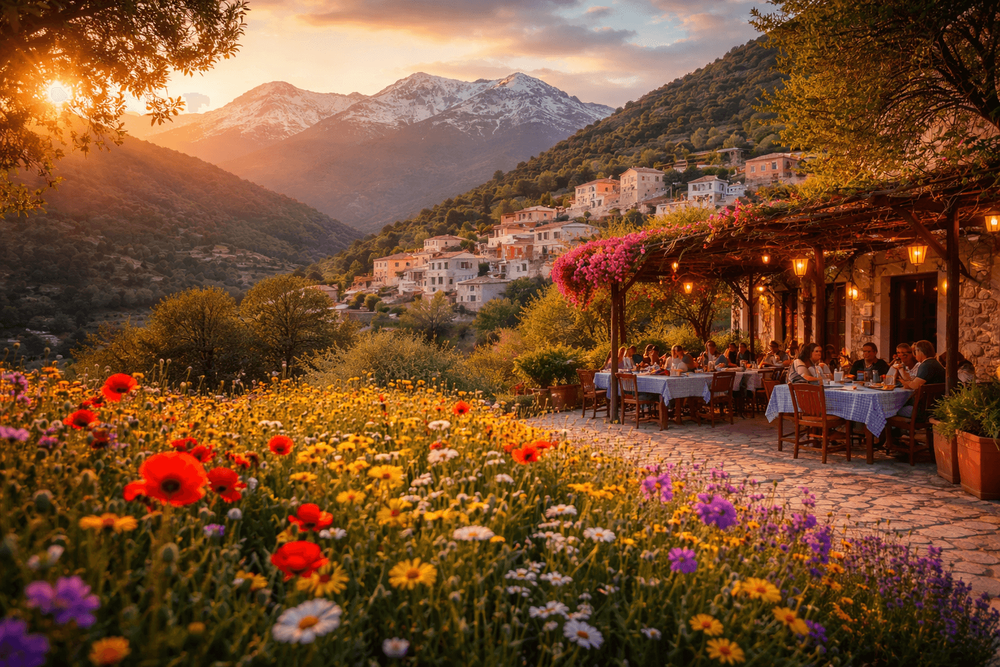
A goat bell sounds once, then again, somewhere above the olive terraces. The air smells faintly of thyme and damp rock. Along a low stone wall, poppies flare red against a field gone soft with daisies. This is Crete in spring, when the island loosens its shoulders after winter and before the crush of high summer. You’ll find yourself lingering over midday meals in village taverns, tracing quiet paths through gorges still echoing with runoff, and tasting young wines while swallows scribble across a wide blue sky.
Crete in spring: why this season changes everything
The island’s scale can intimidate in July and August; in shoulder season it becomes wonderfully humane. Roads feel spacious, historic towns breathe easier, and coastal postcard names—Balos, Elafonisi, Falasarna—shift from checklist to choice. The sea is cool, yes, but the trade is glorious: wildflowers freckling the hillsides, snow lingering on the Lefka Ori and Psiloritis ranges, and clear air that carries birdsong for what feels like miles. Local life sets the rhythm. Fishermen repair nets in harbors rather than ferrying sunbeds; vine growers watch new leaves unfurl; cafés tilt their chairs into sunlit squares while neighbors discuss the weather and the price of artichokes.
A one-week slow itinerary that stays inland—on purpose
You don’t need to tour the whole map. A week devoted to two bases gives you depth without hurry.
- Days 1–3: Western Crete from Chania and its hinterland. Wander the Venetian harbor and then leave it behind for Apokoronas villages, foothill hamlets like Vamos or Fres, and the orange groves that perfume the plains in spring. Hike quiet sections of the E4 trail above the coast, or choose a manageable gorge such as Imbros or Agia Irini; trails can be muddy early in the season, so go prepared and check local advice. The famed Samaria Gorge typically opens around May—weather permitting—so timing matters if it’s on your list. Even without it, ridge walks deliver sea-and-snow views that feel uniquely April.
- Days 4–7: Central Crete for wine, antiquity, and highland life. Base near Archanes or in the villages south of Heraklion to be close to the island’s heartland of vineyards and Minoan sites. Explore the archaeological heavyweights—Knossos in the hills above Heraklion, Phaistos surveying the Messara Plain—early or late in the day. Between them, wander to Dafnes or Peza appellation villages for cellar tastings. Spring is ideal for learning the island’s native grapes—Vidiano and Vilana on the white side; Kotsifali, Mandilari, and Liatiko among the reds—paired with olives cured by last autumn’s brine and creamy mizithra cheese drizzled with thyme honey.
Along the way, leave room for the south coast. If weather is stable, a boat hop or footpath between compact villages near Hora Sfakion reveals pebbly inlets, chapels with fading frescoes, and evenings that end with lyra music if you’re lucky. No deadlines, no big agendas: the island rewards the unhurried.
Vineyards, olive mills, and the joy of long lunches
Crete’s agrarian backbone is on proud display March through May. Vines wake slowly, olive trees glint silver-green in the breeze, and fields host a confetti of anemones and chamomile. Many wineries and small olive mills welcome spring visitors for tastings or short tours; call ahead or check hours locally as schedules can be fluid outside summer. The pleasure here is elemental: standing in a stone courtyard with a glass that tastes of citrus and scrub, while a grandmother sets down plates of horta (wild greens), snails sautéed with rosemary, and lamb slow-cooked with artichokes.
Village taverns are where spring becomes memory. Order what the kitchen is making that day: dolmades stuffed with herbs that grew twenty paces from your table; dakos crowned with chopped tomatoes once they arrive in late spring; goat braised with stamnagathi greens. Bread lands warm. Someone pours you a small glass of tsikoudia with dessert, which might be orange-scented cake or yogurt and spoon sweets. Conversation stretches. The island’s celebrated hospitality isn’t a performance here—it’s simply life, and in quieter months you feel invited into it.
Walks that smell of thyme and wet stone
Crete’s footpaths are not just for summer trekkers. In spring, the ground is soft, the light kind, and even short walks feel cinematic. Consider:
- Gorge rambles: Imbros and Agia Irini are shorter, with walls that glow amber in late afternoon. Sections can be slick after rain; good grip matters. Check locally for closures after storms.
- Foothill circuits: The villages around the White Mountains are laced with old mule tracks threading terraces and tiny chapels. A two-hour loop above Vamos or Armenoi delivers panoramic views without the commitment of a full-day hike.
- Plateau strolls: The Lasithi Plateau, encircled by mountains and dotted with orchards and small hamlets, is luminous in spring. An easy amble between villages shows off orchards in leaf and fields studded with irises.
Expect the island to surprise you with small finds: orchids along a path edge; a shepherd waving you toward a water source; church doors left open to reveal dim frescoes and a scent of beeswax.
Culture in the shoulder season
Crete wears its history in palimpsest layers—Minoan, Greek, Roman, Byzantine, Venetian, Ottoman—and in spring you can actually hear it. Museum rooms are calmer, site guides linger to answer questions, and frescoes read as clear stories rather than quick glances. If your timing aligns with Orthodox Easter, the island hums with ritual: candlelit processions, spit-roasted lamb, red-dyed eggs cracked in friendly competition. Dates shift each year; plan loosely and be ready to lean into serendipity.
Music and dance pulse through village life year-round, but spring weekends often bring informal gatherings. If you stumble upon one, you’ll see how the lyra pulls the room forward, how a line dance unspools across a courtyard, and how quickly strangers become part of the circle.
Practicalities: getting there, getting around
- Arrivals: The island’s two main gateways are Heraklion Airport (central) and Chania Airport (west). Ferries from Piraeus dock at Heraklion and at Souda Bay near Chania, a scenic overnight option if you want to sail into your week.
- Car hire: To explore villages, vineyards, and trailheads at your own pace, a rental car simplifies everything. Mountain roads narrow and twist; driving times are longer than maps suggest. Take your time and treat single-lane sections with courtesy.
- Buses and taxis: Intercity buses link major towns and many villages; spring schedules are more limited than summer. Taxis are widely available in towns and can be arranged by your guesthouse for remote pickups after hikes.
What to expect on arrival in spring
Days are mild to warm, nights cooler—layers will earn their luggage space. Winds can freshen, especially along the north coast. Some beach facilities and seasonal restaurants may still be preparing for summer or open only on weekends; that’s part of the appeal, driving you toward places that serve their neighbors first. The sea is refreshing rather than balmy; many prefer shore walks and cliffside picnics now, saving long swims for later months. Wildflower displays peak at different times depending on altitude and rainfall; even into May, higher paths can feel freshly painted.
Where to base yourself
- Chania Old Town or nearby villages: Sleep in a townhouse overlooking an alley perfumed with jasmine, then escape to foothill hamlets for walks and tavern lunches. The balance of culture and countryside is ideal for the first half of your week.
- Archanes or the wine villages south of Heraklion: Close to Knossos and the island’s densest patchwork of vineyards, these bases keep drives short and days varied—antiquity in the morning, tastings at noon, a siesta, then sunset over fields and low hills.
If you prefer the south, small settlements around Hora Sfakion or the Libyan Sea coast offer end-of-the-road quiet, reached by zigzag roads and rewarded by luminous evenings. Spring makes these places feel like they’re yours for a while.
Responsible, seasonal choices
Spring favors travelers who match the island’s pace. Support family-run guesthouses and taverns, buy olive oil and honey directly from producers, and tread thoughtfully on ancient stones and rural paths. Ask before photographing people, and park only where it won’t block farm access. These small courtesies keep Crete’s generous welcome intact.
Why you’ll remember it
Because the island lets you slow down without trying. Because a simple lunch can last two hours and feel like a conversation with the landscape. Because on a late-April afternoon you might stand on a headland and see both sea glitter and a snowline, hearing swifts and goat bells and a distant church clock counting the hour. That’s Crete in spring: alive, local, generous. It’s the right week to fall for the island and the right season to understand it.
When you leave, you’ll already be sketching your return—perhaps for a harvest in late autumn, or maybe again next April, when the first poppies flare and the island quietly opens its doors.
Where to Stay

GDM Megaron, Historical Monument Hotel
GDM Megaron, Historical Monument Hotel is a 5-star stay in Crete, set in a restored landmark near Heraklion’s harbor and city center. It offers elegant rooms, a rooftop pool, spa, restaurant, and easy access to museums and the old town.

ibis Styles Heraklion Central
Centrally located in Heraklion, ibis Styles Heraklion Central is a 4-star stay in Crete with modern rooms, a rooftop terrace, and easy access to shops, restaurants, and the port.

Kastro Hotel
Kastro Hotel is a 3-star stay in Crete with a 9.1/10 guest rating, offering a convenient base for exploring the island and a comfortable, well-reviewed experience for travelers.

DOM Boutique Hotel
DOM Boutique Hotel is a 4-star stay in Crete with a 9.3/10 guest rating, offering a stylish base with convenient access to local sights and a comfortable setting for island stays.

Kipos Boutique Suites
Kipos Boutique Suites in Crete is a 4-star stay with a 9.1 guest rating, offering a stylish boutique setting and a convenient base for exploring the island’s beaches, towns, and local sights.