
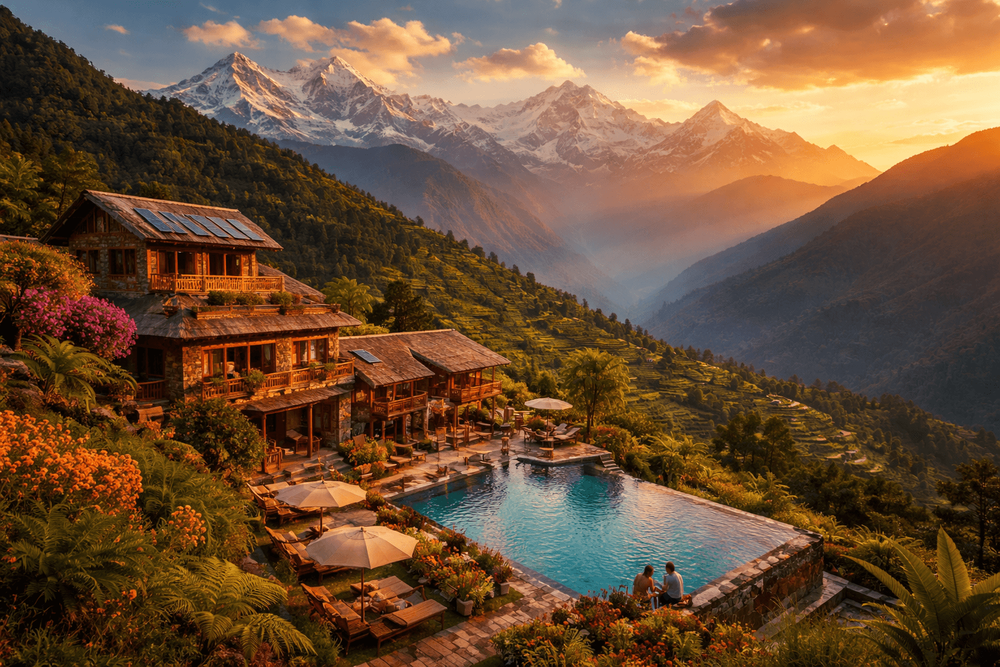
Stay Green in the Himalayas: A Traveler’s Guide to Eco‑Friendly Hotels in Nepal
Sleep gently on Nepal’s soul: restored courtyards, bamboo lakeside retreats, and jungle lodges that prove sustainability can be sensorial—and measurable.
Mood
Sustainable Escape
Meta title: Eco-Friendly Hotels in Nepal: A Sustainable Escape Guide Across Valley, Lake, and Jungle
Meta description: Plan a low-impact journey with our editor-verified guide to eco-friendly hotels in Nepal—heritage stays, jungle lodges, trekking bases, and homestays that care for place and people.
A brass bell rings in a quiet courtyard of Patan as morning light pools on old brick and carved teak. Prayer flags snap in the breeze above a flat rooftop, where solar panels tilt toward the sun and herbs perfume the air—mint and tulsi crushed underfoot. This is Nepal at first light, and for travelers choosing eco-friendly hotels in Nepal, the day begins not with compromise but with clarity: a gentler footprint, a richer encounter with place, and hospitality that restores more than it consumes.
Why Eco-Friendly Hotels in Nepal Matter at High Altitude
Nepal’s landscapes—ice-bright peaks, forested foothills, river plains heavy with heat—are as fragile as they are spectacular. Tourism underwrites much of the country’s economy and post-earthquake rebuilding, but it also strains water tables, waste systems, and forests. Eco-conscious stays help recalibrate that balance. In the Kathmandu Valley, restored heritage hotels preserve endangered Newa architecture and create skilled local jobs. In the Terai’s jungles, lodges collaborate with conservation partners on habitat protection. In highland villages, community homestays turn visitor spending directly into scholarships and improved water systems.

Lonely Planet Nepal: Detailed Itineraries | Travel Like a Local | Insider Tips | Covers Kathmandu, Pokhara, Terai, Mahabharat Range, and more (Travel Guide): Mayhew, Bradley, Bindloss, Joe, Brown, Lindsay, Butler, Stuart, Lama, Tsering
Lonely Planet's Nepal is <strong>our most comprehensive guide that extensively covers all the country has to offer, with recommendations for both popular and lesser-known experiences</strong>. Ex
Check Price on AmazonChoosing eco-friendly hotels in Nepal is not only about energy-efficient lighting and refillable water stations—though those matter. It’s an ethical through-line connecting the guest’s comfort to the long-term well-being of people, wildlife, and culture. The most credible properties make sustainability visible and verifiable: compost steaming behind a kitchen garden; rainwater tanks tucked beneath a courtyard; menus that name local growers; and, where available, public-facing summaries of energy, water, and training efforts aligned with Global Sustainable Tourism Council (GSTC)–recognized criteria (see gstcouncil.org).
Where to Stay: A Green Circuit of Eco-Friendly Hotels in Nepal
A thoughtful route through the Valley, lake country, jungle, and trekking hills can prioritize places already working toward meaningful impact. The examples below are editor-verified as of publication; always confirm current practices directly with the hotel.
Kathmandu Valley: Courtyards, Craft, and Solar Rooftops
Within the medieval lanes of Patan and Bhaktapur, heritage hotels have led Nepal’s earliest and most nuanced sustainability stories. Many occupy restored brick mansions where thick walls provide natural insulation and latticed windows sip light and air—passive design principles that predate modern HVAC by centuries. Rooftops often host solar hot-water tubes; rain barrels feed shade-filled courtyards; and several properties minimize single-use plastics and favor local craft.
- Kantipur Temple House (Kathmandu): A long-standing advocate for low-energy, low-plastic operations and traditional building craft, with details published on its site (kantipurtemplehouse.com).
- Dwarika’s Hotel (Kathmandu): Known for conserving traditional wood- and brickwork through restoration rather than demolition, and for channeling craft skills into living heritage (dwarikas.com). Sustainability is framed around cultural preservation and responsible operations.
- The Inn Patan (Patan): A restored townhouse that keeps the scale intimate and the footprint modest; its setting encourages walking-first exploration of Patan’s artisan quarters (theinnpatan.com).
For travelers who want culture-forward days and quiet, low-impact nights, the Valley’s best eco-minded addresses pair with mindful itineraries—temple visits at dawn, slow lunches in courtyard cafés, and guided food strolls that celebrate seasonal produce. Those curious about Nepal’s culinary renaissance can extend the experience on one of the city’s thoughtful tastings: see Gourmet Food Tours in Nepal: Taste, Learn, and Shop Your Way Through Kathmandu & Beyond (/experiences/gourmet-food-tours-nepal-kathmandu-beyond).
Pokhara: Lake Breezes and Bamboo Light
In Pokhara, mountains stage a daily theater—Annapurna peaks surfacing from cloud, the lake wrinkling with afternoon wind. Eco-forward stays here lean into lightness: cross-ventilated pavilions, living roofs that flush green with monsoon, and rain chains gurgling into cisterns. Kitchens often source from nearby farms, reducing food miles and keeping rupees local.
- The Pavilions Himalayas (near Pokhara): Farm-to-table menus, solar power integration, and on-site biogas are part of its sustainability narrative, documented on the hotel’s site (pavilionshotels.com/himalayas/).
- Tiger Mountain Pokhara Lodge (valley rim above Pokhara): Community partnerships, nature interpretation, and a restrained approach to resources are central to its ethos; read more on the lodge’s sustainability pages (tigermountainpokhara.com).
Travelers seeking to pair low-impact stays with an inner reset will find a natural bridge to the city’s serenity-focused escapes: Himalayan Wellness: A Traveler’s Guide to Yoga, Ayurveda and Meditation Retreats in Nepal (/experiences/wellness-retreats-in-nepal-yoga-ayurveda).
Chitwan: Jungle Ethics and Measured Impact
Down in the Terai, heat thickens and the air carries the vegetal scent of elephant grass. Eco-lodges skirting Chitwan National Park operate on a different rhythm—cicadas, monsoon thunderheads, a dusk chorus of frogs. Here, sustainability is inseparable from wildlife ethics. Responsible operators avoid elephant riding, favoring guided walks, canoe drifts, and low-emission game drives conducted with distance and restraint. Many work alongside conservation groups such as the National Trust for Nature Conservation (NTNC; ntnc.org.np) and WWF Nepal (wwfnepal.org).
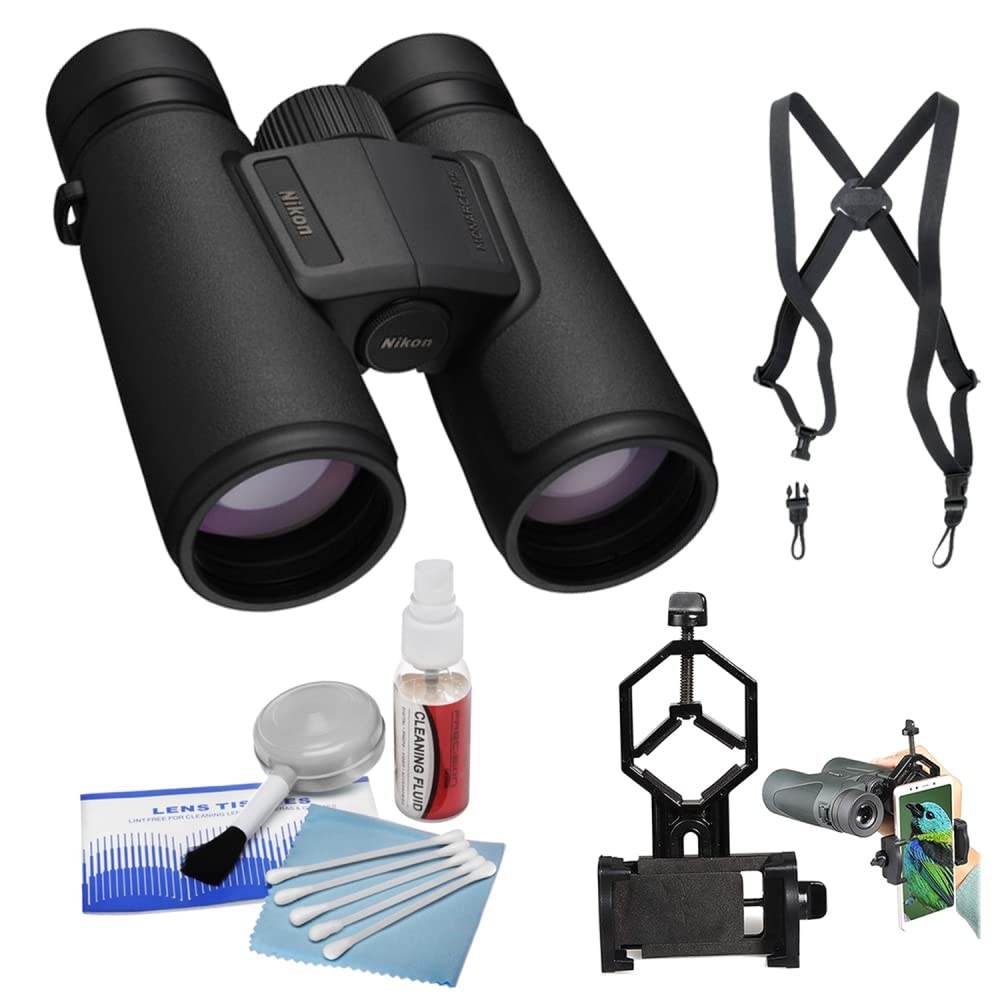
Nikon Monarch 5 8x42 Binoculars : Electronics
Nikon Monarch M5 8x42 (16767) Black Binoculars Bundle with Lens Pen and Lens Cloth, <strong>Compact Binoculars for Adults for Hunting, Bird Watching, and Hiking Essentials, Zoom Lightweight Travel</st
Check Price on Amazon- Tiger Tops Tharu Lodge (near Chitwan): A pioneer in elephant-friendly practices that do not include riding, with welfare standards published on its site (tigertops.com). The lodge’s programming emphasizes respectful wildlife viewing and community links.
When planning multi-sport itineraries—rafting the Trishuli, birding in Chitwan, or tackling ridge hikes—see Adventure Nepal: Treks, Peaks, Rivers & Responsible Thrills (/experiences/adventure-nepal-treks-peaks-rivers-responsible-thrills) for ideas that dovetail with low-impact lodging.
Annapurna and Trekking Routes: Teahouses Evolving, Eco-Lodges Emerging
On Annapurna and other classic circuits, accommodations range from simple family teahouses to more sophisticated eco-lodges perched above rhododendron forests. In many villages, community micro-hydro turbines and cluster solar arrays power lighting and hot water; improved stoves and basic wastewater filtration are increasingly common. For background on Nepal’s renewable push in rural areas, see the Alternative Energy Promotion Centre (AEPC; aepc.gov.np).
Travelers can lean greener by choosing short-shower rooms, avoiding out-of-season hot water on snowbound passes, and eating what villages grow rather than ordering imported meat. Those who crave comfort without waste will find a sweet spot in low-impact lodge networks and seasonal tented camps that depend on renewable energy and limit supply runs.
Community Homestays: Staying With, Not Just In, Nepal
Across the country, community homestays turn hospitality into a village project—often led by women. Guests sleep under mustard-yellow quilts, wake to millet porridge sweetened with jaggery, and join families for field walks or weaving demonstrations. Transparent platforms like the Community Homestay Network (communityhomestay.com) outline how revenue supports host families and shared projects.
For travelers, homestays offer direct cultural exchange and a lesson in sufficiency: bucket showers warmed by the sun, no AC but breezes coaxed through windows, and meals that taste of the next field over. The impact is tangible—wage-earning opportunities reduce outward migration, crafts revive when visitors value them, and village councils guide tourism on their terms.
Eco-Friendly Hotels in Nepal: What to Look For
Energy and Water Systems You Can See—and Measure
- Solar: Photovoltaic panels and solar hot-water tubes sized to occupancy, with clear guest information about how systems operate.
- Hydro and Grid Renewables: Micro-hydro where mountain streams allow; or documented procurement of a high-renewables mix from the utility when available.
- Water: Rainwater harvesting tanks; low-flow fixtures; linen reuse by default; and on-site wastewater treatment (reed beds, anaerobic digesters) explained in simple, posted signage.
- Backup Policy: Transparent plans for power cuts that prioritize essentials—fans over AC, filtered water over bottled stockpiles.
Materials, Design, and the Feel of Place
- Passive Design: Thick walls, shaded verandas, clerestory windows, and cross-ventilation to reduce heating/cooling loads.
- Local, Lower-Carbon Materials: Brick, salvaged or responsibly sourced timber, stone, lime plasters; bamboo and cane in hot, humid zones as appropriate for durability.
- Seismic and Heritage: In the Valley, favor properties that meet seismic safety while restoring traditional elements—preserving cultural fabric alongside resilience.
Waste, Plastics, and the Invisible Footprint
- Fewer Single-Use Plastics: Glass-bottled or filtered drinking water with refill stations; bulk toiletries; reusable amenity kits.
- Compost and Recycling: Clearly labeled tri-bin systems; compost loops to kitchen gardens; partnerships with municipal or private recyclers where they exist.
- Supply Chain: Biodegradable cleaners; line-drying laundry in sun when weather allows; periodic waste audits shared with staff and, when possible, guests.
Food That Tells a Local Story
- Short Supply Chains: Menus highlighting nearby farms and co-ops; seasonal rotations; grains like millet and buckwheat alongside rice.
- Low-Waste Kitchens: Whole-vegetable cooking, monsoon-season preserves, and careful protein sourcing that respects carrying capacity.
- Fair Flavor: Purchasing charters that guarantee fair pay to growers; culinary apprenticeships for neighborhood youth. Curious eaters can go further behind the scenes on Gourmet Food Tours in Nepal: Taste, Learn, and Shop Your Way Through Kathmandu & Beyond (/experiences/gourmet-food-tours-nepal-kathmandu-beyond).
Certifications and Third-Party Checks
- Recognized Standards: Prefer hotels audited against GSTC-recognized standards (gstcouncil.org). Common labels include Green Key (greenkey.global), Travelife (travelife.info), and, for building performance, LEED (usgbc.org/leed).
- Public Reporting: Look for annual sustainability summaries—energy per guest night, liters of water reused, waste diversion percentages, and staff training hours—ideally verified by a third party or aligned to GSTC guidance.
- Local Partnerships: Formal MOUs with conservation NGOs or community co-ops, not just donations; guest contributions earmarked for specific projects with updates posted on-site or online.
Measuring Real Impact: People, Wildlife, Place
People
Authentic eco-stays make people the priority. That means local hiring at all levels, paid training, progression pathways, and benefits that extend to families. Artisanal collaborations—textiles, pottery, metalwork—should credit makers by name and place, with fair pricing and the option to visit studios. Community funds, voted on by residents, often support maternal health, libraries, or scholarships for hospitality training.
Wildlife
In the lowlands, lodges that care for wildlife prove it through action: refusing elephant rides; enforcing minimum viewing distances; limiting vehicle numbers; mapping wildlife corridors around properties; and directing guest levies to anti-poaching patrols and habitat restoration in coordination with NTNC (ntnc.org.np) or WWF Nepal (wwfnepal.org). Outcomes reported in partnership with these organizations carry more weight than marketing copy.
Place
Cultural integrity is environmental integrity. Hotels that restore traditional homes prevent demolition waste and safeguard building knowledge; those that commission local music and dance on community terms help living traditions pay their way. Mountain lodges that source fuel responsibly—LPG cylinders packed in bulk, solar cookers at base camps, efficient stoves in staff quarters—spare surrounding forests the slow damage of overharvest.
Practical Guidance for Low-Impact Stays
Smart Questions to Ask When Booking
- Energy and Water: What share of your power is renewable? Do you harvest rainwater and treat wastewater on site?
- Plastics and Waste: Are rooms free of single-use plastics? How do you compost and recycle?
- Food: What portion of your menu is sourced within about 100 km and in season? Any partnerships with local farms or co-ops?
- People: What share of your staff—especially management—comes from the local community? Do you fund any training or scholarships?
- Biodiversity: Do you support any conservation projects, and how are results measured with partners like NTNC or WWF Nepal?
- Verification: Are you audited against a GSTC-recognized standard? Can you share your latest sustainability summary?
Seasonal Considerations
- Dry Season (Oct–Dec; Mar–Apr): Clear mountain views, stronger solar yield, peak demand. Book early for truly eco-forward rooms.
- Winter (Jan–Feb): Cold nights in the hills—choose properties with solar hot water and efficient backup. Expect crisp days for valley exploring.
- Monsoon (Jun–Sep): Lush landscapes, fewer crowds, and good rates in cities. Roads can be muddy; ask about transport impacts and hydropower reliability. This is a rich festival window too; aligning stays with local celebrations can deepen cultural exchange—see Festival Trail Nepal: How to Experience Nepal’s Rich Cultural Celebrations (/experiences/festival-trail-nepal-cultural-festivals).
Cost and Value
Eco-forward lodging can price slightly higher due to small-scale builds, fair wages, and renewable infrastructure. Value comes into focus when you count what’s included: filtered water instead of bottles; guided walks that interpret history and habitat; and rooms designed to be comfortable without guzzling energy. Stretch budgets by traveling shoulder season, choosing smaller room categories, or booking longer stays that reduce transport emissions and often unlock discounts.
Traveler Tips for Treading Lightly
- Carry a reusable bottle and use hotel refill stations; skip plastic straws and takeaway cups.
- Pack biodegradable toiletries and keep showers short, especially at altitude.
- Dress respectfully and engage curiously; cultural care is sustainable travel.
- On treks, eat local, largely vegetarian menus; avoid out-of-season demands that require long-haul transport.
- Decline elephant rides; choose walking, canoe, or low-impact jeep safaris guided by licensed naturalists.
- Offset flights through reputable programs—but prioritize reduction: combine regions, travel overland where sensible, and linger longer.

GRAYL GeoPress 24 oz Water Purifier Bottle - Filter for Hiking, Camping, Survival, Travel (Bali Blue)
View on AmazonThe Image to Keep
At dusk in Bhaktapur, a hotel’s windows glow amber against handmade brick, and incense winds up from a courtyard where a fig tree gathers the night. Somewhere south, in Chitwan, a solar pump quiets and the forest takes over—nightjars calling, river stones cooling, the sky arranging its stars. Eco-friendly hotels in Nepal do not trade luxury for restraint; they replace waste with intention and dazzle not just the eye but the conscience. Travelers leave with lighter bags and fuller stories—of craft revived, forests guarded, and a hospitality that invites you into the work of caring for a place as if you belonged.
Recommended Travel Gear
Lonely Planet Nepal: Detailed Itineraries | Travel Like a Local | Insider Tips | Covers Kathmandu, Pokhara, Terai, Mahabharat Range, and more (Travel Guide): Mayhew, Bradley, Bindloss, Joe, Brown, Lindsay, Butler, Stuart, Lama, Tsering
Lonely Planet's Nepal is <strong>our most comprehensive guide that extensively covers all the country has to offer, with recommendations for both popular and lesser-known experiences</strong>. Ex
GRAYL GeoPress 24 oz Water Purifier Bottle - Filter for Hiking, Camping, Survival, Travel (Bali Blue)
Versatile, fast, and ridiculously easy to use — the 24oz GeoPress Water Filter & Purifier Bottle <strong>requires zero setup, no sucking or squeezing, and makes 24 fl oz (710 ml) of clean purified
Nikon Monarch 5 8x42 Binoculars : Electronics
Nikon Monarch M5 8x42 (16767) Black Binoculars Bundle with Lens Pen and Lens Cloth, <strong>Compact Binoculars for Adults for Hunting, Bird Watching, and Hiking Essentials, Zoom Lightweight Travel</st