
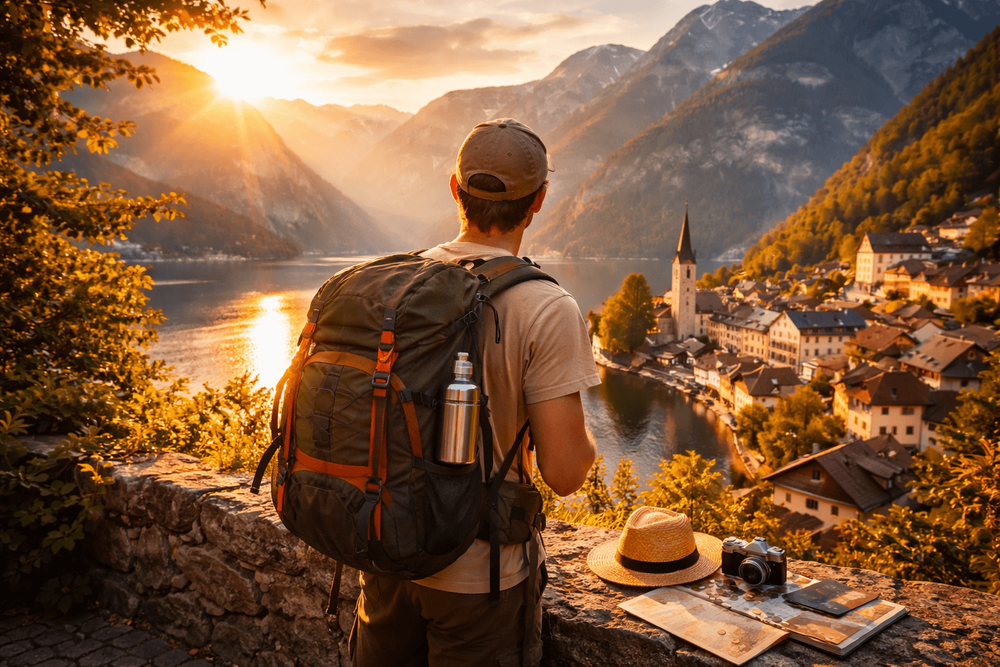
How Much Does It Cost to Backpack Europe? Budget Breakdown & Tips
Realistic daily budgets by region, sample itineraries, and proven money-saving tactics—everything travelers need to price out a Europe backpacking trip.
Mood
Budget-Savvy Adventure
At dawn, a night train exhales into a misty platform. Cyclists rattle past a canal, bakery windows bloom with warm croissants, and church bells fold into the rush-hour hum. Somewhere between a hostel’s communal kitchen and a cobbled square brimming with espresso cups, the question cuts through the romance: how much does it cost to backpack Europe? The answer depends on pace and priorities—but with a smart plan, the continent opens generously to every budget.
How Much Does It Cost to Backpack Europe? The Quick Answer
- 1 week: €450–€900 (shoestring vs. classic backpacker), excluding flights
- 2 weeks: €900–€1,800
- 1 month (28–30 days): €1,400–€3,000
- 2 months (56–60 days): €2,700–€5,600
- 3 months (85–90 days): €3,800–€8,100
These ranges assume hostel dorms, public transit, a mix of self-catering and casual meals, a handful of paid attractions per week, and intercity buses or advance-purchase trains. Scandinavia, Switzerland, and high-season coasts can push numbers higher; the Balkans and parts of Eastern Europe can pull them lower. Travelers asking how much does it cost to backpack Europe should think in daily targets, then tailor by region and season.
What Affects How Much You’ll Spend: 7 Key Factors
- Season: Summer (June–August) inflates prices on coasts and in capital cities, with accommodations up to 30–60% higher. Shoulder seasons (April–May, September–October) bring softer rates and friendlier queues; winter is excellent value beyond the Christmas market rush.
- Pace: Moving every 1–2 days drains budgets through transport and impulse spending. Slow travel—staying 4–5 nights—earns multi-night discounts, kitchen time, and local routines that cost less.
- Countries (and cities): Nordic capitals, Zurich, Geneva, London, Dublin, Paris, and Amsterdam are top-tier expensive; the Balkans, Poland, Hungary, Slovakia, and the Baltic states stretch euros further. Coastal Croatia in August costs more than inland Serbia in May; Rome’s center outprices Palermo’s old town.
- Transport choices: Night trains save a bed; buses beat last-minute rail; advance rail tickets undercut flexible fares. Low-cost flights can be bargains—but baggage fees and airport transfers add up.
- Accommodation type: Dorm beds vary from €10–€15 in the Balkans to €45–€60 in Scandinavia. Private rooms or boutique hostels can double or triple daily spend.
- Activities: Museum passes, free walking tours (tip-based), and city cards compress cultural costs. Guided day trips, adventure sports, and nightlife expand budgets quickly.
- Travel style: A shoestring cook-in-the-hostel approach differs dramatically from a flashpacker’s private rooms and wine bars. Know your comfort zone.
Daily Budgets by Travel Style and Region
Numbers below are per person, per day, excluding long-haul flights.
Western Europe (France, Germany, Benelux, Austria; note Switzerland as an outlier)
- Shoestring: €60–€85 (Switzerland often €90–€120)
- Classic backpacker: €90–€130
- Flashpacker: €130–€200+
Scandinavia (Norway, Sweden, Denmark, Finland; Iceland comparable or higher)
- Shoestring: €80–€110
- Classic backpacker: €110–€150
- Flashpacker: €150–€230+
UK & Ireland
- Shoestring: €70–€100
- Classic backpacker: €100–€140
- Flashpacker: €140–€210+
Southern Europe (Portugal, Spain, Italy, Greece, Malta)
- Shoestring: €45–€70
- Classic backpacker: €70–€100
- Flashpacker: €100–€160
Eastern & Central Europe (Poland, Czechia, Slovakia, Hungary, Baltics)
- Shoestring: €35–€55
- Classic backpacker: €55–€80
- Flashpacker: €80–€120
Balkans (Croatia, Slovenia, Bosnia & Herzegovina, Serbia, Montenegro, North Macedonia, Albania, Bulgaria, Romania)
- Shoestring: €30–€50 (coastal Croatia/Slovenia higher in August)
- Classic backpacker: €50–€75
- Flashpacker: €70–€110
Sample Itineraries with Full Cost Breakdowns
The following estimates assume mid-range transit planning (some advance tickets), a mix of groceries and casual dining, and 1–2 paid attractions every few days. All totals exclude transatlantic/long-haul flights.
2 Weeks: The City‑Hopper (Western + Southern Highlights)
Route: Amsterdam (3 nights) → Paris (3) → Barcelona (3) → Rome (4)
- Accommodation (13 nights): Hostel dorms averaging €35–€45 in Amsterdam/Paris; €25–€35 in Barcelona; €30–€40 in Rome = €430–€560
- Intercity transport: One advance-purchase fast train (AMS–Paris), one budget flight (Paris–Barcelona, 10–20 kg bag), one overnight train or budget flight (Barcelona–Rome) = €160–€280
- Local transport: Transit cards + airport transfers = €80–€120
- Food & drink: Breakfast groceries + one sit-down meal daily + street food/tapas = €300–€450
- Activities: Louvre/Musee d’Orsay pass, Sagrada Família, Colosseum/Forum, canal cruise or bike rental = €140–€220
- Incidentals (laundry, lockers, tips, toiletries): €40–€70
- Travel insurance (2 weeks): €25–€50
Estimated total: €1,175–€1,750 (≈ €85–€125/day)
Tip: Swap Paris for Lyon or Marseille, or Rome for Naples, to trim €100–€150 without losing the city buzz.
4 Weeks: Mixed Route (West → South → East)
Route: Berlin (4) → Prague (3) → Vienna (3) → Ljubljana/Lake Bled (3) → Split & islands (6) → Budapest (4) → Kraków (4) → Warsaw (3)
- Accommodation (27 nights): West/Central between €20–€35 dorms; Adriatic coast €25–€40; Eastern cities €15–€25 = €600–€820
- Intercity transport: Regional trains/buses, one night train, one ferry hop = €230–€360
- Local transport: Day passes, airport/bus terminals transfers = €120–€170
- Food & drink: Mix of markets, canteens, and casual eateries = €700–€950
- Activities: Castle tickets, thermal baths in Budapest, island day trip, WWII and Jewish heritage tours, mountain day pass at Bled = €220–€320
- Incidentals: €80–€120
- Travel insurance (1 month): €40–€80
Estimated total: €1,990–€2,820 (≈ €70–€100/day)
Value plays: Central Europe’s lunch menus (polévka + main in Prague; zloty-stretching pierogi in Kraków) and thermal baths where an afternoon costs less than a cocktail hour in Paris.
3 Months: Slow-Pace Grand Loop (Balkans + East with Western Cameos)
Route: Lisbon (5) → Madrid (5) → Barcelona (5) → overnight to Milan (3) → Ljubljana (4) → Zagreb (4) → Split & islands (6) → Sarajevo (4) → Kotor (4) → Tirana (5) → Ohrid (4) → Skopje (3) → Sofia (4) → Plovdiv (4) → Bucharest (5) → Budapest (6) → Vienna (4) → Kraków (5) → Gdańsk (4) → Berlin (5)
- Accommodation (85 nights): Weighted average—South/West €25–€35, Balkans/East €12–€25 = €1,700–€2,350
- Intercity transport: Mix of buses, regional trains, two night trains, one budget flight (Iberia → Italy) = €550–€850
- Local transport: €300–€420
- Food & drink: Mostly self-catering breakfasts, market picnics, frequent cooking, dining out 3–4 times per week = €2,000–€2,700
- Activities: City cards in 3–4 hubs, guided history walks, monastery and fortress entries, island ferries, occasional concert or football match = €500–€750
- Incidentals & gear top-ups: €200–€350
- Travel insurance (3 months): €120–€200
- Visas/fees: Most nationalities with visa-free Schengen access pay €0; budget €20–€50 for occasional bookings/registration fees where required
Estimated total: €5,390–€7,670 (≈ €63–€90/day)
Note on visas: The Schengen Area allows many passports 90 days in any 180-day period; the UK, Ireland, and most Balkans are outside Schengen—use them to reset the Schengen clock. Always verify current rules and any new travel authorization requirements before departure.
Where Your Money Goes
- Accommodation (30–45%): Dorm beds span €12–€60 depending on region and season; private hostel rooms or budget hotels can be €60–€150 in Western hubs. Booking early for summer coasts and major festivals matters.
- Transport (20–35%): Intercity buses offer the lowest baseline; rail adds comfort and scenery (plus seat reservation costs on some routes); occasional low-cost flights help with long jumps but watch bag policies and remote airports.
- Food & drink (20–30%): Groceries and hostel kitchens can halve daily spend. In Southern and Eastern Europe, set lunches and market staples keep costs friendly; Nordic eating out climbs fast.
- Activities (5–15%): Museum passes, cathedrals, galleries, thermal baths, and day trips shape culture costs. Many European cities offer free museum days monthly.
- Insurance (2–5%): A non-negotiable for medical cover, cancellations, and theft. Shop by coverage, not just price.
- Visas/permits (0–5%): Many travelers pay nothing for short stays; others may need fees—research by passport.
- Gear amortization (variable): A good backpack, walking shoes, and layers pay off across trips; avoid last-minute hauls at airport prices.
Practical Money-Saving Strategies That Actually Work
- Ride the shoulder seasons: April–May and September–October trim rates, calm crowds, and keep daylight for wandering.
- Chain slow travel: Spend 4–5 nights per stop for weekly rental discounts, fewer transit days, and real grocery shopping.
- Mix transport smartly: Combine buses for price, regional trains for comfort, and night trains to save on accommodation. Advance rail fares can be a fraction of flexible tickets.
- Use city cards where they count: If you’ll hit 3–4 paid sights and ride transit, a 48–72-hour pass often pays for itself.
- Cook once, eat twice: Supermarket rotisserie chicken, soups, and pastas stretch across lunches. Many hostels now have decent kitchens.
- Picnic culture: Europe does al fresco beautifully—market cheese, bread, fruit, and a bench with a view beat many restaurant bills.
- Free and nearly free: Tip-based walking tours, public beaches, cathedral entry (donations welcome), park concerts, university galleries.
- Student/youth discounts: Under 26? Carry proof—train cards, museum concessions, and theater rush tickets abound.
- Refill, don’t rebuy: Carry a reusable bottle; fountains in Italy, Switzerland, and across cities are potable unless signed otherwise.
- Beware false savings: A €19 flight can cost €60 with bags and transfers. A flexible rail pass only pays off if you’re riding frequently and long distances.
Deep-dive advice on stretching every euro: see How to Travel on a Budget — Expert Tips for Luxe, Low‑Cost Trips (/experiences/how-to-travel-on-a-budget-expert-tips-luxe-low-cost-trips) and Budget Travel: A Backpacker’s Guide to Smart, Stylish Savings (/experiences/budget-travel-backpackers-guide-smart-stylish-savings).
How to Plan and Track Your Budget
- Start with a daily target by region: For a one-month mix of Southern + Eastern Europe, a classic backpacker budget at €70–€80/day is realistic. Add a 10–20% buffer.
- Build a simple tracker: One tab for plan, one for actuals. Record categories: accommodation, intercity transport, local transport, food, activities, incidentals.
- Update on the move: Ten minutes each night beats a reconciliation marathon later.
- Cash vs cards: Europe is card-friendly and contactless, but small bakeries, markets, and rural buses may want cash. Avoid dynamic currency conversion—always pay in local currency on card terminals.
- ATM strategy: Withdraw fewer, larger amounts from bank ATMs to reduce per-use fees; stow a backup card separately.
- Emergency fund: Set aside 10–20% of total trip budget in an accessible account for medical co-pays, last-minute tickets, or gear replacement.

Lonely Planet Europe on a shoestring (Travel Guide): Lonely Planet, Baker, Mark, Masters, Tom, Miller, Korina, Richmond, Simon, Symington, Andy, Williams, Nicola
Lonely Planet Europe on a Shoestring is <strong>your passport to the most relevant, up-to-date advice on what to skip, what hidden discoveries await you, and how to optimise your budget for an extende
Check Price on AmazonCopyable spreadsheet headers (CSV):
Date,City,Country,Category,Description,Planned (€),Actual (€),Payment Method,Notes
2026-06-12,Porto,Portugal,Accommodation,Hostel dorm 6-bed,20,22,Card,Booked 2 weeks ahead
2026-06-12,Porto,Portugal,Food,Groceries + bakery,12,10,Cash,Bakery pastel de nata
2026-06-12,Porto,Portugal,Local Transport,Metro + top-up,3,3,Card,Andante 24h
Final Checklist, Packing Tips That Save Money, and a Printable Template
Money-saving gear and habits often pay for themselves within a week.
- Universal adapter + short extension: One outlet becomes three, so no scrambling for sockets.
- Refillable bottle + compact filter: Particularly helpful in regions where tap water taste varies.
- Lock + lightweight cable: Dorm lockers vary; secure your bag and your bike rental if needed.
- Quick-dry layers + sink-wash kit: Rotate outfits and skip laundromat fees.
- Sleep kit: Eye mask, earplugs—cheaper than changing rooms at 1 a.m.
- Collapsible container + spork: Leftovers become tomorrow’s lunch.
- Offline maps + download confirmation emails: Fewer printing costs, smoother arrivals.
For a comprehensive capsule of what to bring and what to skip, see The Ultimate Backpacking Packing List: Lightweight Essentials & Smart Tips (/experiences/ultimate-backpacking-packing-list-lightweight-essentials-smart-tips).
Printable one-page budget snapshot (fill in, then photo or save offline):
TRIP NAME: ________________________    DATES: ________________  NIGHTS: ____

REGIONS: (Circle) WE | SCAND | UK/IE | SOUTH | EAST | BALKANS

DAILY TARGET (€): ________   BUFFER (10–20%): ________   TOTAL BUDGET: ________

CATEGORY LIMITS (€):
- Accommodation: ________   - Intercity Transport: ________   - Local Transport: ________
- Food & Drink: ________    - Activities: ________           - Incidentals: ________
- Insurance: ________       - Visas/Fees: ________           - Emergency Fund: ________

TOP 5 SPLURGES (Dates/€):
1) ____________________  2) ____________________  3) ____________________
4) ____________________  5) ____________________

NOTES (Free museum days, city cards, market days):
_______________________________________________________________
_______________________________________________________________
A Lasting Image
Budget travelers tracing Europe’s map by rail and bus will find that costs ebb and flow like tides: a frugal week of balconies and markets in Lisbon; a splurge on an opera night in Vienna; mountain air in Slovenia that costs nothing to breathe. Ask how much does it cost to backpack Europe, and the numbers give the scaffolding. The real structure rises from smart pacing, shoulder-season light, and the quiet, delicious moments a careful budget makes room for—olive oil on warm bread, a museum seen without hurry, a sunset from a city’s highest hill when the day has already been paid for.

TESSAN Surge Protector Flat Extension Cord 5Ft, Flat Plug Power Strip with 4 Outlets 3 USB Ports (1 USB C), 900 Joules Protection, Multiple Wall Outlet Extender Suitable for Home Office Dorm, Grey : Electronics
View on Amazon
Pacsafe Retractasafe 250 Cable Lock, Color:Smoke, One Size
View on AmazonRecommended Travel Gear
Lonely Planet Europe on a shoestring (Travel Guide): Lonely Planet, Baker, Mark, Masters, Tom, Miller, Korina, Richmond, Simon, Symington, Andy, Williams, Nicola
Lonely Planet Europe on a Shoestring is <strong>your passport to the most relevant, up-to-date advice on what to skip, what hidden discoveries await you, and how to optimise your budget for an extende
TESSAN Surge Protector Flat Extension Cord 5Ft, Flat Plug Power Strip with 4 Outlets 3 USB Ports (1 USB C), 900 Joules Protection, Multiple Wall Outlet Extender Suitable for Home Office Dorm, Grey : Electronics
7 in 1 Flat Power Strip: Extension ... Extension Cord: <strong>With only 0.31 inch flat Plug head design, flat Wall Plug can easily fit in tight spots and hide behind sofa, bed, nightstand or other fu
Pacsafe Retractasafe 250 Cable Lock, Color:Smoke, One Size
Safe and secure your items will stay with the handy and portable cable lock by Pacsafe®. <strong>Perfect for securing valuables by locking items shut, together or to a secure fixture</strong>. Feature