
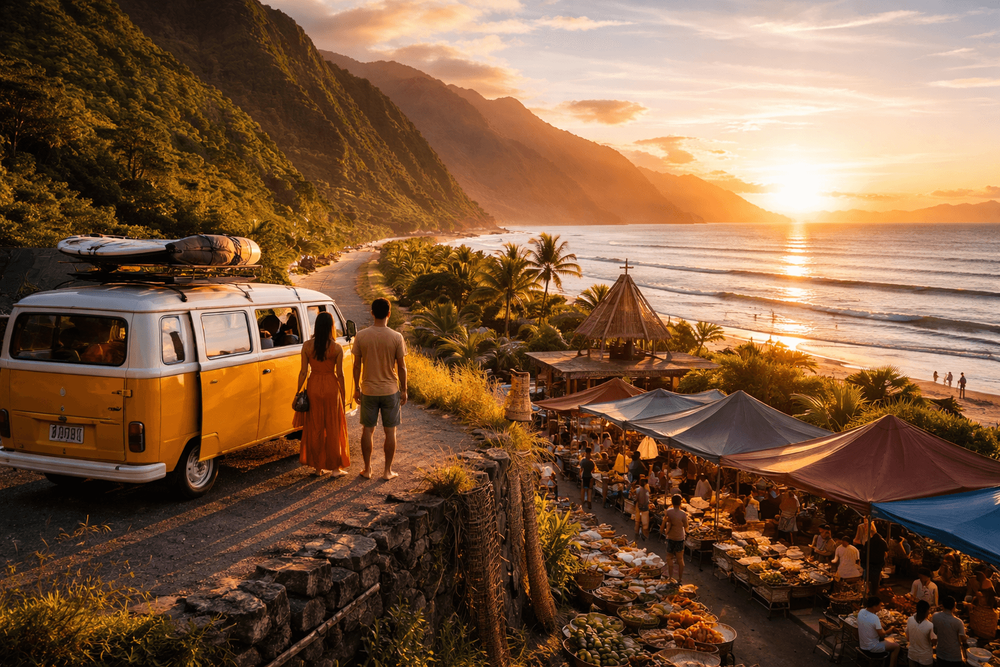
Hualien to Taitung Road Trip: Indigenous Markets, Surf Chapels and Hot‑Spring Camps
A slow-travel spring guide down Taiwan’s east—Indigenous night markets, surf breaks and seaside chapels, with detours to river‑hot‑spring camps—over 5–8 days.
Trip Length
5–8 days
Best Time
March–May
Mood
Cultural / Adventure
Dawn lays a silver edge on the Pacific as the road traces the Qingshui Cliffs; mist lifts from river mouths, and somewhere down the coast a drumline warms up for the night market. On a Hualien to Taitung road trip, the itinerary writes itself in textures—cedar-scented mountain air in Taroko, the salt of Jinzun’s longboard sets, the smoky sweetness of millet on the grill. Give it five to eight days and the East Coast slows your pulse to match the tide.
Planning your Hualien to Taitung road trip
This is a route made for meandering. Two parallel spines define Taiwan’s east: coastal Highway 11 and the inland East Rift Valley’s Highway 9. Most travelers favor Highway 11 for its headlands, fishing harbors, and surf breaks, then dip inland for hot springs or rice terraces before rejoining the sea. Figure on around four to five hours of pure driving from Hualien City to Taitung City without stops; with photo breaks, sea swims, and snack detours, it becomes a journey measured in tastes and viewpoints rather than kilometers.
- Vehicle: A compact car is the most flexible; scooters suit confident riders for shorter hops between villages. Rental counters cluster at Hualien Station and Hualien Airport; book ahead in spring.
- Navigation: Mountain tunnels and cliff-hugging sections can be weather-sensitive. Check local advisories after heavy rain and carry a paper map or cached offline maps as backup.
- Rhythm: Plan two nights up north for Taroko and Hualien’s markets, two nights along the mid-coast around Fengbin or Chenggong, and two nights near Taitung and Dulan for surf, art, and music.
The 5–8 day East Coast road‑book
Think of this as a scaffold you can stretch or compress. The Hualien to Taitung road trip rewards detours and second breakfasts.
Days 1–2: Taroko Gorge and Hualien City
Start where marble walls fold into turquoise rivers. Taroko National Park sits less than an hour from Hualien City; drive in early to catch the canyon quiet. Popular trails can require permits or timed entries—check park updates before you go—and always watch for falling rock after rain. Back in Hualien, the shoreline at Qixingtan turns pink at sunset as locals cast lines and families pedal seafront paths.
After dark, graze your way through an Indigenous-leaning night market scene. In Hualien’s largest market, a whole section celebrates First Nations flavors—think taro-stuffed buns, wild greens, millet cakes, and sips of honeyed millet wine—often to a soundtrack of live drumming and dance. It’s a quick education in the region’s living cultures: Amis, Truku, Bunun and more.
Day 3: Qingshui to Jiqi and Shitiping
Trace Highway 11 south as the cliff road relaxes into hemline coves. Jiqi (often written Jici/Jiqi) offers a gentle arc of sand that, on small days, suits beginners. A salt‑rinse and a roadside seafood lunch later, keep rolling to Shitiping’s otherworldly limestone terrace. The sea has carved tide pools and honeycomb shelves into a natural amphitheater—bring reef shoes if you plan to poke around the edges.
Evening is for a coastal guesthouse—think balconies that inhale the trade winds and the hush of waves at night. Many small stays here are family-run, with breakfasts that taste like the garden out back.
Day 4: East Rift Valley loop and hot‑spring interlude
Swing inland on Highway 9 through rice fields and betel palm groves. The valley runs between the Central and Coastal ranges, a green corridor dotted with hot-spring towns. Options range from classic bathhouses to wild riverside pools that shift with each flood season. If you’re comfortable hiking and conditions are safe, you can seek out canyon springs accessed by rope‑assisted trails; otherwise, opt for established hot‑spring villages where soaking comes with mountain views and a tea afterward. Either way, sunset over the paddies is a keeper.
Day 5: Sanxiantai and Chenggong’s fishing coast
Back on Highway 11, the Sanxiantai arch bridge leaps from shore to an offshore islet of wave‑gnawed lava. Go early; the light cuts clean and the boardwalks are quiet. Chenggong’s harbors hum with fishers unloading the morning’s catch; small eateries here plate whatever came off the boats—grilled, steamed, sometimes raw, always elemental.
Artists have a way of claiming odd corners along this coast—vacated warehouses, chapels, even temple side halls. Keep an eye out for community notices in Donghe and surrounding villages for pop‑up shows and weekend workshops. It’s the kind of scene where you meet an artist over coffee and end up at an impromptu printmaking session by dusk.
Days 6–7: Jinzun, Donghe, and Dulan
The swell breathes differently here. Jinzun Bay’s point and sandbar set the tone for longboard lines on many days, with punchier peaks when typhoon-born energy arrives later in the year. Surf shacks near the harbor rent boards and pour coffee; the vibe is easygoing but the currents deserve respect—ask locals about rips and entry points.
A few kilometers south, the Donghe–Dulan corridor mixes surf culture with ateliers, roadside fruit stalls, and those little white‑walled chapels that double as gallery spaces when someone tapes a flyer to the door. By late afternoon, windsurfers start threading the bay while sun‑bleached verandas fill with travelers comparing reef cuts.
Nights in Taitung City often orbit a music lawn where singer‑songwriters and Indigenous performers take turns under the fairy lights. On weekends, a craft “slow market” assembles—woven bags, ceramic whistles, herbal balms—part gathering, part shopping, wholly local. Then Dulan turns the dial later: courtyard gigs, food stalls, and conversations that roll past midnight.
Day 8 (or float day): River‑mouth hot springs and southbound exits
If the season and river levels cooperate, look for informal riverside soaking spots near bridges south of Taitung. Pools appear and vanish with storms; always heed signage and local advice, and leave the riverbed as you found it. Otherwise, follow steamy hints upriver to established hot‑spring districts where soaks range from stone tubs to open‑air pools under bamboo.
Wrap with an unhurried lunch at a fishing port, one last sea swim, and that bittersweet look north along the road you’ve just traced.
Indigenous night markets and music culture
Food is language on this coast, and the markets translate fluently. Hualien’s big night market devotes entire lanes to First Nations snacks and skewers. In Taitung, weekends amplify: food trucks park under lanterns, and you’ll hear island ballads, percussion, and sometimes hip‑hop threaded with Indigenous lyrics. If you collect experiences, not things, this is where you trade a few coins for a bowl of foraged greens and a conversation about the village they came from.
Surf chapels, studios, and the art of the everyday
Highway 11’s charm is how art spills into daily life. Fishermen repair nets beside stencil artists; a seaside church hosts a photo show; a longboard is as likely to be leaned against a canvas as a beach fence. You won’t find grand museums—what you’ll find are small rooms with salt in the air and a handwritten sign that says “open when the light is good.” Keep your route flexible and you’ll stumble into the show you didn’t know you needed.
Hot‑spring camps and how to soak well
- Wild pools: After floods, riverbeds can hide geothermal seeps that locals shape into ad‑hoc tubs. Conditions change often. Ask around in guesthouses about safe, legal spots, never dig or dam rivers, and watch water levels if rain is forecast.
- Managed springs: Prefer certainty? Towns in the Rift Valley and near Taitung offer bathhouses and outdoor pools with posted hours. Many require swim caps; some separate men’s and women’s baths, others are mixed.
Either way, rinse before entering, keep voices low, and pack out every scrap.
How to get there
- By air: Domestic flights connect Taipei’s Songshan Airport with Hualien and Taitung (schedules vary seasonally). Flying one way and driving the other maximizes time on the coast.
- By rail: The TRA east line links Taipei, Hualien, and Taitung. If you prefer trains, rent wheels at each stop or use local buses to shuttle between trailheads, beaches, and markets.
- By road: Pick up a rental in Hualien City for the full coastal sweep. Fuel is easy to find near towns; top up before long stretches. EV drivers should map chargers in advance—the network is growing but still sparse in rural pockets.
On arrival: what to expect
Spring (March–May) is the coast at its most generous: clear mornings, soft surf, hills radiant with new growth. The air is warm by day, cool at night—perfect for night markets and patio dinners. Card payments are common in cities; many small stalls are cash‑forward. English is understood in travel circles; a few Mandarin or local greetings go a long way. Mobile coverage is reliable along the main roads, thinner in canyons; download maps before venturing deep into Taroko or up remote valleys.
Where to sleep (boutique and character stays)
Skip the high rises. Along Highway 11, family‑run guesthouses gaze straight onto the Pacific; expect balconies, sea‑spray mornings, and breakfasts built from backyard herbs and coastal produce. Inland, timber cabins and farmstays put you among paddies with mountain views and quick access to hot springs. Around Dulan, creative lodgings—studios with hammocks, courtyard rooms, vintage bungalows—carry the art‑and‑surf DNA of the village. Book weekends ahead in spring, especially near music venues.
When to go
Spring is the prime window for a Hualien to Taitung road trip: dry, luminous, and warm enough for swims without the typhoon volatility that can arrive later. Summer brings bigger crowds and heavier humidity; autumn often delivers crisper air and more powerful swell for experienced surfers; winter is quieter and cooler, with some hot springs at their coziest.
The takeaway
This coastline favors the traveler who lingers: another plate of sea urchin at a harbor shack, another song under string lights, another shoulder‑high wave that peels just right. The Hualien to Taitung road trip isn’t about ticking boxes—it’s about letting the map breathe. Start sketching dates. The road will do the rest.
Where to Stay

Lakeshore Hotel Hualien
Lakeshore Hotel Hualien is a 4-star, modern coastal hotel in Hualien (8.7/10 guest rating) that serves travelers between Taroko Gorge and Dulan, offering comfortable rooms, on-site dining and easy access to coastal and mountain attractions.

Farglory Hotel
Farglory Hotel is a 5-star property on Taiwan’s east coast between Taroko and Dulan, offering upscale rooms and full hotel amenities, a convenient base for exploring Hualien–Taitung attractions, and holding an 8.8/10 guest rating.

Meci Hotel
Meci Hotel is a 3-star property rated 8.8/10, located between Hualien and Taitung—convenient for exploring Taroko Gorge and Dulan’s coastline—offering comfortable rooms, helpful staff, and basic amenities such as free Wi‑Fi and easy access to regional transport.

Parkview Hotel Hualien
Parkview Hotel Hualien is a 5-star hotel in Hualien, positioned for exploring the stretch from Taroko Gorge to Dulan, carries an 8.7/10 guest rating, and offers comfortable rooms, on-site dining and full guest services.

Hotelday Plus Hualien
Hotelday Plus Hualien is a 3.5-star, mid-range hotel positioned for travel between Hualien and Taitung—ideal as a base for Taroko Gorge to Dulan excursions—offering comfortable rooms, essential amenities and an 8.6/10 guest rating.