
Mérida’s Second Act: The Yucatán Capital’s Design Hotels, Maya Gardens and Slow-Mexico Rhythm
Design-forward Mérida is the ideal 5–7 day base for cenotes, haciendas, and contemporary Yucatán culture—plazas, galleries, Maya gardens—especially from January to April.
Trip Length
5-7 days
Best Time
January–April
Mood
cultural
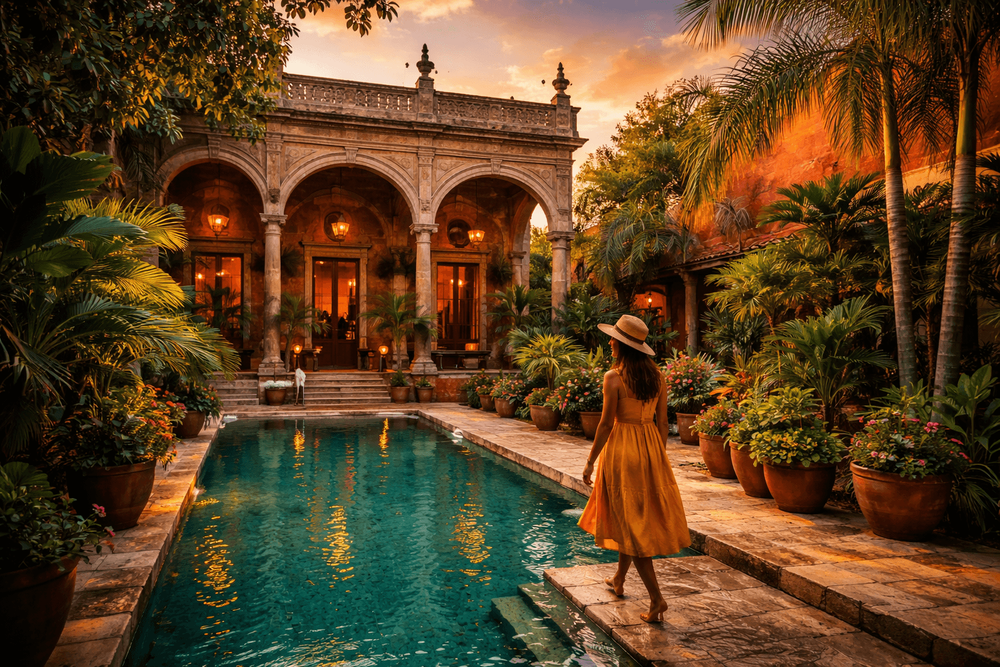
The ceiling fans turn lazily above a courtyard of chukum-plastered walls and potted henequén, the air scented with sour orange and ripe guava. Outside, a trio tunes guitars in a shaded plaza while a street vendor trundles past with ice-cold marquesitas. Consider this your Mérida travel guide to the Yucatán capital’s second act—a design-minded, quietly confident city where restored casonas house artful stays, Maya gardens frame everyday life, and cenotes and haciendas sit within easy reach.
Mérida travel guide: the city’s second act
Mérida has long been the Yucatán Peninsula’s cultural anchor. What’s new is the polish. Over the past few years, the city has leaned into its own rhythm—more patio than pool party, more art walk than nightclub—becoming a base for travelers who want cenote swims, hacienda history, and contemporary Yucatecan creativity without orbiting the Cancun–Tulum corridor. You’ll find yourself tracing the length of Paseo de Montejo beneath French-inspired mansions, then ducking into a minimalist café in Centro Histórico where local limestone and wood set the tone. The days end on plazas—Santa Lucía, Santiago, Plaza Grande—where music is not an event but a habit.
Why base yourself in Mérida now
- Design-forward stays have multiplied in restored townhouses, especially near Paseo de Montejo and in the grid of the Centro, bringing light-filled rooms, soothing plunge pools, and leafy courtyards.
- The city is a launchpad for day trips to cenotes, flamingo-filled lagoons, and Maya sites—without the spring-break energy.
- A contemporary food and art scene—markets, galleries, neighborhood cantinas, and weekly open-air concerts—keeps evenings engaging after daytime explorations.
This Mérida travel guide favors a 5–7 day pace: mornings of discovery, afternoons by the pool or in a museum, and nights in the plazas. Come January to April, when trade winds soften the heat and winter migratory birds turn lagoons pink, and the city’s calendar tilts toward festivals and outdoor culture.
A 5–7 day cadence that feels right
Use this as a loose framework, adjusting for your appetite for ruins, water, and art.
Day 1: Settle into Centro Histórico. Walk Plaza Grande, peek into arcaded corridors, and sample Yucatecan staples—cochinita pibil, sopa de lima, papadzules—at a market stall or a humble lonchería. Evenings often bring music to the plazas; let the city choose your soundtrack.
Day 2: Paseo de Montejo and museums. Stroll the mansion-lined boulevard in the morning before the sun climbs. Step into a cultural museum for context on Maya heritage and Yucatán’s henequén boom, then linger in a shaded café courtyard. As afternoon heat gathers, retreat to your hotel pool or a leafy park; return outside when dusk paints the casonas gold.
Day 3: Cenotes close to Mérida. Choose a string of cenotes carved into the limestone ring surrounding the city. Some are light-shaft caverns with echoing chambers; others are open-sky sinkholes ringed by jungle. Go early, swim respectfully (rinsing off sunscreen beforehand protects the water), and pair your swim with a late lunch in a nearby town.
Day 4: Haciendas and villages. Visit a restored henequén hacienda to understand the plant that built this region’s fortunes, with weathered machinery and airy colonnades now reborn as galleries or gardens. Combine with a craft-forward town—perhaps known for yellow facades or a hilltop convent—for a slow wander and a plate of panuchos in the plaza.
Day 5: Maya sites within a day’s reach. Uxmal is the headline: elegant stonework, rounded corner pyramids, and a jungle setting that rewards unrushed exploration. If you prefer a quieter scene, ask about smaller Puuc-route sites. Back in Mérida, catch a weekly serenade in Santa Lucía or an evening dance on a closed-to-cars stretch of the center.
Day 6: Coast day. Westward, Celestún’s mangrove channels and wide beaches invite boat rides among sunlit waterways, seasonally pink with flamingos through winter into early spring. Eastward, the port towns show a working coast rhythm—fishing boats, hammocks, lime-bright ceviches.
Day 7: Garden day and gallery hop. Seek out Maya-inspired gardens where ceiba trees, chaya, and tropical palms create shade and scent. Spend the afternoon in small galleries and design shops carved into old casonas. Pack a final evening around a cantina table: Yucatecan botanas, cold beer, and the comfortable hum of conversation.
Cenotes and haciendas: design-minded day trips
Yucatán’s underground rivers lace through the bedrock in a near-mythic ring. Many cenotes near Mérida are part of community projects or family-run cooperatives; entry comes with life jackets, and wooden stairways lead you into mineral-blue water. Look for places that limit numbers, maintain composting bathrooms, and provide freshwater showers. The experience is at once elemental and refined—shafts of light, suspended roots, swallows swooping through a cathedral of stone.
Haciendas, meanwhile, narrate a different Yucatán: the era of henequén, when agave fibers tied the world’s packages together. Today, some estates have been reimagined as event spaces, museums, or stays. You don’t need a room key to appreciate the architecture; guided visits and garden strolls let you admire arcades, chimney stacks, and water features shaded by ceibas. Pair a hacienda visit with a village lunch—handmade tortillas, sikil p’ak (a pumpkin seed dip), icy agua de chaya—and return to Mérida in time for twilight on the plazas.
Contemporary culture without the resort sheen
Mérida’s pleasures skew local. Markets like Lucas de Gálvez hum from early morning with pyramids of chiles and still-warm pan dulce. Designers repurpose Yucatecan motifs into ceramics and textiles, and galleries champion regional artists—stone, paint, fiber. The city’s music tradition is generous: mariachis on one corner, trova trios on another, a brass band rehearsing in the park. Sundays can transform the core into a pedestrian playground with food stalls and dance; even on ordinary nights, you’ll hear guitars from doorways and find yourself lingering under the trees.
Food-wise, think depth rather than flash. Lime-laced broths, slow-roasted meats cooked pit-style, and subtle recados (spice pastes) underline a cuisine shaped by Maya techniques and trade routes to the Caribbean and Middle East. Casual cantinas still send out generous botanas with your drinks, and ice cream makers shade their carts as twilight cools the streets. You won’t need a long reservation list here—wandering, then following your nose, often works best.
Practicalities: getting there, staying put, moving around
Getting there: Mérida International Airport (MID) sits a short drive from Centro Histórico, with domestic and select international flights. Overland, long-distance ADO buses link Mérida to Campeche, Valladolid, and the Caribbean side of the peninsula. If you’re combining with a Riviera Maya stay, the overland trip is straightforward and scenic.
What to expect on arrival: The city runs on a late-afternoon-and-evening rhythm. Midday can be warm—shade, courtyards, and siestas are built into the architecture and lifestyle. Many small shops close in the early afternoon and reopen later. Cards are widely accepted at hotels and larger restaurants; markets, collectives, and street vendors favor cash. App-based rides are common, taxis queue at major plazas, and walking is pleasant in the gridded center after the heat loosens.
Getting around for day trips: Renting a car gives maximum freedom for cenotes and haciendas; signage is clear and roads are generally flat. Those who’d rather not drive can arrange private drivers or join small-group outings. Ask about community-led cenote visits, which keep access funds local and often provide excellent context.
Where to stay: Design-forward hotels cluster along and just off Paseo de Montejo and in the Centro’s quieter northern blocks. Expect leafy patios, locally quarried stone, artisanal textiles, and small pools shaded by palms. For a residential feel, look toward Santa Ana and Santiago, where low-key cafés, neighborhood markets, and evening taco stands shape the vibe.
When to go: January through April
For this Mérida travel guide, the sweet spot is January–April. Days are typically dry and bright, with cooler evenings and sea breezes that slip inland. Festivals punch up the calendar in January, flamingos crowd nearby lagoons through winter into spring, and cenote water feels especially crisp. Later months tilt hotter and, by summer, humid; that’s when courtyards and night air become essential.
The case for Mérida as your Yucatán base
From here, the peninsula feels coherent: stone cities rising from the green, freshwater sinkholes like portals in the earth, and a living culture that prefers conversation over spectacle. Mérida lets you braid it all together without chasing the shoreline. This is slow-Mexico at its best—design that respects roots, gardens that tell stories, and days that always leave room for one more plaza bench, one more guitar line carried on the wind. Start sketching those dates; the city is ready when you are.