
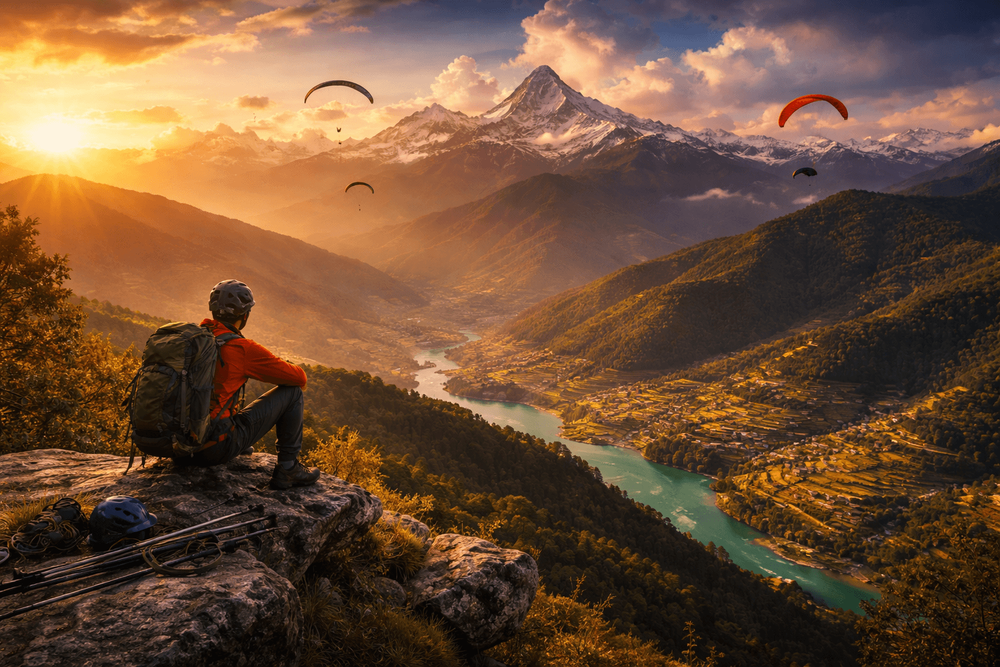
Nepal for Adrenaline: Top Thrills, Where to Go, and How to Prepare
Peaks, rivers, ridgelines, and jungles: a seasoned guide to Nepal’s top adrenaline adventures — when to go, what it costs, and how to do it right.
Mood
Adrenaline Escape
Meta title: Adventurous Activities in Nepal: The Ultimate Adrenaline Escape (Seasons, Permits, Costs) Meta description: Plan adventurous activities in Nepal with our editor-verified guide to trekking, rafting, paragliding, peak climbing, biking, and safaris—plus best seasons, permits, safety, gear, and typical costs. Regulatory and pricing details last checked: October 2024.
Adventurous Activities in Nepal: An Adrenaline Escape
At dawn in Pokhara, paragliders lift like bright petals on a thermal breeze as the first light brushes Machapuchare’s serrated silhouette. Down on Lakeside, kettles hiss, oars knock against wooden gunwales, and porters pass with jangling carabiners. This is the daily overture to adventurous activities in Nepal — a country where the world’s biggest mountains also cradle wild rivers, jungle grasslands, and ridgelines that deliver the kind of vertigo that feels like freedom.
The Best Regions for Adventurous Activities in Nepal
Nepal’s topography is a vertical playground. The following adventures are paired with the regions that showcase them best, along with typical difficulty and time commitments.
Lonely Planet Nepal: Detailed Itineraries | Travel Like a Local | Insider Tips | Covers Kathmandu, Pokhara, Terai, Mahabharat Range, and more (Travel Guide): Mayhew, Bradley, Bindloss, Joe, Brown, Lindsay, Butler, Stuart, Lama, Tsering
Lonely Planet's Nepal is <strong>our most comprehensive guide that extensively covers all the country has to offer, with recommendations for both popular and lesser-known experiences</strong>. Ex
Check Price on AmazonTrekking and Multi-Day Treks
- Where: Everest (Khumbu), Annapurna, Langtang, Manaslu, Mustang
- What it’s like: Teahouse trekking across suspension bridges strung with prayer flags; pine-shadowed trails giving way to arid rain-shadow deserts; yak-bells chiming in air thin enough to ring
- Difficulty: Easy–moderate (Poon Hill, Langtang Valley, Ghorepani) to strenuous (Everest Base Camp, Annapurna Circuit); very strenuous in remote restricted areas (Upper Mustang, Manaslu Circuit)
- How long: Short classics 3–5 days; marquee circuits and basecamps 10–16 days; remote circuits 14–20 days
- Why here: The Khumbu’s amphitheater of 8,000-meter peaks is unmatched for drama, while Annapurna’s loop marries culture with massive Himalayan scenery. Langtang, closer to Kathmandu, offers a gentler introduction; Mustang’s ochre cliffs and cave-laced canyons feel almost Tibetan in spirit.
For a curated overview of marquee routes, local etiquette, and how to link treks responsibly, consult a reputable Nepali trekking agency before you finalize plans.
High-Altitude Mountaineering and Peak Climbing
- Where: Khumbu and Hinku Valleys (Island Peak/Imja Tse, Mera Peak, Lobuche East), Khumbu (Ama Dablam), Manaslu region (Manaslu), Himalaya-wide expeditions (Everest and 8,000ers)
- Difficulty: Trekking peaks (PD–AD) involve glacier travel, fixed lines, and pre-dawn summits; technical objectives like Ama Dablam demand solid multi-pitch alpine skills; 8,000ers require expedition experience and robust logistics
- How long: 18–22 days for 6,000 m trekking peaks; 30–45+ days for major expeditions
- Why here: Nepal concentrates the world’s highest mountains with established infrastructure, renowned Sherpa expertise, and a climbing culture steeped in humility and precision.
White-Water Rafting and Kayaking
- Where: Day runs on Trishuli (near Kathmandu/Pokhara) and Lower Seti (near Pokhara); steep, splashy Bhote Koshi (near the Tibet border); multi-day epics on Sun Koshi (east), Karnali and Tamur (remote west)
- Difficulty: Class II–III (Seti, Trishuli) for first-timers and families; Class IV–V (Bhote Koshi, Sun Koshi, Karnali, Tamur) for experienced paddlers
- How long: Day trips to 7–12-day river expeditions with beach camping under skies frosted by starlight
- Why here: Big-mountain snowmelt funnels into clear, bouncy rapids bracketed by terraced hillsides and jungle-clad gorges — a Himalayan counterpoint to the high-altitude trails.
Paragliding and Tandem Flights
- Where: Pokhara (Sarangkot takeoff), with seasonal flying possible on select mid-hill ridges when conditions align
- Difficulty: Tandem flights are suitable for most; solo and XC require licensure and local briefings
- How long: 20–45 minutes for tandems; half- and full-day courses; multi-day XC camps in prime season
- Why here: Few places on earth combine glassy lakes, reliable thermals, and a front-row seat to 7,000–8,000 m summits.
Canyoning and Bungee Jumping (and Via Ferrata)
- Where: Jalbire and Sundarijal for canyoning; Bhote Koshi and Kushma for bungee and giant swings; short via ferrata-style routes at select adventure resorts (availability varies — confirm before booking)
- Difficulty: Beginner-friendly guided canyon descents with abseils and slides; bungee jumps for thrill-seekers with steel-nerved composure; via ferrata moderate if comfortable with exposure
- How long: Half-day to day outings
- Why here: Sheer-walled gorges echo with water and birdsong; steel spans vault across glacier-carved canyons for gravity-defying leaps.
Mountain Biking and Bikepacking
- Where: Kathmandu Valley Rim (Shivapuri, Kakani, Nagarkot), Pokhara ridges and Phewa-side singletrack, Lower Mustang’s moonscapes (Jomsom to Kagbeni and Muktinath)
- Difficulty: Easy–moderate cross-country in valley forests; technical downhill on Nagarkot and Pokhara trails; high-altitude gravel and singletrack in Mustang
- How long: Half-day spins to 3–7-day bikepacking loops
- Why here: Needle-pine forests smell of resin as tires crunch on red earth; prayer flags clap above switchbacks; apple orchards and yak-dung walls mark rest stops.
Rock Climbing and Bouldering
- Where: Hattiban and Pharping (south of Kathmandu) for bolted limestone; Nagarjun for trad-style cracks; Bimalnagar near Bandipur; crags around Pokhara; urban bouldering gyms in Kathmandu and Pokhara for tune-ups
- Difficulty: Grades from beginner 5s through 7s; guiding and gear rental widely available around Kathmandu and Pokhara
- How long: Half-day to full-day sessions; weekend cragging road trips
- Why here: Warm limestone pockets, jungle shade, and sudden Himalayan vistas at top-outs.
Jungle Safaris (on foot and by jeep)
- Where: Chitwan National Park (central lowlands), Bardia National Park (far west)
- Difficulty: Easy–moderate walks and jeeps; expect heat and humidity
- How long: 2–4 days
- Why here: Emerald grasslands and riverine forests shelter greater one-horned rhino, sloth bear, gharial, and the elusive Bengal tiger; dawn mist rises as spotted deer step into golden light.
If your travel partner craves softer edges to balance the thrills, many lodges and outfitters now offer comfort-focused add-ons — from hot showers at higher-elevation teahouses to hosted stargazing and upgraded river camps.
Seasons, Permits, and What It Costs
Timing, paperwork, and budget will shape any plan for adventurous activities in Nepal. Here’s how to make the most of the mountains, rivers, and jungles.
Best Seasons by Activity
- Trekking: Peak seasons are October–November (crisp skies after monsoon) and March–April (wildflowers, warmer temps). Winter trekking is possible at lower elevations; monsoon (June–September) brings leeches and cloud but suits certain rain-shadow regions like Upper Mustang.
- Peak Climbing/Mountaineering: Spring (April–May) and autumn (late September–November) are standard for 6,000–7,000 m objectives; big 8,000ers also see post-monsoon pushes. Winter ascents are for specialists.
- Rafting/Kayaking: Post-monsoon (September–November) is prime for consistent flows and clarity; spring (March–May) can be good depending on snowmelt and rainfall patterns.
- Paragliding: October–April offers the most reliable thermals and visibility in Pokhara; avoid peak monsoon squalls.
- Canyoning/Bungee/Via Ferrata: Generally year-round with operator discretion; late monsoon can push flows too high for some canyons.
- Mountain Biking: October–April for dry trails; winter mornings are crisp and clear; monsoon turns clay to slick mud.
- Jungle Safaris: October–April for visibility and drier conditions; spring gets hot but grasses are lower and waterholes concentrate wildlife.
Permits and Park Requirements
- Trekking: Most popular regions require a national park or conservation area entry (e.g., Sagarmatha National Park for Everest, Annapurna Conservation Area for Annapurna) and a trekking registration. Since 2023, several regions have required traveling with a licensed guide arranged through a registered agency; in the Everest region, a local permit issued by Khumbu Pasang Lhamu Rural Municipality replaces the historical TIMS. Restricted areas (Upper Mustang, Manaslu, Nar–Phu) require special permits and traveling with a licensed guide through a registered outfitter.
- Peak Climbing: NMA-administered trekking peaks require Nepal Mountaineering Association permits and a qualified climbing guide; higher technical peaks and 8,000ers are permitted via the Department of Tourism and typically require liaison officers and expedition logistics.
- Rafting/Kayaking: Commercial operators handle river permits and logistics.
- Paragliding: Tandem providers are licensed under the Civil Aviation Authority of Nepal (CAAN); independent pilots should register with local clubs where applicable and observe current NOTAMs.
- Jungle Safaris: National park entry fees apply in Chitwan and Bardia; walking safaris and canoe trips must be guided by certified naturalists.
Regulations evolve; confirm the latest requirements with a registered Nepali agency before you travel. Regulatory details last checked: October 2024.
Sample Timeframes and Trip Lengths
- Day scale: Trishuli rafting; Pokhara tandem paragliding; Hattiban sport climbing; Bhote Koshi bungee
- Long weekend: Langtang Valley trek; Nagarkot–Shivapuri MTB traverse; Chitwan safari
- One week: Annapurna Base Camp (fast-paced); multi-day Sun Koshi raft; Lower Mustang bikepacking loop
- Two weeks: Everest Base Camp with proper acclimatization; Annapurna Circuit; Mera or Island Peak climbs (with pre-acclimatization)
- Expedition scale: 30–60+ days for technical summits and 8,000ers
Ballpark Costs (USD)
- Trekking (teahouse, guided): Approximately $40–70 per person/day excluding flights; group packages for classic 12–14 day routes often $1,200–$2,500 including permits, guide/porter, and domestic flights
- Domestic flights: Kathmandu–Lukla typically $180–$250 one way; Pokhara–Jomsom typically $120–$180 one way (weather-dependent)
- Peak Climbing (Island/Mera/Lobuche East): Commonly $2,500–$4,500+ depending on group size and inclusions; technical peaks and 8,000ers vary widely — from around $6,000–$12,000 for Ama Dablam to roughly $35,000–$80,000+ for Everest
- Rafting/Kayaking: Day trips $50–$100; 7–12 day expeditions about $700–$1,800 including river permits, food, and camping
- Paragliding (tandem): Generally $80–$120 per flight; photo/video add-ons extra
- Canyoning/Bungee/Via Ferrata: Roughly $60–$120 per activity depending on location and transport
- Mountain Biking: Guided day rides $50–$90 plus quality bike rental $25–$40/day; multi-day supported trips $120–$200/day
- Jungle Safaris: Park fees about $15–$30/day; lodge-based programs often $150–$400 per person/night including activities and meals
Prices fluctuate by season, inclusions, and exchange rates. Costs last checked: October 2024.
Safety, Fitness, and Gear for High Places and Fast Rivers
Altitude: Acclimatize With Respect
- Above 3,000 meters, aim to sleep no higher than 300–500 meters above the previous night’s altitude.
- Build in rest days at key waypoints (e.g., Namche Bazaar, Dingboche) for hydration and short acclimatization hikes.
- Know the signs of Acute Mountain Sickness (headache, nausea, loss of appetite, disturbed sleep). If symptoms worsen, descend. High-altitude cerebral and pulmonary edema are medical emergencies.
- Consider carrying acetazolamide (Diamox) on physician advice; never use it to push past symptoms.
Training: Prepare the Engine
- Trekking: Prioritize cardio (hiking with a weighted pack, stair intervals), leg strength (squats, lunges), and balance.
- Peak Climbing: Add glacier travel and rope skills; practice with crampons and an ice axe on real snow/ice before the trip.
- Rafting/Kayaking: Comfort in moving water and solid swimming ability; for kayakers, roll practice in pool sessions.
- Paragliding: Tandem passengers need only basic mobility; solo pilots must carry current ratings.
- Biking and Via Ferrata: Build grip strength and core stability; get comfortable with exposure on protected routes.
Gear: What to Bring and What to Rent
- Trekking: Broken-in boots, moisture-wicking layers, insulating midlayer, waterproof shell, sun hat and warm beanie, gloves, and a 3–4 season sleeping bag for shoulder seasons. Trekking poles save knees on long descents.
- Peak Climbing: Double boots or warm single boots with overboots (for 6,000 m), crampons, harness, helmet, ascenders/descenders, and a certified personal lanyard. Many items can be rented in Kathmandu or Namche; check fit and condition carefully.
- Rivers: Wetsuits/splash tops often provided; bring personal base layers, river shoes, and secure sunglasses.
- Paragliding: Tandem setups are provided; bring a fleece and windproof shell for cold air at altitude.
- Biking: Helmet is non-negotiable; knee/elbow pads for technical trails. Quality full-suspension rentals are available in Kathmandu and Pokhara.
- Jungles: Neutral clothing, sun protection, insect repellent; in monsoon, consider leech socks.
Reliable outfitters will supply or rent technical gear; don’t cut corners on safety equipment.
Guides, Certifications, and Evacuation Planning
- On technical climbs, look for IFMGA/UIAGM mountain guides or NMA-qualified leaders; for rafting, prioritize IRF-certified guides and safety kayakers; for paragliding, insist on CAAN-licensed tandem pilots.
- Travel insurance must explicitly cover trekking and climbing up to your maximum altitude as well as helicopter evacuation; many policies exclude activities above 4,000–6,000 m unless added. Confirm in writing.
- Communication in the high Himalaya is patchy; a satellite communicator (e.g., Garmin inReach, ZOLEO) can bridge gaps. In the Everest region and Annapurna, the Himalayan Rescue Association operates seasonal aid posts (Pheriche and Manang). In Kathmandu and Pokhara, CIWEC Clinics and major hospitals offer high-standard care.
- In case of emergency, inform your guide/agency immediately; evacuations are coordinated through operators and insurers rather than a universal mountain rescue number.

Garmin inReach Mini 2, Lightweight and Compact Satellite Communicator, Hiking Handheld, Orange - 010-02602-00
Home is closer than you think with inReach® Mini 2. This <strong>compact satellite communicator adds peace of mind to your adventures without adding weight to your pack</strong>. (Some jurisdictions r
Check Price on AmazonTraveling Well: Responsible and Cultural Considerations
Choose Operators Who Give Back
- Ask how porters are equipped and insured; responsible companies cap loads, provide proper clothing and shelter, and pay fair wages.
- On rivers, seek outfitters who pack out all waste and use gas for cooking. On treks, refill bottles at safe water stations or purify rather than buying single-use plastic.
- Prefer lodges and agencies that are locally owned or demonstrably community-minded; in Mustang and Manaslu, restricted area fees support conservation and heritage — traveling with respect amplifies that impact.

GRAYL UltraPress 16.9 oz Water Purifier & Filter Bottle for Hiking, Backpacking, Survival, Travel (Olive Drab)
View on AmazonLight Footprints, Heavy Memories
- Stick to established trails to reduce erosion; avoid wild camping in fragile alpine zones unless permitted.
- Keep drones grounded unless you have explicit permits; don’t fly near monasteries, wildlife, or air corridors.
- Wildlife comes first on safari: skip elephant rides; choose jeep/walking/canoe experiences led by certified naturalists who respect distance protocols.
Cultural Etiquette in the Hills and Terai
- Walk clockwise around stupas and mani walls; spin prayer wheels gently with the right hand.
- Remove shoes before entering temples and monasteries; dress modestly in villages.
- Ask before photographing people; a smile and a few words of Nepali go far. “Namaste” opens doors; “Dhanyabad” says thanks.
Adventurous activities in Nepal are more resonant when they braid into local life — a morning puja above Namche, a shared thermos of butter tea in Manang, tiger tracks sketched in Chitwan’s riverbank sand.
Where to Base Yourself When the Day’s Thrills Fade
After white-knuckle minutes and long, oxygen-light days, sleep and setting matter.
- Kathmandu Valley: Between permit offices and gear shops, choose quieter quarters just beyond Thamel or in Patan for calmer evenings and easy access to heritage sites. Look for stays with reliable hot water, early breakfasts, and gear storage — simple comforts that keep focus on the next objective.
- Pokhara: Lakeside is convenient for paragliding shuttles and post-ride meals; north-shore lanes are quieter, while central Lakeside keeps you steps from boat piers and guide offices. Seek rooms with mountain-facing balconies if clear-morning views motivate early starts.
- Jungle Lodges: In Bardia’s far west and Chitwan’s community buffer zones, opt for lodges that limit generator use, employ local naturalists, and offer small-group walks and canoe trips — better for wildlife and better for you.
The Image to Keep
Nepal is a study in elements — granite and ice, white water and wind, sal forest and tiger grass. Plan well, tread lightly, and the country’s great stage will open: a ridgeline at dusk, the prayer flags snapping, a glider tilting into the blue; the hiss of a rapid in the dark, tents glowing like embers; boot prints hardening into frost on the climb above high camp. For those seeking adventurous activities in Nepal, the moments between heartbeat and horizon will follow you home — vivid as the mountain light itself.
Recommended Travel Gear
Lonely Planet Nepal: Detailed Itineraries | Travel Like a Local | Insider Tips | Covers Kathmandu, Pokhara, Terai, Mahabharat Range, and more (Travel Guide): Mayhew, Bradley, Bindloss, Joe, Brown, Lindsay, Butler, Stuart, Lama, Tsering
Lonely Planet's Nepal is <strong>our most comprehensive guide that extensively covers all the country has to offer, with recommendations for both popular and lesser-known experiences</strong>. Ex
Garmin inReach Mini 2, Lightweight and Compact Satellite Communicator, Hiking Handheld, Orange - 010-02602-00
Home is closer than you think with inReach® Mini 2. This <strong>compact satellite communicator adds peace of mind to your adventures without adding weight to your pack</strong>. (Some jurisdictions r
GRAYL UltraPress 16.9 oz Water Purifier & Filter Bottle for Hiking, Backpacking, Survival, Travel (Olive Drab)
The 16.9 Fl Oz UltraPress Water Filter & Purifier Bottle <strong>removes ALL global waterborne pathogens (virus, bacteria, protozoa).</strong> As dirty water is pressed through the purifier media,