
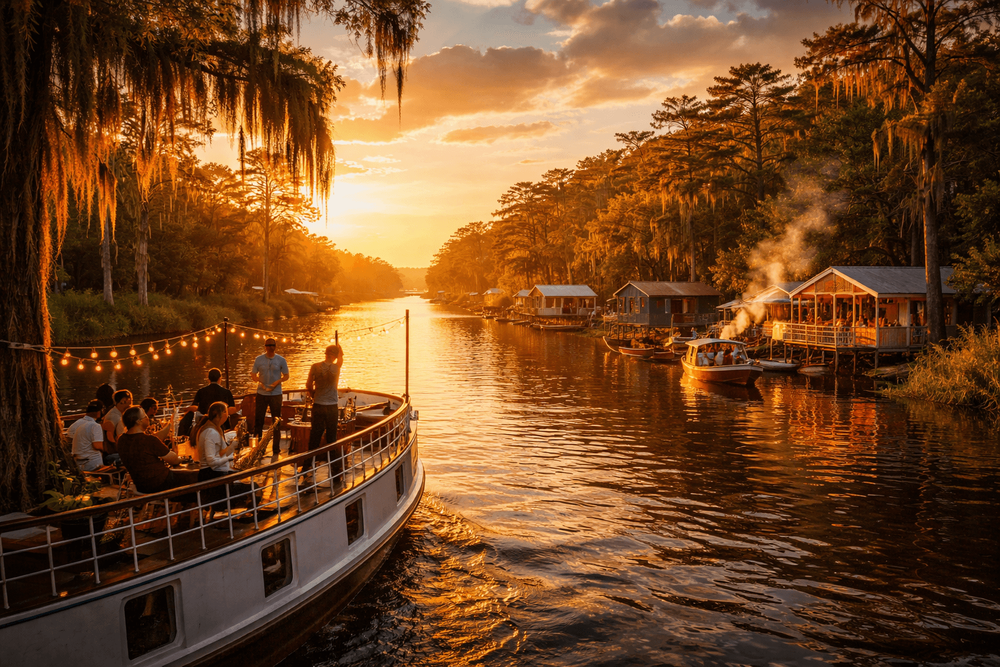
New Orleans River Runs: Dayboat Jazz, Creole Fishing Camps & Bayou Culinary Tours
Start on a Mississippi dayboat with live jazz, then slip into chef-hosted fishing camps for Creole catch-to-table feasts led by local captains. A 3–5 day arc of music, wetlands, and flavor across New Orleans and its bayous.
Trip Length
3–5 days
Best Time
March–November
Mood
Music & Culinary Adventure
You hear the paddlewheel before you see it—the slow slap of boards against brown water, a calliope warming through a ragtime scale, brass brightening the morning air. Coffee still tastes of chicory on your tongue when the band kicks in and the river widens into sky. By afternoon, the soundtrack softens to wind through reeds as you trade decks for cypress shade, a fillet knife for a fork. This is the rhythm of New Orleans bayou culinary tours: start on the Mississippi with a dayboat jazz cruise, then slip into the wetlands where chefs, captains, and tides set the table.
Jazz on the Mississippi: Dayboats that Score the City
The river teaches you the city’s outline. From a historic paddlewheeler or a modern dayboat, the skyline arranges itself—iron-laced balconies, the cathedral’s spires, working wharves stacked with history and cargo. Midday sailings drift past warehouses and grain elevators; twilight departures turn the water pewter and the music silkier. Expect live jazz—tight ensembles that fold standards into second-line swagger—and an easy pace that lets you feel how the whole metropolis turns to face the river.
On board, grab the rail for the wide swing around Algiers Point, watch shrimp boats scissor toward the Gulf, and spot pelicans bombing the eddies. If there’s dining, it tends to be straightforward: Gulf-leaning plates, Gulf views. The real point isn’t the menu; it’s that slow, cinematic aspect you only get from the water. Give yourself to it. The best way to understand New Orleans is not by lane or list, but by wake.
Bayou Bound: Chef-Led Fishing Camps and Catch-to-Table Rituals
Leave the docks and the river’s big-ship drama, and the whole mood changes. Within an hour or two, you’re into a checkerboard of marsh and open water—Bayou Sauvage’s bird-haunted edges, the cypress knees of Barataria, the lacustrine sprawl near Lake Pontchartrain. Small captains’ boats—shallow-draft skiffs or bay boats—thread narrow canals lined with cane. Egrets lift like torn paper. An alligator slides off a log with barely a ripple.
A chef-hosted camp day feels like entering someone’s living room, only the walls are wind and the roof is tin. Coolers thump open; the scent of woodsmoke hangs under a covered porch. Depending on the season and what the tides give, you might pull in blue crab or throw lures for speckled trout and redfish, learning to read grass lines and current seams from a captain who knows every dogleg by memory. Back at the dock or camp kitchen, the chef turns the wet haul into a lesson: the trinity (onion, bell pepper, celery) sweating in a cast-iron pot, filé and a dark roux held like secrets, crab cleaned to sweet, spidery claws. A pot of courtbouillon burbles; fried fish crackles, dusted with spice that tastes like summer’s heat and winter’s stories.
Meals are as conversational as they are culinary. You’ll hear how storm surges re-drew shorelines, why oyster leases matter, and which grandmother insisted on stirring a roux with a wooden spoon, never a whisk. The table is long, the laughter easy, and the landscape feels close enough to touch. It’s the opposite of a plated tasting menu—looser, more generous, and grounded in what came out of the water an hour ago.
Captains as Culture Keepers
Out here, your guide is as much interpreter as pilot. Local boat captains can read a tide chart like a newspaper. They point out duck blinds, crab traps, rookeries, and the subtle scrawl of nutria in the reeds. Many grew up fishing these bayous with family and keep camps that function as both pantry and porch—a place to mend a net, fry a mess of shrimp, swap weather lore, and mark life by migrations.
The better outfits foreground stewardship. Expect talk about seasons and limits, why some species are catch-and-release at certain times, how freshwater diversions and restoration projects are reshaping the marsh. You’re not just passing through scenery; you’re entering a working foodscape, and the etiquette is to listen, ask, and leave it better.
Planning New Orleans bayou culinary tours
- Best window: Spring and fall are a sweet spot—migratory birds are moving, humidity is gentler, and the water often runs clearer. Summer brings long light and exuberant fishing, but also heat and pop-up storms. Late-season trips (through November) can be gorgeous; keep an eye on tropical weather.
- How to book: Look for chef-led experiences that partner with licensed local captains. Seek small-group formats (often 6–10 guests) to keep conversations lively and the cooking intimate. Transparency about sourcing and respect for seasonal closures are green flags.
- What you’ll do: Typically, you’ll ride out from a marina, learn the ropes on the water, and land at a fishing camp or dock kitchen for a hands-on meal—gumbo or étouffée lessons, fish cleaning and spice rubs, maybe shucking and grilling oysters when they’re at their briny best.
- What to bring: Sun protection, a light wind layer, insect repellent, closed-toe shoes you don’t mind getting damp, and a reusable bottle. Cameras love this light, but ask before photographing people at work.
- Licenses and rules: Regulations change by season and species. If you plan to cast a line yourself, check current state requirements in advance; many guided experiences outline exactly what they cover.
A 3–5 Day Rhythm for Music & Culinary Travelers
- Day 1: River and brass. Arrive, drop your bags, and head straight to the riverfront. Book a daytime jazz cruise to learn the bends of the Mississippi by ear and eye. Back on land, wander the narrow streets near the docks and let the evening find you—perhaps with a late set in a small club.
- Day 2: Chef-led bayou foray. Early departure for your camp day. Ride past shrimp boats and bait shops to the launch. On the water, alternate between casting and learning. Lunch becomes a masterclass in Creole technique, eaten family-style under a corrugated roof as the marsh hums.
- Day 3: Wetland perspective, urban palate. Walk a national wildlife boardwalk in the morning to spot gators and herons from dry footing, then return to the city for a cooking demonstration or neighborhood food crawl that traces how the bayou pantry—crab, shrimp, oysters—translates to the plate.
- Day 4 (optional): Second camp, deeper dive. Head to a different parish or habitat—brackish marsh one day, cypress swamp the next—to compare flavors and fishing styles. Consider a sunset return and a late-night stroll along the river when the water looks like poured ink.
- Day 5 (optional): Leisure and legacy. Visit a local market, browse spice blends and hot sauces, and pick up a filé tin to carry flavors home. Close the loop with another short cruise—this time at dusk—so the lights of the city write themselves onto the water.
Getting There, Getting Around, What to Expect
- Arrival: Fly into Louis Armstrong New Orleans International Airport (MSY). The riverfront is within an easy drive; ride-share cars and taxis are readily available. Streetcars rumble near the river and make hop-on exploration simple once you’re in town.
- Meeting points: Dayboat cruises depart from the central riverfront; plan to arrive early for boarding. Bayou departures often leave from marinas south, east, or west of the city—think St. Bernard, Plaquemines, Lafitte, or the Northshore—so build in drive time. Many hosts provide exact coordinates and parking details in advance.
- Weather and water: Conditions shift quickly. Morning fog can burn into bright sun; a passing squall might cool the air, then vanish. Decks can be slick, and open boats mean exposure; layers help.
- Etiquette: Don’t feed wildlife. Respect private camps and working docks. Ask before handling gear. If a captain says a spot is quiet for a reason, believe it.
- Accessibility: Riverboats typically offer covered seating and multiple decks; check for elevator access if needed. Bayou boats and camps vary—some require stepping into small craft or climbing short ladders. If mobility is a concern, communicate with hosts in advance.
Why This Trip Works
New Orleans has always been a port of appetites—music, food, stories—and the water is the common table. Dayboat jazz cruises tune your ear to the city’s tempo; chef-led camps tune your palate to the tide. Together, they make a three-to-five-day arc that feels coherent and rare: you hear the brass on the big river, then taste the marsh where the brass gets its swagger.
If you’re choosing between options, prioritize intimate groups, clear respect for seasons, and collaborations between chefs and local captains. Those are the New Orleans bayou culinary tours that linger—experiences where you can smell the roux darkening, hear a captain tracing his childhood by bayou name, and watch a pelican’s shadow slide across the table just as the gumbo hits its stride.
The Next Wake
When the paddlewheel turns again and the skyline sharpens, you’ll carry the wetlands with you—the sound of reeds, the clatter of crab in a basket, the way a simple fry-up can taste like a map. That’s the thing about this city: it rewards anyone willing to follow the water. Start with the river’s horn-and-brass hello. Then go find the kitchens on stilts and the stories that simmer low. New Orleans bayou culinary tours make it easy to begin; the tide will handle the rest.