
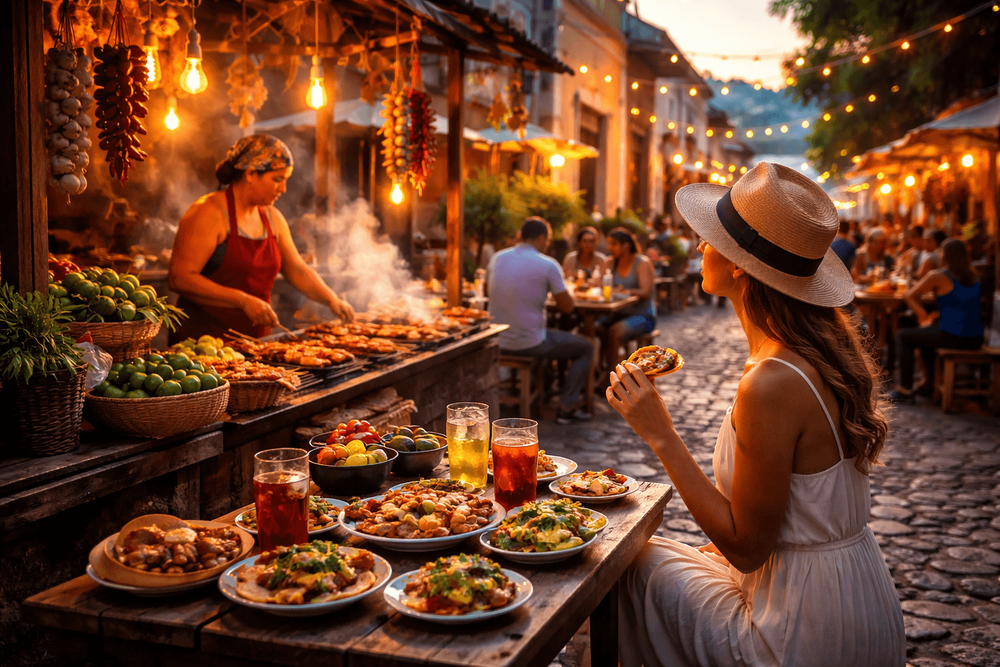
Off the Beaten Path: A Food Lover’s Guide to Authentic Eats
Skip the hype and taste the neighborhood: research smarter, eat braver, and find off-the-beaten-path meals from Kyoto alleys to Lisbon tascas.
Mood
Culinary Adventure
At dusk in Kyoto, a paper lantern breathes a soft amber glow over a cedar doorway barely wider than a shoulder. Steam slips into the alley; somewhere inside, dashi hums with kelp and katsuobushi, and a chef’s knife keeps time against a maple board. This is where the off the beaten path food pilgrim finds their reward: not the place splashed across billboards, but the one that smells unmistakably, deliciously of its neighborhood.
What “Off the Beaten Path” Means for Food Travelers
For culinary travelers, “off the beaten path” isn’t about remoteness—it’s about proximity to the everyday table. It means stepping past the top-ten lists to reach places where cooks cook for neighbors first and visitors second; where menus are short because the market decides them; and where the rhythm of a meal follows the rhythm of the street outside. Off the beaten path can be a stall two subway stops from the center, a grandmother-run kitchen behind a shuttered facade, or a counter bar under a single strip of neon.
It’s not a rejection of famous restaurants so much as a rebalancing: a commitment to tasting how a place feeds itself. The payoff is a bowl of noodles that tastes like the morning’s catch, a stew perfumed by a specific hillside’s herbs, or a pastry that exists only within five blocks of the oven that birthed it.
Why Seek Out Offbeat Food Experiences
- Flavor clarity and terroir: Dishes track the market’s heartbeat. Anchovies in Lisbon gleam with Atlantic brine; Kyoto vegetables carry the crisp sweetness of nearby fields; Sapporo’s miso ramen greets winter with a buttery warmth.
- Connection with people, not brands: A meal becomes a conversation—about recipes learned at a parent’s elbow, a holiday tradition, last season’s weather. Names replace star ratings.
- Cultural literacy: Street foods and home-style plates are vernacular cuisine. Learn to read them and you begin to read the city—its workday patterns, its migration stories, its preferences for bitter, sour, or smoke.
- Value and abundance: Short menus, no-frills rooms, and high turnover often mean better ingredients at gentler prices.
- Serendipity and memory: The most retold travel meals come from alleys and side streets—the hot broth on a cold corner, the skewer blistered over a charcoal tin, the orange of an egg yolk you didn’t know existed.
Research Tools That Actually Work
Finding authentic eats off the beaten path starts well before the first bite.

Lonely Planet Food Lover's Guide to the World: Experience the Great Global Cuisines: Mark Bittman, James Oseland, Lonely Planet, Austin Bush, Austin Bush
<strong>Presents a guide to culinary adventures around the globe, identifying the best places to find local food in every region of the world while offering cultural tips and dining etiquette conventi
Check Price on AmazonListen to local voices
- Neighborhood blogs and city magazines: Search in the local language and in English. Community papers often profile long-running spots and seasonal market guides.
- Food historians and journalists: Essays and oral histories explain why a dish matters—and where it is best understood.
Community forums and maps
- Local forums and expat communities: Threads about “where locals actually eat” often point to streets, markets, or canteens rather than one-off hype spots.
- Map layers: Build a personal map with pins from multiple sources. Prioritize clusters over single dots; deliciousness loves company.
Cookbooks as compasses
- Regional cookbooks reveal signature ingredients and cooking methods. Flag mentions of specific markets, bakers, or producers. The acknowledgments page is a treasure map of suppliers and restaurants the author trusts.
Social media—used with a reporter’s eye
- Follow market vendors, bakers, and small restaurants rather than influencers alone. Watch for daily specials, sold-out notices, and holiday closures.
- Geotags and hashtags in the local script surface spots where the caption reads like a love note, not an ad.
Official and semi-official sources
- Municipal market authorities, agricultural co-ops, and fishing port pages publish auction times, seasonal calendars, and stall directories—clues for when and where to go.
Language and logistics helpers
- Download offline maps and a translation app trained on menus. Save key phrases for “What is your specialty?” and “What’s fresh today?”
- Note payment norms; many small vendors prefer cash. Pack small bills.
On-the-Ground Tactics: Finding and Scoring Great Off-Path Meals
Go where ingredients gather
- Markets at dawn: Arrive with the chefs. In Lisbon, the Atlantic shows up in plastic crates still clicking with ice; in Seoul, brass ladles clang over vats of bone broth before commuters descend.
- Perimeter walks: Circle the outside edge of a market first, then spiral inward. Smell, listen, and note queues where the clientele skews older—often a sign of deep neighborhood trust.
Read the room, not the sign
- Short menus signal focus; handwritten boards suggest seasonality. A printout in plastic may never change; chalk dust tells a story.
- One-dish specialists are often sublime. If everyone is eating the same thing, join them.
Time it right
- Late breakfasts in Tokyo’s old neighborhoods, office-worker lunches in Lisbon tascas, pre-theater snacks in Kyoto’s alleys, nighthawks’ soup in Sapporo—each window reveals a different menu and mood.
Ask better questions
- Instead of “What’s good?” try “What are you proud of today?” or “What’s selling fastest?” Curiosity, framed respectfully, opens doors.
Decode menus without the language
- Numbers, arrows, and stars usually mark house specials. Photos can mislead; watch the pass and point, with permission, to a dish exiting the kitchen.
- Learn a half-dozen ingredient words (mackerel, pork belly, seaweed, mushrooms) to steer preferences and avoid surprises.
Hygiene and turnover cues
- Hot food hot, cold food cold; lids used and replaced; a tidy mise-en-place; a queue that moves. At street stalls, look for vendors who plate with tongs rather than bare hands.
Order and pay like a local
- Queue etiquette matters. In many markets, seat yourself only after paying at the counter. Keep small coins ready; tip modestly where appropriate, generously where it’s the norm.
Carry your own daypack kit
- Napkins, hand wipes, a collapsible tote for market finds, and a reusable water bottle. A small spice tin or chili oil packet can turn a good snack glorious—though always taste first; the cook likely seasoned it perfectly.

Sea to Summit Ultra-Sil Reusable Shopping Bag, Lime : Sea to Summit
View on Amazon
Osprey Ultralight Collapsible Stuff Pack - Lightweight, Packable Travel Backpack — Extra Bag For Travel and Every Day — 18 L Capacity Daypack to Expand Luggage, Black
Amazon.com : Osprey Ultralight Collapsible Stuff Pack - Lightweight, Packable Travel Backpack — <strong>Extra Bag For Travel and Every Day — 18 L Capacity Daypack to Expand Luggage</strong>, Black : S
Check Price on AmazonDestination Spotlights: Offbeat Food Moments Worth the Detour
These aren’t the marquee reservations. They’re the side-street meals that stitch a city to your memory.
Kyoto: Lantern-Lit Alley Kaiseki
In Kyoto’s lesser-trafficked alleys, tiny kaiseki counters reinterpret temple purity and seasonal restraint with six to ten courses that whisper rather than shout. The meal might begin with a saucer of silken yuba draped over young bamboo shoots, then a clear broth catching the first green of sansho leaves. Local vegetables—Kyo-yasai—arrive lacquered with miso aged in cedar barrels. Watch for counters where the chef shops at Nishiki or even smaller ward markets, then designs the night’s menu around a single mushroom variety or river fish. Dress modestly, speak softly, and arrive on time; this is cuisine as conversation.
- When to go: Early spring for mountain greens; late autumn for matsutake and Kyoto turnips.
- How to book: Many counters take phone reservations only; hotel concierges or tourist information centers can assist. Some walk-in seats are released at opening.
Tokyo: Machiya Cafés with a Quiet Genius
Away from Shibuya’s blaze, renovated machiya (townhouses) shelter cafés where coffee is an art and lunch is reverent. Expect set plates of grilled mackerel with grated daikon, miso soup that tastes of the season’s kelp, and rice polished just so. Cakes arrive with restrained sweetness; seasonal fruits star. The creak of floorboards, the whiff of cedar, the tick of a siphon—everything slows. These houses are often family-run; many close early or take a midweek rest.
- When to go: Mornings for kissaten-style coffee and toast; weekday lunches for neighborhood calm.
- Tip: Remove hats, lower voices, and photograph discreetly; you’re in someone’s home as much as a café.
Lisbon: Neighborhood Tascas That Still Cook by Feel
In residential bairros, tascas feed postal carriers, carpenters, and retirees who know the cook by name. Lunch is the main event: broiled sardines that sparkle with sea salt, pork à alentejana perfumed with clams and cilantro, caldo verde with a curl of chouriço. Carafes of vinho verde bead with condensation. The paper place mat soaks up olive oil like a love letter. Daily pratos do dia sell out—when they’re gone, they’re gone. Ask for the house dessert; there’s always one.
- When to go: Weekdays around 12:30–14:00 for the widest choice; arrive early to avoid lines.
- Etiquette: Bread, olives, and cheese placed on the table may be charged only if eaten. Decline politely if you prefer.
Seoul: Alleyway Street Food with a Pulse
Under a tangle of gas canisters and tarps, Seoul’s alleyways stage a nightly opera of heat and spice. A halmeoni ladles gukbap heavy with marrow beside a vendor fanning tteokbokki’s crimson simmer until it snaps. Gimbap rolls are cut like drum beats; skewers hiss over charcoal. Look for alleys where suits shoulder in beside students—proof of a democratic deliciousness. Bring cash and trade pleasantries; a few Korean words go a long way.
- When to go: Evenings for the full spectrum; dawn for steaming bowls built for shift workers.
- Safety: Eat where turnover is brisk; choose soup stalls with rolling boils and tteokbokki sauces that clearly bubble.
Bali: Village Warungs that Taste of the Compound Kitchen
Beyond beachfront strips, family warungs plate Bali’s soul food in threadbare pavilions: lawar speckled with coconut and blood, bebek betutu slow-smoked in banana leaves, and bowls of babi guling crackling dangerously. Banana leaves release a sweet-green perfume when hot rice lands. Ask where the cook buys spices—often a morning market nearby—then visit at dawn to see turmeric-stained fingers and chilies heaped like rubies.
- When to go: Early morning for market breakfasts; mid-afternoon for slow-cooked specialties.
- Respect: Dress modestly near temples; avoid waste, and carry leftovers in your tote rather than asking for extra plastic.
Sapporo: Izakayas That Warm the Hokkaido Night
Snow lifts the city’s scent into a clean, sharp register, and izakayas answer with heat and fat: jingisukan lamb hissed on convex grills, buttery corn dotted into miso ramen, zingy pickles carving relief. Counters glow with amber bottles; the cook’s hands are a choreography of skewers and ladles. Seek spots near the morning fish market or tucked under tram lines; the sake list will tilt local, and the specials board might sing of hairy crab when the sea allows.
- When to go: Winter for soup curries and miso-rich warmth; early summer for ocean-fresh uni and crab.
- Ordering: Point to the “today’s recommendation” board; ask for small plates to graze widely.
Safety, Etiquette & Dietary Considerations
- Food safety: Favor busy stalls and short menus. Trust your senses—fresh oil smells like roasted nuts, not crayons; fresh fish is sweet-ocean, not low-tide.
- Allergies and restrictions: Carry translated cards detailing critical allergens. Learn to say “no fish sauce,” “no pork,” or “vegetarian” in the local language, and confirm whether broths are meat-free.
- Halal, kosher, and Jain considerations: Research neighborhoods with appropriate butchers and vendors. Street food scenes often have dedicated clusters.
- Drinking: In izakayas and tascas alike, alcohol accompanies food. If abstaining, request nonalcoholic options confidently; many houses proudly serve teas, house-made sodas, or vinegars.
- Table manners: Watch the room. In Kyoto, silence can be a compliment; in Lisbon, a friendly exchange with the cook is part of the ritual. In Seoul, pour drinks for others before your own.
- Photography: Ask before shooting people or kitchens. A nod and raised camera can be question enough; accept “no” with grace.
- Payment: Cash remains king at small places. Have small notes; don’t hold up a queue while fishing for change.
How to Plan for Off the Beaten Path Eats
- Anchor days around markets, then build outward to nearby specialists.
- Cluster meals by neighborhood to walk between them; appetite returns with distance and discovery.
- Mix reservations with spontaneity: book one deliberate experience (a counter, a workshop) and leave space for a stall that seduces you at the corner.
Putting It Together: Sample Off-the-Beaten-Path Food Itineraries
These templates braid planning with serendipity and can be adapted to most cities. They privilege small vendors, neighborhood institutions, and experiences where your spend stays local.
Half Day in Lisbon: Market-to-Tasca Micro-Adventure
- 08:30 Mercado Morning: Start at a traditional market hall in a residential bairro. Walk the fish counters; chat with a vendor about the morning’s landings. Snack on a bifana at a stand where pork chops sizzle to order.
- 10:00 Coffee and a Nata: Slip into a century-old pastelaria on a side street. Order espresso short and a still-warm pastel de nata. Note the locals dunking bread in galão for your next visit.
- 12:00 Tasca Lunch: Find a neighborhood tasca with a handwritten board. Ask for the prato do dia and a half-carafe of vinho verde. Finish with queijo and quince paste.
- Ethical booking: None required; spend directly with vendors. If joining a market tasting, choose a small, locally owned operator that caps groups at eight and pays vendors fairly.
Three Days in Kyoto: From Morning Markets to Alley Kaiseki
Day 1: Markets and Monks’ Bowls
- Dawn: Visit a ward market favored by restaurant buyers. Look for mountain vegetables in season. Buy pickles to nibble later.
- Late Morning: Temple shōjin ryōri lunch. Book a small, temple-affiliated dining room where vegetables and tofu carry the day. Ask about seasonal ingredients.
- Evening: Neighborhood izakaya in a machiya. Sit at the counter; order small plates—grilled river fish, seasonal tempura, Kyoto eggplant.
Day 2: Workshops and Waterways
- Morning: Join a tofu-making workshop limited to a handful of guests at a family-run shop. Confirm that fees include ingredients sourced locally and that recipes are shared freely.
- Afternoon: Stroll a canal-side district. Stop for wagashi and matcha at a quiet tea house; observe sweetmaking like theater.
- Night: Alley kaiseki. Reserve a tiny counter that designs menus around the morning’s market run. Dress respectfully, arrive punctually, and let the chef guide you.
Day 3: Farmers and Fire
- Morning: Half-day excursion to a farm on Kyoto’s outskirts. Many small holdings host visitors for planting or harvesting days; choose a program run by the farmer, not a reseller, and that pays workers fairly.
- Lunch: Return to the city for obanzai—home-style plates that change with the season—at a diner feeding office workers.
- Evening: Yakitori specialist with binchotan charcoal. Order omakase skewers; sip local sake by the glass.
Five Days in Bali: Village Kitchens, Spice Trails, and Dawn Markets
Day 1: Arrival and Orientation
- Late Afternoon: Walk a neighborhood away from the beach. Snack at a warung where the grill perfumes the lane. Keep it light; save appetite for tomorrow’s early start.
Day 2: Market Dawn and Compound Lunch
- Pre-dawn: Head to a village market. Follow the scent of fried bananas and the slap-slap of dough. Ask vendors about spice blends; buy small packets to learn from later.
- Midday: Eat at a family compound that serves lunch a few days a week. Ensure your booking is direct-to-family, with transparent pricing and small groups.
- Sunset: Coconut and sambal at a roadside stall. Choose stalls with a steady stream of locals.
Day 3: Spice Workshop and Temple Etiquette
- Morning: Book a spice grinding and cooking class at a community-run center that sources from nearby farms and limits class sizes.
- Afternoon: Visit a temple respectfully. Dress with shoulders and knees covered. Snack on offerings from a stall outside—sticky rice cakes, palm sugar sweets.
- Night: Babi guling at a warung known to close when sold out. Arrive early; share a table.
Day 4: Sea and Smoke
- Dawn: Visit a fishing village as boats return. Many families sell grilled catch at makeshift pits. Choose vendors handling fish on clean boards with cool boxes at the ready.
- Evening: Bebek betutu slow-smoke feast. Pre-order; the dish takes time.
Day 5: Rest and Reflection
- Morning: Coffee at a family roastery. Learn about roasting curves and the economics of smallholders.
- Lunch: Nasi campur buffet where you point to dishes you now recognize. Tip the server who coached you on chilies on Day 2.
- Ethical experiences: Throughout, confirm that any intermediary is locally owned; ask operators how much of your fee goes to cooks and farmers. Favor small caps and transparent sourcing.
A Note on Booking Small, Ethical Local Experiences
- Vet operators: Look for community ownership, transparent pricing, and vendor payments disclosed up front. Avoid experiences that stage poverty or pressure vendors.
- Group size: Eight or fewer keeps impact low and conversations real.
- Language and respect: Learn greetings; arrive on time. Dress for the neighborhood, not a photoshoot.
- Pay fairly: Don’t bargain vendors into losses. If an extra plate appears unasked and you enjoyed it, pay for it.
The Lasting Taste
The best off the beaten path meals rarely arrive with fanfare. They happen because a traveler learned to read the market’s clock, to ask a cook what they’re proud of, to walk one more block after the crowds thin. Remember the smell of yuba and cedar in a Kyoto alley, the tingle of sansho on your lip, the atlantic snap of a sardine in Lisbon, the sweet-heat of Bali’s sambal sliding across rice. Follow those traces, and the next door with a paper lantern—or a handwritten menu, or a wok’s metallic whisper—will open.
Recommended Travel Gear
Lonely Planet Food Lover's Guide to the World: Experience the Great Global Cuisines: Mark Bittman, James Oseland, Lonely Planet, Austin Bush, Austin Bush
<strong>Presents a guide to culinary adventures around the globe, identifying the best places to find local food in every region of the world while offering cultural tips and dining etiquette conventi
Osprey Ultralight Collapsible Stuff Pack - Lightweight, Packable Travel Backpack — Extra Bag For Travel and Every Day — 18 L Capacity Daypack to Expand Luggage, Black
Amazon.com : Osprey Ultralight Collapsible Stuff Pack - Lightweight, Packable Travel Backpack — <strong>Extra Bag For Travel and Every Day — 18 L Capacity Daypack to Expand Luggage</strong>, Black : S
Sea to Summit Ultra-Sil Reusable Shopping Bag, Lime : Sea to Summit
Lightweight, compact reusable shopping ... and stuff sacks · <strong>Ideal for grocery shopping, farmers markets, and travel; large 6.5 gallon capacity holds all the essentials, and strong fabric can