
Redrock Nights: Slot Canyons, Dark‑Sky Camps and Ranch Stays in Utah’s Backcountry
Thread luminous slots by day and sleep under star‑rich skies by night. This 5–8 day Escalante–Grand Staircase–Glen Canyon plan pairs ranch stays with dark‑sky camping.
Trip Length
5–8 days
Best Time
April–May and September–October
Mood
Adventure & Wellness (outdoor)
Dusk settles fast on the sandstone. One moment you’re tracing ripples of ancient seabed in warm, apricot light; the next, the sky vaults to ink and the Milky Way spills from horizon to horizon. This is the promise of Utah slot canyon camping—days threading cool, sculpted corridors and nights under stars so bright your headlamp feels superfluous. Base yourself on a working ranch, add a couple of astronomy-led campouts, and you’ll tap into the Escalante–Grand Staircase–Glen Canyon corridor’s quieter magic—desert drama without the shuttle lines of Zion.
Why this corner of Canyon Country works right now
Grand Staircase–Escalante’s backroads, the Escalante River drainages, and the Glen Canyon corridor draw hikers and photographers who prefer solitude to scene. The terrain is intimate rather than towering: sensuous bends of Navajo sandstone, cottonwood-lined washes, and slots that squeeze to shoulder width before opening into sunlit chambers. Gateway towns are small and unhurried, with ranches that offer cabins and casitas surrounded by sage and slickrock. Many local guides are naturalists first—equipped with telescopes, star charts, and a knack for reading the sky—so a dark‑sky program pairs naturally with days on the trail.
A 5–8 day outline: slots by day, stargazing by night
Days 1–2: Escalante base. Settle into a ranch stay outside town and start early along Hole‑in‑the‑Rock Road, a well-known dirt artery to photogenic narrows. Popular choices include the Peekaboo and Spooky complex, with undulating walls and playful crawl‑throughs. Families can manage sections as an out‑and‑back; photographers should bring a wide‑angle lens and plan for midday light to bounce amber and rose off the sandstone. Return to your ranch porch for sunset, then head to a guided stargazing session—expect laser‑pointer constellation tours and telescope time with Saturn’s rings if they’re in season.
Day 3: Calf Creek day. The lower falls hike is a crowd‑pleaser with classic desert riparian scenes—ferns, petroglyph panels along the canyon wall, and a curtain of water pouring into a turquoise pool. It’s a fine reset day between tighter slot hikes. Back at the ranch, many hosts can arrange horseback rides across open benches or recommend a quiet sunset vantage across the slickrock seas.
Days 4–5: Boulder and backroads. Drive the sweeping curves of Scenic Byway 12 toward Boulder for broader views and another suite of canyons. The Burr Trail notch carves through a rose‑colored canyon that feels cinematic without the commotion. Short side slots branch off the main canyon; keep an eye on unmarked pullouts and use established paths where they exist. Return to Escalante or stay closer to Boulder for a different ranch rhythm—quiet mornings, big sky, and the hush of wind through rabbitbrush.
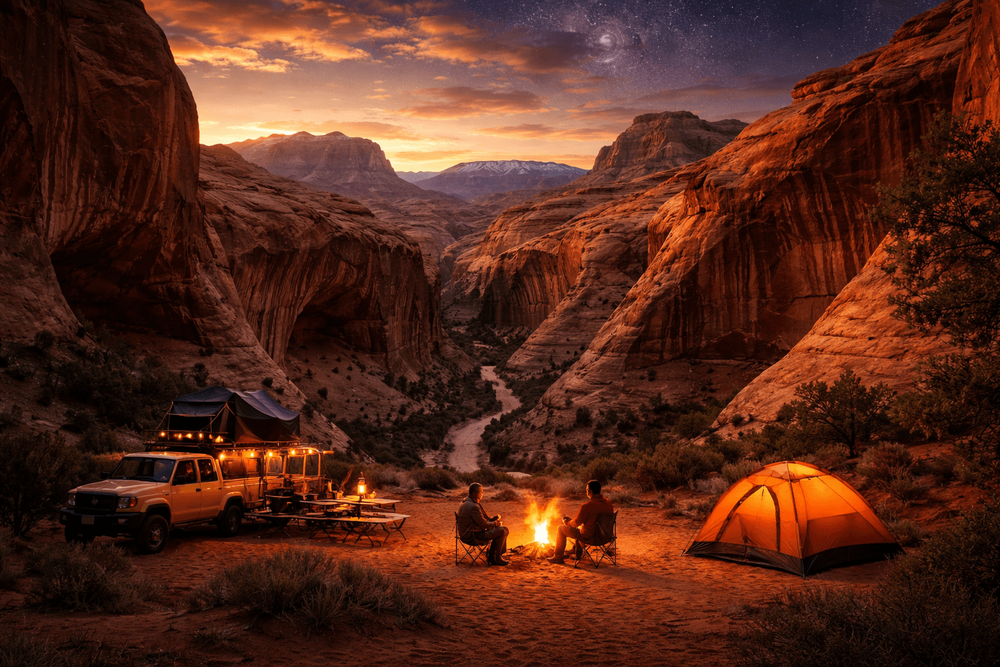
Days 6–7: Glen Canyon corridor campout. Shift to a night or two of dark‑sky camping. Along approved backroads and shorelines within Glen Canyon National Recreation Area and adjacent BLM lands, designated and dispersed sites (where allowed) offer panoramic skies and open horizons. Astronomy‑led camps are a highlight here: guides haul sturdy telescopes, share sky lore, and help you dial in long‑exposure shots. Wake to pink light on buttes and the smell of juniper, then strike out for a half‑day slot near the Escalante River or a bench‑top ramble to prehistoric sand dunes now lithified into waves of rock.
Optional Day 8: Slow morning, then one last slot. Zebra or Tunnel canyons (conditions vary) reward patient photographers with creamy striations and mirror‑still pools after rains. If conditions aren’t right, ramble a slickrock dome and let the skyline do the storytelling.
Utah slot canyon camping: where the nights shine
If your desert dream is equal parts hiking and night sky, this region makes it easy to mix both. Utah slot canyon camping thrives here because campable terrain sits remarkably close to day‑hike trailheads. You can leave a ranch after lunch, drive a short stretch of graded gravel, and have your tent pitched by golden hour. A few planning notes:
- Conditions change quickly. Flash‑flood risk is real; slots act like funnels during storms. Check weather several times (both the local forecast and regional radar) and never enter a narrow canyon if rain is possible upstream.
- Road surfaces vary from washboard to sand and clay. After rain, some routes become impassable. High‑clearance vehicles are often recommended; four‑wheel drive can be essential on certain spurs.
- Camp only where permitted. In popular areas, use designated sites. Disperse only where it’s clearly allowed, on durable surfaces. Pack out everything; even microtrash glows under starlight.
- If you’re new to Utah slot canyon camping, consider a guided overnight. You’ll maximize safety and learn sky photography fast.
For photographers and families
- Light and timing: Midday brings luminous, reflected glow inside many slots, while late afternoon paints the rim walls. Early arrivals beat crowds at popular narrows; late starts can mean richer tones but warmer temps.
- Lenses and settings: A fast wide‑angle is king underground. A lightweight tripod helps for the blue‑hour rim shots after you exit the canyon. Keep dust caps handy; fine sand travels.
- Kids in slots: Choose corrugated slots with escape ramps and avoid obstacles that require exposure moves. Teach a simple “one at a time” rule for chokepoints and keep group size modest.
- Night photography: During astronomy‑led camps, red‑light discipline protects night vision. Learn to focus at infinity before full dark. Compositions with sage, juniper, or a slickrock spine give the sky context.
How to get there
- By air: The most reliable gateways are Salt Lake City and Las Vegas, with rental cars available; both are a half‑day’s drive from Escalante. Smaller regional options include Page and St. George, helpful if you’re focusing on the Glen Canyon corridor. From the north, US‑89 and UT‑12 link you into the heart of Grand Staircase–Escalante; from the west, UT‑12 rolls in from Bryce Canyon country.
- By road: UT‑12, a designated scenic byway, is the spine of this trip, connecting Boulder and Escalante with sweeping panoramas and frequent turnouts. Hole‑in‑the‑Rock Road branches south of Escalante toward several famous slots; it’s graded gravel with variable conditions.
What to expect on arrival
- Services are concentrated in small towns. Stock up on fuel and water whenever you can; once you hit the backroads, amenities disappear. Cell coverage is patchy to nonexistent in canyons and on remote benches.
- Orientation is everything. Stop at the Escalante Interagency Visitor Center for current road conditions, water levels in specific canyons, and camping rules. Glen Canyon’s visitor centers can brief you on shoreline access, backcountry protocols, and fire restrictions.
- Ranch stays feel personal. Expect porches angled toward sunsets, trail advice over morning coffee, and an easy pivot from comfort to adventure—ideal when you’re pairing soft beds with a night or two under canvas.
The quieter alternatives to Zion
Zion rewards, but it concentrates visitors on a handful of marquee trails. Here, the canyons diffuse across a much larger map. You’ll park at sandy pullouts, follow cairned routes across slickrock, and slip into narrows where footfalls are the loudest sound. Patience and an early start tend to buy you exactly what you came for: color, silence, and room for your tripod.
Practical tips and safety
- Water: Carry more than you think you need; reliable sources are limited and often silty. Many hikers stash a reserve in the vehicle for post‑hike recovery.
- Footwear: Closed‑toe shoes with good grip handle undulating sandstone and occasional wades. Thin gloves can save your hands in rough‑walled squeezes.
- Weather windows: The sweet seasons—April–May and September–October—bring cooler mornings and long, camera‑friendly evenings. Summer heat is intense; winter can be icy on shaded ledges.
- Leave no trace: Walk on rock or in the sandy wash, not on cryptobiotic soil. It’s the black‑crusted living skin of the desert—once crushed, it can take years to recover.
When to go
The shoulder seasons are the gold standard here. Spring (April–May) brings mild days, clear stars, and cottonwoods leafing bright green against red rock. Autumn (September–October) adds crisp mornings and flame‑colored willows along the washes—perfect for tent nights and unhurried hikes. These cooler windows also make Utah slot canyon camping more comfortable for families.
The takeaway
In a single week, you can thread luminous narrows, watch a constellation parade from your sleeping bag, and wake on a ranch to the hiss of sprinklers in a hayfield turning gold. Canyon Country rewards those who slow down, plan with care, and give darkness its due. Start sketching your route along UT‑12, match a ranch base to a pair of night‑sky camps, and leave room for surprises. Out here, the map is a suggestion—the sky is the itinerary.