
The Art of Going Slow in Oaxaca: Villages, Textile Traditions and Mezcal Country
Plan a slow, craft-centered Oaxaca itinerary: 5–7 days of village kitchens, weaving workshops, mezcal country, and boutique stays beyond the city center.
Trip Length
5-7 days
Best Time
October–April (dry season; mild days, cool nights; Día de Muertos late Oct/early Nov)
Mood
culinary
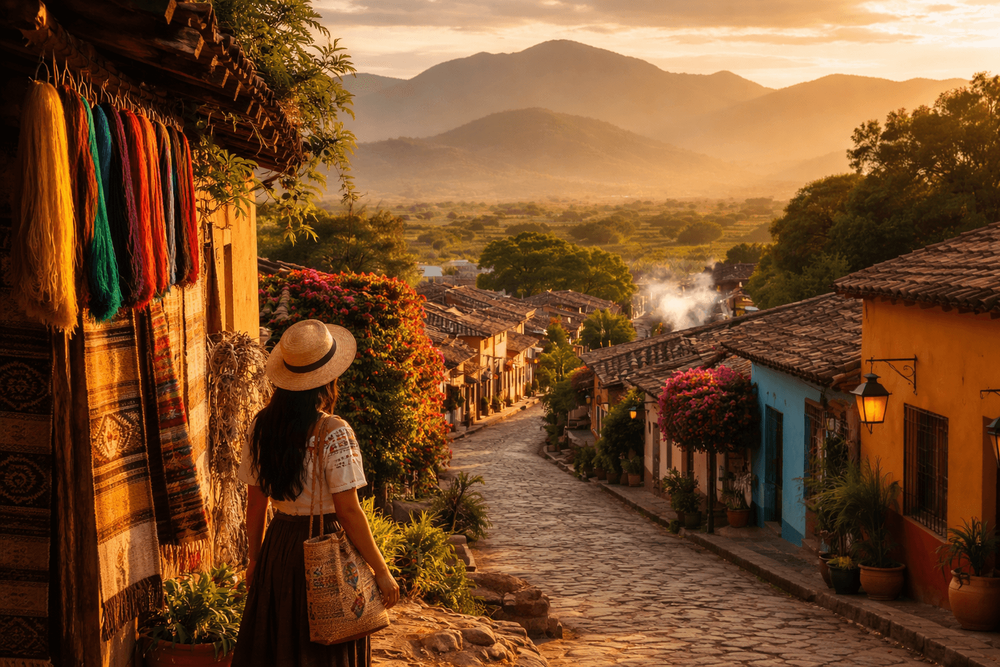
Smoke from a morning comal curls into the cool air as a woman pats blue-corn masa into memelas, the rhythm of her hands matching the soft thud of a nearby loom. This is where a thoughtful Oaxaca itinerary begins—not in a rush to collect sights, but in the small, precise moments that flavor the valley: a gourd of chocolate de agua, the scent of roasted agave drifting from a country palenque, cochineal-dyed skeins hung like flags across a courtyard.
Why Slow Oaxaca Rewards the Patient Traveler
Oaxaca is a city, yes, but it’s also a constellation of craft villages and kitchens spread across the valley, each with its own tempo and tradition. Teotitlán del Valle weavers working with natural dyes. San Bartolo Coyotepec’s glossy black clay. Santa María Atzompa’s green-glazed pottery. Alebrije carvers in San Martín Tilcajete. Mezcal makers around Santiago Matatlán. The distances are short, but the conversations are long—and that’s the point. You’re not here to sprint. You’re here to listen, to taste, and to buy directly from the people who make the things you’ll live with long after you fly home.
Your 5–7 Day Oaxaca itinerary for Going Slow
This Oaxaca itinerary stretches comfortably over five to seven days, leaving space for detours and second helpings.
Day 1: Settle In and Stroll the Barrios Choose a small inn or guesthouse beyond the heart of the historic center—think the arty lanes of Jalatlaco, the stone-lined streets of Xochimilco, or the leafy slopes of San Felipe del Agua. You’ll trade late-night noise for courtyards scented with lime blossoms and quick access to the villages. Stretch your legs along colorful block-long murals, then drift toward a market stall for tlayudas pressed to order and a glass of agua de chilacayota. As the city’s church bells mark evening, let jet lag dissolve into your first sip of joven mezcal.
Day 2: Markets, Mole, and a Garden of Stories Morning is for markets. Browse produce pyramids and stacks of herbs while cooks griddle memelas by the dozen. Watch chiles get toasted for mole and ask vendors about their favorite chiles for coloradito or estofado. If you’re curious about Oaxaca’s botany and foodways, plan for the Ethnobotanical Garden—entry is typically by scheduled tours, so check timing in advance. Lunch should be simple and deeply local: tamales steamed in banana leaves or mole amarillo spooned over chicken. In the late afternoon, wander through workshops within the city—textiles, tin, or wood—before dinner at a neighborhood cocina serving seasonal dishes alongside corn tortillas pressed in the glow of a clay comal.
Day 3: Teotitlán del Valle—Looms, Natural Dyes, and Mountain Light Head east into the Tlacolula Valley for a day in Teotitlán del Valle. Many family workshops welcome visitors into courtyards where skeins dry from pomegranate and pericón, and cochineal shows its surprising range—from pale rose to wine-dark crimson. Ask about carding, spinning, warp setup, and how patterns are passed down. A village comedor is where lunch should happen: sopa de guías, quesillo pulled like ribbon, and tortillas that have never seen plastic wrap. If you have energy to spare, short trails lead out toward the surrounding hills; even a brief walk reveals the silence that shapes this village’s work.
Day 4: Market Day Swap—Tlacolula or Mitla If your trip includes a Sunday, dedicate it to the Tlacolula market, a riot of produce, live animals, embroidered aprons, and church courtyards scented with copal. Order barbacoa by the kilo and fold it into warm tortillas with pickled nopales. If Sunday doesn’t line up, make this your Mitla day—wander among intricate stone fretwork and then drop into nearby weaving towns to see how old and new motifs meet on a modern loom. Return to the city in time for a twilight rooftop—Oaxaca’s sky goes lavender before dinner.
Day 5: Mezcal Country—From Field to Copita Today is for agave. Arrange a trusted driver or guided transport—the tasting is the point, not the driving. In the fields around Santiago Matatlán and neighboring towns, many palenques open their doors to visitors. You’ll step across a floor dusted with fibers from roasted piñas and watch a stone tahona grind the hearts into pulp. Fermentation vats bubble; copper or clay stills hiss and sing. Keep the pace slow: small pours, water breaks, questions about varietals and altitudes, conversations about wild versus cultivated agaves and the patience they demand. Lunch is simple grilled meat or vegetables with a pile of tortillas and salsas. By late afternoon you’ll understand that mezcal is less a drink than a landscape distilled.
Day 6: Clay, Green Glaze, and a Long Lunch South of the city, San Bartolo Coyotepec’s barro negro shows off razor-thin carving and graphite sheen; west, Santa María Atzompa’s kilns fire the iconic green. Workshops often sit behind unassuming gates—step in, greet the family, and give your eyes time to adjust to rooms lined with forms in every stage of creation. When pieces choose you, buy directly; your pesos ripple through these studios. Make time for a long lunch in a village kitchen—mole negro is a ceremony, and you’ll taste that in every spoon.
Day 7: Open Day—Artisans You Missed, or Monte Albán at Dawn Leave space in your Oaxaca itinerary for what you didn’t expect: a return visit to a weaver, a cooking class in a home kitchen, or a morning walk among hilltop ruins before the day warms. If you’re checking out, pick up textiles or pottery you’ve been considering; regret weighs more than an extra kilo in your carry-on.
Where to Stay Beyond the Center
The most rewarding boutique stays often hide on shady side streets: restored casonas with interior gardens, design-forward guesthouses that showcase local craft, and small inns tucked into the foothills with valley views. Look for places that serve breakfast in-house (so you can get an early start for village days) and that can connect you with trusted drivers and guides. Outside the city, countryside lodges near Teotitlán or Mitla trade nightlife for star-salted silence and dawn walks.
Eating and Drinking with Intention
Oaxaca’s kitchens are generous, and the best way to understand them is to sit down where ingredients were grown or milled. Try:
- Memelas piled with asiento and fresh salsas at a morning stall.
- Tlayudas crisped over charcoal and cut into quarters to share.
- Tamales de chepil, coloradito over turkey, or chichilo if you’re lucky.
- Tejate whipped in a jícara, a cool, cacao-and-maíz drink that fuels market mornings.
- Chocolate de agua frothed high, and atole when nights are cool. Taste mezcal in flights where production is explained clearly—espadín side by side with tobalá or madrecuixe opens a window onto agave diversity. Sip, don’t slam; great producers make spirits meant for conversation.
Getting There, Getting Around, and What to Expect on Arrival
Fly into Oaxaca International Airport (OAX). The terminal is compact; you’ll be outside in minutes. Authorized taxis line up at the exit, and private transfers can be arranged in advance through your lodging. Cash (pesos) is widely preferred in villages and markets; ATMs can be found in the city.
Within the city, you’ll happily walk most days; for craft circuits and mezcal visits, hire a driver or join a small tour. Rental cars are available if you prefer full independence; primary routes are paved, but rural turnoffs can be unsigned, so allow extra time.
On arrival, expect altitude-lite living: bright, highland sun and cool evenings. Days are typically dry from late fall through spring, and adobe walls hold the night’s chill—layers help.
When to Go
October through April is the sweet spot: dry skies, lively markets, and long, golden afternoons. Late October and early November bring Days of the Dead commemorations; if that’s your aim, plan well ahead and accept that village visits will move at a different rhythm. Winter nights run cool; clay mugs of atole make sense then. By spring, jacarandas throw purple shade across sidewalks and driving out to the valleys is a pleasure.
Tips for Respectful, Rewarding Encounters
- Buy at the source when you can; ask about process and care.
- Always ask before photographing people or inside workshops.
- For mezcal days, arrange a sober driver. Hydrate and pace tastings.
- Keep small bills for market meals and village purchases.
The Last Word
Slow travel isn’t code for doing less—it’s permission to do things properly. This Oaxaca itinerary leaves room for the long lunch, the second cup, the extra half-hour leaning over a loom to understand the genius of a pattern. The valley rewards patience. Start setting aside days now, and Oaxaca will meet you with open doors and a seat at the table.
Where to Stay

Hotel Hacienda
Hotel Hacienda is a 4-star stay in Oaxaca offering comfortable rooms and a convenient base for exploring the city, with a guest rating of 8/10.

Hotel Fortin Plaza
Hotel Fortin Plaza is a 4-star stay in Oaxaca, offering easy access to the city center and a practical base for exploring local sights, with comfortable rooms and a guest rating of 8.3/10.

Hotel Victoria Oaxaca
Hotel Victoria Oaxaca offers a convenient stay in Oaxaca with city views, an outdoor pool, restaurant, and fitness center. The 3.5-star hotel is rated 7.9/10 by guests and suits travelers seeking practical amenities.

Parador del Dominico
Parador del Dominico is a 3-star hotel in Oaxaca, offering a central stay near the city’s main sights with comfortable rooms, a restaurant, and practical amenities for travelers exploring the historic center.

Hotel Trebol
Hotel Trebol is a 3-star stay in Oaxaca with a 9.4 guest rating, offering a convenient base for exploring the city and a comfortable setting for travelers.