
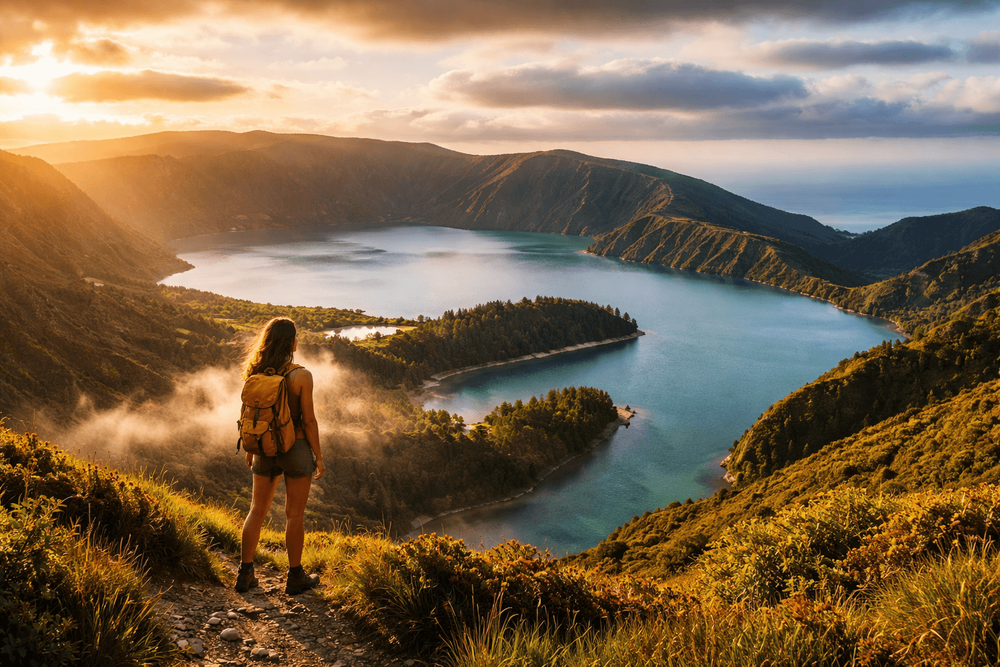
The Azores for Active Travelers: Crater Lakes, Thermal Pools and Whale Season
Hike crater rims, watch whales, and soak in thermal pools on São Miguel. A 5–7 day Azores travel guide for active couples and adventurous travelers, April–October.
Trip Length
5-7 days
Best Time
April–October; spring for migrating whales, summer for trails and swims, early autumn for calmer, d'
Mood
adventure
Mist peels off a blue-green crater lake at first light, the hydrangeas along the lane still jeweled with dew. By afternoon, a geysering spout marks a whale’s slow arc offshore, and by twilight you’re weightless in a steaming pool under tree ferns. If that sounds like your kind of week, this Azores travel guide points you straight to São Miguel’s elemental core—lava-forged trails, warm mineral waters, and the Atlantic alive with giants.
Azores travel guide: São Miguel for active travelers
São Miguel rewards momentum. The island moves from ridge to rim to shoreline in a single drive, with views that seem to rearrange the sky. For couples and outdoorsy travelers, the trick is balance: trade mornings on the trail for afternoons on the water, then restore in geothermal baths after dark. Plan for 5–7 days so you can time whale outings to the weather, linger at crater viewpoints, and work in at least two long soaks.
What you won’t find here is pretense. São Miguel is frank in its beauty—volcanic calderas, tea fields combed into the north coast, fishing towns with basalt harbors—and generous to those who plan around its moods. Microclimates are real; the mountain can be mist while the coast runs full sun. Start early, pivot when clouds roll in, and you’ll stack highlights.
A 5–7 day nature-forward itinerary
Day 1: Arrival, ocean edge, first soak
- Touch down in Ponta Delgada and pick up a rental car. The island’s best trails and thermal sites are spaced out; having wheels lets you chase clear skies. After an espresso along the harbor, head west for a coastal walk on lava rock platforms. Time your day so your first soak is at the ocean’s edge: when the tide and swell align, heated volcanic springs mix with Atlantic surf at a rocky cove on the island’s western tip. It’s pure theater at sunset.
Day 2: Sete Cidades crater rim
- Start early for Sete Cidades, the twin lakes filling São Miguel’s grandest caldera. Rim trails lead you along green pastures with the crater yawning beside you and the Atlantic flashing in the distance. Pick a segment that matches your pace—there are out-and-backs and loops from various viewpoints—and descend to the village for a lakeside pause. Kayaks are often available on calm days if you want to trade boots for paddles.
Day 3: Whale season window, tea fields, thermal waterfall
- Book a morning whale-watching trip with a responsible operator that prioritizes wildlife welfare and uses spotters on shore. Spring into early summer typically brings migrating baleen whales; year-round, resident sperm whales and playful dolphins can appear. Back on land, drift the north coast to the island’s tea-growing area, where pale-green terraces roll toward the sea. Cap the day in a rainforest-like reserve on the flank of the Fogo volcano, where a warm, iron-rich waterfall and terraced pools ease hiking muscles.
Day 4: Furnas—fumaroles, lakeside trails, long soaks
- Furnas is the island’s geothermal heart. Walk the boardwalks past whistling vents and bubbling mud, then circle the lake on a soft trail through cedars and open fields. Traditional cozido stew slowly cooks in the hot ground here; if you’re curious, ask around town for places that serve it in the afternoon. Leave ample time for the thermal gardens—some are botanical dreamscapes with avenues of tree ferns and wide, ochre pools. Plan your soak for evening, when steam hangs in the air and the gardens glow.
Day 5: Lagoa do Fogo ridge and a wild beach
- Aim for Lagoa do Fogo on a clear morning. The trail from the pass drops into a caldera that feels elemental and remote, with white sand coves edging turquoise shallows when the light hits right. It’s one of the island’s most photogenic viewpoints, but patience pays—if it’s socked in, wait 20 minutes; conditions can shift quickly. After the hike, head to the north shore for black-sand beaches where surfers read the sets and the sunsets stretch wide.
Day 6: Nordeste waterfalls and cliff roads
- Drive east to Nordeste along a thread of cliff-hugging roads, pausing at miradouros that open like picture frames onto a jagged coastline. Trails here weave through cedar forests to waterfalls and old stone bridges. Picnic at a terraced garden above the sea and watch for shearwaters cruising the thermals. If you want more heat therapy, small, rural thermal springs dot this side of the island—less sculpted than the big gardens, mellow at dusk.
Day 7 (optional): Offshore islet, canyoning, or another whale trip
- If the weather plays nice, take a boat to the small islet off the south coast for clear-water snorkeling in summer; access can be managed to protect the reserve, so book ahead in high season. Adrenaline seekers might try canyoning in one of the island’s river gorges with a certified guide. Or roll the dice on a second whale trip—wildlife has its own calendar, and a patient schedule is often rewarded.
Geothermal bathing: what to know
- Water temperatures vary: expect pleasantly warm to very hot. Ease in, and give your body time to adjust.
- Iron-rich pools can tint light swimsuits; dark fabrics are a smarter choice here.
- Many sites have basic facilities and require modesty in swimwear. Rinse before and after; showers can be cool.
- Some gardens limit hours or manage capacity, especially in peak months. If a place is on your must-do list, check it early in your trip and keep your timing flexible.
Ocean wildlife, respectfully
Whales and dolphins are the Azores’ blue-chip encounter. To keep it that way, look for small-group operators that brief guests on behavior, limit approach distances, and interpret sightings with marine biologists or trained guides. Seas can be lively even in summer—if you’re prone to motion sensitivity, choose morning departures when winds are typically lighter. Consider balancing a fast RIB outing with a slower catamaran day for comfort and perspective.
Getting there and getting around
- Flights: Ponta Delgada (PDL) connects directly with Lisbon and Porto, plus seasonal services from parts of North America and Western Europe. If you’re already island-hopping within the archipelago, short inter-island flights and ferries link São Miguel with its neighbors.
- Car rental: Highly recommended. Roads are paved and in good condition, but narrow in villages and on country lanes. Roundabouts are common; driving is on the right. Parking at marquee spots like crater viewpoints can fill by late morning—arrive early or linger until late afternoon.
- Fuel and charging: Gas stations are spread around the island. Electric vehicles are increasingly available; charging points exist in key towns, though planning helps outside urban cores.
- Trails and safety: Weather flips quickly. Check local conditions and heed any closures. On cliff paths, give livestock gates a gentle close; you’re walking through working landscapes.
When to go
April through October is prime for hikers, swimmers, and whale watchers. Spring brings migrating whales and a surge of greens across the craters; early summer adds hydrangea-lined roads and longer, brighter evenings; late summer into early autumn offers warmer seas and mellow light for photography. Winter can be soulful—with moody skies and hot springs almost to yourself—but rain is more frequent and ocean conditions rougher. This Azores travel guide leans into April–October for the best balance of trail time, marine life, and safe sea conditions.
What to expect on arrival
Ponta Delgada’s airport is compact and efficient, with car rentals a short walk from arrivals. ATMs and cafés sit landside; signage is clear in Portuguese and English. Within 15 minutes you can be on the ring road that threads the island. Give yourself an unhurried first hour to acclimate to roundabouts and the island’s rhythm. On the weather front, carry a light layer in the car: you might leave a sunny coast and find the crater rim wrapped in mist.
Why São Miguel works for couples
The island sets a natural cadence for two: a steady hike where conversation runs easy, a shared jolt of awe at a whale’s fluke, the quiet of soaking shoulder-to-shoulder under cedar limbs. Dining is unshowy and satisfying—grilled fish, island cheeses, sweet pineapples grown in glasshouses—and evenings tend to wind down early, which suits early trail starts. The romance here is in the elements and the freedom to chase them.
Leave it better
Stay on marked paths to protect delicate crater vegetation. In thermal areas, follow posted guidance and keep glass out of pool zones. Out at sea, listen to your guide and accept that wildlife chooses the terms—your restraint helps keep these waters thriving.
The island rewards intention. Plan a week that rides the weather, pivots between ridge and reef, and closes each day in steam or salt. If the idea of waking to a crater rim, trading glances with a whale by noon, and sinking into warm water at dusk makes your heart beat faster, consider this Azores travel guide your permission slip to start plotting dates.