
The Best Time to Visit the Azores? Right Now, for Whale Watching, Hot Springs and Empty Trails
Spring is the Azores at full tilt: migrating whales, steamy hot springs, and quiet trails. March–June brings the sweet-spot balance of adventure and calm—without crowds.
Trip Length
5-7 days
Best Time
March–June (spring shoulder season)
Mood
adventure
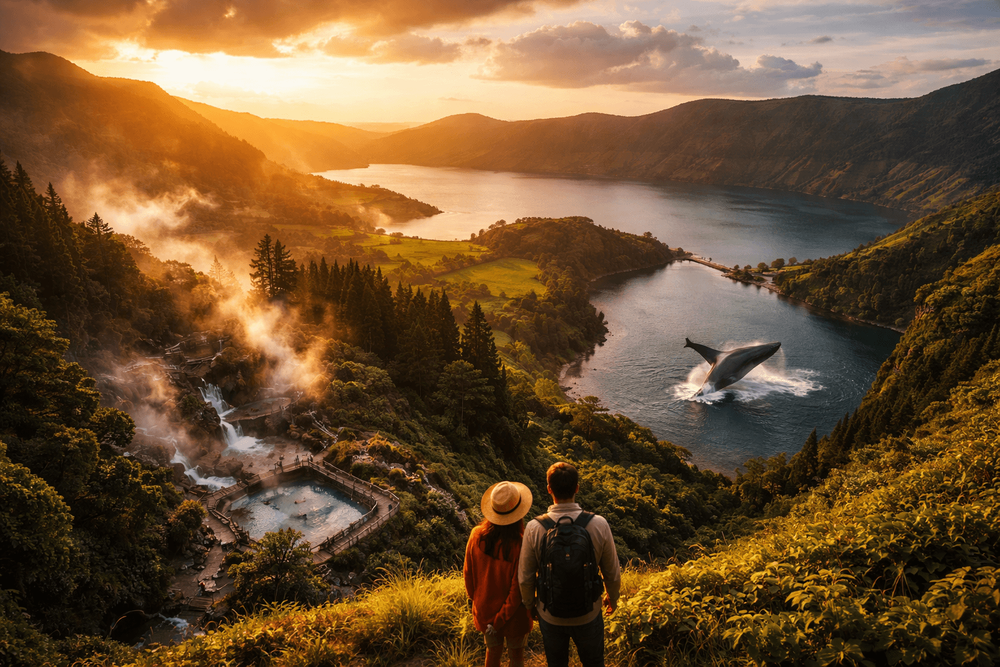
A vapor plume erupts off the bow, and a blue-gray ridge lifts from the Atlantic—a whale surfacing in the cool light of spring. Onshore, steam curls from hillside pools, and the high crater rims are traced by empty footpaths. This is the best time to visit the Azores: that shoulder-season window when migrating giants slide past volcanic islands, thermal waters feel earned, and trails belong to you.
Why spring is the best time to visit the Azores
Spring on these nine North Atlantic islands is all about contrast—soft, green hills and lava-black coastlines, cobalt ocean and cloud-wreathed calderas. From March through June, the Azores are in motion: baleen whales moving north, pastures flushing with wildflowers, ferry schedules expanding, and cafés opening longer hours without the density of summer crowds. You trade August’s carnival energy for a quieter, more elemental rhythm—mornings on the water, afternoons in hot springs, and evenings with the windows cracked to the sound of distant surf.
If you’ve been weighing the best time to visit the Azores, spring is the sweet-spot balance: active experiences at their peak, prices that haven’t spiked for high season, and the islands’ moody weather delivering drama without derailing plans. Expect a mix of sun, mist, and sudden rainbows—those famous four-seasons-in-a-day shifts—plus cooler air that makes soaking and hiking more inviting.
A 5–7 day plan for adventure
Five to seven days is enough to feel the texture of the archipelago if you keep your focus tight. Fly into São Miguel and choose a second island based on your priorities—Faial or Pico for marine life and lava landscapes; Terceira for historic streets and photogenic coastlines.
- Days 1–3: São Miguel. Base in or near Ponta Delgada for boat access and easy drives. Whale-watch one morning, soak in geothermal pools in the afternoon, and devote a full day to the crater lakes and ridge trails of the west and center.
- Days 4–6: Hop to Faial or Pico. In Faial, walk the rim of its vast Caldeira and linger along the marina where ocean-crossing yachts pull in. Across the channel on Pico, the silhouette of the volcano dominates everything, and you can hike the lower lava fields and thread through stone-walled vineyards. If you choose Terceira instead, plan coastal walks and a day exploring its green interior.
- Day 7: Buffer day for weather, an extra soak, or a coastal drive through sleepy villages and cliff-backed pastures.
Keep your schedule flexible; the Azores reward patience. Clouds might sit on a viewpoint in the morning and peel back by late day. When the ocean is glassy, head out on the water. When rain rolls in, it’s time for thermal pools, tea plantations, or a long lunch with views of the Atlantic.
Whale watching in spring
The Azores lie across a marine corridor used by migrating baleen whales each spring, with sightings that can include fin and blue whales alongside dolphins and year-round residents like sperm whales. Shore-based spotters—locals trained to read the sea from headlands—radio positions to boats, turning each outing into a treasure hunt across an enormous blue stage.
Morning departures from harbors on São Miguel, Faial, and Pico are common in spring. Conditions vary, but cooler months often bring clear, crisp air that sharpens the horizon. Dress for spray, sit toward the stern if you’re prone to motion sensitivity, and choose an operator that prioritizes education and wildlife welfare. The most memorable moments aren’t always the closest passes; sometimes it’s the quiet between waves as you wait, scanning, before that unmistakable exhale cuts the wind.
Hot springs and geothermal rituals
Volcanic energy pulses through São Miguel in particular, where entire valleys steam. On cool spring days, the thermal waters hit the perfect temperature after a morning on the ocean or a hike along a crater rim. In the Furnas area, multiple pools range from silky-warm to iron-rich and piping. You’ll see locals unhurriedly rotating between soak, cold rinse, and linger; follow their lead. Jewelry can discolor in mineral-rich water, and swimsuits may pick up faint hues—bring a darker set you won’t mind dedicating to hot springs.
Along the west coast, there’s a surreal seaside thermal cove where ocean swells mingle with volcanic warmth—plan around tides and swell, and heed lifeguard advice when present, as conditions can change quickly. Elsewhere, smaller woodland pools and waterfalls steam under mossy cliffs, made even more atmospheric by spring mist.
Trail time: crater rims, waterfalls, and lava vineyards
Hiking here is about drama without crowds. On São Miguel, clear mornings tempt you to the rim above twin blue-and-green lakes—a skyline route where hydrangeas leaf out in spring and cows graze impossibly steep meadows. Another favorite climbs toward a high lake that often hides under a low ceiling; wait for a break in the clouds and the water glows an improbable turquoise.
Over on Faial, a sweeping caldera rim walk offers ocean views in all directions when skies lift, while Pico’s lower slopes are latticed with dark, dry-stone walls that once shielded vines from Atlantic winds. Trails are generally well-signed, but conditions shift with weather; spring showers can make rock steps slick and creek crossings lively. Check current trail advisories, start early for clearer views, and pack curiosity—every path seems to reveal another waterfall tucked into ferny ravines.
Getting there and around
Most travelers connect via mainland Portugal, with frequent flights from Lisbon and Porto into Ponta Delgada on São Miguel and additional gateways on Terceira and Faial. Seasonal direct routes from parts of Europe and North America sometimes operate in spring; if you spot one, it can shave hours off your journey. Inter-island movement is by short flights year-round and by ferries that ramp up schedules as the season progresses. Build in buffer time—weather here writes its own script.
On arrival, renting a car is the simplest way to reach trailheads, thermal areas, and lookouts. Roads are well maintained but narrow in places, with stone walls, livestock crossings, and frequent roundabouts. Drive unhurriedly, pull into marked bays to let locals pass, and treat scenic lookouts as the rewards they are rather than targets to rush between. In towns, walking is the pleasure—cobblestones, waterfront promenades, and gardens saturated with spring color.
What to expect on arrival
- Weather: Variable by the hour. You may start in a sweater, strip down to a T-shirt over lunch, and pull on a rain shell for a ridge walk. Cloud ceiling dictates viewpoints; local webcams can help you pick your moment.
- Atmosphere: Spring feels local-forward—markets full of greens and island cheese, cafés humming without queues, trailheads with a spare handful of cars.
- Etiquette: On whale boats, listen to briefings and keep voices low around wildlife. In hot springs, rinse before and after, and share space kindly. On trails and farm lanes, close gates you open.
- Food and drink: Coastal restaurants specialize in simply grilled fish, stews, and the island’s citrus and pineapples. In the geothermal valley, you can try a stew slow-cooked in the warm earth—comforting on a gray day.
Fine-tuning your timing: March–June
- March–April: Cooler, moodier, and gloriously green. Prime for whale activity, dramatic surf, and long, steamy soaks. Trails are quiet; bring waterproof layers and expect some mud.
- May–June: Days stretch, seas can settle, and inter-island ferries expand. Crater rims clear more often, coastal rock pools invite cautious dips, and village terraces fill around golden hour.
If you’re still asking yourself the best time to visit the Azores for adventure, aim your pin at late spring. You’ll catch the tail end of migrations, a shoulder-season calm across the islands, and the volcanic landscapes at their most vivid.
Planning forward
Spring travel here rewards spontaneity within a smart frame—lock in flights and a car, choose a second island that matches your style, and leave the daily order of play loose. The ocean will tell you when to go to sea, the clouds will tell you when to climb, and the steam rising from the hills will invite you to linger longer than you planned. Start plotting dates between March and June, because right now is exactly when the Azores give the most back—and you’ll want to be there for it.