
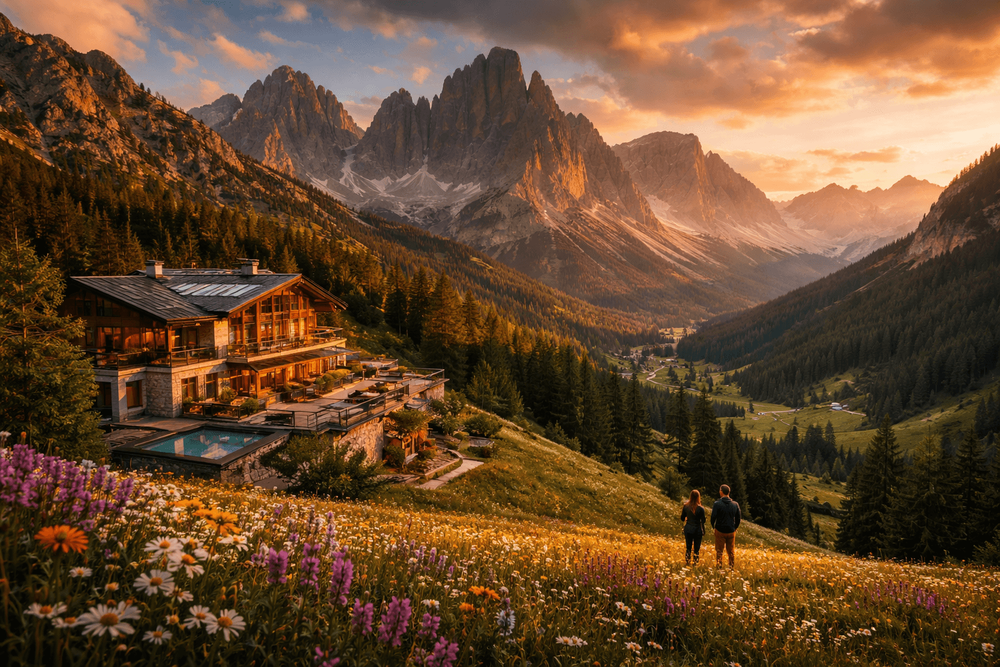
The New Luxury of the Dolomites: Design Rifugios, Wildflower Valleys, and the Best Dolomites Hiking Hotels
A design-forward week in Cortina d’Ampezzo and Val Gardena: shoulder-season hikes, wildflower valleys, and Dolomites hiking hotels that make altitude feel effortless.
Trip Length
1 week
Best Time
June to September; for wildflowers and quieter trails, aim for June and early September.
Mood
adventure
Dawn breaks above a line of pale limestone towers, and the first light brushes the meadows with a honeyed glow. Steam lifts from your coffee on a rifugio terrace; below, gentians and buttercups freckle the grass, and a footpath winds toward a saddle that only reveals itself when you commit to the climb. This is the new rhythm of the Alps: a week shaped by shoulder-season trails, design-smart mountain lodges, and the refined ease of Dolomites hiking hotels that bring contemporary comfort to altitude without muting the wild.
Why this season rewrites the alpine script
June and early July feel like a secret shared between locals and the mountains. Snow recedes from high passes, cable cars hum back to life, and valleys around Cortina d’Ampezzo and Val Gardena roll out a botanical parade—orchids tucked into grass, larch-framed clearings ringing with cowbells. Days run long, the air carries a cool edge, and the UNESCO-listed peaks shine brightest after quick-clearing afternoon squalls. Come September, families have headed home, trails quiet again, and the light goes metallic and cinematic—perfect for photographers and anyone who prefers their viewpoints with space.
What you trade in high-summer buzz you gain in texture: better odds of last-minute tables at valley restaurants, more room on balcony trails, and a front-row seat to meadow color. Shoulder season is also the ideal time to try a first hut night—the kind of simple luxury that feels like a privilege rather than a production.
Dolomites hiking hotels: where design meets altitude
The phrase used to mean heavy timber and red-check duvets. Now, many rifugios and valley bases lean into restrained, material-forward design—clean-lined larch and stone, frameless windows that turn the mountains into a wall-size painting, saunas perfumed with spruce, and dining rooms where polenta shares the table with inventive, garden-led plates. The point isn’t opulence; it’s clarity. After a day tracing a ridge, you want a hot shower, a glass of something mineral, and a bed angled toward the last light on the peaks.
In the valleys, Dolomites hiking hotels tend to anchor trail networks with easy access to lifts, e-bike rentals, and guides. Higher up, design rifugios trim the fuss—shared or simple ensuite rooms, boots drying by the door, dinner served at long tables—yet deliver small, exacting comforts: wool throws, good coffee, and the kind of silence that resets you by morning. Booking a night above treeline also unlocks the hour that day trippers miss—soft dawns and ember-red sunsets, when the limestone seems to hold light from within.
A week across Cortina d’Ampezzo and Val Gardena
Think of your seven days as a slow arc from rocky amphitheaters to meadow-rich plateaus, with one or two nights high in the system.
Day 1–2: Cortina d’Ampezzo Arrive and shake off the journey with a balcony path near town that threads through larch and stone pine, the Tofane and Sorapiss groups staging the skyline. Explore historic routes where old military paths contour the slopes, and spend the evening on a terrace as the peaks blush at sunset. Keep pace easy; you’re here for altitude legs, not heroics.
Day 3: Rifugio night Ride an early lift or hike up through dwarf pines to your chosen hut. Afternoon clouds often pass fast, leaving the golden hour clean and sharp. Dinner is usually a set menu—think dumplings, seasonal greens, a loaf you’ll remember—and conversation arcs from trail stories to tomorrow’s line. Step outside before bed; the Milky Way, when it appears, delivers a hush no spa can match.
Day 4–5: Val Gardena Cross one of the great passes and drop into Val Gardena, a valley with deep woodcarving traditions and trailheads that unfurl like a fan. Spend a day on Alpe di Siusi, a broad, high plateau quilted with wildflowers and hay barns, with views that spin from the Sassolungo group to the Sciliar massif. Note that private cars are restricted on parts of the plateau during the day; plan on cable cars, shuttles, and your own legs.
On the second day, choose either a mellow traverse beneath limestone walls—watch for edelweiss along sunnier banks—or a guided via ferrata sampler to taste the region’s ladder-and-cable heritage in a controlled way. End with a soak or steam back at your base; the new luxury is letting your knees forgive you overnight.
Day 6: High path, slow afternoon Pick one ambitious route—an airy col with a panoramic return, or a loop that skirts a cirque and descends through stone pine. Lunch can be a simple board at a mid-mountain hut: local cheese, speck, a slice of strudel. Back in the valley, wander the lanes of Ortisei or Selva, peering into ateliers where chisels still meet larch the old way.
Day 7: Parting light Set an alarm and catch sunrise from an easy ridge near a lift station. The spires ignite for minutes, then relax into daylight. It’s a quietly addictive ritual—and a reason you’ll start planning the next trip on the flight home.
How to get there and move around
Most travelers aim for Venice Marco Polo or Innsbruck, both common gateways to Cortina d’Ampezzo and Val Gardena. For Val Gardena, trains run to Bolzano/Bozen, where buses and taxis connect up-valley. Cortina links to Venice and Treviso by coach; schedules ramp up as summer arrives. A rental car gives the most flexibility for passes and early trailheads, but parking in towns can be structured and limited; check your hotel’s policy and consider leaving the car for lift-linked days.
Cable cars typically operate by late spring into autumn, though wind and weather can pause service with short notice. Build a plan B that starts at a lower trailhead or pivots to a valley loop. Rifugios range from simple to design-forward; many accept cards but carrying some cash helps in smaller huts.
What to expect on arrival
You’ll hear three languages in quick sequence—Italian, German, and Ladin—and menus mirror that blend. Fuel up on canederli (bread dumplings) and barley soups, thin-sliced speck, mountain cheeses, and apple desserts that taste like summer afternoons. Trail markings are clear, but distances and elevation gain can hide in plain sight; a “moderate” loop here might earn its rating with a stony descent. Sun at altitude hits harder and storms can spark and vanish within an hour. Good layers and a lightweight shell are worth the space, and if a via ferrata tempts you, hire a certified guide and proper kit.
Shoulder-season hikes worth your time
- Meadow rambles on Alpe di Siusi: Gentle gradients, maximal scenery. Walk between hamlets, linger at a terrace, and watch paragliders skim the ridge.
- Balcony trails near Cortina: Wide views without big effort, paths contouring above the valley under pale walls.
- A quiet ridge at sunrise: Use a first lift up, step away from the crowd by choosing a parallel path, and let the early light do the rest.
- Historic contours: Follow signed routes that trace old mule tracks and emplacements, a reminder that these serene slopes once held other stories.
If your style leans “home base plus day hikes,” Dolomites hiking hotels in both Cortina and Val Gardena make the logistics easy: walk out the door, ride up, and be on the trail in minutes. If you’re hut-curious, stitch a night or two into the middle of your week—enough to feel the cadence without living out of a pack.
The design difference
What separates today’s mountain stays isn’t marble or chandeliers—it’s intention. Architecture leans into quiet materials and light; meals center what the season offers; wellness means a sauna with a view of the ridgeline you just crossed. Rooms are compact but clever, with storage where you need it and windows framing first light. This is the version of comfort that enhances the landscape rather than competing with it, and Dolomites hiking hotels are leading that shift.
Before you book
- Timing: June and September strike the sweet spot for flowers, clarity, and calmer trails.
- Stays: Mix valley bases with at least one rifugio to unlock dawn and dusk on the peaks.
- Movement: Consider a car for flexibility, then go car-light once you’re in the valleys.
- Guides: For via ferrata or glacier-adjacent terrain, local guides add safety and context.
Why it lingers
The Dolomites reward anyone willing to trade speed for depth. A week here isn’t about collecting summits; it’s about learning the light, noticing how larch needles glow at dusk, tasting how a valley makes its bread, and discovering how good design—simple, thoughtful, and rooted in place—can make a mountain day feel complete. Book the flights, secure that hut bed, and let the mountains set your pace. The path is waiting, and so is the last light on the stone.
Where to Stay

Hotel Serena Cortina
Hotel Serena Cortina is a 3-star stay in the Dolomites, near Cortina d'Ampezzo and Val Gardena, offering easy access to mountain scenery and outdoor activities, with guests rating it 7.8/10.

Hotel da Beppe Sello
Hotel da Beppe Sello is a 3-star stay in Cortina d'Ampezzo, Dolomites, with easy access to Val Gardena and nearby mountain activities. It offers a comfortable base for alpine trips and scores 8.4/10 from guests.

Franceschi Park Hotel
Franceschi Park Hotel is a 4-star stay in the Dolomites, offering easy access to Cortina d'Ampezzo and Val Gardena. It features comfortable rooms and a guest rating of 8.8/10.

Boutique Hotel Villa Blu Cortina D'Ampezzo
Boutique Hotel Villa Blu Cortina D'Ampezzo is a 4-star stay in the Dolomites, offering a boutique style in Cortina d'Ampezzo with easy access to Val Gardena and a guest rating of 8.7/10.

Ambra Cortina Luxury&Fashion Hotel
Ambra Cortina Luxury&Fashion Hotel is a 4-star stay in Cortina d'Ampezzo, set in the Dolomites near Val Gardena, with stylish rooms and easy access to mountain scenery, skiing, and the town center.