
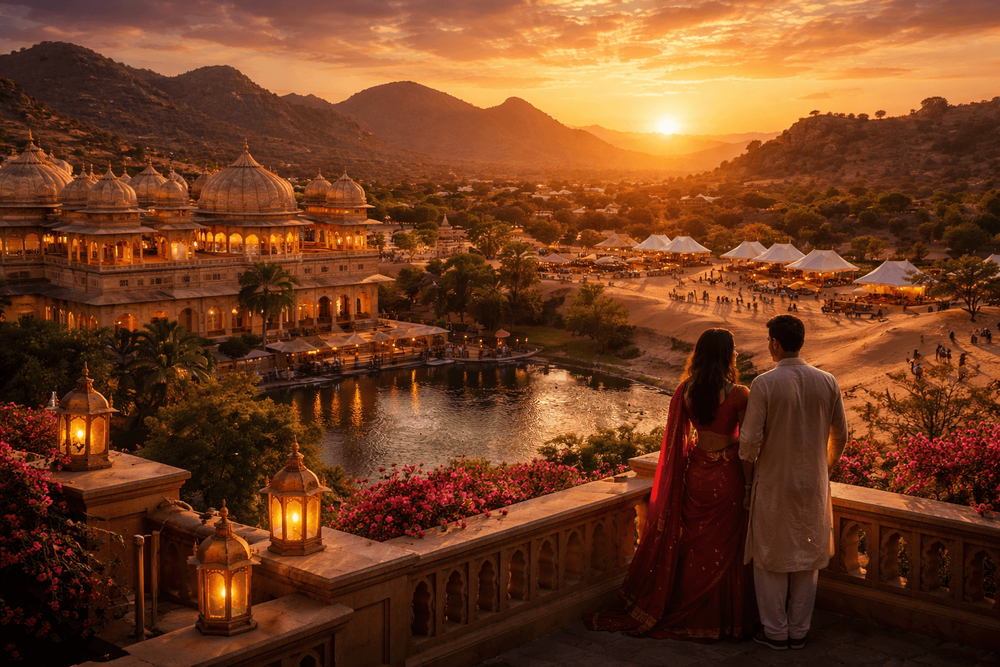
The New Rajasthan: Palace Hotels, Desert Camps and Craft Villages Beyond Jaipur
Link palace hotels, desert camps, and living craft studios into a 10–14 day Rajasthan itinerary that goes beyond Jaipur—slow, luxurious, and deeply textured.
Trip Length
10-14 days
Best Time
October–March
Mood
luxury
At dawn on the Thar’s pale dunes, a kettle whistles and a herder steps along the ridge as if sketched from a miniature painting. The sand is cool underfoot, a camel bell marks the measure of the morning, and someone is frying fresh bread over coals. This Rajasthan itinerary is about linking moments like this—quiet, textural, precise—into a journey that swaps the standard city-to-city dash for nights in restored palaces, time in the desert, and hands-on encounters with living craft.
The idea: a richer Rajasthan
Rajasthan rewards the traveler who slows down. Yes, Jaipur, Jodhpur, and Udaipur anchor the map, but the story lives in the spaces between: courtyard tea in a former noble house, a jeep amble to a village weaving cooperative, a candlelit desert supper beneath a riot of stars. Think of this as a necklace of stays—heritage hotels set in frescoed mansions or hilltop forts, a few nights in a well-run desert camp—and intersperse them with craft studios and rural market days. You’ll come away with a sense of continuity between the region’s royal past and present-day creativity.
A Rajasthan itinerary for 10–14 days
Use the outline below to shape a 10–14 day loop. Add or subtract days depending on how much time you want in the desert or among artisans. This Rajasthan itinerary assumes a start in Jaipur, with a finish in Udaipur and a departure flight onward.
Jaipur (2–3 nights): Land in the state capital and shake off the flight with a slow walk through pink-walled lanes in the old city. Spend a day focused on craft: block-printing workshops on the outskirts welcome visitors for dyeing and printing sessions, while jeweler ateliers explain enamel and setting techniques handed down through families. Evenings are for your palace or haveli hotel—courtyards glowing with lanterns, a terrace view over domes, maybe a traditional percussion recital.
Shekhawati fresco towns (1–2 nights): Drive north into a region known for merchant mansions layered with storybook murals. Many have been partly restored as small heritage stays; others remain lived-in family homes with centuries-old wall paintings. Wandering these lanes with a local guide, you’ll spot caravans painted in indigo, scenes from epics, foreign steamships—signs of trade routes that once ran this way. It’s a manageable hop from Jaipur and a satisfying switch to slower rhythms.
Thar Desert camp near the western frontier (2 nights): Continue west until the land turns dune-soft. Choose a low-impact camp that keeps its footprint light—canvas tents with proper beds, flickering lanterns, and meals cooked in a field kitchen. The best experiences here are simple: a sunset ride on the dunes, a stargazing session with hot chai, and a night performance by local folk musicians seated on carpets, the air bright with clapping and the smell of woodsmoke.
Rural Marwar around the Blue City (2–3 nights): Base yourself in the countryside rather than the urban core—many old estates and small forts have been converted into intimate hotels with gardens and stepwells. Days unfold in jeeps or on village walks: meeting weavers who work looms in shaded courtyards, potters shaping cool red clay, and pastoral communities who welcome conversation about their daily routines. If you crave city texture, plan a half day for lane-wandering and rooftop views from a hilltop fort that commands the skyline.
Udaipur and the Aravalli hills (2–3 nights): Slide south through undulating hills dotted with lakes and marble temples. On the water, the city shows its most theatrical face—domes mirrored in the lake at dusk as oars crease the surface. Beyond the core, hill drives deliver forested passes, leopard-scouting in rocky scrub with trained trackers, and weekly rural markets where baskets, bangles, and brass pots pile high. Close your trip with a boat ride and a dinner in a lakeside palace hotel—the kind of evening that crystallizes this itinerary’s balance of heritage and ease.
If you have 14 days, add a stop midway between Jaipur and Udaipur—temples and stepwells hide in these hills—or spend an extra night in the desert to catch the different moods of dawn and moonrise on the dunes.
Palace stays and desert camps: what to expect
Heritage hotels in Rajasthan range from exquisitely restored royal palaces to smaller mansions with blue-tiled courtyards and carved stone balconies. Expect high ceilings, antiques with patina, and staff who treat hospitality as an art—afternoon tea on terraces, slow dinners under neem trees, and perhaps a resident historian who can narrate the property’s lineage. Many estates sit just outside major cities, which means bird-song mornings, swimming pools framed by arches, and ready access to both urban highlights and village life.
Desert camps differ widely. Seek out operators that limit generator noise, manage waste responsibly, and employ local performers and guides at fair rates. Tents should feel dreamy yet grounded: proper linens, ensuite facilities, woven rugs, and a communal fire where musicians gather after dinner. Ask about short camel rides led by handlers who prioritize animal welfare; jeep drives are another way to crest dunes for that ripple-of-sand horizon at sunset.
Craft encounters that feel thoughtful
Rajasthan’s crafts are not museum pieces; they’re livelihoods. Block printers thump teak into cloth in rhythmic lines; tie-dyers knot silk into constellations; miniature painters render eyelashes with a single-hair brush. The most rewarding encounters are arranged with intention:
- Schedule studio time, not just shopping. Many workshops offer half-day experiences where you can try a technique, understand natural dyes, or watch a motif emerge from a carved block.
- Buy directly when you can. Artisans’ cooperatives and family studios set transparent prices; any premium goes to the maker, not a middleman.
- Consider shipping. Serious pieces—textiles, carpets, inlay—travel better with insured couriers arranged by your hotel or the workshop.
Your hotel concierge or local guide will know which studios welcome visitors without turning the process into a performance. The result is a Rajasthan itinerary that channels your spending into the communities that give the state its visual signature.
When to go and how to get around
- Season: October through March is the sweet spot: clear skies, cool mornings, and warm afternoons. Winter light flatters sandstone and mirror-work, and the desert nights invite bonfires and stories. Around late autumn, festival calendars fill; plan early if your dates align with major celebrations.
- Getting there: Jaipur, Jodhpur, and Udaipur are connected by frequent flights to Delhi and Mumbai. Trains link the region’s hubs with character to spare; if time matters more than romance, road transfers with a private driver are the most flexible way to connect palaces, camps, and villages.
- On arrival: Airports are straightforward, and most luxury hotels arrange meet-and-greet service along with a private car. Expect a warm welcome—garlands, a cool drink, perhaps a forehead mark of greeting—and a gentle pace as you settle in.
How to shape it with your style
A Rajasthan itinerary is elastic by design. Love design history? Linger in fresco towns and take a curator-led walk of palace apartments. Obsessed with textiles? Add a full day to printing and dyeing studios and request an introduction to a weaver’s collective. Crave the desert? Expand your camp stay to watch the same dune line change color from apricot to pewter to pearl. Food-minded travelers can ask for a family-style cooking session in a noble house; wellness fans can book morning yoga in a marble pavilion followed by an oil massage in a vaulted spa room.
Responsible travel notes
Rajasthan’s hospitality is generous; return it by treading lightly. Choose camps and hotels with visible sustainability measures—solar power, water stewardship, heritage-sensitive restorations—and guides who live locally. When photographing artisans or families, ask first. And remember that craft is work: your fair purchase helps keep skills alive for another generation.
The takeaway
Plan for texture, not tally marks. With palaces that glow at dusk, dunes that sing in the wind, and workshops where patterns bloom from hand and eye, Rajasthan invites you to tune your trip to its slower beat. Start sketching dates between October and March, line up your stays, and let the spaces between the icons do the talking. The state is ready to meet you halfway—with a lantern lit and the kettle already on.
Where to Stay

Gaj Kesri By 7 Apple Hotels And Resorts
Gaj Kesri By 7 Apple Hotels and Resorts is a 4-star stay in Rajasthan offering comfortable rooms and a high 8.9 guest rating, with easy access to regional sights and a relaxed resort-style setting.

Bhati Desert Camp,Raisar Bikaner
Bhati Desert Camp in Raisar, Bikaner, is a 3-star Rajasthan stay offering a desert camp setting and a 7.4/10 guest rating.