
Travel Destinations: The Definitive Guide to Choosing Where to Go
A cosmopolitan, sensory-rich guide to choosing travel destinations that match your mood, season, and budget—plus trends for 2026 and curated picks.
Mood
Wanderlust Guide
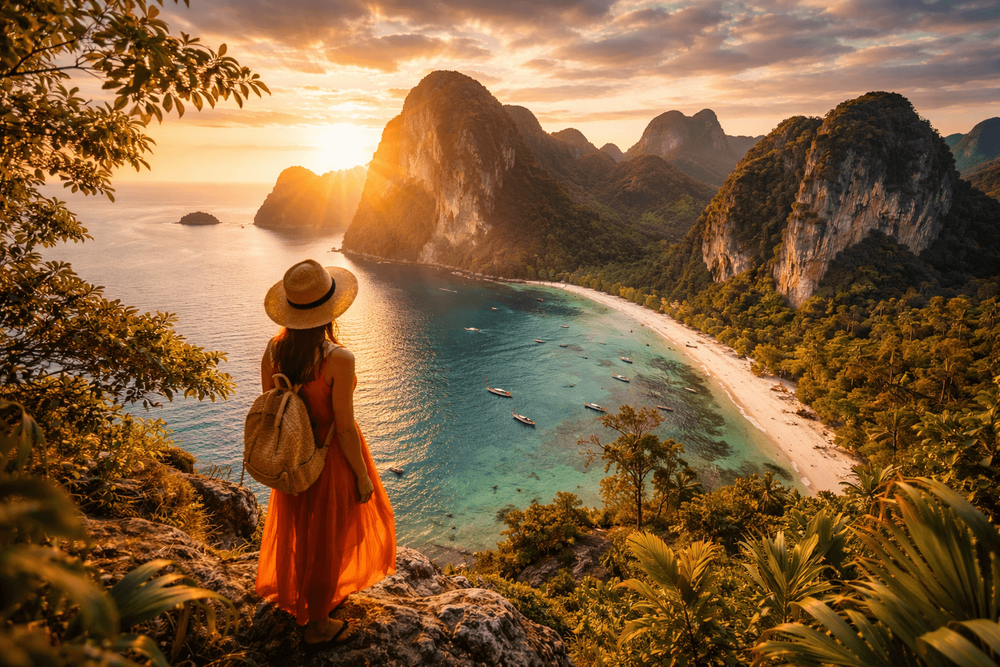
At dawn the city exhales. A boulangerie swings open its door, releasing a ribbon of warm butter and yeast; trams hum awake; a river lifts its silver shoulder to the sun. In another hemisphere a reef breaks the horizon into flecks of white, palms lean, and the first fisherman motors out across molten glass. Travel destinations are more than coordinates on a map—they are moods, seasons, stories. Choosing where to go shapes the journey as surely as the ticket in your hand.
Why the right destination matters — travel as more than a place
A destination is a lens. It colors what travelers notice and what they carry home, long after the suitcase is unpacked. A high-desert town invites a slower heartbeat and stargazing language; a capital city re-tunes the senses to gallery light and café chatter. The right choice aligns with curiosity: a first solo trip that feels gently navigable, a multigenerational escape with forgiving logistics, a pilgrimage to taste, to history, to wildness.
Place also holds memory. Cities reveal themselves in layers—ancient walls shadowing street art, immigrant bakeries perfuming avenues once walked by emperors. Landscapes are archives of weather and time, from lava fields to mangrove lagoons. To pick a destination thoughtfully is to decide which archive you want to read with your feet: a Renaissance palimpsest, a coral kingdom, a spice route.
Travel itself is elastic. A long-haul flight can vault you into a new climate and alphabet; a two-hour train ride can reset perspective without jet lag. The calculus is personal, but the outcome is universal: when travelers choose well, logistics dissolve and experience takes center stage.
How to Choose Travel Destinations: Match Mood, Season, Budget, and Time
The best journeys begin with a question: What feeling is sought? Revived, challenged, nourished? Start with mood, then narrow by season, budget, and time available.
- Mood: Crave creative charge? Cities like Mexico City or Seoul serve design, cuisine, and late nights. Need quiet? The Azores or the Scottish Highlands offer wide horizons and slow weather. Romance reads differently in Kyoto’s maple fire than it does on a Zanzibar tide.
- Season: Weather windows govern many travel destinations. The Himalaya’s clearest skies arrive post-monsoon; southern Africa’s dry season concentrates wildlife; Japan’s spring and autumn arc with color. Shoulder seasons—April–May, September–November in many regions—balance good weather with fewer crowds. See the best time to travel guide for month-by-month nuance.
- Budget: Stretch funds by tracking currency tides and favoring midweek fares. Secondary cities and countryside stays often deliver better value than marquee hubs. Consider rail passes in Europe (how to travel Europe by train) and apartment-style lodgings for longer stays.
- Time: Map ambition to hours on the move. With five days, think one city and its satellites (Lisbon with Sintra and Cascais). With two weeks, pair regions (Andalucía and Morocco; Bangkok with Chiang Mai and the Andaman). For sabbaticals, slow the cadence—fewer borders, deeper routine.
Pro tip: Build around an anchor—an art biennale, a migration, a family celebration—and let the rest orbit. Calendars can be keystones: e.g., Rajasthan’s kite festival or the Great Wildebeest Migration’s river crossings.
Travel styles explained: city culture, nature escapes, beach retreats, and slow travel
City culture: where ideas gather
In great cities, the air crackles. Travelers will find craft breweries in former warehouses, next-gen galleries inside Brutalist hulks, and chefs splicing heritage spices with experimental technique. Consider Cities of Light: Paris post-Olympics in a fresh arts bloom; Mexico City where street murals are civic argument; Seoul where fashion rewrites tradition overnight. The rhythm is gallery–market–neighborhood— mornings at a museum, lunches in century-old markets, afternoons wandering residential lanes where ivy overtakes stone.
Cultural etiquette matters: dress with respect at temples and cathedrals; learn greetings; ride transit to read the city’s pulse. Choose lodgings in neighborhoods that match your curiosity—Canal-lined quarter for design lovers, historic core for night owls, leafy enclave for café lingerers. Urban parks are soul space: a jog along Bogotá’s ciclovía, a picnic under Madrid’s plane trees.
Nature escapes: landscapes that reset the clock
Nature recalibrates. In Patagonia the wind writes calligraphy across steppe grasses; in Canada’s Banff the ice is a cathedral. The goal is immersion without harm. Trek with local guides who know where condors nest; book permits early for fragile zones; bring layers that whisper rather than rustle.
Not all nature is alpine heroic. The Azores steam with tea fields and crater lakes; Namibia’s dunescapes turn to ink at dusk under inky skies; New Zealand’s South Island strings together fjords and vineyards with roads that seduce motorists into pulling over every kilometer. Think in arcs: coast–forest–highland, river–desert–oasis.
Beach retreats: salt, rhythm, light
The appeal of a beach is elemental—salt on skin, sleep reset by tides. Each coastline speaks a dialect. In the Caribbean, trade winds and steelpan; in the Indian Ocean, atoll mornings and reef-softened surf; in the Mediterranean, a choreography of late lunches and swims in sapphire coves. Seek variety: mix a lazy day under palms with a mangrove kayak, a lighthouse hike, a market for fish grilled simply with lime.
Beach ethics matter: reef-safe sunscreen; no touching coral; support marine protected area fees. In many islands, shoulder season can deliver calm seas and easier tables.
Slow travel: depth over distance
Slow travel prizes routine and neighborhood—markets as mentors, the corner baker as daily confidant. Rent an apartment near a tram line; cook with local ingredients; learn the names of seasonal fruit. Swap checklists for habits: morning walks through cemeteries or coastal paths; weekly language exchanges at cafés; volunteering hours with community groups. The itinerary becomes a life lived elsewhere, briefly but sincerely.
Practical planning: timing, visas, costs, and logistics
Success belongs to the prepared, especially when crossing borders and climates.
- Timing: Track holidays—both yours and the destination’s. Golden Weeks, Carnival, Ramadan, and school breaks change crowd patterns and opening hours. Book must-see sights and remote lodges months ahead; keep some blank afternoons for serendipity.
- Visas and entry: Requirements shift. Many travelers to Europe will soon encounter ETIAS pre-travel authorization; verify the latest start date and rules before booking. E-visas are increasingly common (from Uzbekistan to Kenya). Always confirm via official government portals or consult our visa basics.
- Health and insurance: Check vaccinations and malaria maps; carry digital and paper copies of policies. Remote treks or polar cruises may require evacuation coverage.
- Money: Combine a no-foreign-fee card with some local cash. Tipping cultures vary—know when a service charge is included. ATMs are broadly available but can be scarce in rural zones and islands.
- Connectivity: An eSIM often beats local SIM hunting; download offline maps and transit apps. For long stays, portable Wi-Fi can be cost-effective.
- Pack for respect and function: Lightweight layers that cover shoulders and knees unlock religious sites and rural comfort. Bring a scarf, a refillable bottle, and shoes that forgive cobbles.
- Getting around: Trains are back—from European night lines to high-speed corridors in Asia. Ferries weave island chains; regional airlines link remote archipelagos. See Europe by train and how to ride Japan’s rails.
- Safety and etiquette: Register travel plans if your government offers it. Observe local norms: right-hand escalator etiquette in Tokyo, haggling rules in Marrakech, quiet hours in alpine villages.
Sustainability and authentic experiences: finding places that give back
Travel can be regenerative when intention meets action. Choose stays with credible certifications or transparent local hiring. In fragile environments—rainforests, coral reefs, high-altitude plateaus—smaller groups mean lighter footprints and richer interpretation.
- Go shoulder or off-peak: Spreading visits across the calendar reduces pressure on waterways and plazas while rewarding travelers with space and conversation.
- Stay longer in fewer places: Depth replaces emissions-heavy zigzagging. Weekly market trips become language lessons; favorite café orders greet travelers by name.
- Move cleaner: Opt for rail over short-haul flights where practical; consider hybrid expedition ships for polar routes; rent EVs where charging networks exist.
- Eat the watershed: Order the catch of the day, heirloom grains, seasonal vegetables. Culinary spending is a direct investment in communities.
- Learn from custodians: Book with indigenous-owned operators; join ranger-led walks; contribute to conservation or cultural funds when asked.
Exploration should feel like reciprocity, not extraction. Our responsible travel principles outline ways to tread lightly while traveling deeply.
Inspiration sources and trends for 2026 — where travelers are heading now
The compass in 2026 swings toward meaning and mastery.
- The rail renaissance continues: New and revived night trains stitch together Europe’s capitals and second cities, inviting low-carbon loops that pair culture with countryside.
- Secondary cities shine: Porto over Lisbon, Bologna over Florence, Kanazawa over Kyoto—places with strong identity and gentler crowd dynamics.
- Regenerative itineraries: Travelers seek projects that heal—reef restoration snorkels in Indonesia, rewilding walks in Iberia, agroforestry homestays in the tropics.
- Cuisine as cartography: Pilgrimages follow fermentation labs in Copenhagen-adjacent countrysides, mezcal villages in Oaxaca, natural wine micro-producers in Georgia’s Kakheti.
- Cold and clear: Arctic and sub-Arctic routes on hybrid ships put Greenlandic fjords and Svalbard’s glacier fronts within reach, while dark-sky reserves in Namibia and New Mexico draw stargazers.
- Cultural megaprojects mature: Archaeological corridors open new sections, and museum districts expand in Gulf hubs, with AlUla’s sandstone canyons and installations captivating design lovers.
- Celestial travel: A total solar eclipse in August 2026 will sweep across Greenland, Iceland, and parts of northern Spain, prompting thoughtfully planned astro-itineraries. See eclipse travel tips.
Where to point the pin next? Consider:
- Island volcanics with culture: The Azores, Réunion, and Madeira blend crater lakes, Afro-European spice routes, and cliff-hung levadas.
- Silk Road threads now easy to follow: Uzbekistan’s blue-tiled caravanserais pair with Fergana Valley workshops and Central Asian steppes accessed by improved air links and e-visas.
- East African coastlines: Lamu’s dhow culture, Tanzanian marine parks, and Swahili stone towns meld history with luminous seas.
- Andes and altiplano: Peru’s Sacred Valley and Bolivia’s salt flats anchor routes that add lesser-visited cloud forests and coffee fincas.
Short curated starting points — editorial picks with internal links
Not a bucket list—more a handful of doors to open, each with a distinct mood.
- Kyoto, Japan: Wooden lanes, temple moss, and a calendar of seasons that repaint the same garden four times a year. Kyoto guide
- Mexico City, Mexico: Murals that argue, tacos that sing, modernist homes that glow at dusk. Mexico City neighborhoods
- Azores, Portugal: Hydrangea hedges, tea plantations, whale song on the horizon. Azores islands
- AlUla, Saudi Arabia: Nabataean tombs in rose-gold cliffs; land art under desert constellations. AlUla travel
- Patagonia, Chile & Argentina: Granite spires, lenga forests, and wind that reminds travelers who is in charge. Patagonia route
- Sicily, Italy: Fish markets at daybreak, Greek theaters at sunset, Baroque towns dusted with lemon zest. Sicily essentials
- Namibia: Dune oceans, shipwreck coasts, Himba homelands, and nights flooded with stars. Namibia safari basics
- Tbilisi, Georgia: Sulfur baths, Art Nouveau facades, and qvevri wines poured like history. Tbilisi and Kakheti
- Lisbon, Portugal: Fado and tile, custard tarts still warm, trams grinding up the hill. Lisbon city guide
- Seoul, South Korea: Hanok quiet meets neon futurism; markets steam, mountains ring the city. Seoul planner
- Banff & Lake Louise, Canada: Turquoise bowls of water cradled by stone and spruce. Banff outdoors
- Oman: Frankincense trails, desert camps, wadis as green as emerald bottles. Oman road trip
- Madagascar: Baobab avenues, lemur choruses, and reefs with rainbow pulse. Madagascar travel
- New Zealand’s South Island: Fiords, wine roads, and skies that feel newly laundered. South Island loop
Browse more ideas by travel style: City breaks, Nature escapes, Beach retreats, and Slow travel stays.
From inspiration to itinerary: a next-step checklist
Turn curiosity into a plan, one deliberate step at a time.
- Define the feeling: Write three words for the mood sought (e.g., creative, rested, outdoorsy). Use them to filter options.
- Set the window: Choose dates, then cross-check climate and festivals with our best time to travel.
- Draw a radius: Align flight time with PTO; aim for one region per week of travel.
- Sketch a spine: Anchor the trip with one event or landscape. Build two to three hub bases rather than many one-nighters.
- Map movement: Prefer trains and nonstop flights. If road-tripping, cap drive days at four hours.
- Book the bottlenecks: Permits, small lodges, must-see sites. Leave room for unscripted afternoons.
- Budget smartly: Allocate 60–70% to transport and lodging, 20–30% to food and experiences, a cushion for the unexpected.
- Prepare documents: Check passports, visas, insurance, and any authorizations like ETIAS. Save digital copies; share itineraries with a trusted contact.
- Pack with intention: Climate-fit layers, respectful attire, meds, chargers, a small daypack, reef-safe sunscreen if coastal.
- Learn five phrases: Greetings, please/thank you, numbers, and “How much?” open doors everywhere.
- Plan to give back: Choose at least one locally owned experience or conservation fee to support. See responsible travel.
- Keep a day empty: Curate serendipity—markets, park benches, and conversations are the soul of place.
Great travel is not an escape from life but a way of paying closer attention to it. Choose wisely, move lightly, and let destinations—city, coast, mountain, desert—tune the senses anew. Among all the world’s travel destinations, the right one for this moment will feel like a door swinging open onto who you are becoming next.