
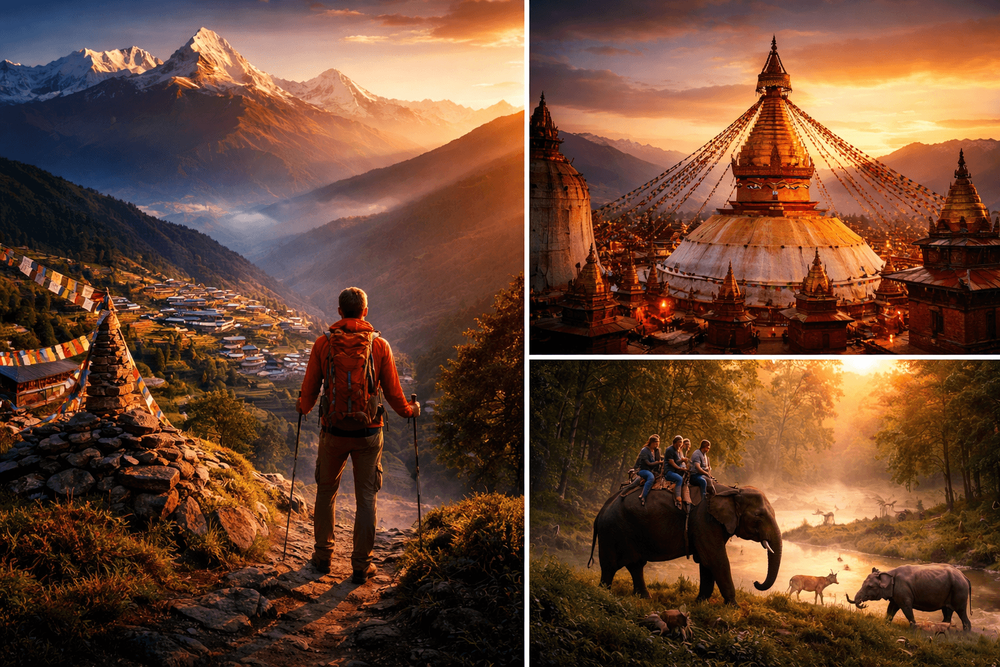
Unforgettable Nepal: Himalayan Treks, Spiritual Cities & Jungle Adventures
From sky-high treks to incense-swirled temples and rhino-stalked jungles, this guide maps the soul-stirring ingredients of an unforgettable Nepal journey.
Mood
Himalayan Adventure
At first light, the Himalaya ignites—peaks blushing from rose to gold as prayer flags crackle in a high-altitude breeze and a kettle hisses over a teahouse stove. It is a moment that explains why unforgettable trips to Nepal keep calling travelers back: the air is thin, the silence is vast, and the world seems to pause so the mountains can speak.
Epic Himalayan Trekking and Mountain Viewpoints
Trekking here isn’t merely a climb; it’s a slow-blooming immersion in altitude, culture, and landscape. Paths thread through yak-grazed pastures and frosted rhododendron, by stone-walled hamlets where metal cups clink with sweet milk tea and the scent of woodsmoke lingers on wool shawls. The lodges are simple, the camaraderie sincere, and the rewards—sunrise horizons serrated by 8,000-meter giants—profound.
Everest Base Camp and the Khumbu’s Grandeur
The Everest Base Camp trek is Nepal’s chorus line, and for good reason. A short, weather-dependent flight to Lukla opens the door to the Khumbu, where the path rises through forests ringing with Himalayan monal calls to the Sherpa market town of Namche Bazaar. Here, an acclimatization day doubles as a cultural interlude: museums celebrate high-altitude history, and bakeries scent the lanes with cardamom and cinnamon. Above, Tengboche Monastery frames Ama Dablam like a painted thangka, bells chiming against a cold blue sky.
Onward, the land turns lunar—wind-etched moraine, glacial rivers the color of steel. EBC itself (5,364m) is a rough amphitheater of ice and stone, but the emotional apex is often Kala Patthar (5,545m), where a sunrise view brings Everest, Nuptse, and Lhotse into breath-stealing proximity. Expect 12–15 days round-trip with smart acclimatization in Namche and Dingboche and a measured, mindful pace to mitigate altitude’s effects.
Annapurna Circuit, ABC, and the Art of the Teahouse
Where Everest is austere, the Annapurnas are kaleidoscopic. The classic Annapurna Circuit crosses climate zones like turning chapters—subtropical rice terraces yield to alpine pines and finally to the high, high aridity of the Manang Valley. Apple orchards press cider, stove-warmed lodges serve dal bhat that fuels a thousand switchbacks, and prayer wheels spin in the shadow of ice-glossed ridges. The long arc culminates at Thorong La (5,416m), its signpost festooned in flags and triumph.
For a shorter but no less stirring trek, Annapurna Base Camp (4,130m) feels like stepping into a natural amphitheater of Himalayan titans—Machhapuchhare’s fish-tail crest seems to hover above the glacier. Many travelers pair ABC with the gentler Poon Hill ridge for sunrise views that rake across Dhaulagiri and Annapurna, or opt for Mardi Himal, a 5–7 day ridge walk that trades crowds for knife-edge panoramas.
Teahouse Rhythm, Altitude Realities
The heart of Nepal’s trekking is its teahouse culture. Rooms are spare—wooden beds, thick blankets, the soft creak of floorboards—while common rooms glow around a central stove. Dinner is communal: lentils and rice arrive in gleaming steel; hikers swap stories; guides check weather and oxygen levels. Days unfurl at an unhurried cadence shaped by ascent rates and rest stops for ginger tea.
Altitude demands humility and preparation. Most travelers ascend no more than 300–500 meters per day once above 3,000 meters, taking rest days (Namche, Manang) and staying alert to headaches, nausea, or insomnia. Proper hydration, warmth, and a flexible itinerary are essential. Talk with a travel health professional about high-altitude considerations before departure, and ensure travel insurance covers helicopter evacuation.
For more route ideas and responsible planning tips spanning rivers, peaks, and remote valleys, see Adventure Nepal: Treks, Peaks, Rivers & Responsible Thrills (/experiences/adventure-nepal-treks-peaks-rivers-responsible-thrills).
When the trail ends, a restorative night in Kathmandu is happily earned—the Dwarika’s Hotel (booking-url), a museum-like sanctuary of carved wood and brick, pairs heritage architecture with hushed courtyards where the city’s bustle melts away.
Rich Cultural and Spiritual Immersion
Nepal’s spirit is as magnetic as its mountains. In the Kathmandu Valley, centuries of artisanship and devotion are written into every strut and shrine. Durbar Squares in Kathmandu, Patan (Lalitpur), and Bhaktapur feel like living galleries—pagoda roofs shingle the sky, bronze guardians glint at temple doors, and woodcarvers still coax vines and deities from sal wood in workshop alcoves.
At Boudhanath Stupa, butter lamps flicker against whitewashed curves as a river of pilgrims moves clockwise to the low thrum of mantras. Monasteries like Kopan and Namo Buddha invite respectful visitors to sit in on morning prayers, the room filling with incense and the resonant pulse of long horns. At Pashupatinath, Hindu rituals on the Bagmati River—somber, sacred—remind travelers that in Nepal, life and death share the same public square.
Festivals punctuate the calendar with riotous color: spring’s Holi drapes the alleys in powders of saffron and fuchsia; Indra Jatra unfurls towering chariots through central Kathmandu; Dashain and Tihar bring family reunions and flickering rows of oil lamps. Participation is welcome—offering marigolds at a shrine, accepting tika from a beaming elder—so long as shoes are removed where indicated, modest dress is observed, and photography is requested with courtesy.
Beyond the cities, homestays and community lodges add depth to any itinerary. In Panauti or Kirtipur, families open kitchens to guests for lentil-grinding and spice-toasting lessons; in Bandipur, dusk finds the bazaar square lit by oil lamps and the Himalaya turning copper above tiled roofs. In Patan, a private studio visit introduces Newar metalworkers whose repoussé techniques trace to the Malla era. Those seeking meditative renewal between treks can explore yoga, Ayurveda, and retreat options via Himalayan Wellness: A Traveler’s Guide to Yoga, Ayurveda and Meditation Retreats in Nepal (/experiences/wellness-retreats-in-nepal-yoga-ayurveda).
Food, naturally, is a throughline. Street-side steamers billow with momos; sel roti circles sizzle golden at Tihar; thukpa simmers rich with mountain herbs. To dig deeper into edible traditions, Taste Nepal: Must-Try Street Foods, Where to Find Them and How to Eat Like a Local (/experiences/taste-nepal-best-street-food-where-to-find-how-to-eat-like-a-local) and Gourmet Food Tours in Nepal: Taste, Learn, and Shop Your Way Through Kathmandu & Beyond (/experiences/gourmet-food-tours-nepal-kathmandu-beyond) offer delightful springboards for culinary wanderings.
For travelers who prefer a boutique base with a sense of place, Baber Mahal Vilas (booking-url) transforms a Rana-era compound into a warren of courtyards and colonnades—each suite a quiet nod to Nepal’s layered aesthetic.
Wildlife, Jungles and Off‑the‑Beaten‑Path Nature
The Terai—a ribbon of subtropical grassland and riverine forest along Nepal’s southern edge—hums with a different kind of wonder. In Chitwan National Park, dawn mists hang low as a dugout canoe noses through glassy water; bank-side, a prehistoric gharial slides into the current, and greater one-horned rhinos materialize from elephant grass like gray boulders come to life. Birders track hornbills and minivets; lucky eyes might snag the rosette-shadow of a leopard.
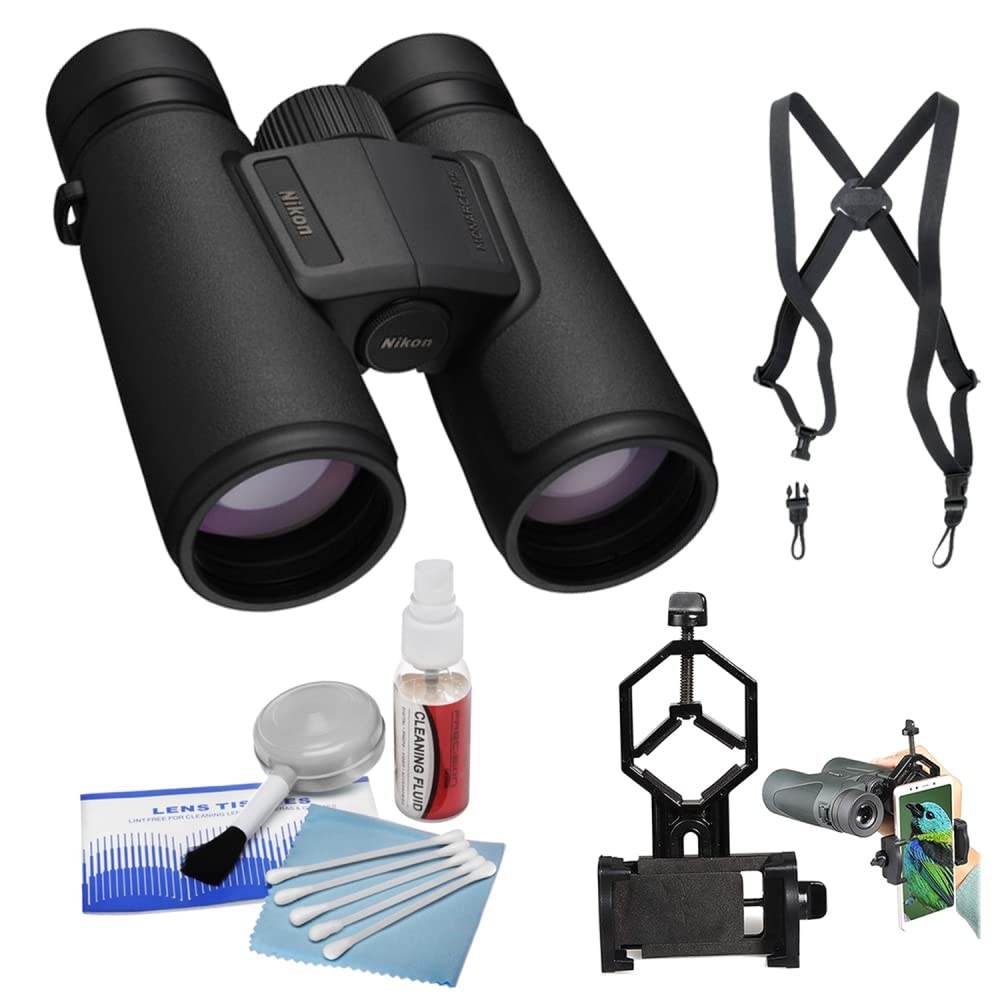
Nikon Monarch 5 8x42 Binoculars : Electronics
Nikon Monarch M5 8x42 (16767) Black Binoculars Bundle with Lens Pen and Lens Cloth, <strong>Compact Binoculars for Adults for Hunting, Bird Watching, and Hiking Essentials, Zoom Lightweight Travel</st
Check Price on AmazonBardia National Park, farther west and wilder, rewards patience with solitude. The river corridors feel empty in the best way, and tiger sightings are statistically stronger here than in Chitwan, though never guaranteed. Naturalist-led foot safaris, jeep excursions, and silent river drifts cultivate the alert stillness that wildlife demands.
- Where to go for wildlife density: Chitwan offers higher lodge variety and accessible game-viewing, ideal for first-time safari-goers.
- Where to go for solitude and tiger hopes: Bardia’s remoteness trades convenience for thrilling quiet and better odds of big-cat encounters.
Koshi Tappu Wildlife Reserve, in the eastern lowlands, is a paradise for wetland birding—stilted hides, endless sky, and winter migrations that turn mudflats into a fluttering mosaic.
Up in the middle hills, stone villages stitch terraced slopes where citrus scents the air and afternoon winds rattle millet stalks. For treks with fewer footprints, Langtang Valley (rebuilt and resilient after the 2015 earthquake) traces glacier-fed rivers beneath sawtooth ridges; the Manaslu Circuit encircles a rarely visited giant with old-world seclusion; Upper Mustang—by special permit—leads through ocher canyons and sky caves, a Tibetan Plateau outpost of wind-sculpted drama.
Jungle evenings invite candlelit verandas and the far-carrying bark of deer. In Chitwan, Tiger Tops Tharu Lodge (booking-url) sets the standard for conservation-minded stays—thatch-roofed villas under sal trees, expert naturalists, and a light-on-the-land approach that honors the forest’s rhythms.
Adventure Activities and Experiential Highlights
Nepal is wired for adrenaline and curiosity in equal measure. Over Lake Phewa in Pokhara, paragliders launch into thermals, canopies arcing like bright fish against Machhapuchhare’s knife-edged silhouette. Ultralight flights skim the face of the Annapurnas at sunrise, engines purring as valley fog rips like silk below.
White-water routes lace the country: the Trishuli is a forgiving introduction; the Seti’s jade channels carve past jungle-clad banks; the Bhote Koshi plunges fast and steep for paddlers craving punchy rapids. Multi-day expeditions on the Sun Koshi or Karnali unfurl star-powdered campsites and warm-water swims.
Mountain bikers trace jeep tracks and singletrack through the Kathmandu Valley’s ridgelines or tackle the dusty climbs of Lower Mustang—a moonscape of ocher cliffs and wind-bent chortens. Elsewhere, canyoning cascades rappel through ferny gorges, and bungee jumps arc over Himalayan ravines with a view made for gulping deep breaths.
Experiential culture rounds the edges of thrill-seeking. In Bhaktapur, a master potter coaxes a pot from a slow-turned wheel and invites careful hands to try; in Patan, textile ateliers demonstrate natural dyes—madder, indigo, walnut—drying on sun-warmed parapets. Those drawn to flavors can fold momo pleats at a family kitchen or join a guided tasting via Gourmet Food Tours in Nepal: Taste, Learn, and Shop Your Way Through Kathmandu & Beyond (/experiences/gourmet-food-tours-nepal-kathmandu-beyond).
On the lakeside in Pokhara, Temple Tree Resort & Spa (booking-url) balances mountain-facing suites with a palm-fringed pool—a serene base for paragliders at dawn and leisurely boaters by afternoon.
Planning Unforgettable Trips to Nepal: Practicalities & Responsible Travel
A journey’s glow intensifies with good planning. For unforgettable trips to Nepal that blend trekking, culture, and wildlife, timing, permits, and thoughtful choices make all the difference.

Lonely Planet Nepal: Detailed Itineraries | Travel Like a Local | Insider Tips | Covers Kathmandu, Pokhara, Terai, Mahabharat Range, and more (Travel Guide): Mayhew, Bradley, Bindloss, Joe, Brown, Lindsay, Butler, Stuart, Lama, Tsering
Lonely Planet's Nepal is <strong>our most comprehensive guide that extensively covers all the country has to offer, with recommendations for both popular and lesser-known experiences</strong>. Ex
Check Price on AmazonWhen to Go
- Trekking prime time: October–November and March–April bring clear skies and stable conditions. Rhododendrons ignite the hills in spring; post-monsoon autumn delivers crystal views.
- Winter (December–February): Cold at altitude; lower-elevation treks and cultural touring shine.
- Monsoon (June–September): Lush valleys and fewer crowds, but leeches, landslides, and cloud-obscured peaks are factors; great for Mustang (in a rain shadow) and wildlife in between showers.
Getting There and Around
International flights arrive in Kathmandu (Tribhuvan International). Domestic flights connect to Pokhara (Annapurna), Bharatpur (Chitwan), and Nepalgunj (Bardia), as well as the famed, weather-sensitive hop to Lukla for the Khumbu. Overland routes by tourist bus or private vehicle reach Besisahar (Annapurna Circuit trailhead) and trail access points around Pokhara. Build in buffer days—mountain weather and air traffic can nudge schedules.
Permits, Guides, and Local Rules
- Popular trekking regions typically require both a national park/conservation area entry (e.g., Sagarmatha National Park for Everest; Annapurna Conservation Area Permit for Annapurna) and a TIMS registration.
- As of recent policy updates, most trekkers in Nepal’s major regions are required to use a licensed guide, with permits arranged through registered agencies. Restricted areas (Upper Mustang, Manaslu, etc.) mandate special permits and a guide, often with a minimum of two trekkers on the permit. Always verify the latest regulations before departure.
Health, Safety, and Fitness
- Altitude: Ascend gradually, schedule acclimatization days, and know early warning signs of AMS. Never ignore symptoms; descent is the reliable remedy.
- Insurance: Choose a policy that covers high-altitude trekking and helicopter evacuation.
- Water & Hygiene: Refill, don’t rebuy—carry a filter or purification tablets; avoid single-use plastic bottles in the mountains.
- Fitness: Cardiovascular base training and back-to-back day hikes with a loaded pack make the trail feel kinder. Comfortable, broken-in boots are non-negotiable.
- Gear: A four-season sleeping bag for high treks, layered clothing, sun protection, microspikes for shoulder seasons, and a headlamp. Rentals are widespread in Kathmandu and Pokhara.

Sawyer Products Squeeze Water Filtration System, Cnoc ...
View on AmazonBackpackers stretching budgets will find characterful, social stays across the country—see Hostel Recommendations in Nepal: Best Picks for Trekkers, Backpackers & Budget Travelers (/experiences/hostel-recommendations-nepal) for vetted options.
Responsible Travel
Nepal’s landscapes and cultures repay respect with deeper connections.
- Hire local: Guides and porters are the backbone of mountain travel; fair wages and good equipment matter.
- Stay community-minded: Choose community lodges and homestays where possible; your rupees ripple out.
- Tread lightly: Keep to trails, pack out non-biodegradable waste, and refill water. In fragile zones, avoid off-trail shortcuts that scar hillsides.
- Cultural sensitivity: Dress modestly at temples and villages; walk clockwise around stupas; ask before photographing people or rituals; observe no-fly zones for drones.
- Wildlife ethics: In parks, prioritize lodges and operators committed to conservation and avoid any activity that stresses animals.
The best itineraries weave contrasts—icy pre-dawn summits and incense-warmed chapels, jungle rustles and market chatter, the clang of a blacksmith’s hammer and the hush of falling snow. When a bell sounds at dusk on a ridge above the Modi Khola and the last color drains from Machhapuchhare’s blade, travelers will understand: Nepal is not one trip but many—a lifetime of horizons stitched into a single, soaring tapestry.
Recommended Travel Gear
Lonely Planet Nepal: Detailed Itineraries | Travel Like a Local | Insider Tips | Covers Kathmandu, Pokhara, Terai, Mahabharat Range, and more (Travel Guide): Mayhew, Bradley, Bindloss, Joe, Brown, Lindsay, Butler, Stuart, Lama, Tsering
Lonely Planet's Nepal is <strong>our most comprehensive guide that extensively covers all the country has to offer, with recommendations for both popular and lesser-known experiences</strong>. Ex
Sawyer Products Squeeze Water Filtration System, Cnoc ...
Whether hiking, camping, hunting, fishing, or traveling abroad, the Sawyer Squeeze Water Filtration System will <strong>ensure you have access to clean water in the backcountry or anywhere in the worl
Nikon Monarch 5 8x42 Binoculars : Electronics
Nikon Monarch M5 8x42 (16767) Black Binoculars Bundle with Lens Pen and Lens Cloth, <strong>Compact Binoculars for Adults for Hunting, Bird Watching, and Hiking Essentials, Zoom Lightweight Travel</st