
Beyond Salmon: Unique Food Experiences to Try in Helsinki
From market-hall tastings and island picnics to Michelin menus and foraging, savor Helsinki’s inventive, seasonal food scene—plus practical tips to plan.
Mood
Culinary Adventure
A northerly sun glints off the harbor as gulls wheel over the cobbles and the first trays of korvapuusti—glossy, cardamom-scented cinnamon rolls—slide from the oven. A fishmonger’s knife flashes silver; coffee drips in soft, steady streams; dill perfume lingers over bowls of steaming salmon soup. This is breakfast at the edge of the Baltic, and a perfect invitation into unique food experiences in Helsinki, where old-world flavors meet inventive Nordic craft.
Unique Food Experiences in Helsinki: Signature Flavors
Helsinki’s culinary story begins with honest, elemental staples—rye, fish, game, berries—prepared with a precision that elevates simplicity into ritual. Travelers will taste the landscape as much as the cuisine: the forest in a sprig of spruce, the archipelago in a smear of smoked roe, the midnight-sun sweetness concentrated in a cloudberry.
Rye bread and Karelian pies
Finland’s dark, tangy ruisleipä (rye bread) is a national emblem, integral to everyday breakfasts and as expressive as wine: dense and malty in one bakery, airy and sour in another. In Helsinki, heritage cafés and contemporary bakeries alike bake loaves with cult followings. The city’s oldest patisserie, Ekberg (est. 1852), turns out exemplary crusts; take a slice crowned with butter and shaved radish for a bracing start to the day.
Alongside it, seek out karjalanpiirakka, oval Karelian pies with a crimped rye shell and tender rice porridge filling, served warm with munavoi—silky egg butter that melts into the crust. Many cafés offer them all day; the best are still just-out-of-the-oven, their edges crisp, their centers custardy.
Salmon—cured, smoked, and ladled into soup
Salmon is a Helsinki classic, but diversity is the draw: gravlax, cured with salt, sugar, and dill; buttery cold-smoked slices draped onto rye; and creamy lohikeitto, the city’s beloved salmon-potato soup, ladled with a flourish of chives. Market-hall counters often sell multiple house-smoked styles—try a flight to appreciate the subtle play of smoke, fat, and salt. A bowl of soup eaten while looking out over bobbing boats tastes like pure maritime comfort.
Northern game and the flavors of Lapland
Reindeer—lean, mineral, and delicately sweet—arrives from Sámi herding lands in Lapland, appearing in carpaccios, tender loins, or rustic sautéed plates with mashed potatoes and lingonberries. Autumn brings elk and other wild game, celebrated for their depth and seasonality. City chefs treat these ingredients with restraint, highlighting heritage and terroir rather than masking them with heavy sauces.
Berries, dairy, and a squeak of cheese
When Finland’s forests erupt in summer, berry flavors become electric: tart sea buckthorn, winey bilberries, sweet wild strawberries, and the prized golden cloudberries that glow like captured sunlight. Many menus pair cloudberries with leipäjuusto—“bread cheese,” a fresh, squeaky cow’s cheese toasted and served warm, its browned spots echoing campfire suppers by northern lakes.
Pastries and the world’s most devoted coffee culture
Finns drink more coffee per capita than anyone else, favoring light-roasted filter brews that shine with clarity. In Helsinki, micro-roasters such as Kaffa Roastery and Good Life Coffee champion single origins and meticulous pour-overs; oat milk is ubiquitous. Pastry counters tempt with korvapuusti all year and seasonal specialties like runebergintorttu—almond-rum tortes topped with raspberry jam (February)—and pillowy laskiaispulla (Shrovetide cream buns) in late winter. Sit by a café window as snow softens the city’s edges, or on a terrace in high summer, when the evening light lingers and conversation stretches toward midnight.
Salty licorice and chocolate to take home
Salmiakki (salty licorice) is Finland’s love-it-or-leave-it confection, bracing with sal ammoniac. Balance its intensity with smooth bars from Karl Fazer, a local institution since 1891; the iconic blue-wrapped milk chocolate makes an elegant edible souvenir.
Raise a glass: long drinks, craft beer, and Nordic spirits
Helsinki’s signature sip may be the long drink—gin brightened with grapefruit soda—created for the 1952 Olympics and still blissfully refreshing on a sunny pier. Craft beer thrives (look for crisp lagers and creative sours), while the Helsinki Distilling Company in Teurastamo revives urban distilling with gins that nod to forest botanicals and small-batch whiskies. Wine lists increasingly favor low-intervention bottlings that pair beautifully with foraged and fermented flavors.
The Innovative Dining Scene: From New Nordic to Zero-Waste
The city’s chefs channel a distinctly Finnish outlook—unfussy, nature-first, and quietly exacting—folding foraging, fermentation, and seasonality into dishes that feel both inevitable and revelatory. This is where unique food experiences in Helsinki leap from plate to philosophy.
At the harbor’s edge, Palace sets the tone in a mid-century modern aerie, its kitchen sculpting pristine seafood, game, and vegetables into precise narratives of place. Olo weaves an elegant tasting journey through Nordic seasons, while Grön’s plant-forward menus make wild herbs, roots, and mushrooms thrilling protagonists. Finnjävel Salonki reimagines traditional Finnish fare—like seven-grain porridge or Karelian classics—with star-level finesse and storytelling.
Sustainability here is more than a buzzword. Pioneers like Nolla build menus around traceable, low-waste sourcing: spent-grain miso, house-milled flour, and local vegetables preserved to carry summer brightness into February dark. Nokka celebrates small producers with real transparency, and the city’s natural wine bars—Baskeri & Basso (BasBas) among them—create warm, candlelit stages for seasonal plates and deftly chosen bottles.
Chef’s counters and kitchen-adjacent tables bring diners into the fold—watch a cook finish your cep mushrooms with a lick of smoke; discuss fermentation with the pastry chef torching juniper meringue. The pop-up spirit that began with Helsinki’s globally influential “Restaurant Day” continues in one-off dinners, residency takeovers, and seasonal feasts on islands and rooftops. Booking platforms typically release seats a month or two out; for bucket-list spots, plan ahead or join waitlists and pounce on cancellations.
Markets, Classes, Foraging, and Archipelago Feasts
Helsinki’s most immersive food moments unfold beyond white tablecloths—among the clatter of market halls, under birch groves, and aboard wooden boats that nose between sunlit skerries.
Market halls to linger in
Start at the Old Market Hall (Vanha Kauppahalli), a 19th-century confection of iron and glass beside the harbor. Inside, stalls display Baltic herring in shimmering ranks, rounds of leipäjuusto, slabs of smoked fish, elk sausages, cloudberry jam, and the city’s creamiest lohikeitto. Pick up a rye-bread sandwich layered with gravlax and dill-mustard sauce and eat it on a bench overlooking the ferries.
Hakaniemi Market Hall, recently refreshed, remains a beloved neighborhood hub: greengrocers heap chanterelles and new potatoes when summer hits; butchers talk you through reindeer cuts; bakers pass warm Karelian pies across the counter. Hietalahti Market Hall skews cosmopolitan with street-food vendors and craft brews, perfect for a relaxed lunch crawl. Many of these spaces are free to enter and make excellent budget-friendly stops; travelers seeking more ideas can browse Free in Helsinki: Top No-Cost Attractions, Practical Tips & Seasonal Picks.
Guided food tours and cooking classes
Join a guided tasting tour to sample market classics, learn how Finns salt, smoke, and ferment, and trace how the city’s immigrant communities—Somali, Vietnamese, Middle Eastern—have enriched the urban palate. Cooking classes often begin with a market shop, then move into hands-on sessions: crimping Karelian pies, pan-searing whitefish with browned-butter dill sauce, or preserving late-summer berries into jewel-toned jams. These skills travel well; so does the ritual of lingering over coffee with a still-warm pulla.
Foraging: Everyman’s Right made delicious
From April to October, guided foraging trips slip into nearby forests to identify spruce tips, wild herbs, chanterelles, and porcini. Finland’s Everyman’s Right (jokamiehenoikeudet) allows foraging responsibly on most public lands; a local naturalist turns the landscape into an open-air pantry and teaches how to return with respect. Back in the city, some tours conclude with a simple cooking class—a wild-mushroom toast, perhaps, glossed with sour cream and chives.
Food festivals and seasonal rituals
The Helsinki Baltic Herring Market animates the harbor each October, when fishing boats tie up and sell jars of herring spiked with lingonberry, mustard, or dill. In summer, crayfish parties (rapujuhlat) crackle with laughter, aquavit toasts, and bibs; ask restaurants about seasonal menus. May Day (Vappu) fills parks with picnics of tippaleipä pastries and bottles of sima, a light, lemony mead. Coffee and beer festivals pop up in spring, while Christmastime warms the city with mulled glögi and gingerbread at twinkling markets.
Island picnics, food cruises, and sauna suppers
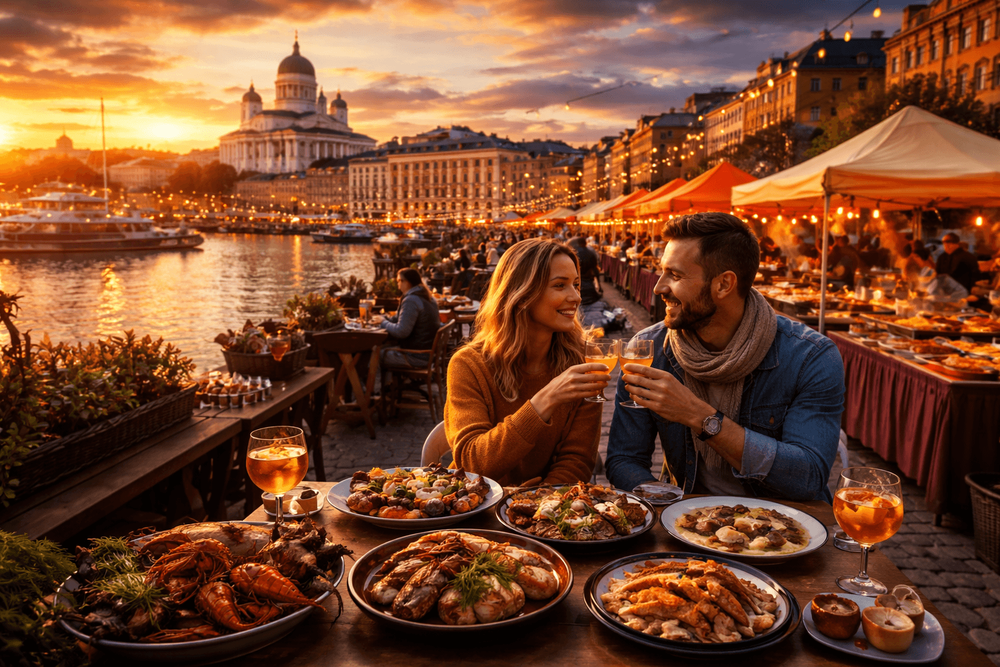
Pack a basket at the market halls and hop a ferry to Suomenlinna, the sea fortress whose breezy lawns and ramparts all but demand a picnic of new potatoes with butter, smoked fish, and cloudberry tarts. Smaller isles like Lonna and Pihlajasaari offer beaches, nature trails, and seasonal restaurants that treat the Baltic as larder and muse. Dinner cruises weave through the archipelago from late spring to early autumn, serving Nordic tasting plates as the city softens into gold.
Back on shore, few experiences marry Finnish culture and cuisine like an evening at Löyly, a sculptural public sauna complex with a Nordic grill. Alternate steam and sea dips, then settle into a table for charred salmon and herb-bright salads, the scent of smoldering birch still on your skin. Those after a particularly atmospheric date night can draw ideas from Romantic Weekend in Helsinki: Saunas, Seaside Strolls & Design-District Dates.
How to Plan Your Edible Helsinki
Where to eat by neighborhood
- Katajanokka and the Harbor: Perfect for market-hall grazers, seafood lovers, and archipelago ferries a few steps from lunch.
- Design District (Punavuori, Ullanlinna): A warren of natural-wine bars, artisan bakeries, and chef-led bistros—ideal for an evening crawl.
- Kallio: Casual, creative, and budget-friendly, with craft beer bars, vegan kitchens, and third-wave coffee.
- Kruununhaka and the Historic Center: Intimate bistros and culinary institutions in handsome 19th-century streets.
- Töölö and the Waterfront West: Classic cafés (don’t miss lakeside Café Regatta for pulla and blueberry pie), with easy access to parks and the opera.
- Teurastamo: A former abattoir turned food precinct with the Helsinki Distilling Company, smokehouse flavors, and lively courtyard events.
Seasonal highlights: what to eat when
- Winter: Game, root vegetables, rich fish stews, oven pancakes, and Christmas market treats with glögi. Pastries include runebergintorttu (February) and laskiaispulla (late winter).
- Spring: Spruce tips, wild herbs, and the exuberant Vappu picnics in early May.
- Summer: New potatoes with dill, grilled whitefish, just-picked berries, and long terrace evenings with a long drink or crisp lager.
- Autumn: Chanterelles and porcini, reindeer and elk, and the Baltic Herring Market’s briny celebration.
Diets, access, and good-to-know tips
- Dietary preferences: Helsinki is exceptionally accommodating. Vegan, vegetarian, gluten-free, and lactose-free options are widely labeled; oat milk is standard in cafés. Allergen labeling follows EU norms.
- Water and tipping: Tap water is excellent and free; tipping is modest to uncommon as service is included (round up if moved to).
- Payments: Cards are accepted almost everywhere, even at market stalls.
- Alcohol: For takeaway spirits and strong wines, visit Alko (state shops). Expect higher prices for alcohol than in many countries.
Price ranges and reservations
- Markets and casual lunches: 8–15€ for soups, sandwiches, and pastries.
- Bistros and wine bars: 18–32€ for mains; tasting menus 55–85€.
- Fine dining: 95–195€+ for multi-course menus at top-end restaurants. Reservations are recommended for popular spots, especially on weekends and during summer; top-tier restaurants can book out weeks ahead. Many high-end kitchens close on Sundays and Mondays, and some scale back in July when Finns decamp to summer cottages—an excellent time to focus on markets, terraces, and island dining.
Where to stay for flavor-forward exploring
- For design lovers and serious breakfasts: The Hotel St. George anchors the city’s creative heart with a serene spa and its own street-facing bakery turning out superb sourdough and pulla—fuel for a day of market-hall hopping.
- For a taste of Lapland in the capital: Lapland Hotels Bulevardi brings northern textures and flavors south; its on-site kitchen serves refined reindeer, Arctic char, and foraged herbs in rooms that glow with soft, birchwood calm.
- For harbor mornings and market proximity: Hotel Haven overlooks the quays—step outside and you’re browsing cheeses at the Old Market Hall within minutes, returning later to sunset aperitifs over the water. Budget-focused travelers keen to put savings toward tasting menus can explore our city’s top hostels in Best Hostels in Helsinki — Top Picks for Budget Travelers, Solo Adventurers & Groups.
The city’s flavors reveal themselves best in layers: the crunch of warm rye under a veil of dill-cured salmon; the orchid-honey perfume of cloudberries against squeaky cheese; the glow of juniper in a gin and the shock of cold sea air after a sauna. Collect those moments, and unique food experiences in Helsinki become not just meals, but memories—threaded with forest light, harbor breezes, and the quiet confidence of a culinary culture that knows exactly who it is.