Urban Wild: Rooftop Foragers, Night‑Blooming Gardens and Community Kitchens on Mexico City’s Edible Edge
Explore Mexico City’s edible periphery—chinampa canoe mornings, rooftop foraging workshops, night‑blooming garden dinners, and community kitchens guided by local growers.
Trip Length
3–5 days
Best Time
Year-round; best March–November (spring–autumn) for blooms and produce
Mood
Cultural / Wellness
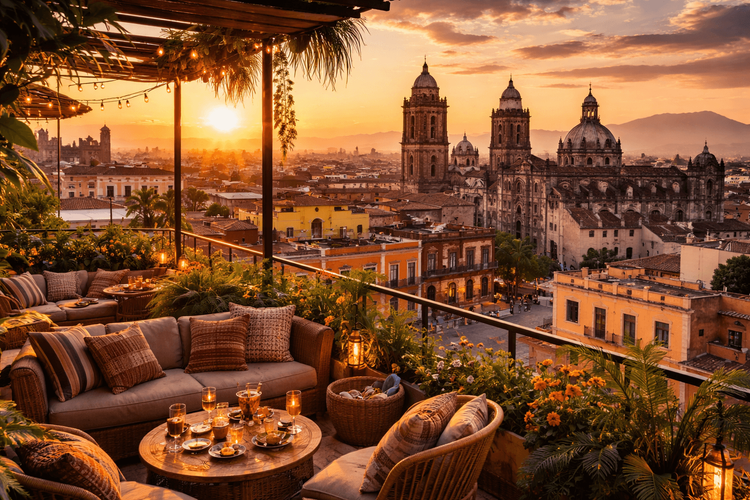
The flower opens as the city dims. On a rooftop garden in the southern districts, a single white blossom loosens at dusk, peppering the air with perfume while someone warms a comal and a cook snips squash flowers with the care of a jeweler. This is the moment a Mexico City urban foraging tour clicks into focus: the metropolis is edible if you know where to look—and who to learn from.
Why the edible outskirts matter
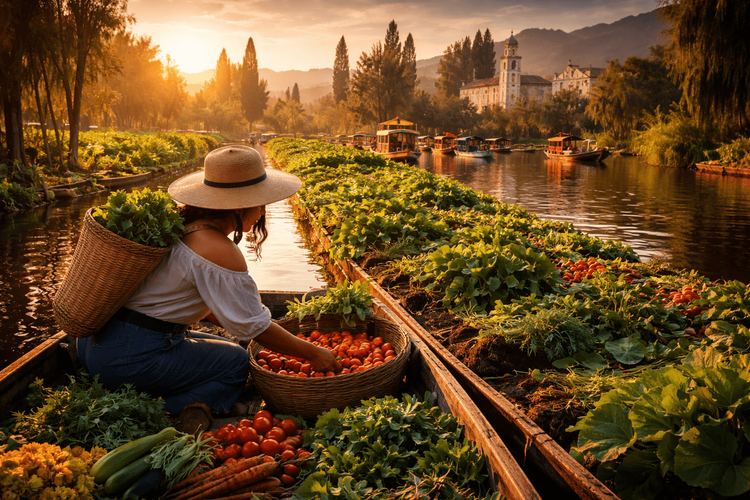
Follow the canals toward Xochimilco and Tláhuac and the city turns green at the seams. Long before skyscrapers, farmers shaped floating garden plots—chinampas—out of reed, lake mud, and willow. Today, those plots are still worked by families who know the textures of the soil by fingertip. Up in the hills near Milpa Alta, terraced patches and home gardens keep the milpa tradition alive—corn, beans, and squash arranged as a living design that feeds both soil and community. Between these landscapes and the city’s concrete rooftops blooms a culture of foraging, not as a trend but as daily knowledge: quelites (wild greens) gathered after rain, papalo torn fresh for salsa, epazote bruised to wake its resinous scent.
This is where the edible city reveals itself—in the periphery, at water level, on rooftops, and inside community kitchens where recipes are teachings and tools are stories.
Mexico City urban foraging tour: what it actually feels like
A typical day might begin before rush hour. You meet a guide at a canal-side embarcadero, join a small group on a flat-bottomed boat, and push out into mirror-still water. As the sun lifts, herons lift too, and willow roots grip the banks. On a chinampa, a farmer gestures to beds of amaranth, huauzontle, and quintonil—greens you’ll taste within the hour. You rub a sprig of epazote between fingers; its aroma is a compass for the rest of the day.
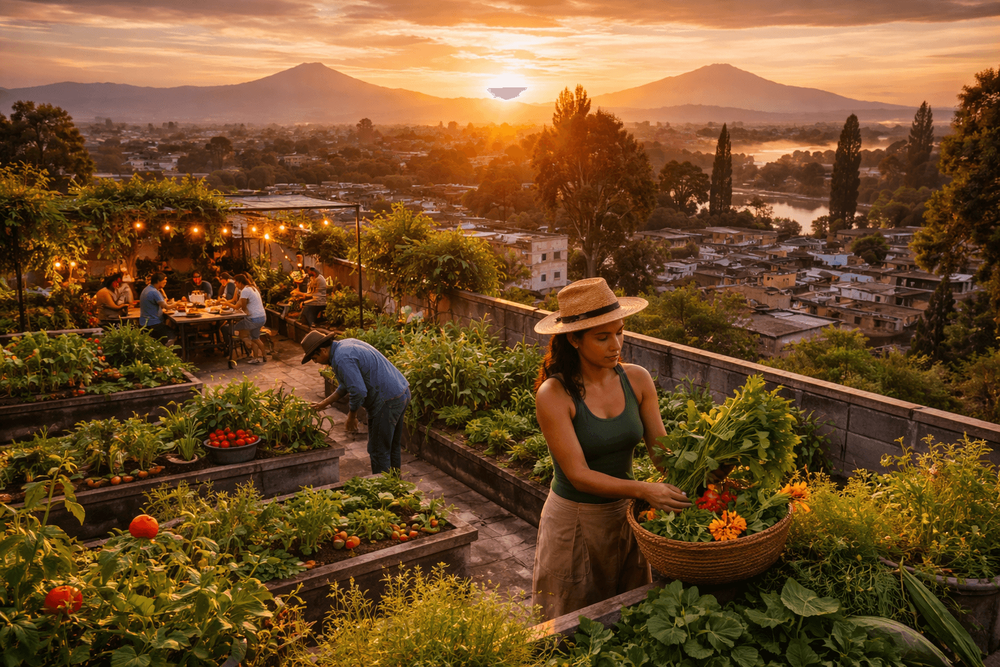
Later, the route shifts punctually urban. On an apartment rooftop, a workshop host runs fingers through containers dense with edible leaves: purslane thriving on summer rain; mint shadowing the parapet; chard curled like sails. You learn to identify, harvest, and handle plants respectfully—always with permission, always with context. This is urban foraging as practice rather than scavenger hunt, grounded in relationships between growers and terrain. A quick sauté turns rooftop greens tender; tortillas puff; lunch is proof.
Night resets the palate. In a garden that waits for evening, lanterns pick out the shapes of hoja santa and avocado leaves. While night-blooming flowers open only to scent the air, the menu you share leans toward edible blossoms and herbs—squash flowers folded into masa, nasturtium leaves smacked bright in a salsa, a tisane brewed from aromatic leaves to close. The experience is meditative, unhurried, and deeply local.
A 3–5 day plan along the southern edge
Day 1: Canal morning, rooftop afternoon
- Early meet-up at a recognized embarcadero in the southern canals. Glide to a working chinampa with a farmer-host. Learn how beds are shaped and how crops rotate through the seasons. Harvest small amounts of greens and herbs with guidance, then cook a canal-side brunch—think nixtamal-fresh tortillas griddled on a comal, quelites wilted with garlic, a crumble of local cheese if available.
- Afternoon rooftop workshop closer to town. You’ll move through containers like a living pantry, talk soil health, and practice identifying look-alike plants. Expect to taste as you harvest.
Day 2: Markets and a community kitchen
- Morning market walk in a southern barrio. Stalls overflow with seasonal produce: long paddles of nopal cactus, squash in shades of dusk, amaranth seeds bound into sweets. The goal isn’t shopping for volume; it’s learning the vocabulary of ingredients you’ll cook later.
- Midday and afternoon in a community-run kitchen. Under a cook’s patient rhythm, you might rinse nixtamal, grind masa, and press tortillas; fold flor de calabaza into quesadillas; simmer a pot of beans with avocado leaves and epazote. The kitchen becomes classroom and table at once.
Day 3: Hill trails and herb lore
- Head toward the higher neighborhoods skirting the forests. Trails edge plots where medicinal and culinary herbs grow together—yerba buena, chamomile, and the anise-kissed hoja santa. You’ll hear how dishes and remedies overlap, how food knits health into daily life.
- Evening free, or choose a second rooftop session focused on seed saving and container design—useful context to apply at home.
Optional Day 4–5: Deep dive on chinampas and night‑blooming garden dinner
- Spend a full day on the water moving between two or more chinampas, noting how techniques shift from plot to plot. In the rainy months, canals feel especially lush; in the drier months, paths firm up for walking tours.
- Save one evening for that night-blooming garden dinner—a quiet, lantern-lit service where the cooking lingers on edible flowers, herbs, and seasonal produce from partners across the southern districts. Expect a thoughtful pace.
Practical details
- Best time to visit: Tours operate year-round. Spring through autumn brings a wider range of greens and flowers, mild evenings for rooftop dinners, and canals ringed in color. Summer rains can bring sudden showers; gardens and canal banks are emerald and alive.
- How to get there: Base yourself in central neighborhoods with easy transit. The Metro and light rail connect to the southern embarcaderos for canal departures; rideshares or authorized taxis are common for early meet-ups in Xochimilco, Tláhuac, or the hills near Milpa Alta. Many hosts provide a clear meeting point at a public dock, community center, or plaza.
- What to expect on arrival: Groups are small and led by local growers or cooks. On the water, you’ll board a traditional flat-bottomed boat and transfer onto chinampa paths; rubber boots or slip-on covers are often available when soil is soft. On rooftops, expect a few flights of stairs and hands-on harvesting under guidance. In community kitchens, you’ll work at shared tables with traditional tools—metate, comal, clay pots—following the pace of the cook.
Responsible foraging and respect
Foraging here is invitation-based, not improvisational. That means asking permission before handling a plant, taking modest amounts, and listening to the person who stewards the space. Photograph plants and techniques only with consent. If seeds or starts are offered, they come with instructions; if not, the answer is no. Buying directly from growers and donating to community kitchens keeps knowledge alive and plots productive.
This is also where language matters. Words like quelites, milpa, and nixtamal hold practice and history inside them. Guides translate generously, but you’ll gain more by noticing how foodways and ecosystems speak together: willows holding canal edges; corn stalks bracing beans; rooftop barrels catching rain for the next sowing.
What you’ll actually taste
The flavors tie threads from water to hillside to roof. Expect tortillas pressed moments before you eat them. Green notes from purslane and quintonil; the lemon-basil lift of papalo; epazote’s resinous edge cut with lime. Squash flowers, silky and mild, tuck into quesadillas or float through soups. Herbs are used to frame the plate, not dominate it—hoja santa lending a gentle anise note, mint brightening grains, avocado leaves perfuming beans. Drinks tend toward infusions, atole, or cacao-based preparations, depending on the season and the cook.
Booking and choosing a good fit
Search for cooperatives and community-led projects based in the southern districts rather than generic sightseeing. Look for clear descriptions of who leads the experience (farmer, cook, or both), the sites you’ll visit (canal plots, rooftops, kitchens), and how your fee supports growers. A solid Mexico City urban foraging tour will set expectations about walking on uneven ground, transit to meeting points, dietary flexibility, and weather plans. If you’re traveling with kids or have accessibility needs, ask about adaptations—many hosts are creative about pacing and routes.
Why this trip feels like cultural wellness
There’s a grounded calm that comes from reading a city through its plants. Your shoulders drop on the canals. Hands remember rhythm on a tortilla press. A rooftop herb’s scent can change the way you think about home cooking for months. Wellness here isn’t a promise of detox or retreat; it’s the steadying sensation of being taught something useful, of adding one respectful habit to your own kitchen. A Mexico City urban foraging tour sends you home with more than photos—you carry flavors you can recreate, and a deeper sense of how urban life and agriculture still braid together at the city’s edge.
When you leave, the city hums on. But somewhere to the south, a garden is just beginning to glow as the night blooms open, and a cook is slicing squash flowers thin as paper. That future dinner is reason enough to start planning now.
Where to Stay

Camino Real Aeropuerto
Camino Real Aeropuerto is a 4-star, business-oriented hotel near Mexico City's southern barrios and chinampas, offering convenient airport access, business-friendly facilities and on-site dining, with a guest rating of 8.1/10.

Hotel Catedral
Hotel Catedral is a 4-star hotel in Mexico City's southern barrios near the chinampas, earning a 9.1/10 guest rating; it offers comfortable rooms, attentive service and a convenient base for exploring local markets, canals and neighborhood culture.

Barcelo Mexico Reforma Mexico City
Barcelo Mexico Reforma in Mexico City's southern barrios near the chinampas is a 4.5-star, modern hotel offering contemporary rooms, dining and business facilities, and a fitness center; guests give it an 8.8/10 for its location and amenities.

WeEnjoy Hotels Grand Prix Aeropuerto CDMX
WeEnjoy Hotels Grand Prix Aeropuerto CDMX is a 4-star hotel near Mexico City Airport in the southern barrios and chinampas, offering practical 4-star accommodations and services and scoring 8.1/10 from guests for its convenient location.

Hotel Metropol
Hotel Metropol is a 4-star hotel in Mexico City's southern barrios near the chinampas, offering comfortable, contemporary rooms, on-site dining, free Wi-Fi and concierge services, and easy access to local transport and waterways; guests give it a 7.8/10.