
Zanzibar’s Blue Hour: Conservation Stays, Spice‑Boat Dinners and Regenerative Beaches
Zanzibar’s blue hour meets a new kind of beach luxury: stays that fund reef restoration, spice‑boat dinners with local captains, and regenerative beach clubs on the east coast.
Trip Length
5–7 days
Best Time
June–October and December–February (dry seasons)
Mood
Wellness & Conservation
The sea turns the color of indigo cloth as the call to prayer threads through Stone Town’s alleys. A late dhow ghosts past the harbor, its lateen sail catching the last wash of sun. On deck, a captain checks his nets and a pan of cloves, cinnamon, and cardamom warming over a small flame—the scent that gave this island its name. Tonight, I’m headed east to one of the sustainable Zanzibar lodges, where reef gardeners string coral fragments like charms and the tide sketches wide, walkable sandbanks. This is Zanzibar’s blue hour, a quietly radical time: the island is rewriting beach luxury with conservation at its core.
Why Zanzibar now: wellness with a conscience
Zanzibar rewards travelers who want salt air and silence with purpose. In a 5–7 day arc, you can tune yourself to Stone Town’s historic rhythm, then move to the east coast for mornings of yoga and reef walks, afternoons floating over seagrass meadows, and evenings that taste of the spice route. The dry months—June to October and again December to February—bring clear water, calmer seas, and the sort of star-sharp skies that make you forget your screen. Winds in season keep the heat honest and, on the east coast, carry colorful kites across the horizon while leaving sheltered reefs glassy in the mornings.
Stone Town: spice, soul, and the sea
Start in Stone Town, a UNESCO-listed warren of carved doors, coral‑rag townhouses, and balconies that lean toward each other like old friends. Wander the dhow harbor at first light as fishermen return with the day’s catch; later, drift through the market where fruit vendors stack mangoes like pyramids and cloves color burlap sacks a rusty brown. The waterfront green—Forodhani Gardens—comes alive at dusk: skewers, pressed sugarcane, octopus curls on grills, and the voice of the sea close by.
Stone Town sets the tone for Zanzibar’s conservation-forward spirit. Guides speak matter-of-factly about reducing plastic, steering visitors to reef-safe sunscreen, and supporting community projects. Many walking tours now thread in visits to spice plots on the island’s interior, where farmers explain how cinnamon peels in ribbons and how nutmeg hides in a lacquered shell. You’ll taste the island under your tongue before you see it again in the waves.
Sustainable Zanzibar lodges: reef-to-room impact
Head east after two nights, trading alleys for a shore that stretches pale and wide. Here, sustainable Zanzibar lodges are reimagining what a coastal stay can be. Energy often comes from solar, desalination systems hum quietly out of sight, and greywater is treated for gardens that host native species instead of thirsty ornamentals. Plastic-free rooms stock refillable glass bottles; beach clubs offer water refill stations and compost their kitchen prep, sending nutrient-rich soil to village tree nurseries.
What sets these stays apart, though, is their relationship with the reef. Along the east and northeast coasts, lodge-led and partner projects cultivate coral nurseries—skeins of young coral hung in the water column or fixed to frames—then outplant fragments onto degraded patches of reef. Guests are invited to learn, sometimes to clean algae from frames on guided swims, or to help record fish sightings for long-term monitoring. The work is quiet and patient: a diver with a zip-tie, a slate of notes, a square meter of future.
On shore, you’ll see a different, equally vital story. Seaweed farmers—often women—tend plots on the tidal flats at low water, knotting lines and harvesting fronds that dry to a coppery sheen. Some eco-minded beach clubs purchase directly from these co‑ops for spa products or kitchen experiments, a micro‑economy that keeps value local and gives travelers a tangible way to spend well. It’s regenerative tourism not as slogan, but as supply chain.
Spice‑boat dinners with local captains
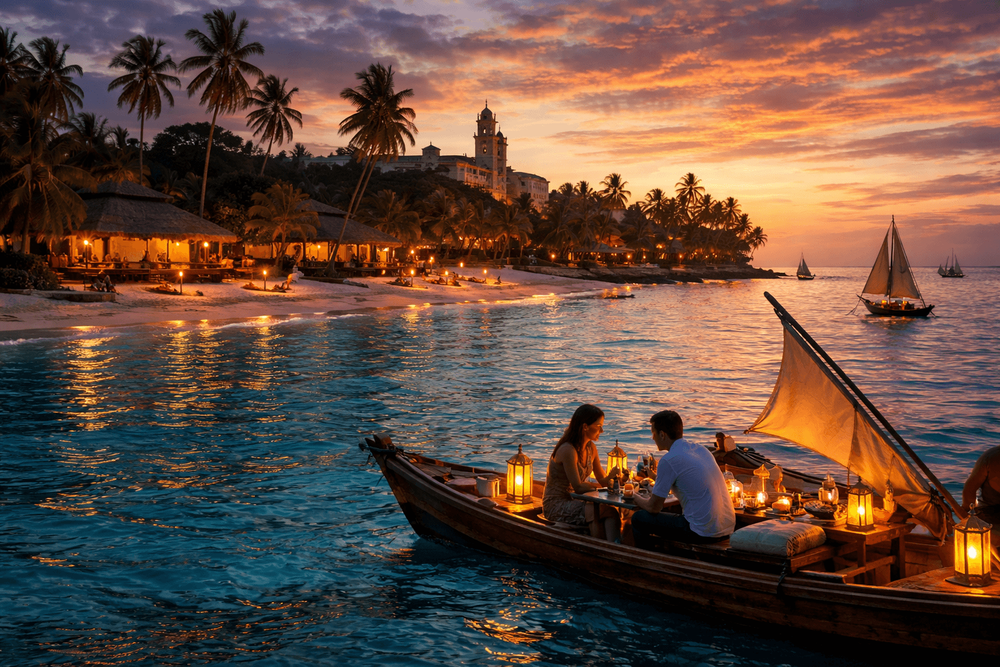
Zanzibar’s cuisine is a map of monsoon winds and centuries of exchange, and one of the most memorable ways to read it is aboard a traditional wooden boat. Arrange an evening with a local captain whose family has sailed these waters for generations. As the dhow pushes off, he’ll steer by the shape of the reef and the feel of the breeze, while a small crew coaxes dinner from a charcoal brazier—a catch-of-the-day rubbed with clove and lime, pilau laced with cardamom, coconut greens, a mango relish bright with chili.
These spice‑boat dinners are more than sunset spectacle. Captains talk about respecting the tides, the zones they avoid to protect spawning, and how partnerships with conservation‑minded lodges mean fewer single-use plastics on board and better waste handling back at the landing. You’ll eat cross-legged under a triangular sail, the hull creaking softly, and the island will flicker to life along the shoreline.
Reef restoration and the blue hour underwater
At slack tide, slip into the water with a guide for a slow snorkel over coral gardens. The east coast’s intertidal rhythms lay out a marine classroom: seagrass meadows where juvenile fish hide; bommies laced with soft corals; stately table corals that host a living confetti of damselfish. In some protected areas, look for small tags on frames—the quiet signature of restoration. If you’re diving, ask about sites where restoration efforts have improved coral cover and fish life, and about how to maintain neutral buoyancy to keep fin-kicks from stirring sediment over new growth.
Several community and lodge programs pair ocean experiences with education sessions ashore: how coral polyps build skeletons; why warming seas stress them; where mangroves and seagrass lock away “blue carbon”; and how you can contribute meaningfully—beyond a donation—with citizen science surveys or by choosing operators who cap group sizes and time in sensitive zones. The reward is as much understanding as it is a kaleidoscope of fins and light.
Regenerative beaches on the east coast
The east coast is shaped by tide and wind, and the most forward-thinking beach clubs now design with that dynamism in mind. Instead of leveled dunes and hard seawalls, you’ll see boardwalks that hover above the sand, native plantings that anchor the foredune, and lighting policies that keep the night sky dark and reduce disturbance to wildlife. Some clubs host regular beach clean‑ups with local youth groups, turn glass into sand for construction fill, and invite travelers to join short workshops on making reef‑safe balms using island botanicals.
Wellness here stretches past the massage table. Yoga platforms face sunrise, smoothie menus favor island fruits, and saunas are cooled with harvested rainwater. But the deeper reset happens in the ritual of the day: walking the tidal flats at first light while herons stalk in the shallows; learning to free-dive on a single calm breath; sipping spiced tea while a conservation lead outlines the week’s reef check. You leave lighter because your days were arranged not just for you, but for the place.
A 5–7 day flow
- Days 1–2: Stone Town. Dive into the markets, doorways, and rooftop silhouettes. Take an afternoon spice plot visit and a waterfront stroll that ends with skewers at the night food stalls. Rest in a townhouse stay that prizes heritage conservation and waste reduction.
- Days 3–6: East coast. Check into one of the sustainable Zanzibar lodges aligned with reef work. Alternate days between saltwater and sand: a morning snorkel or dive; an afternoon reef walk with a guide who can name the creatures underfoot; a dhow‑side spice dinner one evening; yoga and a seaweed farm visit the next. If the wind calls, try a kitesurfing lesson with an operator who offsets boat fuel and supports beach monitoring.
- Day 7: A slow morning. Buy sea-salt and cloves to carry home; watch the water climb the lagoon until it smooths the reef flat. Say a quiet thank you to the tide.
Practicalities: when to go, getting there, what to expect
Best time to visit: Dry months, June–October and December–February, offer clearer water, easier boat days, and pleasant evenings. Short rains can brush the island in November, while the long rains typically arrive March–May.
Getting there: Fly into Abeid Amani Karume International Airport (ZNZ) in Zanzibar City, with connections through regional and long‑haul hubs. High‑speed ferries also run between Dar es Salaam and Stone Town’s port. Transfers to the east coast take roughly an hour to two by road depending on the beach you’ve chosen.
On arrival: The airport is compact and straightforward. Arrange a lodge transfer in advance or use a licensed taxi from the official rank. Many stays accept cards, but carry small Tanzanian shillings for tips and market snacks. Modest dress in Stone Town is appreciated, especially away from the beachfront. The east coast’s dramatic tides are part of its magic; plan reef swims with your guide for the right water height, and wear reef‑safe sunscreen to protect the coral you came to see.
How to choose well: Ask prospective stays three questions—How do you handle water and waste? Do you partner with local conservation or community groups? Can guests learn or contribute without stressing the environment? The best answers are specific: coral nursery involvement, plastic-free commitments, fair employment and training, support for seaweed co‑ops, mangrove plantings, or transparent measurements of impact.
In the end, Zanzibar’s true luxury is the feeling that your presence left something quietly better—a coral fragment taking hold, a dune’s grass growing taller, a captain’s evening catch wrapped not in plastic but in palm frond. When the island slips back into blue, you’ll know you’re part of that color.
Where to Stay

Mizingani Seafront Hotel
Mizingani Seafront Hotel is a 4-star seafront property in Stone Town, Zanzibar (east coast), rated 8.7/10 by guests, that offers direct ocean views, waterfront access, on-site dining and easy walking access to Stone Town's historic sites, markets and the ferry terminal.

Tembo House Hotel
Tembo House Hotel is a 4-star property in Stone Town, Zanzibar, rated 7.8/10 by guests, offering comfortable rooms, on-site dining and practical amenities, with a central location that provides easy access to local markets, cultural sites and nearby beaches.

Hotel La Gemma dell'Est
Hotel La Gemma dell'Est is a 5-star property on Zanzibar’s east coast near Stone Town, rated 8.1/10, offering coastal accommodations with on-site dining and leisure facilities and convenient access to beaches and the island’s historic attractions.

The Mora Zanzibar - Luxury All Inclusive
The Mora Zanzibar - Luxury All Inclusive is a 5-star, all-inclusive beachfront resort on Zanzibar’s east coast (Stone Town & east coast), rated 9.2/10, offering villa-style accommodation, direct beach access, on-site dining, a spa and water-activity options.

Canary Hotel & SPA
Canary Hotel & SPA is a 4-star coastal hotel in Zanzibar (Stone Town & east coast) offering on-site spa services and convenient access to Stone Town’s heritage sites and nearby beaches, with a guest rating of 7.7/10.