
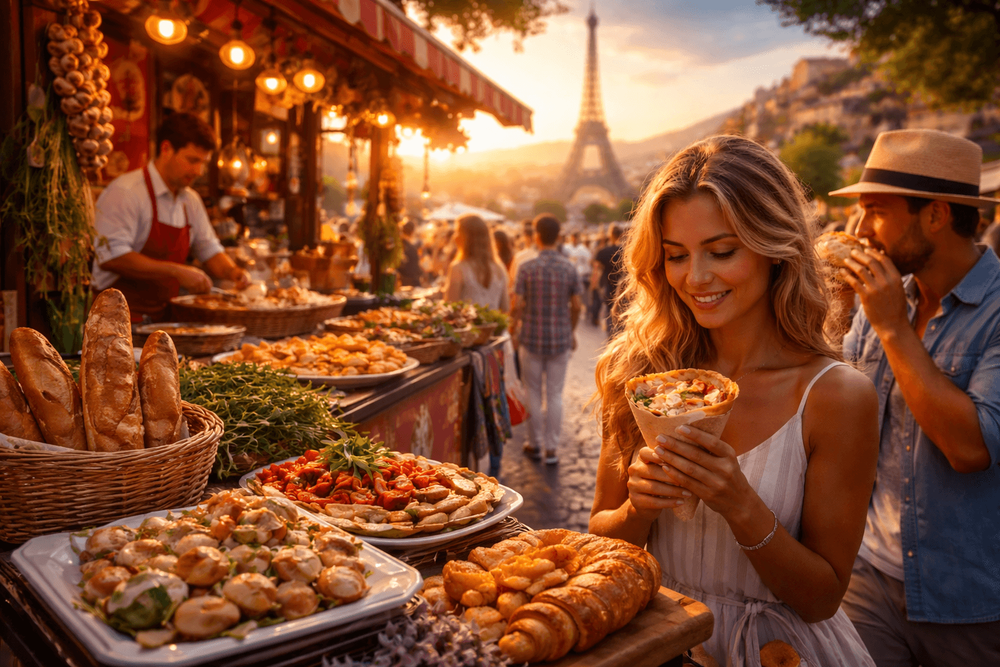
Bites of France: Exploring Street Food from Paris to Provence
From Paris crêpes to Nice socca, taste France in motion—a regional street-food trail through markets, quays, and sunlit squares.
Mood
Gourmet Street Crawl
On a sunlit morning in Nice, the first trays of socca slide from the wood-fired oven, their edges freckled and brittle, the center silky with chickpea and olive oil. A fishmonger at the Vieux-Port calls out the day’s catch; a baker dusts off warm loaves destined to cradle butter and ham. This is street food in France—steeped in terroir and tradition, alive with the hum of markets and the chatter of line‑dwellers choosing their next bite.
A Cross-Country Tasting: Regional Street Classics
France’s streets, markets, and quays form a rolling buffet of regional identity. Sampling across regions is to read the country in edible chapters—each recipe a reflection of climate, history, and migration.
Paris and Île-de-France: Crêpes, Jambon-Beurre, and a Falafel Detour
Paris’s culinary shorthand might be a crêpe flipped before your eyes—paper-thin, its lacy edges crisping on a billig. Sweet crêpes (wheat flour) deliver a simple crescendo of sugar, lemon, or buttery caramel; savory galettes (traditionally buckwheat) come folded around runny egg, ham, and Gruyère—the classic complète. The city’s democratic lunch, the jambon-beurre, pairs salted butter with rosy ham in a baton of crusty baguette—proof that simplicity, done precisely, can be revelatory.
On Rue des Rosiers in the Marais, falafel stands reflect a layer of Parisian history shaped by Jewish and Middle Eastern communities. The best pitas brim with crisp chickpea fritters, pickled cabbage, and tahini that drips, gloriously, onto your wrist—a reminder that French street food isn’t static, but a living dialogue.
Brittany and Normandy: Buckwheat and the Market Sausage
Travelers will find Brittany’s soul in buckwheat. Galettes here carry buckwheat’s nuttiness with a miner’s sturdiness; the galette-saucisse—hot grilled sausage wrapped in a galette—remains a market-day staple across Rennes and beyond, often chased with a dry local cider. Along the Norman coast, expect crêpe stands bright with local butter and apple confit, the air scented with the sea.
The Riviera, Nice, and Marseille: Socca, Pan Bagnat, Pissaladière, and Panisse
On the Côte d’Azur, a trinity defines Niçois street eating. Socca, made from chickpea flour and olive oil, arrives as bronzed slabs cut from a vast copper pan—best eaten burning-hot with black pepper. Pan bagnat, a fisherman’s portable salad, stuffs tuna, egg, tomato, olives, and anchovy into a round loaf slicked in olive oil; it tastes of sun, harbor winds, and market mornings. Pissaladière layers slow-sweated onions and the whisper of anchovy on a tender crust, olives arranged like punctuation.
In Marseille, the port’s Maghrebi influences bring panisse (chickpea fritters) and merguez sandwiches to the fore. Order a cornet of panisse, hot and salted, and watch the ferry glide across a chalk-blue bay.
Lyon: The Silk City’s Savory Heart and Sweet Fringe
Lyonnaise cuisine tends toward hearty restaurant fare, but street-friendly versions of local icons exist if you know where to look. Bakeries and market counters tout saucisson brioché—aromatic sausage swaddled in buttery brioche—sliced to go. Sweet tooths should hunt for praline-studded brioches in a rose blush, or seasonal bugnes, fragile fritters dusted with sugar. A smear of cervelle de canut—fresh herbed cheese—on a warm hunk of bread might be the city’s most disarming snack.
Alsace and the Northeast: Pretzels, Tarte Flambée, and Winter Markets
In Strasbourg and Colmar, pretzels twist from bakery hooks, lacquered and sesame-flecked. Street stands at fairs and marchés de Noël serve tarte flambée (flammekueche) by the slice—thin dough blistered over fire with crème fraîche, onions, and lardons. Come winter, steaming cups of vin chaud and the scent of cinnamon write their own footnotes in the margins of each bite.
The Southwest and Atlantic: Oysters, Canelés, and Basque Notes
Along the Atlantic, seaside markets like Arcachon brim with oysters—zippy and saline, doused with lemon or mignonette and eaten standing. In Bordeaux, canelés—small, caramelized cakes with custardy hearts—make an ideal pocket dessert. The Basque Country brings Bayonne ham layered in buttered bread and squares of gâteau basque filled with black cherry, best enjoyed as you drift from square to square.
Where to Find the Best Street Food in France
Seek the arteries of daily life. France’s greatest open-air dining room is its network of markets, neighborhood boulangeries, and waterside promenades.
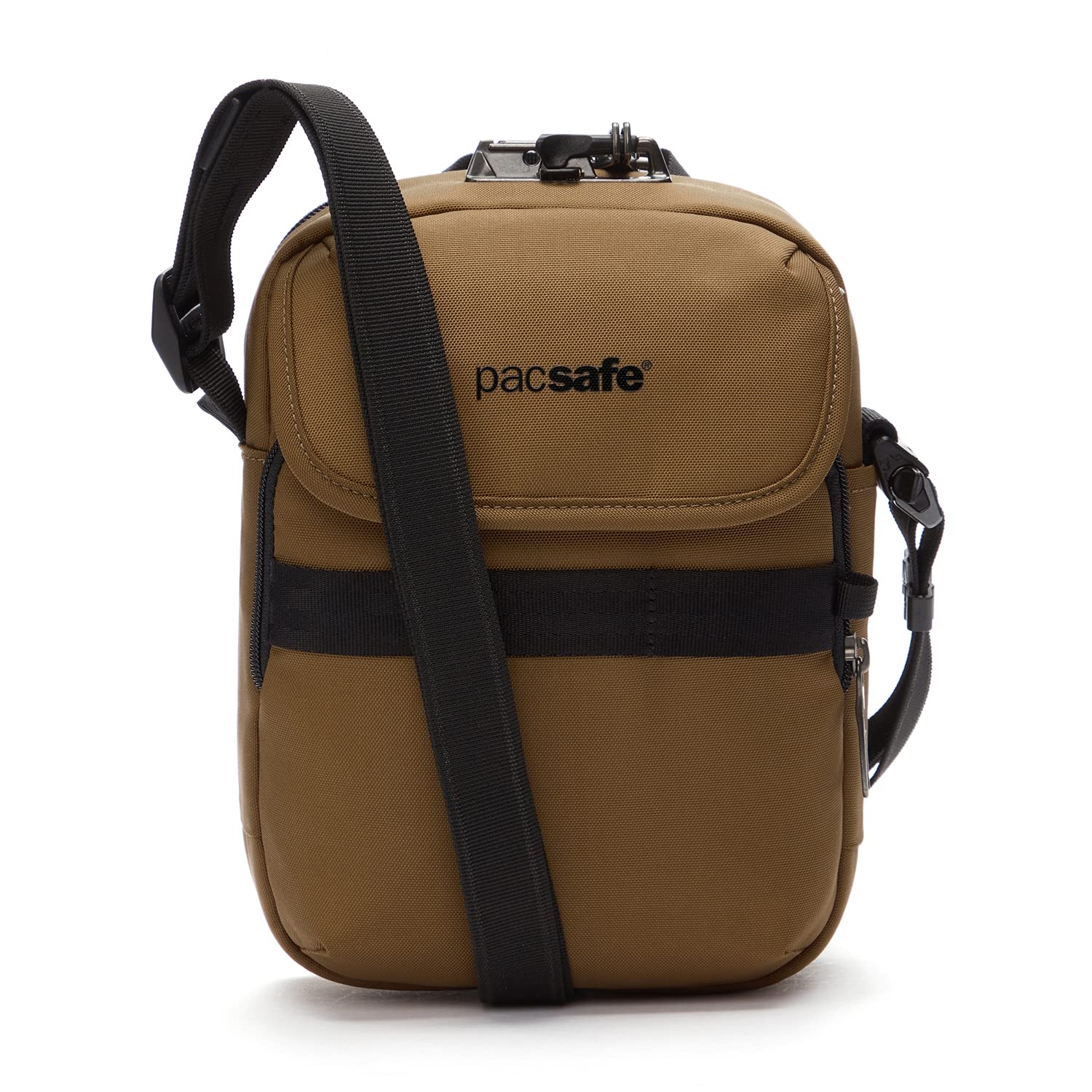
Pacsafe Metrosafe X Anti Theft Compact Crossbody - Fits 8" Tablet, Black : Clothing, Shoes & Jewelry
ANTI-THEFT - 2022 version in Tan colorway, <strong>Interlocking Zippers & Cut Proof Material (lightweight steel mesh) to prevent pickpocketing</strong>. RFID blocking pocket to keep credit cards/I
Check Price on AmazonParis: The Marché des Enfants Rouges charms with long-standing food counters; crêpe stands flourish near Montparnasse and canal-side in the 10th. Rue des Rosiers in the Marais draws the city’s most fervent falafel devotees. A short stroll away, the Hôtel des Archives tucks into a 19th-century building with lofty windows—ideal for lingering after a lunchtime street crawl.
Nice and the Riviera: Cours Saleya hosts an exuberant morning market (antiques on Mondays), where socca sellers fire off trays that vanish in minutes. In summer, evening markets pop up across the coast, doubling as an invitation to wander and nibble. Nearby, the Hôtel du Cours occupies a sun-washed townhouse with balconies perfumed by citrus—worth every step from the stalls below.
Marseille: Aim for the Vieux-Port at dawn for a quick theater of sea and commerce, then drift into Noailles for pastries, spices, and panisse. Food trucks and kiosks around the Corniche offer sea-breezy lunches with views.
Lyon: Neighborhood bakeries near Place Bellecour or on the Presqu’île often sell saucisson brioché by the slice; weekend markets along the Saône and Rhône promenades become open-air lunchrooms. For a base within ambling distance of riverside markets, the Grand Lyon Bellecour pairs Art Deco bones with an easygoing bistro downstairs.
Brittany: Rennes’s Marché des Lices is a temple to the region, where galette-saucisse vendors work the grills as locals gather for cider and gossip.
How to choose reliably delicious—and safe—stalls? Watch for lines of locals and quick turnover; a tight, seasonal menu often signals care. Ask about origin—producers and AOP labels are badges of pride. Heat matters: crêpes poured to order trump pre-made stacks; fried snacks should arrive crisp, not languid with oil. And the best vendors welcome questions, explaining their onions like old friends.
If your appetite skews toward small-queue secrets and regional detours, our food-lover’s guide to authentic eats offers a companionable deep-dive into finding the real thing.
The Culture Behind the Counter: Seasons, Stories, and Social Rituals
Street food in France isn’t fast food; it’s fast culture. A galette-saucisse at a Breton market tastes of peasant grains and seaside trade routes that brought buckwheat to Europe. Socca and panisse bear witness to centuries of Mediterranean exchange. The Parisian jambon-beurre speaks to bakery craft codified by law and to a nation that prizes the daily rhythms of bread.
Vendors, too, are keepers of memory. A Niçois socca-maker’s copper pan might be the same one his mother used; a Lyonnaise baker guards a pink-praline recipe scrawled by a grandfather. Markets double as social salons—a Sunday loop through stalls is as much about greeting a fishmonger by name as selecting oysters. In summer, open-air guinguettes hum along riverbanks, and the apéro hour gathers friends around paper-wrapped slices and plastic cups of something local—Muscadet with oysters, rosé with pan bagnat, cider with galettes.
Immigrant communities shape this landscape, from North African merguez sizzling at Marseille’s markets to Levantine falafel lines in Paris. The result is an ever-evolving definition of French street food that honors terroir while embracing the city as a global pantry.
Practical Traveler Guidance: Eat Smart, Order Confidently
Street eating rewards those who arrive early, ask politely, and carry an appetite. A few on-the-ground insights help the experience sing.
Food Safety and Freshness
- Choose stands with steady turnover and food cooked to order or held at safe temperatures.
- Look for clean work surfaces, gloved or well-washed hands, and tidy oil stations for fried items.
- In hot months, prioritize shade and freshly cut fillings. For raw oysters, buy from reputable market stalls and eat immediately.
Allergens and Dietary Notes
- France requires allergen information; look for posted “allergènes” or ask: “Je suis allergique à…”.
- Common allergens: gluten (wheat crêpes, bread), dairy (butter, cheese), eggs (galettes complète), nuts (praline, Nutella), fish/shellfish (anchovies, oysters).
- Vegan/vegetarian options: socca and panisse are typically vegan; pissaladière can be made without anchovies; veggie crêpes/galettes abound. Ask: “Sans [ingrédient], s’il vous plaît.”
- For gluten-sensitive diners, seek buckwheat galettes labeled 100% sarrasin; watch for cross-contact on shared griddles.
Ordering Phrases Worth Knowing
- “Bonjour!” (always, before ordering) and “S’il vous plaît” go far.
- “Une galette complète, s’il vous plaît. À emporter.” (A complète to go.)
- “Sans anchois, possible?” (Without anchovies, possible?)
- “C’est combien?” (How much is it?)
- “Je paie par carte.” / “Vous prenez la carte?” (I’ll pay by card / Do you take cards?)
- “Un verre de cidre, sec.” (A dry cider.)

Lonely Planet French Phrasebook & Dictionary: Janes, Michael, Carillet, Jean-Bernard, Masclef, Jean-Pierre
Lonely Planet's French Phrasebook and Dictionary is <strong>your handy passport to culturally enriching travels with the most relevant and useful French phrases and vocabulary for all your travel
Check Price on AmazonPayment Norms and Tipping
- Most urban stalls accept cards and contactless (“sans contact”); some have minimums. Carry small bills and coins for markets.
- Service is included; tipping isn’t expected. Rounding up or leaving small change is a gracious thank-you for standout service.
Timing Your Bites
- Markets are morning affairs; arrive early for the freshest selection. The Vieux-Port fish market is a dawn ritual; Cours Saleya bustles by mid-morning.
- In summer, coastal towns host marchés nocturnes (night markets). Evenings along Paris’s canals or Marseille’s Corniche are prime for food trucks and kiosks.
- Weekdays around 12:00–14:00 are peak lunch hours; go just before or after for shorter lines.

Vapur Flexible, Collapsible Wide Mouth Anti-Bottle with Detachable Carabiner, 34 Ounce, Admiral Blue, Pack of 1
View on AmazonWhat It Costs—and What to Pair
- Expect: crêpes €3–8; galette complète €6–10; jambon-beurre €3–6; falafel €6–10; socca slice €3–5; pan bagnat €5–9; pissaladière slice €3–5; oysters (market) vary by size and region.
- Pairings: dry Breton cider with galettes; pale Provence rosé with pan bagnat and pissaladière; light Beaujolais with Lyonnaise charcuterie; Muscadet with oysters; espresso with canelés.
Budget-minded travelers can weave these bites into rail itineraries and market days—our guide to backpacking France, with practical routes and budgets, makes an ideal framework for planning. If the street feast inspires a taste of the high life—poolside rosé after a socca crawl—the Riviera’s estates in curated luxury escapes across France offer a graceful counterpoint.
Crafting Your Own Street-Food Trail
Build days around neighborhoods and markets, letting appetite lead. In Paris, cross the Seine between bites—jambon-beurre by Luxembourg Gardens, a crêpe on Île Saint-Louis, a falafel detour in the Marais. In Nice, start at Cours Saleya, then follow the salt air to the Promenade du Paillon, nibbling pissaladière under plane trees. Lyon’s rivers make natural promenades; pockets of saucisson brioché and praline brioche turn benches into private dining rooms. In Brittany, a market sausage rolled tight in a galette is sustenance and souvenir both.
The joy of exploring street food in France lies in its rhythm: the sizzle of batter on a hot plate, the paper bag warm in your hands, the clink of a plastic cup at apéro hour, the quiet satisfaction of eating with the city as your dining room. Between one bite and the next, France reveals itself—a mosaic of regions, recipes, and the people who keep them alive.
Recommended Travel Gear
Lonely Planet French Phrasebook & Dictionary: Janes, Michael, Carillet, Jean-Bernard, Masclef, Jean-Pierre
Lonely Planet's French Phrasebook and Dictionary is <strong>your handy passport to culturally enriching travels with the most relevant and useful French phrases and vocabulary for all your travel
Pacsafe Metrosafe X Anti Theft Compact Crossbody - Fits 8" Tablet, Black : Clothing, Shoes & Jewelry
ANTI-THEFT - 2022 version in Tan colorway, <strong>Interlocking Zippers & Cut Proof Material (lightweight steel mesh) to prevent pickpocketing</strong>. RFID blocking pocket to keep credit cards/I
Vapur Flexible, Collapsible Wide Mouth Anti-Bottle with Detachable Carabiner, 34 Ounce, Admiral Blue, Pack of 1
Lightweight Wide Mouth Design: Our collapsible water bottle is <strong>designed with a wide mouth opening making it easy to fill and is lightweight weighing under 2 ounces when empty</strong> · Easy t