Korean Hanok Revival: Where to Sleep, Eat and Shop in Seoul’s Old Neighborhoods
A spring guide to Seoul’s hanok revival—where to stay, sip tea, meet independent makers, and wander quiet lanes in Bukchon, Seochon, Ikseon-dong, and Eunpyeong.
Trip Length
4-5 days
Best Time
March–June
Mood
cultural
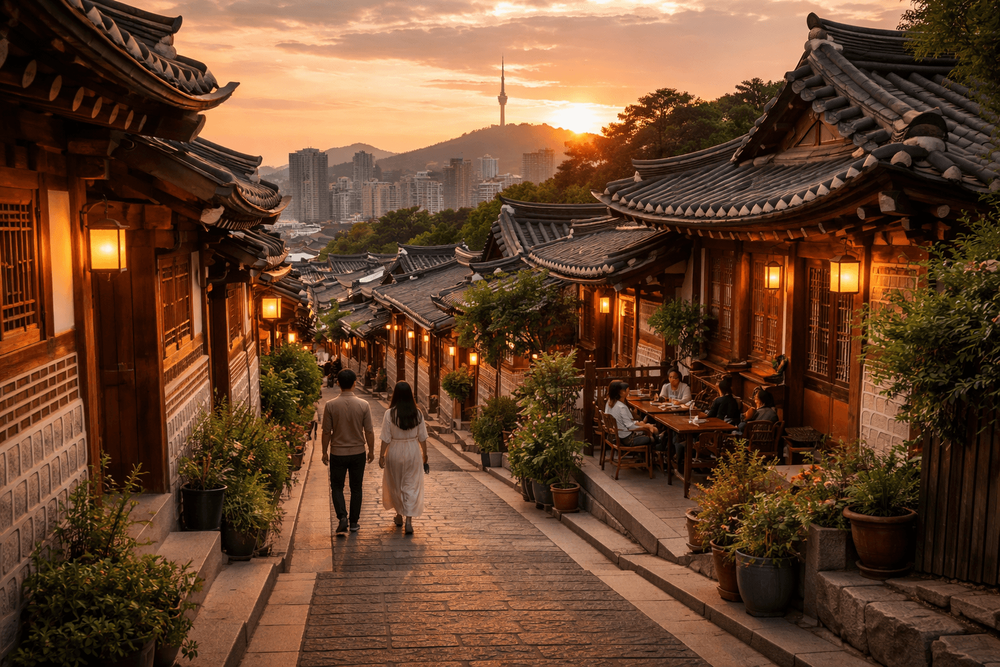
Dawn in Bukchon arrives softly: laundry lines barely stir, clay roof tiles warm to pale gold, and a kettle hisses somewhere behind a wooden gate. This is the hour when a Seoul hanok stay shows its quiet magic—sliding latticed doors open to a courtyard, the scent of pine from freshly planed beams, the city’s rush held at arm’s length by old timber and stone.
Why Spring Is the Moment
Between March and June, Seoul feels newly edited. Plum and cherry blossoms rim palace walls, azaleas burn pink on neighborhood hills, and temperatures invite rambling without the heavy layers of winter. Street life relaxes; lunchtime queues spill from noodle counters, and tea rooms hum at a conversational pace. Spring also flatters hanok architecture: courtyards are sunlit but not yet punishing, and sleeping on warm ondol floors becomes a pleasure rather than a necessity.
Where the Hanok Spirit Lives Now
You’ll find the old Seoul scattered like islands around the modern core, each with a slightly different rhythm:
- Bukchon: A latticework of alleys between royal palaces where tiled roofs crest and fall like waves. It’s photogenic, yes, but step a block off the main lanes and the whispers return—craft studios, tiny galleries, and homes where neighbors greet each other across low walls.
- Seochon: West of Gyeongbokgung, this quarter feels grounded. Small-design ateliers, family-run eateries, and workshops share space with lived-in hanoks, many updated with minimal, careful interventions.
- Ikseon-dong: A warren of early-20th-century houses reimagined as tea salons, bijou boutiques, and contemporary kitchens. It’s lively in the evenings; go early to watch shutters rise, ovens warm, and courtyards fill.
- Eunpyeong Hanok Village: Backed by the granite folds of Bukhansan’s foothills, this younger cluster offers wider streets, a calmer pace, and dramatic mountain backdrops for your morning coffee.
Across these districts, independent makers anchor the renewal: paper artisans shaping hanji lamps, potters throwing moon jars the color of cloud, metalworkers forging brushed-brass tableware, perfumers composing fragrances from cypress and mugwort. Spend an hour watching a maker at work and you’ll read the city differently; the craft vocabulary is everywhere once you know it.
Seoul Hanok Stay: How to Choose Your House
Not all hanok stays are the same, and that’s the point. Decide which version of quiet you want.
- Location: For palace-adjacent mornings and gallery strolls, Bukchon or Seochon make sense. If your idea of reset involves mountain air and a broader horizon, Eunpyeong edges toward Bukhansan’s trails.
- Style: Some homes are faithful to tradition—paper doors, floor seating, an austere beauty interrupted only by a tea tray. Others lean modern with discreet insulation, radiant bathrooms, and glass walls framing a pocket garden. Read host descriptions carefully for clues.
- Privacy: A full-house rental gives you the courtyard to yourself; a small guesthouse offers conversation over tea and local tips. Noise carries in timber homes, so consider your habits (and your neighbors’) when choosing.
- Etiquette: You’ll leave shoes at the threshold, sleep on low beds or futons over ondol, and move deliberately through doorways designed for shorter frames. Hosts often set quiet hours—honor them. This gentleness with space is part of the pleasure.
Two practical notes for booking your Seoul hanok stay: confirm whether the bathroom is en suite or across the courtyard, and check if luggage drop is possible before official check-in; alleys can be tight, and rolling a giant suitcase through morning commuters is nobody’s idea of grace.
Eating in the Old Quarters
In spring, kitchens lean toward lighter broths, peak greens, and the first shoots from local farms. Look for counter-style noodle shops with steam fogging the windows, family-run barbecue joints perfuming entire streets, and hanjeongsik-style dining where small plates parade across low tables—wild greens, nimble pickles, a stew that tastes like someone watched it all morning.
Tea culture thrives around hanoks. Traditional tea rooms pour infusions of roasted barley, persimmon leaf, and chrysanthemum; contemporary cafés experiment with local botanicals, yuzu accents, and rice-based pastries. In the evenings, sake-inspired bars and low-lit wine rooms hide behind wooden doors—often signed only with a single character or a brass plaque. Don’t chase names; follow the rooms that feel right when you peer inside.
Where to Shop: Independent Makers and Markets
- Paper, ink, and light: Hanji studios sell writing paper that begs for a fountain pen and lamps that glow like moonstone. Many offer quick workshops—paste-brushed layers becoming boxes or shades you can carry home.
- Ceramics: Shelves stack with porcelain and stoneware—thrown cups with thumb-pressed dimples, plates washed in celadon, matte-white moon jars that reinterpret Joseon aesthetics for small apartments.
- Textiles and dye: Natural-dye ateliers coax indigo blues and garden browns into scarves, aprons, and simple garments; you may find weekend dye baths open to visitors.
- Antiques and calligraphy supplies: Along the old main drags of Insadong and its side streets, browse bamboo brushes, ink sticks, carved seals, and low tables with stories in their grain.
- Markets: Traditional markets like Tongin or the fabric arcades near Gwangjang reward patience—buttons by the scoop, linens by the meter, banchan stands where you can point, smile, and assemble a picnic for a palace lawn.
A 4–5 Day Outline for Repeat Visitors
- Day 1: Check into your hanok and learn its rhythms. Afternoon at Changdeokgung’s grounds, then a slow loop through Bukchon before dusk. Early dinner nearby; end with tea under open rafters.
- Day 2: Seochon’s side streets for breakfast pastries and small galleries. Lunch at a neighborhood market; climb toward Inwangsan’s viewpoints if the sky looks promising. Evening back lanes for a glass of makgeolli or a modest natural wine bar.
- Day 3: Ikseon-dong in the morning as shopkeepers lift shutters. Walk to Jongmyo’s solemn cypress paths, then trace Cheonggyecheon’s stream back toward the old quarters. Dinner at a courtyard restaurant where laughter leaks through paper doors.
- Day 4: Eunpyeong Hanok Village for mountain air and a temple-side café. If the weather holds, wander a low-elevation trail on Bukhansan’s edge. Return to the city for a tasting flight at a craft makgeolli spot or a dessert bar riffing on traditional sweets.
- Day 5 (optional): Studio visits—paper, ceramics, or metalwork—then a last-hour spree for incense, tableware, and teas. Pack the breakables in clothing, then one final courtyard coffee before the airport train.
Getting There and Around
- Arrival: Most international flights land at Incheon International Airport. The AREX train runs directly to Seoul Station; express and all-stop services both work, with predictable transit times. Airport limousine buses fan out across central districts and can be easier if your lodging sits far from a subway stop.
- Payment and transit: A rechargeable transit card like T-money simplifies the subway and buses; many visitors now tap with contactless credit cards as well. Cabs are plentiful, though alleys in hanok areas may require a short walk.
- Navigation: Local mapping apps tend to be more accurate for addresses and walking routes than international ones. Screenshot your hanok’s gate and keep the host’s phone number handy in case you need guidance for the final turn.
What to Expect on Arrival
- Check-in: Many hanok stays message an entry code the day of arrival. If there’s a courtyard gate and an inner door, expect two codes. Quiet hours are common; voices travel through wood and paper more than you think.
- Shoes off: There’s usually a genkan-style threshold. Slippers wait just inside; wear socks you don’t mind showing.
- Beds and heat: Sleep is low to the ground—either a futon or a compact frame—warmed by ondol underfloor heating. In spring, you’ll often crack a window for the night air and wake to birds that regard tiled roofs as perches.
- Bathrooms: Many are modern but compact. If the shower and courtyard are separated by a paper door, move with care and keep towels off the floor to preserve the wood.
- Luggage and alleys: Streets can be narrow and stepped. Pack with wheels in mind or plan to hand-carry for the final approach. If you arrive early, ask about dropping bags inside the gate.
When to Go
Spring—March through June—strikes the balance: flowers, clear air, and longer light for exploring. Weekdays are gentler in the most-photographed lanes. Early mornings and post-dinner strolls give you the courtyards at their most eloquent.
Why This Trip Rewards a Return
A hanok teaches you to lower your voice, to register the grain of a beam, to notice where the sun strikes at 10 a.m. That sensibility carries into the city; suddenly Seoul is not just speed and signage but joinery, glaze, pattern, and polite restraint. Book your Seoul hanok stay for spring, leave time for makers and markets, and the city will meet you at the pace of its oldest doors—quietly, then all at once, it feels like yours.
Where to Stay

Roynet Hotel Seoul Mapo
Roynet Hotel Seoul Mapo is a contemporary 4-star hotel in central Seoul, close to Bukchon, Ikseon-dong and Seochon, offering comfortable rooms, practical services and easy access to cultural neighborhoods, and holds a 9/10 guest rating.

Dormy Inn SEOUL Gangnam
Dormy Inn SEOUL Gangnam is a 3-star hotel in Seoul, conveniently located for exploring Bukchon, Ikseon-dong and Seochon, offering practical, comfortable rooms and a 9/10 guest rating that reflects reliable service and easy access to city sights.

GLAD MAPO
GLAD MAPO is a 4-star hotel in Seoul, centrally located for Bukchon, Ikseon-dong and Seochon, offering contemporary rooms, on-site dining and a 9/10 guest rating as a convenient base for exploring the city.

Hotel Skypark Kingstown Dongdaemun
Hotel Skypark Kingstown Dongdaemun is a 4-star hotel in Seoul with an 8.7/10 guest rating, located near Dongdaemun and within easy reach of Bukchon, Ikseon-dong and Seochon, offering convenient access to shopping, historic neighborhoods and transport connections.

NINE TREE BY PARNAS SEOUL MYEONDONG 2
4-star hotel in Seoul’s Myeongdong area, close to Bukchon, Ikseon-dong, and Seochon, with easy access to shopping, dining, and cultural sights. Guest rating: 8.8/10.