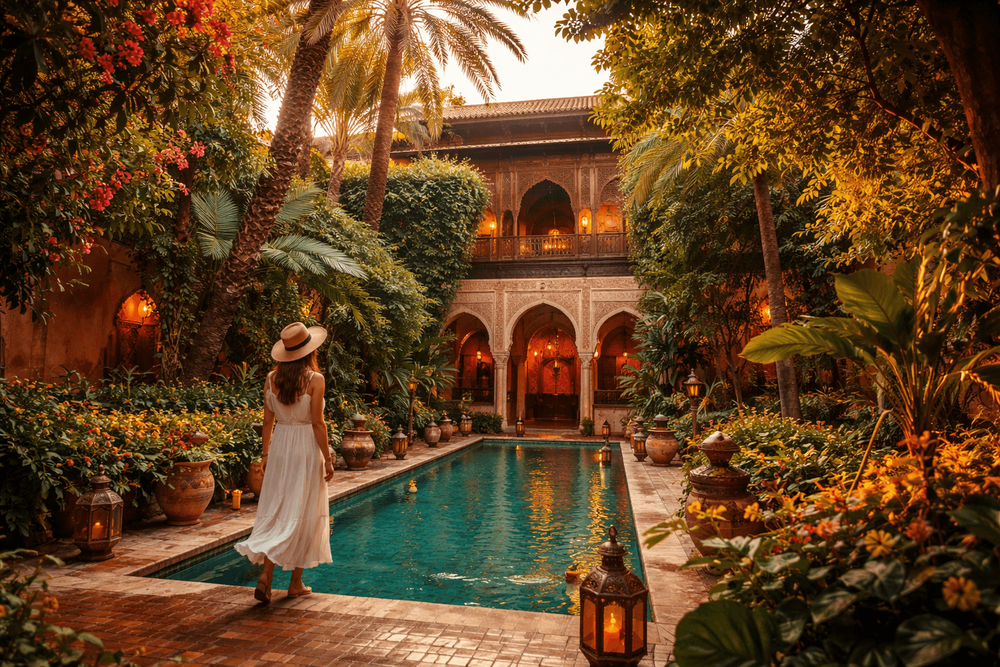
Marrakech in the Green Season: Gardens, Riads and a Softer Side of the Red City
Spring softens Marrakech: gardens brim, riads hush, and afternoons stretch in shade. A 3–5 day wellness-paced guide to neighborhoods, hammams, and the green season.
Trip Length
3-5 days
Best Time
March–May
Mood
wellness
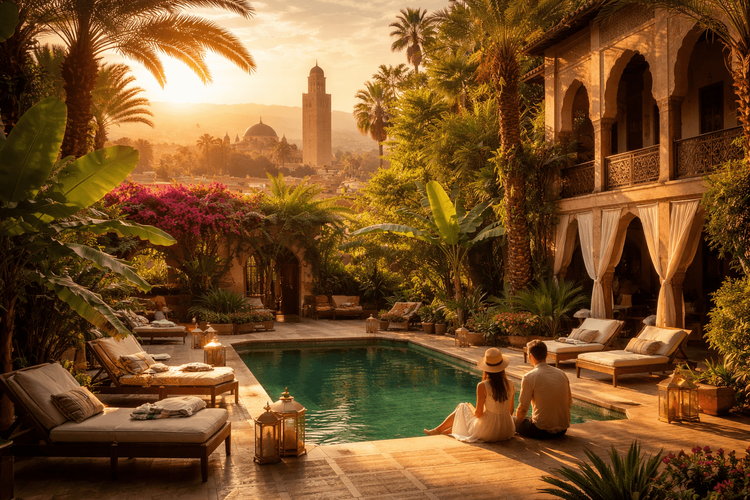
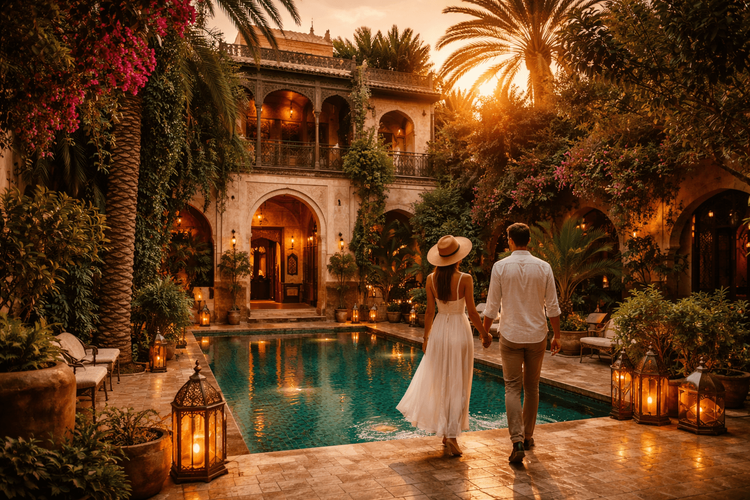
The first cool breeze arrives with dawn, carrying the light perfume of orange blossom through a riad’s open courtyard. Swallows chatter above the zellige-lined fountain, and the city stirs softly beyond the walls. This is the promise of Marrakech spring travel: a green season that tempers the Sahara’s glare, refills the gardens, and slows the pulse of a city famous for its intensity. You’ll find yourself moving at a gentler cadence—tea before taxis, gardens before souks, hammams before late lunches—because spring in Marrakech invites you to savor.
Why spring changes Marrakech
Spring recasts Marrakech in softer tones. Mornings are cool and luminous; afternoons warm without the heavy scorch of summer; evenings slip back into a desert chill that makes rooftop dinners and courtyard concerts feel effortless. Orange trees flower across the city, and palm crowns show their freshest fronds. The medina’s clay walls glow deeper after a light shower, while new leaves fill the city’s historic gardens with shade that’s priceless by midday. If you’ve been waiting to see the Red City without heat haze and hard edges, March to May is your window.
Marrakech spring travel: where to stay for calm
You come to Marrakech for immersion, but you stay sane by choosing your base carefully. Riads in the medina deliver the sensory drama—carved cedar doors, tadelakt plaster, patterned tile, and that hush you only get around a courtyard pool. For a quieter landing, target the Kasbah quarter (south of the main souks), where residential lanes keep foot traffic gentler and mornings particularly serene.
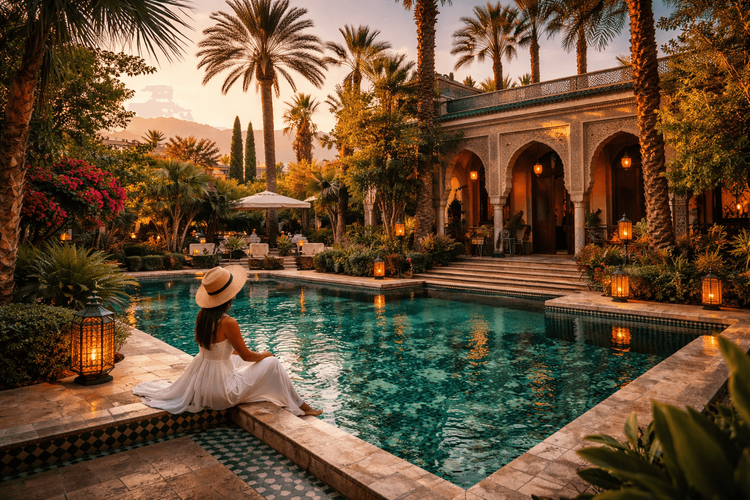
Prefer wider streets and leafy sidewalks? Gueliz (the 20th-century “new city”) offers tree-lined boulevards, galleries, and cafes where you can gather yourself between forays into the old town. Hivernage sits just beyond, with broad palm-shaded avenues and residential calm that still keeps you within easy reach of the Koutoubia and the main square. If your wellness goals include true quiet, the Palmeraie—Marrakech’s storied palm oasis—trades medina theatrics for date palms, birdcall, and slow afternoons by the pool.
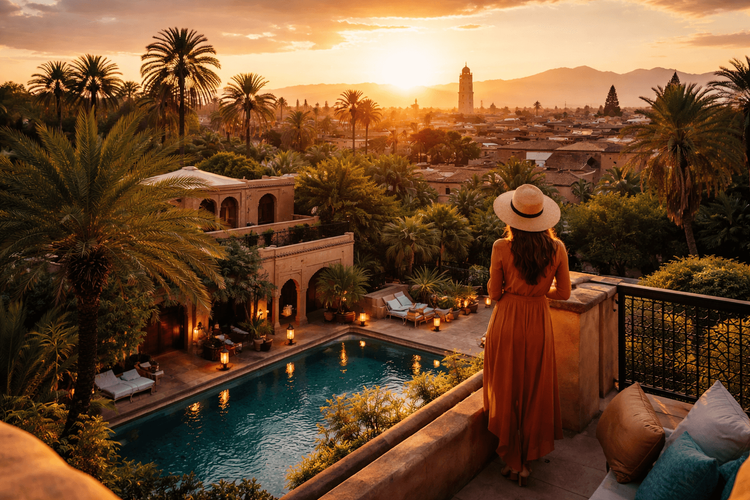
Wherever you land, look for riads and small hotels that prioritize space and respite: sun-washed roof terraces for early yoga, plunge pools or shallow basins in the courtyard, and thick walls that mute the outside world. Spring is when these details matter most—you’ll use every calm corner.
The gardens that define the season
Marrakech is a garden city at heart, and spring is when that identity is easiest to read. Start early at Jardin Majorelle, a cobalt-blue fantasy encircled by bamboo, cacti, and palms. Arrive right when it opens to hear the garden before you see it, then linger on the periphery for a visit to the nearby Yves Saint Laurent Museum if design and fashion are part of your pilgrimage.
When the light climbs, head for the Menara olive groves. The long reflecting basin was built for irrigation and contemplation in equal measure; stand at the water’s edge and the Atlas snowline, when visible, throws a cool echo over the city’s warmth. On alternate days, consider a walk in the historic Agdal orchards, an immense checkerboard of trees and pools that speaks to centuries of water-wise planting. Inside the medina, restored palace gardens—like the discreet riad-cum-garden complexes that now welcome visitors—offer a primer in courtyard horticulture: geometric parterres, orange and pomegranate trees, aromatic herbs edging gravel paths.
Don’t rush these places. Spring light changes hour by hour, and shade will be your constant negotiation partner. Carry water, move bench to bench, and treat each garden as a meditation hall in the open air.
A wellness rhythm for 3–5 days
Day 1: Land softly. After check-in, claim your rooftop for a slow lunch and a stretch. In the late afternoon, step into the medina just far enough to orient: the Koutoubia’s minaret as your compass, the souks for a first wander, then back to your riad for a hammam ritual—steam, exfoliation, and the comforting scent of eucalyptus or orange blossom.
Day 2: Gardens as your guide. Begin at Majorelle before the crowds, then aim for a shady cafe in Gueliz for a modern counterpoint to medina life. Late afternoon belongs to the Menara olive groves; walk the perimeter, listen for the change in birdsong at dusk, and watch locals gather by the water.
Day 3: Medina at half-speed. Enter from the Kasbah side, where lanes are more residential. Space your stops: a restored medersa courtyard for cool stone and quiet geometry, a tea break in a small square, then a slow loop through artisan quarters where woodworkers, leatherworkers, and metal turners still shape the city’s daily tools. Return for an argan oil massage and a siesta.
Day 4–5 (optional): Choose your flavor of calm. The Palmeraie for poolside reading and a sunset camel ride among the palms; Sidi Ghanem’s design district for studio visits and minimalist cafes; or a half-day devoted to cooking with local produce—spring vegetables and preserved lemons—so you can carry the city’s flavors home without guesswork.
Across these days, keep your pace seasonal: earlier starts, a midday retreat to shade, and an evening return when call to prayer pours like a ribbon across the rooftops.
How to get there and what to expect on arrival
Marrakech Menara Airport sits a short drive from both the medina and the newer neighborhoods. Direct flights connect from several European hubs, and domestic hops from Casablanca and other Moroccan cities are frequent. Ask your riad or hotel to arrange a pickup, especially if you’re staying inside the old town; drivers can deliver you to a nearby gate where porters with handcarts help with the last short walk through car-free lanes.
At the airport, ATMs and currency exchange are straightforward. Cash remains useful for small purchases, taxis, and tips, though many accommodations and larger shops accept cards. Taxis operate with meters in principle; confirm the meter is used or agree a fare before setting off. For most intra-city trips, small “petit” taxis handle short hops; larger “grand” taxis can be booked for longer distances.
On arrival at your riad, expect a glass of mint tea and a few minutes of orientation—the best lanes to use at night, how to find your way back by landmark, the quietest hours for rooftop time. Embrace that guidance; medina lanes are a puzzle by design, and local shortcuts spare you effort in the afternoon heat.
Eat, sip, and restore
Spring cooking in Marrakech favors brightness: salads of tomatoes and herbs, lemon-laced fish tagines, seasonal vegetables cooked slow and soft, and flaky pastries kissed with honey. Seek out terraces where you can dine under the first stars and hear the city at a murmur. Between meals, look for cafes that serve fresh-pressed juices, mint tea poured high for a crown of foam, and herbal infusions that locals swear by for digestion and sleep.
For deeper restoration, dedicate one evening to a full hammam-and-massage sequence. Traditional black soap, a kessa scrub that leaves skin new, ghassoul clay, and warm argan oil seal in the softness. Follow it with a slow walk back through quiet lanes—spring air does the rest.
Neighborhoods that reward unhurried wandering
- Kasbah: Residential, measured, and close to historic sites; mornings are especially gentle.
- Gueliz: Galleries, design stores, and wide sidewalks framed by shade trees—an excellent reset between medina forays.
- Hivernage: Palms and broad avenues; a good base if you want spacious rooms and evenings that feel unpressured.
- Palmeraie: The city’s green fringe where time dilates; spring is prime for long, languid afternoons.
Use these districts as your tuning fork—dip into the medina’s energy, then step back when the light hardens and the soundscape rises.
Planning notes for the green season
- Pack for layers. Spring days can swing from cool mornings to warm afternoons and back to crisp evenings.
- Sun and shade strategy matters. A hat and a habit of stepping to the shadowed side of the street make long walks enjoyable.
- Fridays and holidays shift the city’s rhythm; expect reduced hours in some shops and let the day unfold.
The case for Marrakech spring travel
There’s a reason travelers return at this time of year. Gardens brim with their best greens, courtyards feel like private sanctuaries, and the city’s sensory volume lowers just enough to let you hear its subtler notes—the thrum of a loom, the clink of a teapot lid, the breeze in a stand of olives. Marrakech spring travel isn’t about conquering a list; it’s about claiming a mood.
When you’re ready to move, the city will meet you step for step. Until then, let the season set the tempo: early, easy, shaded, scented. Book the riad with a courtyard you’ll actually use, put the gardens first, and give yourself five days if you can. The green season doesn’t shout for your attention—it rewards the traveler who listens.
Where to Stay

Savoy Le Grand Hotel Marrakech
Savoy Le Grand Hotel Marrakech is a 5-star stay in Marrakech with easy access to the city’s main sights, featuring spacious rooms, multiple dining options, a spa, and outdoor pools.

Longue vie Hotels
Longue Vie Hotels is a 4-star Marrakech stay with easy access to the city’s main sights, offering contemporary rooms, a pool, spa facilities, and a highly rated guest experience with an 8.9/10 score.

Kenzi Rose Garden
Kenzi Rose Garden is a 5-star Marrakech hotel with gardens, pools, a spa, and dining options, set near the city center for easy access to souks, attractions, and nightlife.

Swiss Continental Hotel
Swiss Continental Hotel is a 4-star Marrakech stay with a 9/10 guest rating, offering a central base for exploring the city and comfortable rooms suited to leisure or business travelers.

Aqua Fun Club All inclusive
Aqua Fun Club All inclusive is a 4-star Marrakech hotel with water park facilities, all-inclusive dining, and family-friendly leisure areas, offering easy access to the city while serving as a convenient base for relaxed stays.