Puglia’s Inland Secret: Trulli, Olive Groves and the Farms That Are Rewriting the Region’s Food Scene
Go inland in Puglia for trulli lanes, olive estates, and agriturismi dinners. This 5–7 day culinary route spotlights design-forward farm stays and whitewashed villages.
Trip Length
5-7 days
Best Time
April–June (May is ideal)
Mood
culinary
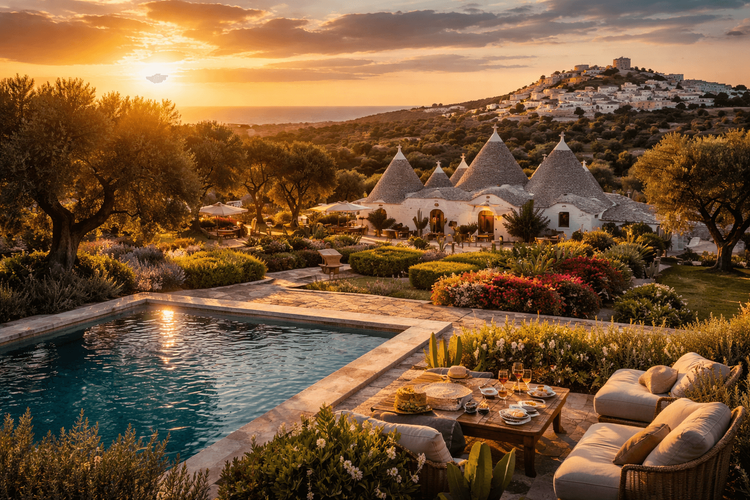
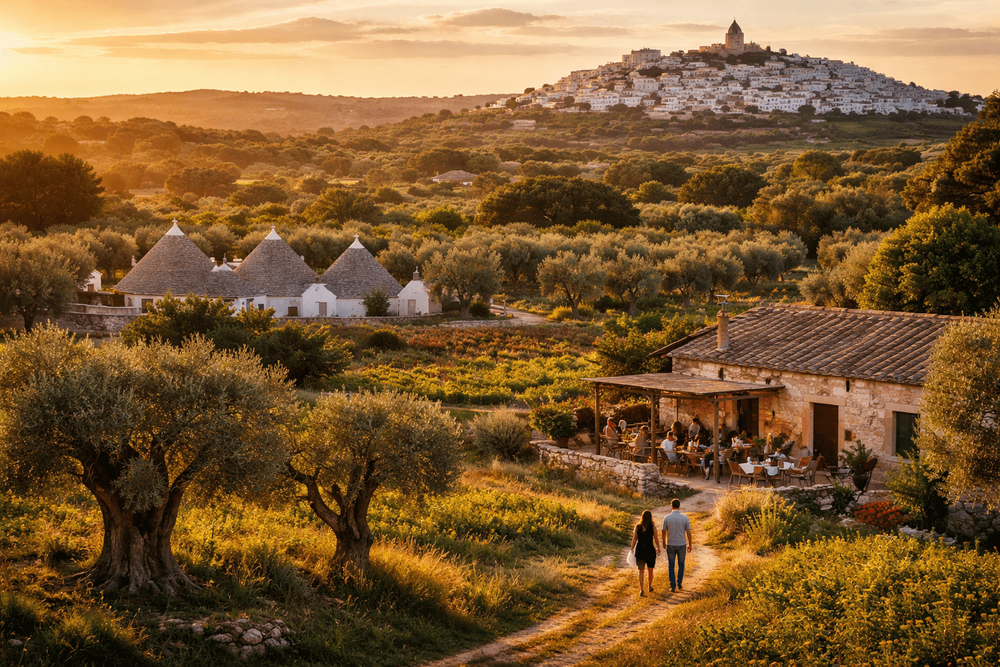
You arrive as the evening light slips between ancient olive trees, their trunks gnarled like sculptures, and a low stone wall guides you toward a whitewashed farmhouse. Beyond the gate, a courtyard hums softly: a wood-fired oven sighs, a carafe of golden oil catches the last sun, and somewhere a cork pops. If the coast built Puglia’s reputation, the interior is where the region’s soul is plated—and this Puglia travel guide is your entry to it.
The inland compass: where trulli meet the table
Set your bearings on the Valle d’Itria, where conical trulli dot fields like punctuation marks and hill towns glow chalk-white at dusk. The landscape is deliberate here: dry-stone terraces stitched with herbs, lanes edged in wild fennel, fig trees leaning into limestone walls. You’re not here to chase beach clubs; you’re here to linger over olive oil tastings in centuries-old groves and to follow the day’s arc from soil to stove.
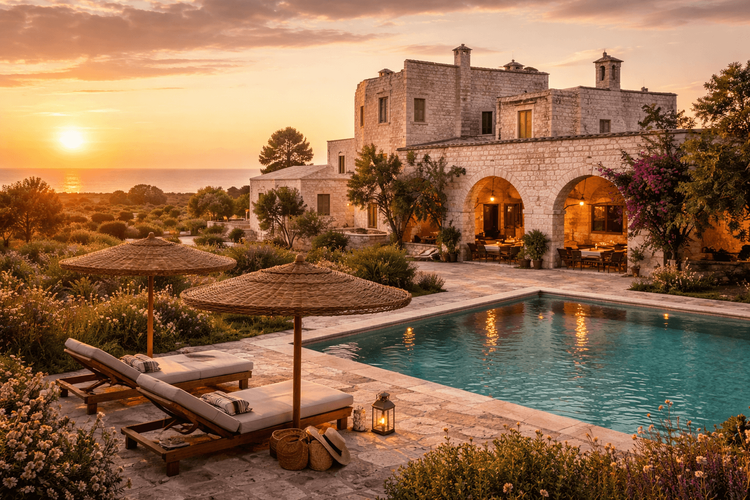
Agriturismi—a farm-stay model that Puglia has refined with quiet confidence—anchor the experience. Expect restored masserie (former farm estates) that keep their agricultural heart beating: olive presses still at work, kitchen gardens powering menus, dining rooms that smell faintly of citrus wax and wood smoke. The best places lean into local materials and a clean-lined aesthetic: limewashed vaults, linen-draped tables, stone basins hewn from pietra leccese, ceramics thrown in nearby Grottaglie. It’s understated, deeply tactile design that lets the food and the fields lead.
Eat with the seasons, learn from the makers
Spring into early summer (April through June) is Puglia at peak generosity. Fields brim with artichokes, fava beans, peas, and early tomatoes; almonds and cherries arrive as the weather tips warm. Menus read like dispatches from the soil: orecchiette shaped by hand in the afternoon and tossed with cime di rapa; tangy sheep’s milk cheeses; burrata that collapses at the nudge of a fork; briny olives and taralli to start every meal. Many estates offer short cooking sessions—rolling pasta, learning the logic of soffritto, tasting through single-estate oils and understanding why early-harvest bottles bite back in the best way.
In hill towns like Cisternino and Locorotondo, twilight brings the scent of grills and butcher counters where meats are cooked to order, a convivial ritual that spills onto alleys framed by geraniums and stone stairs. Meanwhile, on the plateau toward the Murgia, bakeries turn out loaves with crackling crusts and long-fermented heft, a reminder that wheat fields are as much a part of Puglia’s identity as olive groves.
Where to stay: agriturismi with a point of view
Choose bases that keep you close to the land. Around Ostuni and the Valle d’Itria, masserie set amid silvery groves offer rooms scattered between trulli and stables-turned-suites. Many serve dinner only to house guests, creating a quiet, communal rhythm—aperitivo under the pergola, then a set menu that tracks the garden’s arc. Farther south in the Upper Salento, you’ll find farmhouses encircled by fig and almond orchards, with shaded pools and long tables set under mulberry trees. Don’t come looking for flash. Come for stone under bare feet, birdsong at breakfast, and the soft clink of plates laid in the courtyard.
A note on expectations: these are working properties. You may hear a tractor at dawn; you’ll also find country calm that urban hotels can’t imitate. Rooms skew minimal and cool; service is personal, often handled by the family. Book well ahead for late spring, when the combination of warm days, wildflowers, and produce lures in-the-know travelers.
A 5–7 day inland route for cooks and eaters
Think of this not as a strict itinerary but as a rhythm.
Days 1–3: Valle d’Itria base (Ostuni–Locorotondo–Cisternino)
- Morning: Olive oil tasting at an estate with ancient trees. Walk the groves; learn the difference between early and late harvest, then taste with bread and tomatoes.
- Afternoon: Wander a whitewashed town. Locorotondo’s circular lanes or Ostuni’s sun-bleached stairways reward slow strolls and viewpoints across the olive plain.
- Evening: Farm dinner. Look for menus that feature legumes, hand-formed pasta, and seasonal greens—fava purée with chicory is a spring rite.
Days 4–5: Grottaglie and the Murgia fringe
- Morning: Visit ceramics studios in Grottaglie’s historic quarter; the hand-painted jars and plates have become the quiet design language of Puglia’s best tables.
- Afternoon: Push inland toward the Murgia for grain-country flavors. Seek out bakeries for substantial loaves and focaccia fragrant with tomatoes and oregano.
- Evening: Try a butcher-grill dinner in a hill town—pick your cuts, then linger outside with a carafe and a paper-wrapped plate.
Days 6–7: Upper Salento countryside
- Morning: Bike country lanes flanked by stone walls and caper bushes; stop for figs and espresso at a village bar.
- Afternoon: Swim in a farmhouse pool or drive to a quiet cove for a saltwater reset.
- Evening: Return inland for a long table dinner under the stars, where olive oil, tomatoes, and grilled vegetables do the heavy lifting.
If you’re short on time, compress to five days: three around the Valle d’Itria, two in the Upper Salento. If you have a week, slow even further and add a second farm-stay to compare terroir, kitchens, and table culture.
Puglia travel guide: practicalities that matter
- Best time to visit: April–June hits the sweet spot—long light, mild heat, fresh produce, wildflowers. By late June, inland afternoons can turn hot, but evenings stay generous.
- How to get there: Fly into Bari or Brindisi. Both airports connect to major European hubs and sit within an hour or so of the Valle d’Itria by car. Trains lace the coast, with local lines and buses reaching many towns; to stay on farms and move at your own pace, a rental car is the most straightforward option.
- Getting around: Country lanes are narrow and walled in stone—beautiful but slow. Plan drives in short hops. In historic centers, look for ZTL signage (limited traffic zones) and park just outside; walking is part of the pleasure here.
- What to expect on arrival: Addresses in the countryside can be fluid; share your ETA with the property and save a pin. Access roads may be unpaved, and check-ins often feel personal—a quick tour of the kitchen garden is not unusual. Dinner at agriturismi is typically by reservation and may follow a set menu built from the day’s harvest.
- Packing mindset: Think hands free—tote for market hauls, space in your luggage for ceramics or olive oil, and layers for courtyard dinners that stretch into the night.
Taste deeper: experiences worth planning ahead
- Olive oil education: Book a guided tasting that moves from grove to mill to glass. Learn to warm the cup in your palm, inhale green tomato and artichoke notes, and pair oils with simple plates.
- Pasta by hand: Short, joyful workshops demystify the pinch-and-drag that forms orecchiette. You’ll sit down to your own handiwork, sauced simply.
- Market mornings: Follow locals to weekly markets in inland towns; you’ll learn more from a produce stall than any guidebook could tell you.
- Craft and design: In Grottaglie, ceramicists shape everything from whimsical pitchers to matte, architectural tableware. Around Lecce, seek workshops that work in pale local limestone and traditional papier-mâché.
Beyond the postcard: why inland Puglia now
The coast continues to shine, but the interior is shaping the region’s most interesting food conversations. Younger growers are tending abandoned groves and championing resilient varietals. Kitchens are editing plates—fewer flourishes, deeper flavor—while dining rooms lean elemental: stone, light, and the color of ripe wheat. It’s a place that respects raw ingredients and time. That’s the energy this Puglia travel guide prioritizes: not just where to go, but how to eat and stay with intention.
Before you leave
Ship a case of oil from a farm you visited; it’s the one souvenir that extends the trip. Practice the market rhythm at home. And when you pour a grassy green into a pan, you’ll hear the evening chorus of crickets in the groves and remember how Puglia rewards the unhurried.
When you’re ready, spring will be waiting—lanes perfumed with wildflowers, tables set in courtyards, and that first bite of something that tasted of sunlight and limestone. Start plotting dates between April and June; the countryside will do the rest.
Where to Stay

Charming Trulli
Charming Trulli is a 3-star property in Puglia offering traditional stone trulli accommodation close to Alberobello, Ostuni and the Salento coast; it holds a 9.6/10 guest rating and provides easy access to UNESCO sites, regional towns and beaches.

Trulli Soave
Trulli Soave is a 3.5-star trulli-style property in Puglia, rated 8.6/10, offering traditional stone rooms and a convenient base for exploring Alberobello, Ostuni and the towns and coastline of the Salento region.

Hotel Ramapendula
Hotel Ramapendula is a 4-star stay in Puglia, near Alberobello, Ostuni and Salento, with a guest rating of 8.8/10. It offers a convenient base for exploring the region's trulli towns, countryside and Adriatic coast.

Terrazza Sui Trulli
Terrazza Sui Trulli is a 3-star hotel in Puglia, rated 9.5/10 by guests, featuring a terrace with views of the trulli and acting as a convenient base to explore Alberobello, Ostuni and the beaches and towns of the Salento peninsula.

Trulli Contento - Rooms & Apartments
Trulli Contento - Rooms & Apartments offers 4-star stays in Puglia’s Alberobello area, with easy access to Ostuni and Salento. It features rooms and apartments and holds a 9/10 guest rating.