
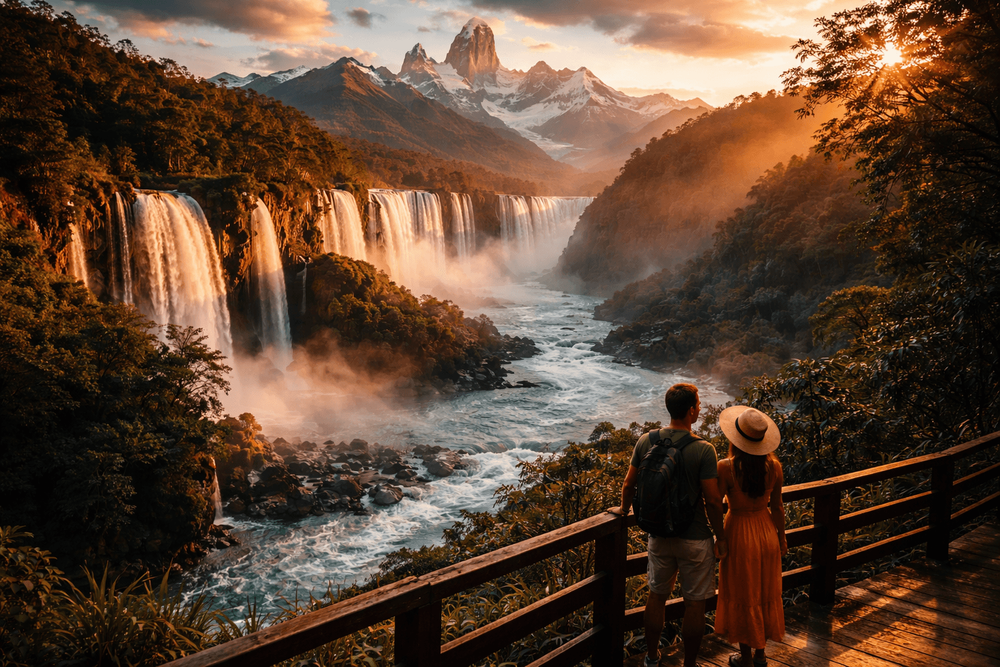
Must-Do Sightseeing Tours in Argentina: Where to Go, When to Book, and What to Expect
From tango-lit boulevards to glacier fields and vine-striped valleys, here’s how to plan, book, and savor the best sightseeing tours in Argentina.
Mood
Grand Adventure
At sunrise on the Río de la Plata, the first espresso machines hiss awake and the jacarandas throw violet shadows across wide, Parisian avenues. A few hours later, mist rises from a green cathedral of jungle where the Iguazú River explodes into a hundred silver veils. Sightseeing tours in Argentina draw a map of contrasts: tango salons and glacier fields, high-desert canyons and vineyard valleys stitched to the Andes. This is a country best felt in motion—on foot, by boat, across pampas roads—guided by people who read its landscapes like a favorite book.
Sightseeing Tours in Argentina: The Essentials
Buenos Aires: Architecture, Cafés, and the Pulse of Tango
Buenos Aires is a city of façades and stories, and the finest city tours thread both together. Half-day cultural walks typically trace a narrative arc from the cobbled antiques market of San Telmo to La Boca’s rainbow corrugated houses and street murals, onward to the stately mansions and marble angels of Recoleta Cemetery. A Teatro Colón backstage tour demystifies one of the world’s great opera houses, its red velvet and gilded balconies resonant with history.
For travelers eager to step into the city’s signature rhythm, evening experiences pair a guided neighborhood stroll with a parrilla tasting—perfectly blistered provoleta, chimichurri-brightened steak—and a milonga visit where locals dance until sunrise. Some tours add a beginner’s lesson with a professional dancer before you slip into the crowd. In between, neighborhood bike tours roll breezily along the Costanera Sur Ecological Reserve, an unexpected mosaic of wetlands and birdlife on the edge of skyscrapers.
Where to stay: In San Telmo, the Casa San Telmo occupies a restored townhouse where high ceilings and patterned tiles echo the neighborhood’s 19th‑century grandeur; its leafy courtyard is a hushed refuge after a day of urban exploration.
Iguazú Falls: Boardwalks, Boat Spray, and Moonlit Roars
On the Argentine side of Iguazú Falls, catwalks lace through subtropical forest to platforms perched at the very edge of the cascades. Classic full-day tours split time between the Upper and Lower Circuits, ending at the Devil’s Throat, where water plunges in a horseshoe roar. Wildlife sightings—toucans, coatis, dazzling butterflies—often steal the show en route.

JOTO Up to 7" Universal Waterproof Phone Case for iPhone 17 Air 16 15 14 13 12 11 Plus Pro Max, IPX8 Cellphone Dry Bag XR X SE, Galaxy S23 S22 S21 S20+ S20 S10 Plus Note, Pixel -Black : Cell Phones & Accessories
View on AmazonFor those who can handle a drenching, the Gran Aventura boat sprint revs up the river and noses into the spray—a short, adrenalized add-on to most guided circuits. More contemplative travelers book the occasional full-moon walk, when the falls glow under a gauzy light and the jungle hum deepens. Many tours cross to Brazil for alternative vantage points; bring your passport and check visa requirements in advance.
Perito Moreno and Patagonia: Ice, Wind, and Big Horizons
The Perito Moreno Glacier in Los Glaciares National Park feels like a living thing—cracking, breathing, advancing—its ramparts of blue ice calving into Lake Argentino. Half-day tours focus on the network of balconies and boardwalks with changing perspectives on the ice front. Add a nautical safari boat to drift near the turquoise wall, or lace on crampons for the guided Minitrekking, a two-to-three-hour walk over the glacier’s otherworldly surface. For fit hikers, the longer Big Ice experience delves deeper into crevasses and sculpted caves.

Osprey Talon 22L Men's Lightweight Hiking Backpack - Small Daypack for Travel & Camping, Green Canopy/Pine Leaf, Extended Fit
The Osprey Talon™ 22L is a <strong>lightweight bag for men, built for full-day hikes, biking, and travel</strong>. With a spacious main compartment, dual-zippered hipbelt pockets, top panel pocket, an
Check Price on AmazonBeyond El Calafate, multi-day Patagonia circuits stitch together Cerro Fitz Roy and Laguna de los Tres hikes near El Chaltén, ranch visits on the steppe, and the glacier-spangled waters of the Upsala and Spegazzini arms. Expect fierce winds, vaulted skies, and guides who can read weather’s quick-turn moods.
After days among peaks and ice, the Estancia La Esperanza outside El Calafate offers gaucho‑era warmth—lantern-lit asado dinners, horse rides over golden grasses, and rooms that pull the horizon close.
For travelers seeking high-touch stays across Patagonia and wine country, consider these handpicked retreats: Inside Argentina’s Finest Luxury Lodges: From Patagonia Glaciers to Mendoza Vineyards.
Mendoza: Vineyards, Andes Vistas, and Slow, Sunlit Days
Mendoza’s wine tours move at a different tempo—sun on adobe walls, fountains burbling in plazas, the Andes stippled white in the distance. Guided circuits typically focus on Luján de Cuyo and Maipú for storied Malbec houses, or the higher-altitude Uco Valley for cutting-edge architecture and cool-climate finesse. Many operators weave in barrel tastings with winemakers, food-pairing lunches under pergolas, or hands-on blending sessions.
Between tastings, day trips trace the Camino de Alta Montaña past turquoise reservoirs and switchbacks to Aconcagua Provincial Park, where a short trail leads to the Horcones lagoon and a postcard view of the continent’s highest peak. Back in the valley, bike-and-bodega routes glide along poplar-shaded lanes.
Stay in the vines at Finca Los Andes, a contemporary hideaway in the Uco Valley where floor‑to‑ceiling glass frames serrated peaks and late-afternoon light melts into the rows.
The Northwest (Salta & Jujuy): Colonial Plazas, Painted Hills, and Salt Flats
Salta’s historic center reveals its baroque heart on guided walks—rose-and-cream church towers, arcaded plazas, museums that speak to pre-Columbian and colonial layers. Day tours fan into the Valles Calchaquíes, where Quebrada de las Conchas chisels a route through crimson rock. Farther north, Jujuy’s Quebrada de Humahuaca unfurls like an artist’s palette—Puramamarca’s Seven-Color Hill, Tilcara’s adobe fortress, small workshops selling weavings dyed with cochineal and walnut.
From here, 4x4 expeditions climb to the Salinas Grandes, a white infinity under a cobalt sky. Guides carry coca leaves and local wisdom on altitude: slow steps, steady hydration, and reverence for Aymara and Kolla traditions that persist in village festivals and markets.
Península Valdés: Whales, Penguins, and the Rhythm of the Atlantic
On the raw Atlantic coast, Península Valdés is an orchestra of wildlife. From June to December, southern right whales gather in protected bays; licensed boats from Puerto Pirámides idle close enough to feel the blow on your cheek. Between September and March, Magellanic penguins waddle through brushy corridors at Punta Tombo, while elephant seals lounge across pebble beaches year-round.
Responsible operators emphasize distance and silence: it’s a privilege to watch, not a right to intrude. Pair marine-life days with time on Chubut’s windcarved beaches—and if the call of sand and surf grows louder, explore broader coastal escapes in Argentina’s Best Beaches: Top Coastal Picks for Sun, Surf and Wildlife.
Planning Your Itinerary: Seasons, Durations, Getting Around
Argentina is vast—2,300 miles north to south—so smart timing and routing matter as much as the tours themselves.

Lonely Planet Argentina (Travel Guide): Albiston, Isabel, Brown, Cathy, Clark, Gregor, Egerton, Alex, Grosberg, Michael, Kaminski, Anna, McCarthy, Carolyn, Mutic, Anja, Skolnick, Adam
Covers Buenos Aires, The Pampas ... del Fuego, Uruguay · The Perfect Choice: Lonely Planet’s Argentina, <strong>our most comprehensive guide to Argentina</strong>, is perfect for both exploring top si
Check Price on Amazon- Buenos Aires: Year-round, but the city shines March–May and September–November when jacarandas bloom and café terraces brim. Typical city walks and bike tours run 3–4 hours; tango-and-dinner evenings stretch to midnight and beyond.
- Iguazú Falls: Visit year-round. Expect higher water flow and steamy heat December–March; shoulder months (April–May, August–September) bring slightly cooler temperatures and fewer crowds. Plan one full day on the Argentine side; add a second for Brazil or a boat add‑on.
- Patagonia (El Calafate/El Chaltén): Prime season runs October–April, with peak demand in December–February. Shoulder months offer calmer trails and golden lenga forests. Glacier boardwalks are half-day; Minitrekking/Big Ice require 1 full day. Multi-day circuits link Calafate and Chaltén over 3–5 days.
- Mendoza: Mild and sunny most of the year. Harvest (Vendimia) peaks late February–March; late spring and fall bring crisp air and vineyard color. Wine tours are commonly full-day (two to three wineries plus lunch); high-mountain day trips are 10–12 hours.
- Northwest (Salta/Jujuy): Best April–November in the dry season; summer (December–March) can bring afternoon storms and washed-out tracks. Expect full-day canyon circuits; add a day for Salinas Grandes.
- Península Valdés: Whale season June–December (peak September–November). Penguins September–March. Wildlife days typically run 6–8 hours with several coastal stops.
Domestic flights are the time-saver, radiating from Buenos Aires’ Aeroparque to hubs including El Calafate (FTE), Bariloche (BRC), Mendoza (MDZ), Salta (SLA), and Puerto Iguazú (IGR). Argentina’s long-distance buses offer a comfortable, budget-friendly alternative, with lie-flat “cama” seats on overnight routes; expect journeys of 15–20 hours between far-flung regions. Car hire is ideal for Mendoza’s wineries and Salta’s scenic loops—roads are generally good, though Andean passes and Patagonian wind demand unhurried driving and a full tank.
Accessibility varies by region but is improving. In Buenos Aires, major museums and theaters are wheelchair accessible, and many sidewalks have curb cuts (watch for uneven paving). At Iguazú, the primary walkways and the train to the Devil’s Throat have step-free access; boat rides are typically not accessible. Los Glaciares boardwalks include ramps and railings with designated accessible viewpoints. Several wineries in Mendoza offer step-free tastings and accessible restrooms—confirm when booking. Cobblestones in historic quarters (San Telmo, Purmamarca) can be challenging; a sturdy wheeled aid and a patient pace help.
For a different vantage on the country’s scenery—mountain passes, vineyards, pampas—consider elegant rail journeys covered here: Argentina by Luxury Rail: Scenic Journeys, Gourmet Dining & Exclusive Routes.
Booking Smart: Group vs. Private, What’s Included, What It Costs
Choosing between group and private sightseeing tours in Argentina comes down to travel style, budget, and desired depth.
- Group tours are cost-effective and social, with fixed routes and timetables—ideal for city highlights, Iguazú’s boardwalks, and winery introductions. Look for small-group caps (12–16 guests) to avoid the megabus feel.
- Private tours buy flexibility: linger at a viewpoint, detour to a tiny bodega, or pace hikes to your stride. They’re especially valuable in the Northwest, where distances are long and roadside discoveries reward spontaneity, and in Patagonia, where weather windows can shift.
Seek operators using licensed, insured guides (guías habilitados) who are locally based and trained in first aid. Vehicles should carry visible authorization, and adventure add-ons (ice trekking, rafting) must use specialist teams with safety briefings and proper gear. Guides who speak your preferred language and understand accessibility needs are worth the premium.
Typical inclusions and exclusions:
- Inclusions: hotel pickup/drop-off, transport, bilingual guide, park permits (sometimes), and tastings or lunch on wine tours.
- Exclusions: national park entry fees, optional boat rides or premium tastings, tips, and border-crossing visas where applicable.
Ballpark price ranges (per person, USD equivalents; actuals vary with season and exchange rates):
- Buenos Aires half-day city tour: group $25–60; private $120–250. Milonga lesson + show with dinner: $60–150.
- Iguazú full-day Argentine side: group $50–120; private $180–350. Gran Aventura boat: $80–100 add‑on. Park fees: budget $15–40.
- Perito Moreno boardwalk + boat: group $60–120; Minitrekking: $180–250; Big Ice: $350–500.
- Mendoza wine day (2–3 wineries + lunch): group $60–120; private $180–300 plus premium tastings.
- Northwest day circuits (Quebradas/Salinas Grandes): group $60–120; private $180–350.
- Península Valdés whale watching: boat $70–120; full-day wildlife circuit $80–160.
How to save without compromising:
- Travel shoulder seasons (April–May, September–November) for milder weather, easier availability, and lower rates in many regions.
- Book combo packages—e.g., a city tour + tango evening, or Calafate + Chaltén circuit—for bundled discounts.
- Reserve adventure slots (ice trekking, whale boats) early in peak months; late deals are rare for limited-capacity trips.
- Consider long-distance buses for overnight legs and allocate funds to a handful of private, high-impact days.
- Budget travelers can stretch pesos further by choosing sociable, well-located stays from this guide: Argentina on a Dime: Best Budget Hostels for Backpackers and Savvy Travelers.
Culture, Safety & Traveling Responsibly
Good travel manners are a kind of passport in Argentina. A few gestures go far.
Etiquette and tipping:
- A warm “buen día,” “por favor,” and “gracias” smooths any exchange; in the Río de la Plata region, you’ll hear the local “vos” and lunfardo slang from porteños.
- In restaurants, a 10% tip is appreciated for good service. Round up for taxis. For guides, consider $5–10 per person for group day tours; for private full-day tours, $20–40 for the guide (and $10–20 for the driver) depending on complexity and service.
- Cash and cards are both used; ask operators whether prices are quoted in pesos or dollars and which payment methods they accept, as conditions can shift.
Health and safety:
- Tap water is potable in major cities like Buenos Aires and Mendoza; in remote areas, use filtered or bottled water. Pack high-SPF sunscreen and a brimmed hat; Iguazú adds robust insect repellent to the list.
- Altitude in the Northwest can top 11,000 feet (3,350 meters). Ascend gradually, rest well, and avoid heavy meals and alcohol on arrival day. Guides often provide coca tea; consult your doctor about prevention if you have concerns.
- Urban safety is common-sense: keep valuables out of sight, use registered taxis or reputable ride-hailing, and be mindful with phones in crowded areas.
Wildlife and environmental responsibility:
- Keep respectful distances from animals; never feed coatis at Iguazú or approach whale calves. Follow guide instructions and marked trails in national parks. Drones require permits.
- Choose operators committed to conservation—small-group caps, low-impact practices, local hiring. Buying directly from artisans in the Northwest keeps revenue in communities that steward these landscapes.
- Pack out all trash, refill water bottles where possible, and consider balancing domestic flights with longer overland legs to lighten your footprint.
Finally, remember that some of the most meaningful experiences unfold in the in‑between. Ask questions. Pause for a mate shared on a bench. Let your guide introduce you to a baker, a luthier, a silversmith. Argentina reveals itself in conversations as much as in viewpoints.
What Sightseeing Tours in Argentina Feel Like, in a Single Image
A bandoneón sighs through an open window. Two hours later, your shoes squeak on a jungle boardwalk, and spray freckles your camera lens. Tomorrow, the ice answers back—crack, thunder, silence—before you fall asleep to the dry rustle of vineyard leaves. Sightseeing tours in Argentina don’t just connect places on a map; they string together textures, tastes, and stories that linger long after wheels leave the runway.
Recommended Travel Gear
Lonely Planet Argentina (Travel Guide): Albiston, Isabel, Brown, Cathy, Clark, Gregor, Egerton, Alex, Grosberg, Michael, Kaminski, Anna, McCarthy, Carolyn, Mutic, Anja, Skolnick, Adam
Covers Buenos Aires, The Pampas ... del Fuego, Uruguay · The Perfect Choice: Lonely Planet’s Argentina, <strong>our most comprehensive guide to Argentina</strong>, is perfect for both exploring top si
JOTO Up to 7" Universal Waterproof Phone Case for iPhone 17 Air 16 15 14 13 12 11 Plus Pro Max, IPX8 Cellphone Dry Bag XR X SE, Galaxy S23 S22 S21 S20+ S20 S10 Plus Note, Pixel -Black : Cell Phones & Accessories
Lamicall Waterproof Phone Pouch ... 4-7" ... <strong>JOTO 2 Pack Waterproof Phone Pouch Case Up to 7", IPX8 Underwater Phone Case Cellphone Dry Bag for iPhone 17/Air 16 15 14 13 12 Pro Max X
Osprey Talon 22L Men's Lightweight Hiking Backpack - Small Daypack for Travel & Camping, Green Canopy/Pine Leaf, Extended Fit
The Osprey Talon™ 22L is a <strong>lightweight bag for men, built for full-day hikes, biking, and travel</strong>. With a spacious main compartment, dual-zippered hipbelt pockets, top panel pocket, an