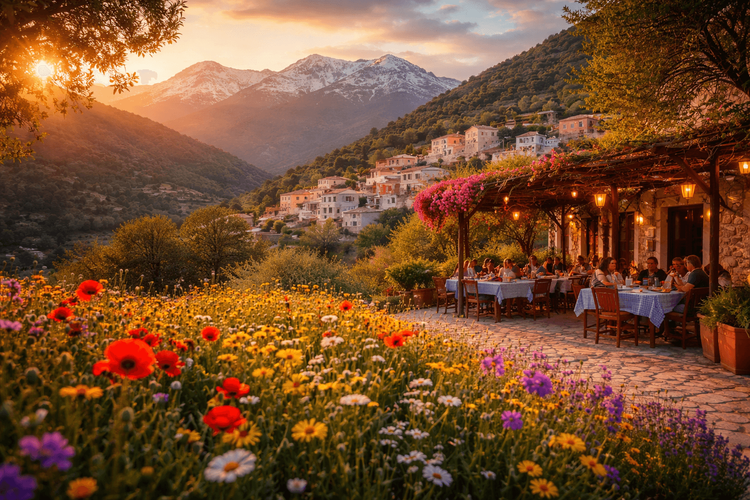

The Best Time to Visit Crete Isn’t Summer: Spring and Late Autumn Win
Spring and late autumn are the real sweet spot for Crete—wildflowers, warm seas, vineyard lunches, quiet coasts, and unhurried walks. Plan a one-week slow escape.
Trip Length
1 week
Best Time
March–May and October–November
Mood
slow travel
On an April morning in western Crete, the hills smell of wild thyme and damp stone, and the goat bells carry farther than any car. The sea is a softer blue, not yet bleached by high-season glare. Walking a terrace path above an olive valley, I learned quickly that the best time to visit Crete isn’t summer at all—it’s the bookends of the year when the island breathes slowly and invites you to match its rhythm.
The Best Time to Visit Crete: Spring and Late Autumn
Spring (March–May) and late autumn (October–November) bring everything you come to Greece for—long lunches, luminous water, mountain air—without the heat or the crowds. In spring, hillsides are green and freckled with flowers; vineyard rows glow with new leaves; village squares wake up as cafés drag tables into the sun. In October, the sea holds summer’s warmth, evenings soften into sweater weather, and harvest flavors infuse menus. If you’re chasing the best time to visit Crete for walking, wine, village taverns, and quiet coastal stays, these months are the sweet spot.
Walking Crete in Shoulder Season
Crete rewards walkers who take their time. The island runs on an epic scale—snow-dusted peaks, limestone gorges, and coastlines that switch from sand to pebbles to rock shelves within a single cove. In spring, paths feel newly minted: soil still moist, herbs aromatic, and the light clear enough to read the strata on a cliff face. Tracks through olive groves and terraces roll gently enough for an easy half-day, while more ambitious hikers can tackle gorge walks and highland routes when temperatures are kinder.
Many of the island’s major gorges typically operate with seasonal access. Expect popular national park routes to open closer to May, weather permitting, and to wind down by late October. If your visit falls in early spring or November, pick lower-altitude ravines, coastal trails, and village-to-village routes. Local guides and tourism offices are good sources for current conditions; trails can change quickly after winter rains.
What I love most about spring walking here is the soundtrack: bees at work in the sage, a distant rooster, church bells marking the hour in a hamlet you hadn’t noticed. In late autumn, the palette shifts—gold grasses, olive harvests underway, and the occasional woodsmoke curling from a mountainside home. Either way, the island’s paths feel like they belong to you.
Wine Country and Long Lunches in Village Taverns
Crete’s wine story runs deep, and the shoulder months let you taste it without hurry. Hills south of the main cities undulate with vineyards, and estate roads are calmer outside summer. You’ll find crisp whites and earthy reds made from indigenous grapes, poured with an easy pride. Expect conversations to wander—from soil and wind to family histories and the merits of pairing local cheeses with particular blends.
This is also prime time for tavern culture. Spring menus lean into greens and herbs, soft cheeses, and early vegetables; autumn tables tilt toward roasted dishes, slow-cooked meats, and anything touched by the olive press. The experience isn’t just flavor—it’s pacing. Meals begin late and end later, often with a tiny glass of raki on the house if you’ve made friends. In the quiet months, there’s room for that kind of generosity.
Quiet Coasts and Sea Days
The coast changes tempo outside summer. In October, the water is often perfect for unhurried swims, and small coves feel private even at midday. Many beach cafés still operate, though with fewer umbrellas and more locals, and sunsets stretch lazily over the horizon. By November, you might trade swim time for shoreline walks, shell-hunting, and reading on a terrace while waves thrum below. If a southerly cove is glassy, seize the moment; if weather turns, there’s always a seaside taverna to watch it pass with a plate of something warm.
One Week, Unrushed: A Slow Itinerary
A week on Crete in spring or late autumn is about choosing a couple of bases and letting the days expand.
Days 1–3: West for walking and harbors. Base in a historic harbor town or a small inland village. Spend one day on a coastal path with sea views and another exploring hill villages linked by stone lanes and olive groves. Use the third day for a moderate gorge walk or a drive into the foothills for panoramas and cheese-tasting at a farm shop.
Days 4–5: Central for wine and antiquity. Move inland toward vineyard country for tastings and cellar tours. Devote a morning to a Minoan site, then linger over lunch in a town square where schoolchildren chase pigeons and everyone knows everyone by name. Late afternoons are for terrace naps or a loop drive through agricultural valleys.
Days 6–7: East or south for quiet coastlines. Choose a smaller seaside village for two nights of sea air and slow mornings. Walk a section of coastal trail, read, collect smooth pebbles, and plan your next meal. If the sea is warm (it often is in October), stretch out your swims; if you’re here in March or November, lean into bracing dips followed by hot showers and a hearty dinner.
This itinerary isn’t a checklist—it’s an invitation to sink in. One museum, one site, one good walk, and a lot of life in between.
How to Get There
Crete is served by airports near Heraklion and Chania, with more flights in spring and autumn than in winter. Overnight ferries link Piraeus (Athens) to both Heraklion and Chania; sailing schedules are fuller outside deep winter and can fluctuate with weather. If you’re mixing islands, ferries connect Crete with others in season, though shoulder-season routes may be limited.
Once on the island, a rental car gives you freedom to find trailheads, vineyards, and small coves. The main east–west highway links major towns; mountain roads are narrower and slower, and they’re part of the pleasure. Buses run between the main cities and many villages, though frequencies drop outside summer—plan around timetables if you aren’t driving.
What to Expect on Arrival
Weather and light: Spring brings mild days and cool evenings; pack layers for dawn starts and terrace dinners. October often holds warm afternoons, while November delivers shorter days and the chance of early storms that make the landscape feel dramatic.
Walking conditions: Trails can be damp or eroded after winter rains. Choose sturdy footwear and check conditions locally, especially for gorge routes that have seasonal openings.
Sea and shores: The sea warms through summer and usually stays swimmable into October. In spring, it’s cooler but crystalline. Some beach services taper off; the quiet is the point.
Dining and reservations: Many restaurants and cafés operate year-round in towns. In small villages, hours can be flexible; if a spot matters to you, call ahead or go early. Easter week can be busy with local celebrations—book rooms and ferries in advance if your dates coincide.
Payments: Cards are widely accepted in cities and larger towns. In small rural taverns and kiosks, carry some euros just in case.
Why These Months Make Sense
Beyond comfort, there’s character. In spring you walk through fields alive with bees and watch farmers checking irrigation channels. In late autumn, you see nets unfurled for olives, vines trimmed back for winter, and cats discovered asleep on warm stone. Museums and archaeological sites feel contemplative, and the conversations you have—with a baker about yesterday’s weather, with a vintner about next year’s harvest—are easier when no one is racing a dinner rush.
This is also when your presence feels most welcome. Many Cretans live to a seasonal rhythm; coming in the shoulders helps spread the year’s income and keeps family businesses humming beyond high summer. You get something too: space, and the sense of an island revealing itself at human speed.
Final Thoughts
Ask a local and you’ll often hear the same thing: the best time to visit Crete is when the island slows down and the colors sharpen. Spring and late autumn deliver that balance of nature, culture, and appetite that turns a simple week into a keeper. Start looking at March, April, May, October, and November on your calendar. Crete will be ready—with a trail that winds into thyme, a table set in the sun, and a shoreline that feels like it’s waiting just for you.
Where to Stay

GDM Megaron, Historical Monument Hotel
GDM Megaron, Historical Monument Hotel is a 5-star stay in Crete, set in a restored landmark near Heraklion’s harbor and city center. It offers elegant rooms, a rooftop pool, spa, restaurant, and easy access to museums and the old town.

ibis Styles Heraklion Central
Centrally located in Heraklion, ibis Styles Heraklion Central is a 4-star stay in Crete with modern rooms, a rooftop terrace, and easy access to shops, restaurants, and the port.

Kastro Hotel
Kastro Hotel is a 3-star stay in Crete with a 9.1/10 guest rating, offering a convenient base for exploring the island and a comfortable, well-reviewed experience for travelers.

DOM Boutique Hotel
DOM Boutique Hotel is a 4-star stay in Crete with a 9.3/10 guest rating, offering a stylish base with convenient access to local sights and a comfortable setting for island stays.

Kipos Boutique Suites
Kipos Boutique Suites in Crete is a 4-star stay with a 9.1 guest rating, offering a stylish boutique setting and a convenient base for exploring the island’s beaches, towns, and local sights.