The Rebirth of Cairo’s Historic Core: Hotels, Galleries and Nile-View Rooftops
Cairo’s historic core is reinventing itself with restored facades, boutique stays, indie galleries, and Nile-view rooftops. Our Cairo travel guide maps when to go, how to arrive, and the neighborhoods where the city’s new energy shines.
Trip Length
4-6 days
Best Time
October–March
Mood
cultural
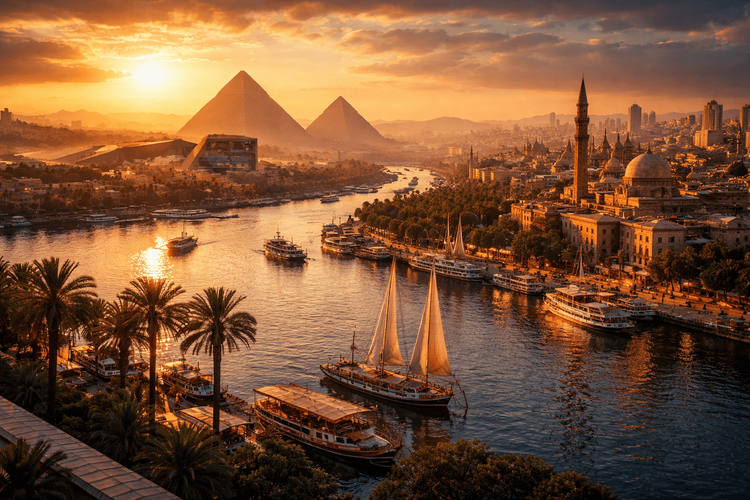
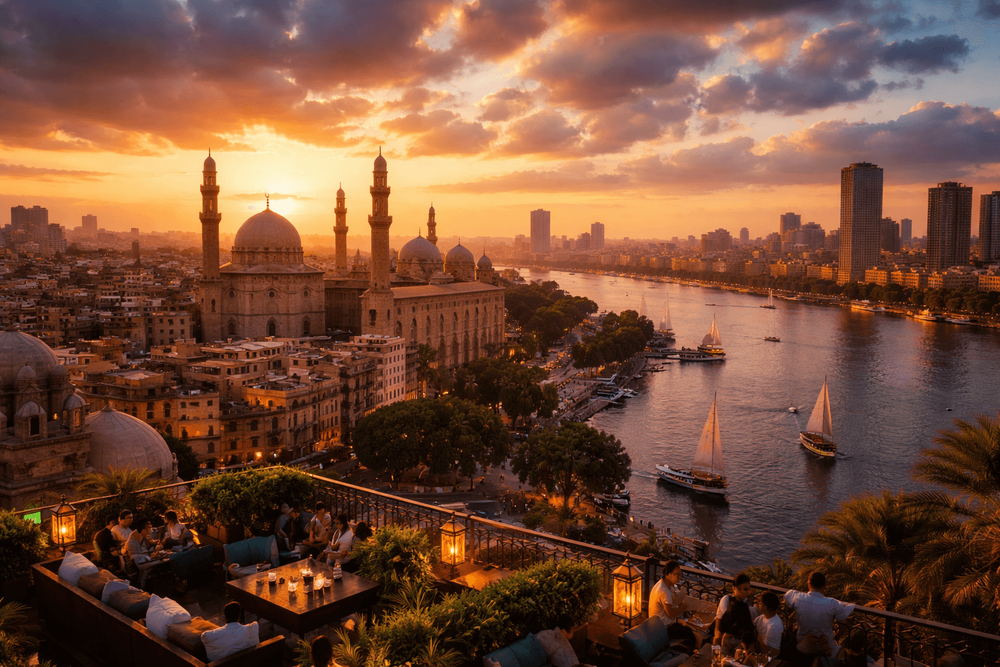
The first call to prayer ripples across the Nile as neon flickers to life on art deco cornices. From a terrace above a restored boulevard, you trace the river’s slow curve past Zamalek and watch feluccas trim their sails for twilight. This is where Cairo feels newly confident: heritage facades scrubbed clean, indie galleries upstairs in old apartments, and a new crop of small hotels staking their claim on balconies once made for afternoon tea. Consider this your Cairo travel guide to the revived heart of the city—one that pairs centuries-old craft with a rising design scene and those hard-to-forget Nile-view rooftops.
Why the historic core feels new again
What locals call Khedival Cairo—the 19th- and early 20th-century downtown planned with grand European boulevards—has been quietly reclaiming its poise. Restoration crews have worked through colonnades and balconies, peeling back layers of dust to reveal gilded plasterwork and marble thresholds. The result is a city center that finally looks in the mirror and recognizes itself: cinematic, layered, and surprisingly walkable.
In the wake of these restorations, creative energy has moved in. Former apartments host white-cube galleries and design studios; street-level cafés spill onto arcades; rooftop lounges are the new parlors, their low-slung seating aimed squarely at the sunset. The surrounding quarters—Garden City’s curving lanes, Zamalek’s leafy island, and the lanes of Islamic Cairo—plug into this renaissance with a steady rhythm of openings and exhibitions.
Cairo travel guide to the revived core
- Downtown Cairo: Start at Tahrir Square and fan out along historic arteries. You’ll find stone lions guarding Qasr al-Nil Bridge, century-old passageways strung with bulbs, and courtyards that hum long after midnight. This is the address for compact, design-forward stays inside renovated buildings—think high ceilings, patterned tile, and a fresh take on Egyptian modernism.
- Garden City: A crescent of embassies and quiet streets where villas hide behind gardens. Many new dining rooms and lounges claim riverfront terraces; by day, it’s a gentle stroll between shaded corners and bookshops. By night, low lighting and polished brass set the tone.
- Zamalek: The island of culture—galleries in converted flats, contemporary craft studios, and performance spaces. It’s also where you’ll catch the city’s new coffee and wine bars, often with a terrace peeking over jacaranda trees to the Nile.
- Islamic Cairo: East of downtown, this is the historic spine of the city. Medieval gates, minarets like a skyline of exclamation marks, and artisans hammering copper or inlaying mother-of-pearl. Restoration here has brought back the dignity of major monuments and the intimacy of older lanes. Come for doorways that seem to whisper stories.
- Coptic Cairo and Fustat: Ancient churches and quiet courtyards set the mood, alongside museums that connect the pharaonic past to contemporary Egypt. It’s an easy half-day from the center and pairs well with a late afternoon sail.
Where to stay: heritage bones, new attitude
Cairo’s freshest places to sleep aren’t grand in scale; they win on character. Inside restored downtown blocks, boutique hotels are leaning into original terrazzo floors, wooden shutters, and geometric ironwork. Rooms open onto petit balconies where you can sip mint tea and watch the evening unfold below; a few add intimate rooftops where the city feels at arm’s length.
Across the river, some mid-century towers have been refitted with design-forward rooms and skyline bars. The sweet spot for many travelers sits within easy walking distance of the rejuvenated streets—close enough to roam on foot, high enough to catch that purple hour when the river glassifies.
If you prefer quiet, base in Garden City or the greener corners of Zamalek; if you want to feel the city’s thrum, claim a set of keys downtown. Either way, ask for an upper-floor room to soften traffic noise and maximize those Nile or skyline views.
Contemporary Cairo: galleries, design, and Nile-view rooftops
The city’s creative pulse is easiest to feel upstairs. Many galleries occupy former residential floors, where corniced ceilings frame shows by painters, photographers, and sculptors. Pop in for an afternoon and you might find a talk or screening setting up in the back room. Weekends bring open studios and maker markets—ceramics, textiles, brasswork—bridging centuries-old techniques with a cleaner, modern line.
Design shops dot the grid, their windows stacked with handblown glass, woven palm baskets, and lighting that riffs on mashrabiya screens. It’s a scene that rewards slow browsing and questions—owners are often behind the counter and happy to explain the lineage of a pattern or weave.
Then there are the rooftops. Some float at mid-rise level with a front-row view of downtown’s Paris-meets-Cairo facades; others perch high enough to watch the island of Zamalek glow like a ship. Order karkadé (hibiscus) on ice or a tamarind spritz and let the river set the tempo.
What to eat and drink now
Cairo’s dining scene is leaning into its own pantry. Casual spots serve morning taameya (Egypt’s herb-loaded falafel) and sesame-dusted breads straight from the oven; at lunch, a steaming bowl of koshari—lentils, pasta, rice, and a red sauce with attitude—still hits right. The newer openings play with heritage flavors: charred eggplant under tahini, fish brightened with dill and citrus, cumin-forward meats and seasonal salads that snap with mint.
Coffee culture has climbed a rung or two. You’ll find carefully pulled espresso in downtown and Zamalek cafés, yet traditional Turkish-style brews remain a late-night staple. For evening, a wave of terraces now pours local wines and cocktails that nod to the souk—think date syrup, hibiscus, and spice—without drowning out the view.
Practicalities: when to go, getting there, on arrival
- Best time to visit: October to March is Cairo at its most generous—clear skies, softer light, and daytime temperatures that invite long walks. Winter evenings can be cool, so bring a light layer. During Ramadan, schedules shift; evenings can be particularly lively after sunset.
- Getting there: Cairo International Airport (CAI) is the main gateway, with wide global connections. From major hubs in Europe, the Middle East, Africa, and North America, nonstop or one-stop routes are typical.
- From the airport: Official taxis and ride-hailing apps are the simplest options; traffic can make the trip 45–90 minutes depending on the hour. Agree the fare in advance if taking a street taxi, or use an app for an upfront price.
- Trains and onward travel: Intercity trains link Cairo with Alexandria to the north and the Nile Valley to the south. Reserve ahead during peak seasons and allow extra time at stations.
- On arrival: Expect security checks at hotels, museums, and malls—routine and efficient. ATMs are widespread; small notes help with tips and taxis. Local SIMs are sold at the airport and in city kiosks, and eSIMs are increasingly available. Dress respectfully when visiting mosques; shoulders and knees covered, with women sometimes asked to cover hair. Always ask before photographing people.
A 4–6 day outline to make it yours
- Day 1: Arrive, check in, and stretch your legs along a restored downtown boulevard. Cross Qasr al-Nil Bridge at sunset and celebrate the city’s glow from a Nile-view rooftop.
- Day 2: Islamic Cairo. Trace Al-Mu’izz Street’s line of medieval architecture and the crafts lanes around it. Break for mint tea on a terrace, then wander under lanterns as the evening call drifts over the rooftops.
- Day 3: Morning at the Giza Plateau for the pyramids and sphinx. Return to Zamalek for galleries and a slow dinner on a river-facing terrace.
- Day 4: Coptic Cairo and Fustat’s museums. In late afternoon, take a felucca sail—the city looks different when you’re at water level and the sun is low.
- Day 5: Choose your lane. Garden City for quiet streets and cafés; or Heliopolis for early 20th-century architecture. End with a design shop crawl back downtown.
- Day 6: Day trip to Saqqara and Memphis for deep-time perspective; back in the city, cap your stay with one last rooftop, one last glass of karkadé.
This outline flexes: with four days, trim Heliopolis and the day trip. With six, linger—Cairo rewards dawdling as much as dashing.
Etiquette and small smarts
- Fridays are different: late morning prayers shape the day; some shops open later.
- Street-crossing is an art. Follow locals, keep a steady pace, and make eye contact.
- Bargaining belongs in markets, not in cafés or grocery shops.
- Many museums and religious sites have photography rules; look for signage and respect attendants’ guidance.
Planning forward
What makes this moment compelling is the balance: a city confident enough to preserve its bones and playful enough to sketch fresh lines across them. As scaffolds come down, balconies reappear; as gallery lights switch on, conversations spill into the street. If you’ve been waiting for a sign to plan that Cairo escape, let this Cairo travel guide be it—pack your curiosity, claim a seat above the Nile, and watch the city write its next chapter in real time.
Where to Stay

Steigenberger Hotel El Tahrir
Steigenberger Hotel El Tahrir is a 4-star Cairo stay near Tahrir Square and the Egyptian Museum, offering modern rooms, an outdoor pool, fitness facilities, and easy access to the city center.

Le Méridien Cairo Airport
Le Méridien Cairo Airport is a 5-star hotel next to Cairo International Airport, offering modern rooms, a pool, fitness center, multiple dining options, and a convenient stay for transit travelers and business guests.

Fairmont Nile City
Fairmont Nile City is a 5-star Cairo hotel on the Nile, close to downtown and major sights, with elegant rooms, multiple dining options, a spa, outdoor pool, and river views.

Cairo Marriott Hotel
Set on the Nile in central Cairo, Cairo Marriott Hotel offers historic palace-style accommodation with multiple dining options, a pool, spa, and fitness center, placing guests close to the city’s main attractions.

Le Passage Cairo Hotel & Casino
Le Passage Cairo Hotel & Casino is a 5-star stay in Cairo with easy airport access, offering modern rooms, multiple dining options, a casino, outdoor pools, a spa, and shuttle service for transit and city stays.