
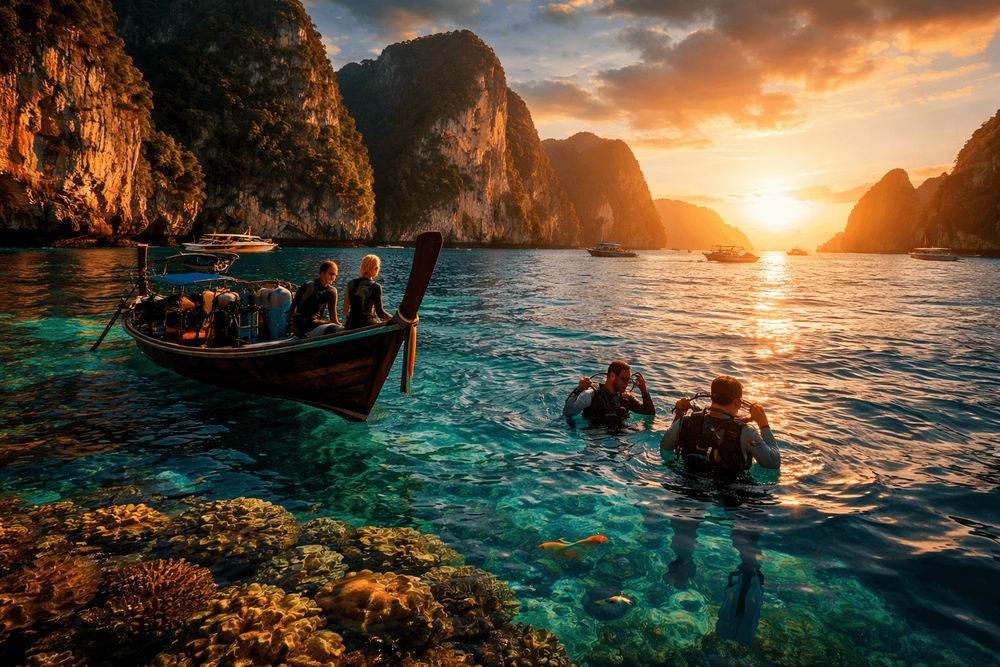
Best Diving Destinations in the World: An Expert Guide
From Raja Ampat’s kaleidoscopic reefs to the sharky blue of Cocos, this expert guide maps the world’s best diving destinations—when to go, how to plan, and how to dive well.
Mood
Underwater Odyssey
Beneath the ocean’s skin, light fractures into cathedrals, parrotfish rasp coral to confetti, and a slow-moving manta unfurls like silk in a current. For travelers seeking the best diving destinations, the world reveals itself as a layered atlas of reefs, wrecks, walls, and blue-water pelagic highways—each with its own season, temperament, and story.
How We Chose These Waters
Not all seas are created equal. This guide spotlights destinations chosen for five core criteria: biodiversity (from cryptic pygmy seahorses to schooling hammerheads), visibility (that painterly distance between you and the drop-off), accessibility (airlift, boats, and on-site infrastructure), seasonality (predictable windows for calm seas and star species), and conservation status (MPAs, responsible operators, and local stewardship). The result is a regionally balanced short list that meets divers where they are—beginners and families, wreck-obsessed historians, and big-animal devotees alike—while keeping an eye on impact.
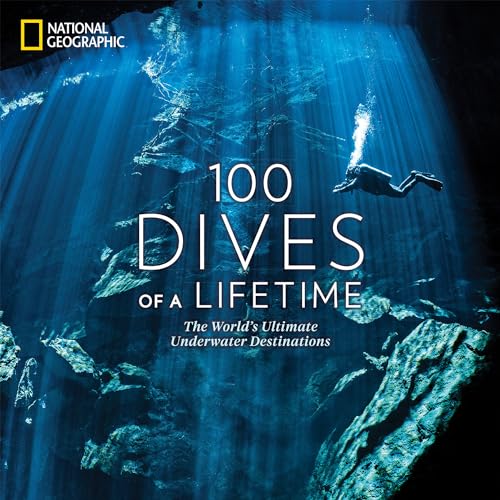
100 Dives of a Lifetime: The World's Ultimate Underwater Destinations (100 of a Lifetime): Miller, Carrie
CARRIE MILLER is an <strong>American-born, New Zealand-based travel writer</strong>. She has spent her career riding reindeer in Mongolia and diving with great white sharks in Australia, among other a
Check Price on AmazonThe Best Diving Destinations in the World: Regions and Signature Sites
Indo-Pacific: Raja Ampat, Komodo, Sipadan, Maldives
The Indo-Pacific is the planet’s biodiversity engine, where the Coral Triangle blurs into island nations and atolls formed by time and tectonics. Raja Ampat, Indonesia, is the kaleidoscope at the center—over 1,300 fish species on reefscapes that resemble living tapestries. Here, soft corals pulse in chocolate-milk currents, wobbegongs lounge under ledges, and tiny Denise’s pygmy seahorses cling like punctuation to gorgonians. Liveaboards drift between Misool and Dampier Strait; shore-based eco-lodges bring feathered visitors—red birds-of-paradise—into the narrative above water.
Komodo tightens the tempo. The currents that split its straits are conveyor belts for life: mantas on cleaning stations at Manta Alley, clouds of anthias over Castle Rock, and clouds of chromis blurring into motion. Drift hooks and precise briefings are the norm; topside, dragon-backed landscapes and pink-sand coves drive home Komodo’s outsider beauty.
Malaysia’s Sipadan is a myth that delivers. Jacques Cousteau called it “an untouched piece of art,” and divers today still fin through barracuda vortices and turtle traffic on plunging walls. Daily permits are strictly limited to protect the island’s reefs, which means planning ahead and basing at nearby Mabul or Kapalai for the macro-rich interludes.
Across the Indian Ocean, the Maldives is a necklace of coral atolls where lagoons glow lit-from-within. Channel dives deliver pelagic thrills—grey reef sharks, eagle rays, and seasonal mantas—while resort house reefs keep beginners content. Few places marry castaway-blue surface dreams with such consistent big-fish action just a short zodiac ride away. For island-hopping inspiration in the region, see The Best Islands in Southeast Asia: Beaches, Diving & Island-Hopping.
Caribbean & Atlantic: Belize Barrier Reef, Bahamas, Cozumel
In Belize, the Mesoamerican Reef arranges itself as a coral city-state: spur-and-groove labyrinths at Turneffe, cathedral buttresses at Lighthouse Reef, and nurse sharks in attendance. Gladden Spit draws whale sharks during springtime snapper spawning (dates vary with the lunar cycle), and Ambergris Caye offers family-friendly bases with calm, shallow sites.
The Bahamas is a case study in clarity and charisma. Off Grand Bahama and Bimini, shark encounters—tiger, lemon, Caribbean reef, and winter’s great hammerheads—reframe fear as fascination. Abaco’s blue holes and Andros’ inland caverns open windows into karst history, while the sandbanks of the northern islands host stingrays that rise from the seafloor like apparitions.
Cozumel keeps the current gentle and the drift steady. Palancar’s buttresses, Santa Rosa Wall’s cobalt drop-offs, and Columbia’s swim-throughs are a reminder that ease and drama can coexist. Shoreside, the island’s rhythm—taquerías, plazas, sunsets spooling out over the Caribbean—makes it a perennial favorite for beginners and returning divers alike.
Red Sea & Indian Ocean: Sharm el-Sheikh, Socotra, Seychelles
The Red Sea sculpts color with an almost theatrical intensity. Around Sharm el‑Sheikh, Ras Mohammed’s walls bloom with soft corals, and the SS Thistlegorm—sunk in 1941—remains the world’s most storied wreck dive. War-time cargo, from motorbikes to boots, sits suspended in time, while anthias drape the superstructure in orange veils. Visibility here can seem hyperreal; the sea’s salinity and isolation play alchemist with light.
Farther south, the island of Socotra—remote and otherworldly, with dragon’s blood trees rivalling any reef for surrealism—hosts reefs that benefit from upwellings and relative isolation. Conditions and security can be fluid; travelers should monitor current advisories and work only with reputable operators.
In the Seychelles, granitic drop-offs and outer atolls like Aldabra (a UNESCO World Heritage Site, access strictly limited) reveal dusky parrotfish, green turtles, and fields of hard coral. Time a visit for the transitional seasons when seas calm and visibility spikes, and embrace island time between dives on beaches that could be paintings. For sandy interludes anywhere on the globe, browse Best Beaches in the World: Expert Picks for Every Kind of Traveler.
Eastern Pacific: Galápagos, Cocos
This is where diving becomes pilgrimage. In the Galápagos, the confluence of currents writes a saga in which scalloped hammerheads school in the hundreds and sea lions cartwheel through the scene like mischievous narrators. Wolf and Darwin islands, reached by liveaboard, deliver pelagic theater: big-shouldered Galápagos sharks, manta drive-bys, and, in cooler months, whale sharks the size of buses. The archipelago’s strict protections make the diving feel consequential; topside, finches and marine iguanas write the evolutionary footnotes.
Cocos Island, Costa Rica, is a cloud forest adrift at sea. Waterfalls spill into coves where white-tip night dives stage hunting ballets and cleaning stations buzz with hammerheads like a rumor come true. Crossings can be adventurous; the payoff is a sense of arriving at a frontier. Both Cocos and Galápagos are squarely in Bucket-List Destinations: A Curated Guide to the World's Must-See Places.
Temperate & Polar: Norway, Svalbard
Cold water carries its own poetry. In Norway, kelp forests undulate like bronze curtains, wolffish grin from their dens, and orca encounters—typically done as guided snorkeling in winter—etch themselves indelibly. Summer brings luminous nights, calmer seas, and dives under bridges like Saltstraumen, where some of the world’s strongest tidal currents pump a living soup of plankton and fish.
Svalbard takes the experience to the edge of the map. Ice-scoured bottoms, arctic anemones, and the muffled quiet of high-latitude water reward divers fluent in drysuit skills and expedition mindset. It’s not the place to rack up tropical reef counts; it is the place to redefine what underwater beauty can be.
Best Diving Destinations for Beginners and Family Trips
Calm seas, gentle entries, and top-tier instruction define an excellent first dive vacation. The shortlist:

Shearwater Research Peregrine Dive Computer
The Peregrine is <strong>a simple and easily accessible, full colour, multi-gas dive computer</strong>. The large screen and 2-button functionality make it easy to navigate and an ideal companion for
Check Price on Amazon- Maldives: Many resort islands feature shallow house reefs accessible from shore, calm lagoons for training, and manta or turtle encounters just a boat ride away. The combination of clear water and forgiving conditions builds confidence fast.
- Bonaire: The Caribbean’s shore-diving capital posts yellow “Dive” stones along the road; toss tanks in the truck, pick a site, and enter at your pace. Sloping reefs, tarpon on dusk dives, and an island-wide commitment to conservation make it ideal for families and new divers.
- Cozumel: While drift is part of the DNA, briefings are meticulous and currents are predictable. Shallow gardens at Paradise Reef and Chankanaab Natural Park offer forgiving introductions.
- Ambergris Caye and Turneffe Atoll, Belize: Protected shallows, nursery reefs, and a smooth learning curve paired with excellent English-speaking instructors.
- Egypt’s South Sinai (Sharm and Dahab): House reefs, easy entries at Lighthouse and Eel Garden, and a competitive training ecosystem keep standards high and costs reasonable.
- Koh Tao, Thailand: A global training hub with calm bays, plentiful instructors, and straightforward logistics; beyond the classroom, the Gulf of Thailand often serves up aquarium-clear shallows.
Look for operators with small class sizes, modern rental gear, and proper confined-water practice. Between dives, choose bases with short boat rides—less time in transit, more time enjoying that first turtle sighting retold over dinner.
For Advanced Divers: Big Pelagics, Wrecks, Caves, and Technical Challenges
The ocean’s more demanding experiences reward training, experience, and humility.

Scuba Surface Marker Buoy (SMB) Set, 5ft Hi-Visibility Reflective Band Open Bottom Safety Sausage with 100ft Alloy Finger Spool Dive Reel and Double-ended Snap Hook Fits Underwater Fluorescent Yellow
View on Amazon- Pelagic crossroads: Galápagos (Wolf/Darwin) and Cocos are the archetypes: ripping currents, thermoclines, and life on a grand scale. Elsewhere, Palau’s Blue Corner (Micronesia) and Socorro (Revillagigedo, Mexico) deliver manta trains and shark aggregations. Many operators here require Advanced certs and 50–100 logged dives.
- Wreck wonderlands: Chuuk (Truk) Lagoon in Micronesia is a wholly different archive—WWII Japanese ships draped in soft corals, engine rooms frozen mid-century. The Red Sea’s Thistlegorm and Giannis D, Scotland’s Scapa Flow (German High Seas Fleet scuttled in 1919), and Coron in the Philippines round out a global syllabus. Penetration requires proper training; even external tours demand buoyancy control to avoid silt-outs.
- Cave and cavern: The cenotes of Mexico’s Yucatán offer dappled sunshafts and haloclines that bend light into magic; certified full-cave divers explore immense systems while open-water divers stick to guided caverns within the daylight zone. Sardinia’s Grotta del Nereo or the Bahamas’ Abaco caverns add Mediterranean and Atlantic chapters.
- Technical ambitions: Deep walls, overhead environments, and extended bottom times demand training in decompression procedures, gas management, and equipment redundancy. Sites like Dahab’s Blue Hole or deep wrecks in Malta draw tech divers; the rest of us respect the line between aspiration and readiness.
Wherever the challenge, a long surface interval with a logbook and a map completes the experience—names and depths become a story in contour lines.
When to Go: Seasonality and Visibility Windows
Seasonality shapes everything from visibility to wildlife encounters. Aim for the sweet spot—where seas, plankton, and wind align.
- Indo-Pacific: Raja Ampat is diveable year-round; peak conditions often run October–April with calmer seas in the south. Komodo shines April–November in the north and shoulder seasons in the south when mantas abound. Sipadan is consistent most of the year; the driest months typically fall April–December. Maldives’ northeast monsoon (November–April) brings the best visibility in many atolls; southwest monsoon (May–October) can mean more plankton—and mantas—with choppier seas.
- Caribbean & Atlantic: Dry season, roughly December–May, brings calmer seas and clear skies across much of the region. Belize’s whale sharks frequent Gladden Spit around March–June aligned to full moons. Bahamas’ great hammerheads peak December–March in Bimini; tiger shark encounters are strong October–January at Tiger Beach (and seen year-round).
- Red Sea & Indian Ocean: Egypt’s Red Sea is approachable year-round; many divers favor spring (March–May) and fall (September–November) for warmth and visibility. Seychelles enjoys best vis in the transition months: April–May and October–November, between trade winds.
- Eastern Pacific: Galápagos splits into two dive moods—cooler, nutrient-rich June–November (schooling hammerheads, whale sharks) with rougher seas; warmer, calmer December–May (manta encounters, better vis in some sites). Cocos’ hammerhead action is often strongest June–October, with rain common; December–May can be calmer with different wildlife highlights.
- Temperate & Polar: Norway’s peak cold-water clarity aligns with late winter and spring; summer offers longer days and easier logistics. Svalbard diving is an expedition proposition—short Arctic summers (July–August) are operational windows.
For macro trip timing beyond diving, including festivals and regional climate arcs, see Best Places to Travel in 2026: Curated Picks for Next-Year Adventures.
Planning and Practicalities
Certification and skills: Many coral-reef destinations welcome Open Water divers, but drift, depth, and overhead environments raise the bar. Advanced Open Water plus nitrox expands options and safety margins, especially on liveaboards with multiple dives per day. Operators in Galápagos, Cocos, and certain Red Sea itineraries may require recent logged experience in currents and minimum dive counts.
Liveaboard vs. day boats: Remote archipelagos—Raja Ampat, Komodo, Cocos, Galápagos—unfurl best from liveaboards that sleep near the action and thread lesser-visited sites into the week. Day boats excel in Cozumel, Bonaire, Sharm, and the Maldives (especially when staying on resort islands with in-house operations). Balance your appetite for ocean crossings with your tolerance for motion.
Permits and park fees: Expect daily or per-dive conservation fees in MPAs—Belize Marine Reserves, Komodo National Park, Ras Mohammed. Sipadan’s daily diver permits are tightly capped and allocated to operators; book early. Liveaboards typically collect fees in advance; carry local currency or a card for incidental levies at check-in.
Budgets: Two-tank day dives often range from modest to mid-tier depending on region; liveaboards span from hardy budget vessels to luxury yachts. Factor nitrox surcharges, gear rental, fuel supplements, and crew tips. Remote logistics (Cocos, outer atolls) increase costs; convenience (Cozumel, Sharm) can keep them accessible.
What to pack:
- Exposure protection matched to water temps: 3 mm in many tropics; 5 mm (plus hooded vest) for longer days or thermoclines; drysuit with appropriate undergarments for temperate/polar.
- Personal fit matters: your own mask and computer top the list; add spool and DSMB for drift zones, a reef hook for high-current sites (used sparingly and correctly), and a compact torch for wrecks and night dives.
- Sun-smart, reef-safe approach: long-sleeve rash guards and mineral-based sunscreen reduce chemical load on reefs; a wide-brim hat and quick-dry layers optimize boat days.
- A minimal save-a-dive kit: spare straps and o-rings, defog, and basic tools—small items with outsized payoff.
Health and safety: Hydrate, equalize early and often, and favor conservative profiles. Seek operators who brief emergency procedures and carry oxygen and radios; in remote waters, evacuation coverage and dive-specific insurance are prudent. Check the location of the nearest recompression chamber; respect 24 hours pre-flight after repetitive dives. Seasickness mitigation (medication, ginger chews, acupressure bands) can salvage a trip.
Cultural and local context: Dive towns are communities first. In Indonesia and the Maldives, modest dress in villages honors local norms; in Belize and Egypt, tipping customs vary by operator and are best clarified upfront. Buying services locally keeps your spend circling in the place that hosts your adventure.
Responsible Diving and Conservation
The most beautiful dive is the one that leaves no mark. Choose operators who brief buoyancy and environmental protocol, then dive like a ghost: no touching, no collecting, no feeding. Keep fins high and weights trimmed to avoid coral contact; maintain mindful distance from megafauna and never block cleaning stations.
Support MPAs with your wallet and your voice. Fees fund rangers and education; respectful presence reinforces the value of protection. Where available, join citizen-science efforts—fish counts in the Caribbean, manta ID in the Maldives, or shark censuses in the Eastern Pacific—so your logbook contributes to research.
Minimize your surface footprint: refillable bottles on boats, reef-safe sun protection, and gear that lasts. If volunteering with coral nurseries or turtle projects, vet programs for scientific rigor and local leadership. The ocean is resilient, but it is not inexhaustible; diving should be witness, not pressure.
The Image to Carry Home
Maybe it’s the hush at 20 meters when your bubbles thin and a turtle regards you with prehistoric calm. Maybe it’s the silver thunder of hammerheads at the edge of a blue water column. The best diving destinations don’t just deliver sightings; they teach a slower way of seeing. Step off the stern and let the world reorganize itself into light, color, and breath. The surface will still be there when you return, brighter for where you’ve been.
Recommended Travel Gear
100 Dives of a Lifetime: The World's Ultimate Underwater Destinations (100 of a Lifetime): Miller, Carrie
CARRIE MILLER is an <strong>American-born, New Zealand-based travel writer</strong>. She has spent her career riding reindeer in Mongolia and diving with great white sharks in Australia, among other a
Shearwater Research Peregrine Dive Computer
The Peregrine is <strong>a simple and easily accessible, full colour, multi-gas dive computer</strong>. The large screen and 2-button functionality make it easy to navigate and an ideal companion for
Scuba Surface Marker Buoy (SMB) Set, 5ft Hi-Visibility Reflective Band Open Bottom Safety Sausage with 100ft Alloy Finger Spool Dive Reel and Double-ended Snap Hook Fits Underwater Fluorescent Yellow
Unclip the spool from your harness or BCD, remove the clip and secure it to a D-ring, then attach the spool to the DSMB. ... Open the bottom of the marker buoy and hold it above your regulator exhaust