
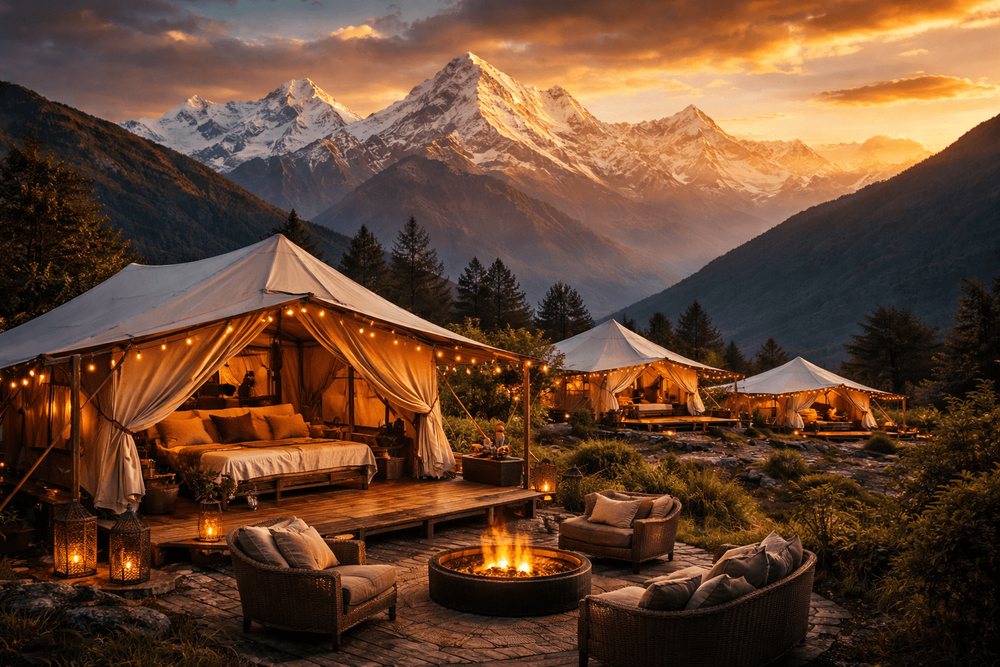
Glamping in the Himalaya: Luxury Camping Experiences in Nepal
Canvas suites, chef-led campfires, and Himalayan horizons: discover the most evocative places to glamp in Nepal—from Khumbu ridges to Chitwan’s riverine jungles.
Mood
Adventure Luxe
Just before sunrise in Khumbu, the canvas of a heated tent blushes pink. Prayer flags whisper in the thin mountain air, a kettle hisses softly on the camp stove, and the first light slides down the fluted walls of Ama Dablam. This is luxury camping in Nepal: the serenity of the high Himalaya, distilled to its essentials, yet elevated with plush duvets, chef-led cuisine, and guides who know precisely when to slow a climb for breath or speed it up for a cloudless summit view.
Where to Go for Luxury Camping in Nepal
From the glacier-carved amphitheaters of Everest to the tiger grasslands of Chitwan, Nepal’s best glamping unfolds across dramatic altitudes and ecosystems. Each region promises a different mood—rare air and prayer wheels in the high country; fireflies and river sunsets in the lowlands—yet all bend toward the same idea: comfort without dulling the frontier thrill.

Lonely Planet Nepal: Detailed Itineraries | Travel Like a Local | Insider Tips | Covers Kathmandu, Pokhara, Terai, Mahabharat Range, and more (Travel Guide): Mayhew, Bradley, Bindloss, Joe, Brown, Lindsay, Butler, Stuart, Lama, Tsering
Lonely Planet's Nepal is <strong>our most comprehensive guide that extensively covers all the country has to offer, with recommendations for both popular and lesser-known experiences</strong>. Ex
Check Price on AmazonEverest and the Khumbu
The Khumbu rewards those who chase superlatives—peaks stacked like a crown, villages strung with mani walls and spinning bells, the crunch of frost underfoot at dawn. Here, camp operators establish seasonal, expedition-style luxury camps on private clearings near classic trekking routes, pairing insulated canvas with proper beds, down-topped duvets, and oxygen on standby. The differentiation is altitude and access: helicopter shuttles make the improbable easy—skipping sketchy trail sections or simply delivering guests from Kathmandu to a high meadow for lunch with a front-row view of Everest’s plume. Days might weave from gentle acclimatization walks to Tengboche Monastery’s incense-laced blessings, ending with stargazing so sharp the Milky Way looks granular.
Annapurna Foothills
Where the mountains spill south in terraces of millet and rice, the Annapurna foothills trade raw altitude for lyrical variety—Gurung stone villages, rhododendron forests that glow like embers in spring, vistas of Machapuchare’s perfect fishtail. Camp life here favors comfort at a friendlier elevation. Expect private tent suites on grassy knolls a day’s hike from accessible trailheads, often paired with boutique lodges, so travelers can mix nights under canvas with nights in timber-and-stone rooms. Early mornings are for ridge walks; late afternoons are for ginger tea and a book while the light drains from Dhaulagiri’s ice.
Upper Mustang
Past Jomsom the land seems to exhale—arid cliffs, ocher canyons, sky caves guarding ancient secrets. In Upper Mustang, the appeal is exclusivity and culture: a restricted region where limited permits and a short season keep trails quiet. Luxury camps here are more expeditionary, designed to move lightly across a lunar landscape. Days pivot between walled cities like Lo Manthang, with whitewashed monasteries and butter lamps, and wind-carved valleys where the silence feels ceremonial. Helicopters knit the vastness, linking trails to remote gompas and overlooked passes.
Pokhara Lakeside
The mirror of Phewa Lake and the Annapurnas beyond set an altogether different pace. Here, glamping leans romantic, with tented villas tucked into forested peninsulas and reached by boat at dusk. The Pavilions Himalayas Lakeview offers tented eco-villas whose canvas walls flutter to birdsong, big beds look out to the water, and en-suite bathrooms bring hotel polish to the edge of the wild. By day, guests paddle kayaks or take leisurely hill walks to small shrines; by night, kerosene lanterns and a chorus of cicadas replace the city’s lights.
Chitwan and the Terai Lowlands
In the subtropical south, grasslands shiver in the breeze and the Rapti River curls past sandbars pocked with heron prints. Luxury tented camps bring the safari grammar of canvas and campfire to Nepal’s oldest national park. The Tiger Tops Tharu Lodge continues a storied conservation legacy with elegantly dressed safari tents shaded by sal trees, farm-to-table meals, and naturalists who can decode the jungle’s unspoken signals—alarm calls, pugmarks, a deer freeze that means something else is moving. Morning canoe drifts reveal crocodiles warming on mud banks; sundowners glow amber as hornbills coast overhead.
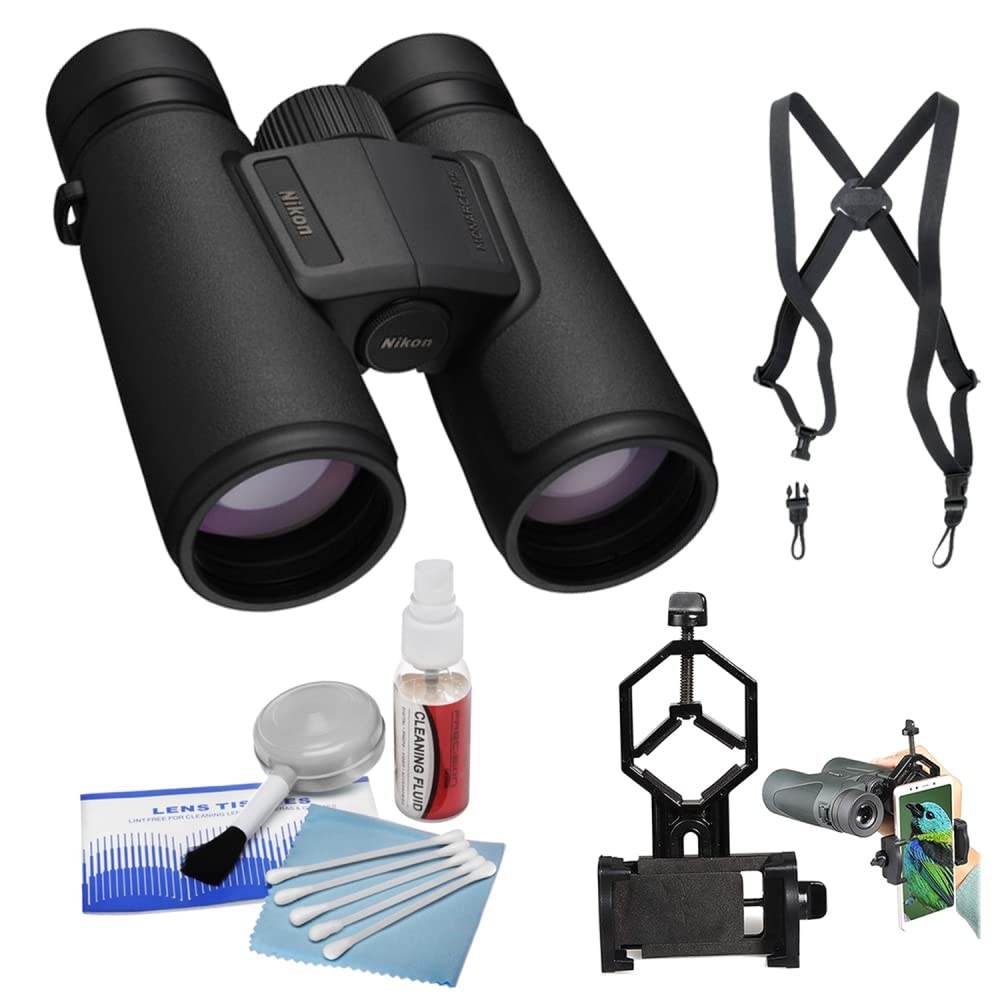
Nikon Monarch 5 8x42 Binoculars : Electronics
Nikon Monarch M5 8x42 (16767) Black Binoculars Bundle with Lens Pen and Lens Cloth, <strong>Compact Binoculars for Adults for Hunting, Bird Watching, and Hiking Essentials, Zoom Lightweight Travel</st
Check Price on AmazonWhat to Expect: Canvas, Service, Wellness
The best luxury camping in Nepal upgrades the classic expedition tent into a private, four-season cocoon. Sturdy canvas or insulated panels keep mountain nights cozy, with proper bed frames, high-thread-count linens, and thick rugs underfoot. Many tents offer en-suite bathrooms with flush toilets and hot showers; in colder zones, expect hot-water bottles at turndown, propane or wood stoves, and sometimes electric blankets powered by discreet solar arrays. At lower elevations, open-air bathing, soaking tubs, and shady verandas invite lazy afternoons.
Dining is a point of pride. Chefs trained in both Nepali and continental kitchens plate hearty trekking fare—dal bhat layered with seasonal greens, yak-cheese ravioli, roasts and fresh-baked breads—alongside lighter, wellness-forward menus. Picnic lunches appear at improbable viewpoints; breakfast might arrive as a thermos of French press and still-warm cinnamon rolls at the flap of your tent.
Service borrows from both expedition guiding and boutique hospitality. Private guides and porters tailor the pace to the day and the guest, while camp crews move invisibly—warming water, airing boots, plotting the next ridge walk. Transport options telescope distances: 4x4s link airstrips to remote trailheads; helicopters leapfrog weather windows to catch a clear morning above the clouds.
Unwinding is half the point. After long hiking days, some camps roll out yoga mats beneath deodar pines or offer on-call massage with arnica and juniper oils. Those looking to extend the restorative arc can pair a glamping itinerary with dedicated wellness time; see our guide to Himalayan Wellness: A Traveler’s Guide to Yoga, Ayurveda and Meditation Retreats in Nepal for inspiration.
Signature Experiences Worth Planning Around
- Day hikes and short treks: In Khumbu and Annapurna, guides map out acclimatization loops to hidden chortens and high pastures. Expect 2–6 hours of walking on stone staircases and soft forest duff, punctuated by tea-house stops for milk tea and views that make conversation fall away.
- Helicopter outings: A dawn heli-run to Kala Patthar or the Annapurna Sanctuary can pivot a trip from memorable to transcendent, putting guests nose-to-nose with glaciers before breakfast. Operators typically include oxygen, satellite comms, and contingency days for weather buffers. For broader ideas on active itineraries, explore Adventure Nepal: Treks, Peaks, Rivers & Responsible Thrills.
- Cultural village visits: In the foothills, hosts arrange meals with Gurung or Magar families; in Mustang, guides translate the quiet scholarship of monastic caretakers and the centuries-old murals that bloom across chapel walls. Homestay nights can be woven into glamping routes for deeper connection.
- Wildlife safaris: In Chitwan, naturalists lead foot safaris at first light, jeep drives through elephant grass, and silent canoe trips on mirror-still backwaters. Birders notch barbet calls and bee-eater flashes; lucky travelers spot rhinos trundling into river shallows and, very occasionally, the ripple of a tiger.
- Stargazing and sunrise rites: Camps often keep telescopes on hand; at altitude, planets burn bright and meteor showers scratch silver across impossibly clean skies. Sunrise can become its own ritual—thermos, shawl, ridge, the reveal of a mountain range unspooling like a scroll.
- Tailored romance: Nepal’s glamping excels at intimacy—private hilltop dinners, flower-strewn tented suites, heli champagne picnics. For a final-night flourish in Kathmandu or Pokhara, our guide to Romantic Restaurants in Nepal: Candlelit Rooftops, Lakeside Dinners & Himalayan Views helps seal the mood.

Osprey Talon 22L Men's Lightweight Hiking Backpack - Small Daypack for Travel & Camping, Green Canopy/Pine Leaf, Extended Fit
The Osprey Talon™ 22L is a <strong>lightweight bag for men, built for full-day hikes, biking, and travel</strong>. With a spacious main compartment, dual-zippered hipbelt pockets, top panel pocket, an
Check Price on AmazonTwo properties embody this spirit of place particularly well. On Phewa Lake’s quiet shore, The Pavilions Himalayas Lakeview strings a handful of tented eco-villas between water and forest, the scent of citrus groves bright in the evening air. In the Terai, Tiger Tops Tharu Lodge anchors luxury under canvas to decades of community-led conservation, where the soft tread of a nature walk can feel as charged as any summit push.
Practical Essentials and Responsible Travel
- Best seasons: For high-country camps in the Khumbu and Annapurna regions, aim for October–November and March–May when skies are clearest and rhododendrons or late-autumn light transform the trails. Upper Mustang shines from late spring through early autumn (May–September), thanks to its monsoon rain shadow. The Terai lowlands, including Chitwan, are most comfortable from October–April, with cooler, drier air—though the emerald monsoon months bring lush riverbanks and dramatic skies.
- Altitude, health, and safety: Even with heated tents and top-tier guides, the mountains demand respect. Build in acclimatization nights above 3,000 meters; ascend gradually and hydrate. Reputable operators carry oxygen and pulse oximeters, and employ guides trained in AMS protocols. Helicopter evacuation is possible but weather-dependent; ensure comprehensive travel insurance that covers high-altitude trekking and evacuation.
- Permits and logistics: Trekking near Everest requires a Sagarmatha National Park permit; the Annapurna region uses the Annapurna Conservation Area Permit (ACAP). Many routes also require a TIMS card. Upper Mustang is a restricted area requiring a limited-entry permit and a licensed guide. Safari experiences in Chitwan include national park entry fees organized by lodges. Most travelers fly into Kathmandu, then connect by fixed-wing to Lukla (Everest), Pokhara (Annapurna/Pokhara lakeside), Jomsom (Upper Mustang), or Bharatpur (Chitwan). Road transfers by 4x4 fill the gaps; helicopters are the wild card for access and weather workarounds.
- Budgeting and booking: Expect luxury camping in Nepal to range roughly from USD 350–700 per person per night in the lowlands and foothills, and USD 700–1,200+ in high-altitude or ultra-remote setups, especially when helicopters are involved. Multi-day private tented expeditions—including support crew—are typically quoted as all-inclusive packages. Book 6–9 months out for peak seasons; secure domestic flights early, and keep a weather buffer on either side of high-mountain segments.
- Sustainability and community impact: Nepal’s finest glamping outfits aim to tread lightly: solar power and battery banks over diesel generators; low-plastic operations with filtered water; composting and waste-backhauls from remote sites. Ask how your operator engages local communities—through fair wages, training, and sourcing (from vegetables to linens). Cultural respect matters in monasteries and villages: dress modestly, request permission before photographs, and learn a handful of Nepali phrases. Leave-no-trace applies doubly in fragile alpine zones.
For those building a broader itinerary around these nights under canvas, our guide to Top Tourist Spots in Nepal: Kathmandu, Pokhara, Everest & Beyond helps map compelling gateways and add-on adventures.
The Lasting Image
Maybe it’s the way canvas frames a landscape—with edges that flutter and seams that hum in a breeze—or how a valley’s sounds rise at dusk: the wooden tok-tok of looms, a river riffle, the low call of cattle returning home. Luxury camping in Nepal makes these textures feel close enough to touch, while the service, safety net, and thoughtful design remove the friction that so often distracts from the wild. In the morning, a tent flap opens not just onto a view, but onto a feeling—the exhilaration of being precisely where the world falls silent and the mountains start to speak.
Recommended Travel Gear
Lonely Planet Nepal: Detailed Itineraries | Travel Like a Local | Insider Tips | Covers Kathmandu, Pokhara, Terai, Mahabharat Range, and more (Travel Guide): Mayhew, Bradley, Bindloss, Joe, Brown, Lindsay, Butler, Stuart, Lama, Tsering
Lonely Planet's Nepal is <strong>our most comprehensive guide that extensively covers all the country has to offer, with recommendations for both popular and lesser-known experiences</strong>. Ex
Osprey Talon 22L Men's Lightweight Hiking Backpack - Small Daypack for Travel & Camping, Green Canopy/Pine Leaf, Extended Fit
The Osprey Talon™ 22L is a <strong>lightweight bag for men, built for full-day hikes, biking, and travel</strong>. With a spacious main compartment, dual-zippered hipbelt pockets, top panel pocket, an
Nikon Monarch 5 8x42 Binoculars : Electronics
Nikon Monarch M5 8x42 (16767) Black Binoculars Bundle with Lens Pen and Lens Cloth, <strong>Compact Binoculars for Adults for Hunting, Bird Watching, and Hiking Essentials, Zoom Lightweight Travel</st