
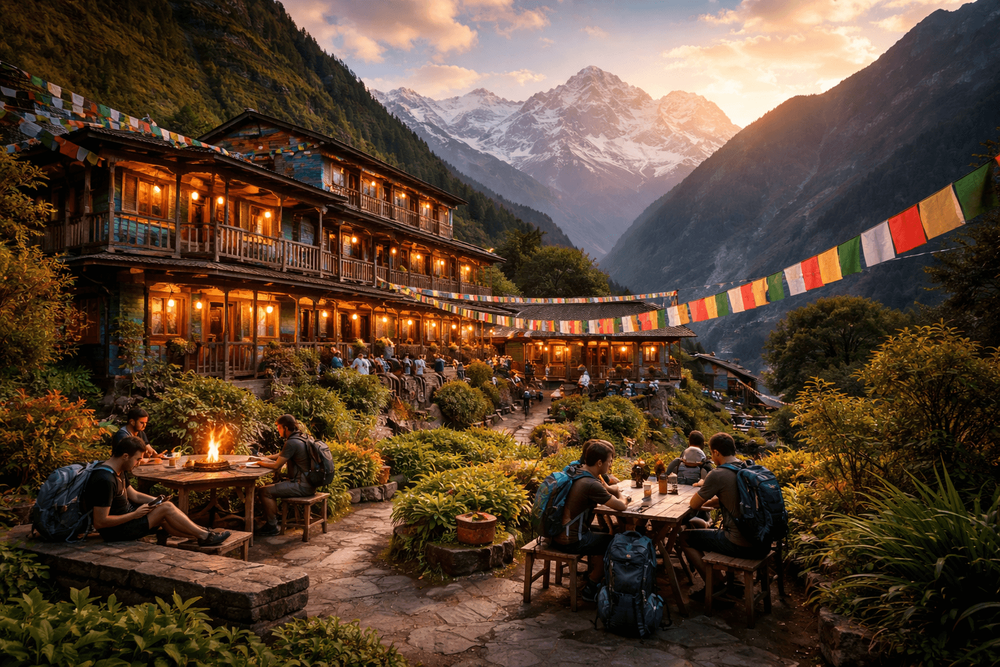
Hostel Recommendations in Nepal: Best Picks for Trekkers, Backpackers & Budget Travelers
Field-tested hostel picks and practical tips for Nepal—from Thamel rooftops to Pokhara’s lakeside calm and Chitwan’s river breeze—plus tea-house know-how.
Mood
Budget Backpacking
Hostel Recommendations in Nepal: 2026 Budget Guide
Meta description: Find the best hostels in Kathmandu, Pokhara, and Chitwan—typical 2026 prices, amenities, tea-house tips, booking advice, and safety for budget backpackers.
At sunrise in Thamel, prayer bells chime over a maze of brick lanes as a kettle whistles on a rooftop terrace. From up here, the city stirs—hawkers unroll carpets, porters shoulder baskets, and a breeze sets prayer flags snapping against a powder-blue sky. It’s the hour when a good bunk, a hot shower, and a strong coffee matter most. For travelers seeking hostel recommendations in Nepal—whether plotting a trek into the high Himalaya or drifting west to Pokhara’s lakeside calm—this is a country where characterful stays and community are part of the journey.
Best Hostel Recommendations in Nepal by Region

Lonely Planet Nepal: Detailed Itineraries | Travel Like a Local | Insider Tips | Covers Kathmandu, Pokhara, Terai, Mahabharat Range, and more (Travel Guide): Mayhew, Bradley, Bindloss, Joe, Brown, Lindsay, Butler, Stuart, Lama, Tsering
Lonely Planet's Nepal is <strong>our most comprehensive guide that extensively covers all the country has to offer, with recommendations for both popular and lesser-known experiences</strong>. Ex
Check Price on AmazonKathmandu/Thamel: Social Energy, Rooftops, and Ready Logistics
Kathmandu’s Thamel district remains the classic first stop—lively, layered, and convenient. Hostels here skew social and practical: think rooftop breakfasts with a distant temple glinting in the morning light, 24-hour receptions for late flights, and staff who can walk you through route options over a map in minutes. As of 2026, dorms typically run about US$6–12 per night, with private rooms from roughly US$18–35 depending on season and en-suite status. Expect fiber-backed Wi‑Fi in many properties (often in the 20–100 Mbps range, though speeds vary), lockers, tour desks that can arrange permits, and cafés serving masala tea to an ever-rotating cast of trekkers.
What to look for: a quiet side street just off the main lanes to cut noise, a sunlit courtyard or lounge that doubles as a co‑working nook by day, a small rooftop for golden-hour meetups, and easy strolls to momo stalls and spice-scented markets—ideal before or after a day on Gourmet Food Tours in Nepal: Taste, Learn, and Shop Your Way Through Kathmandu & Beyond.
Pokhara/Lakeside: Sunrise Over Annapurna, Laid-Back Vibes
Five to seven hours west by tourist bus—or a short domestic hop—Pokhara is Nepal’s exhale: paddle-slashed mornings on Phewa Lake, paragliders tracing arcs over green hills, and cafés where time drifts as slowly as the clouds on Machapuchare’s blade. Around Lakeside, hostels feel calmer than Thamel and often add welcome extras for trekkers returning from Annapurna: gear storage, laundry by the kilo, and hot showers that redeem the coldest high pass.
As of 2026, dorm beds here hover around US$7–12, with privates in the US$20–40 range depending on season. Aim for properties with top-floor lounges angled to sunrise over the ridge, tidy smaller dorms (four to six beds) with individual reading lights, and a clearly labeled left-luggage room—handy for leaving city clothes and laptops during multi-day hikes. Staff who arrange early mountain shuttles and share daily trail condition notes are a plus.
Chitwan/Sauraha: River Breezes and Wildlife Dawn Calls
Down in the Terai, humidity replaces mountain chill, and the Rapti River shimmers beyond tall elephant grass. In Sauraha, the gateway to Chitwan National Park, hostel-style stays often blur into simple jungle lodges—rooms with verandas under thatch and birdsong as your alarm. As of 2026, expect dorms around US$6–10 and privates roughly US$20–40; some properties offer packages that bundle canoe rides, village walks, or jeep safaris.
Look for eco-minded touches—solar-assisted hot water, filtered-water refill stations, and guides trained to prioritize responsible wildlife viewing. Evenings stretch out in wicker chairs by the riverbank as the frog chorus rises with the heat.
Trekking Tea Houses vs. City Hostels: What’s Different
Once the trail begins, the world shifts from hostels to tea houses—family-run lodges lining Nepal’s classic routes. Rooms are simple: wood-panel walls, twin beds, shared bathrooms, and a common room where a cast-iron stove throws orange light on damp socks and bright cheeks. As of 2026, a bed commonly runs US$3–10 depending on region and season, but meals are the engine of tea-house hospitality and where most of your spend lands. Many lodges discount—or sometimes include—the room if you eat breakfast and dinner on site. Wi‑Fi, hot showers, and device charging are often extras, especially at higher altitude.
City hostels promise consistent Wi‑Fi, lockers, and laundry; tea houses promise atmosphere and immediacy—the hiss of a pressure cooker, a deck of cards slapped down, a window where clouds peel away from a 7,000-meter face. Both are part of the rhythm of Nepal.
Rooms, Prices, and Amenities: What to Expect
- Typical 2026 price ranges (per person, per night):
- Dorms, Kathmandu/Pokhara: about US$6–12; Chitwan: about US$6–10
- Private rooms, Kathmandu/Pokhara: roughly US$18–40; Chitwan: roughly US$20–40
- Tea houses on trek: room about US$3–10; meals US$10–25 per day depending on route and altitude
- Dorm configurations: 4–10 beds are common. Look for privacy curtains, individual sockets, and personal reading lights.
- Privates: En-suites usually carry a US$5–10 premium; some include balconies or small terraces.
- Wi‑Fi: In Kathmandu and Pokhara, many hostels run fiber (often 20–100 Mbps as of 2026). Ask about backup power for monsoon storms and occasional outages.
- Hot showers: Gas or solar-heated in cities; on treks, hot buckets or solar showers may carry a small fee.
- Lockers and security: Most dorms provide lockers (bring a sturdy padlock). Receptions often run 24/7 in Thamel; CCTV is common.
- Kitchens: Shared guest kitchens appear in backpacker-focused hostels, though not universally. Many offer refillable filtered water stations—bring a reusable bottle.
- Laundry: Same-day service by the kilo is standard in Kathmandu and Pokhara; prices can be a touch higher in Lakeside and Sauraha.
- Rooftops and courtyards: These social spaces set the tone—check photos for shade, seating, and whether they face sunrise or sunset.

Master Lock 643D Set Your Own Combination Padlock, 1 Pack, Silver : Baby
View on AmazonCheck-In, Payment, Safety, and Health Essentials
- Check-in: Standard times land around mid-afternoon. Night buses and red-eye flights are common, so message ahead for early bag drop or dawn arrival. Nepalese accommodation providers must register guests; keep your passport handy.
- Payment: Cash remains common beyond higher-end properties. Many hostels accept cards with a 3–4% surcharge. ATMs are plentiful in Kathmandu and Pokhara; withdrawal limits vary by bank. Carry small notes (NPR 100–500) for tea houses and rural stops. Local e-wallets (eSewa, Khalti) are widely used by residents but can be tricky with foreign cards.
- Safety: Nepal is generally welcoming and low on petty crime; still, use lockers and avoid leaving valuables charging unattended in common areas. After dark, stick to main, lit streets in Thamel and Lakeside.
- Health: Air can be dusty in Kathmandu—pack a light mask during dry months. Tap water isn’t potable; choose filtered refills. In Chitwan, use repellent and check rooms for mosquito screens in warmer months. For trekking, ask your hostel about current permit rules and consider travel insurance that covers high-altitude rescue—regulations evolve and requirements vary by region.
Who Stays Where: Tailored Picks by Traveler Type
- Backpackers and solo travelers: Choose hostels that schedule walking tours, cooking demos, or nightly tea tastings—easy ways to meet people. In Thamel, look for places with rooftop commons and smaller dorms (six beds or fewer) to balance sociability and sleep.
- Women-friendly stays: Many Kathmandu and Pokhara hostels now offer women-only dorms and employ female front-desk staff. Aim for properties on or just off main streets for late-night arrivals, with round-the-clock reception.
- Digital nomads: Prioritize fiber-backed Wi‑Fi and backup power. Ask for recent speed tests and confirm quiet corners or designated co‑working nooks. Nepal SIM cards (Ncell and Nepal Telecom) are inexpensive and handy for tethering in cities; signal thins as you climb into the hills.
- Family-friendly options: Family rooms and twin/double privates with en-suites are common. Courtyards where kids can play and on-site cafés simplify early breakfasts before day trips to viewpoints or boat rides.
- Trek bases and long-haul hikers: Look for free gear storage, early breakfast service, and laundry turnarounds within 12–24 hours. Many front desks can book guides, porters, and transport, and advise on evolving permit requirements for areas like Annapurna, Langtang, and the Khumbu. For broader planning on peaks and rivers, see Adventure Nepal: Treks, Peaks, Rivers & Responsible Thrills.
For a compact, all-in-one base pre‑ or post‑trek, focus on hostels with clearly tagged left-luggage rooms, early check-out flexibility for dawn buses, and front desks that can arrange last-minute rental layers. In Pokhara, properties with luggage cubbies, a sunny drying terrace, and route updates posted each evening make smooth bookends for Annapurna hikes.
How We Choose: Selection Criteria and Smart Verification
- Cleanliness and maintenance: Crisp linens, clean bathrooms, and regular common-area upkeep are non-negotiable. Scan recent reviews for housekeeping consistency and hot-water reliability.
- Staff helpfulness: In Nepal, warmth is a competitive advantage. The best teams anticipate needs—from SIM setup to advising on festival traffic and permit counters.
- Location: Proximity to transport (tourist bus parks, domestic terminals), sights (Durbar Squares, Lakeside), and essentials (ATMs, pharmacies) matters. Use satellite view to spot potential noise sources—night venues, main roads—or to confirm easy taxi drop-offs.
- Guest vibe: Photos tell the story—are there communal tables and events, or is it all small two-tops? Smaller dorms foster calmer nights; larger ones create a busier scene.
- Reviews and ratings: Prioritize patterns over outliers. Sort by “newest” to catch renovation notes or temporary construction nearby.
- Direct questions to ask: Do you have backup power? What’s the typical Wi‑Fi speed (as of now)? Are there quiet hours? Can you store gear for X days? Is there a fee for hot water or charging on treks? Quick, clear answers are reliable barometers.
Seasons, Booking Strategy, and Responsible Travel
- When to go: Peak trekking runs October–November and March–April—clear skies and rhododendrons in bloom. Winter (December–February) is crisp and calm in cities but cold at altitude; summer monsoon (June–September) brings lush hillsides, lively festivals, and showers that can slow roads.
- Booking windows: In peak seasons, lock in Kathmandu and Pokhara hostels 1–3 weeks ahead, especially for private rooms or women-only dorms. In shoulder seasons, walk-ins often score deals. Tea houses on major routes fill fast during peak months—arrive early in the afternoon or ask your hostel to phone ahead if you’re targeting a smaller village.
- Cancellations and flexibility: Choose free-cancel rates if weather or itineraries hinge on flights to mountain airstrips. Night buses can run late; message your property if you’ll arrive after midnight.
- Cash vs. card: Plan ATM stops in Kathmandu or Pokhara before heading to Chitwan or into the hills. Carry a float of small notes for tea houses, tips, and rural shops.
- Local customs: Remove shoes before stepping into homes or certain hostel lounges; dress modestly around temples and monasteries. Festival days (Dashain, Tihar, Holi, Indra Jatra) can affect transport—front desks are terrific for day-of intel.
- Eco and community-minded stays: Seek hostels with filtered water refills, solar-boosted hot water, towel-on-request policies, and staff training programs. When trekking, carry out waste, refill bottles rather than buying plastic, and choose lodges that discourage off-trail wildlife encounters. For food inspiration that supports small vendors, browse Taste Nepal: Must-Try Street Foods, Where to Find Them and How to Eat Like a Local.
A Note on Tea-House Etiquette and Trek Practicalities
- Meals: Eating dinner and breakfast at your lodge supports the family hosting you and is often expected in busy seasons. It also secures your bed in popular villages.
- Heat and power: Common rooms are heated; bedrooms rarely are, so a warm sleeping layer is wise. Charging fees can apply at altitude—top up power banks in cities.
- Water: Tea houses boil water for a fee; bring purification tablets or a filter for flexibility.
- Permits and guides: Rules change—hostels and reputable agencies can advise on current requirements and safe guide-to-group ratios.
- Porters and fairness: Bag limits are standard (often 20–25 kg per porter). Pack light, tip fairly, and insure high-value gear.

GRAYL GeoPress 24 oz Water Purifier Bottle - Filter for Hiking, Camping, Survival, Travel (Bali Blue)
Versatile, fast, and ridiculously easy to use — the 24oz GeoPress Water Filter & Purifier Bottle <strong>requires zero setup, no sucking or squeezing, and makes 24 fl oz (710 ml) of clean purified
Check Price on AmazonMake It Your Nepal
A good hostel in Nepal is more than a bed—it’s the story engine. It’s where a cashier’s bell dings as you trade trail notes over hot sel roti, where sunrise tongues of cloud detach from Annapurna and slide into a lacquered lake, where river breezes lift the edge of your guidebook in Chitwan’s dusk. With the right base—and a few smart, field-tested choices—hostel recommendations in Nepal reliably turn into the trip’s warmest memories and easiest logistics. Settle in, sip your tea, and let the mountains, markets, and rivergrass do the rest.
Recommended Travel Gear
Lonely Planet Nepal: Detailed Itineraries | Travel Like a Local | Insider Tips | Covers Kathmandu, Pokhara, Terai, Mahabharat Range, and more (Travel Guide): Mayhew, Bradley, Bindloss, Joe, Brown, Lindsay, Butler, Stuart, Lama, Tsering
Lonely Planet's Nepal is <strong>our most comprehensive guide that extensively covers all the country has to offer, with recommendations for both popular and lesser-known experiences</strong>. Ex
Master Lock 643D Set Your Own Combination Padlock, 1 Pack, Silver : Baby
The 1/4in (6mm) diameter shackle ... security offers keyless convenience. The Limited Lifetime. The <strong>Master Lock 643D is a resettable 4-digit combination padlock</strong>....
GRAYL GeoPress 24 oz Water Purifier Bottle - Filter for Hiking, Camping, Survival, Travel (Bali Blue)
Versatile, fast, and ridiculously easy to use — the 24oz GeoPress Water Filter & Purifier Bottle <strong>requires zero setup, no sucking or squeezing, and makes 24 fl oz (710 ml) of clean purified