
Taste Nepal: Must-Try Street Foods, Where to Find Them and How to Eat Like a Local
From momos to juju dhau, savor Nepal’s essential street foods—where to find them, how to order like a local, and smart tips for safety, budget and seasonality.
Mood
Culinary Street Odyssey
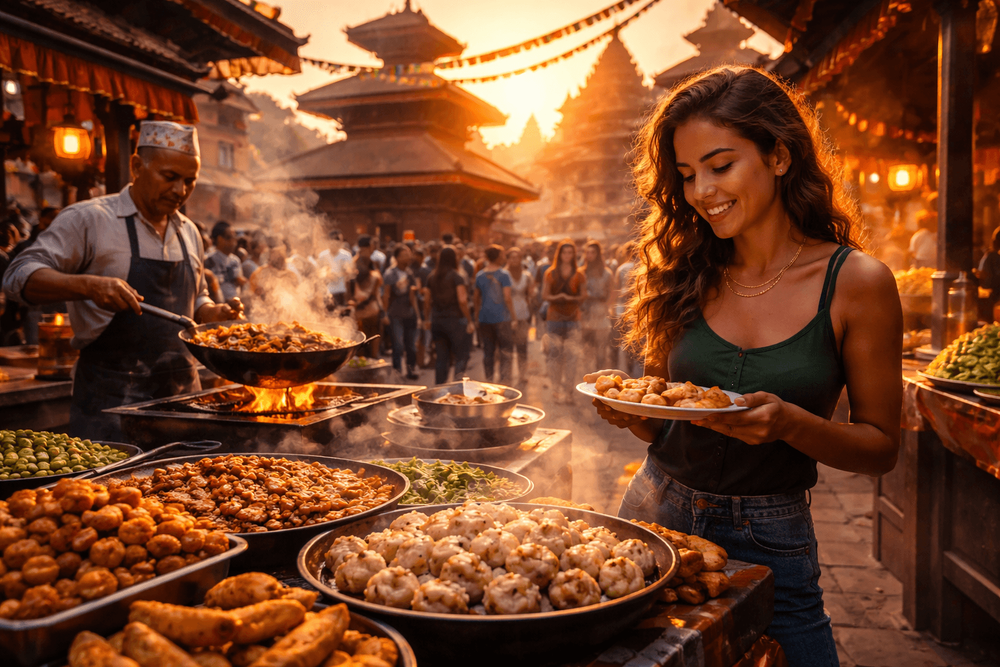
The first hiss of oil hits the cool Kathmandu morning, sending up a curl of spice that mingles with incense from a roadside shrine. A momo steamer exhales, the lid lifted to reveal pleated dumplings, their skins shining like satin. A vendor cracks open a terracotta pot of juju dhau, the “king yogurt” of Bhaktapur, its surface the color of fresh cream. For travelers chasing the best street food in Nepal, this is the country at eye level—brisk, convivial, and endlessly delicious.
Nepal’s street food tells the story of a crossroads: Himalayan kitchens crisscrossed with Newar tradition, Indian subcontinental spice, and Tibetan comfort. It is eaten standing up, shoulder-to-shoulder with commuters and students, and served with the sort of warmth that turns a quick snack into an introduction to the city itself. Those who prefer a guided deep-dive can join curated tastings on Gourmet Food Tours in Nepal: Taste, Learn, and Shop Your Way Through Kathmandu & Beyond, but the joy of discovery is equally present in wandering between markets and metal pots, trusting the aroma of cumin and timmur (Nepal’s native Sichuan pepper) to lead the way.
The Best Street Food in Nepal: 7 Essential Bites
Momos
Arguably Nepal’s most beloved bite, momos are hand-pleated dumplings with fillings that range from chicken and “buff” (buffalo) to paneer, spinach, or mushroom. Steamed momos have a delicate chew; fried or pan-seared kothey bring crisp edges and a caramelized bottom. In the Kathmandu Valley, look for jhol momos bobbing in a warm, tangy tomato–sesame gravy scented with timmur. Expect a side of achar—often tomato, sesame, or chili—whose citrusy numbness is the hallmark of Nepali spice. A plate of 8–12 is standard; they pair beautifully with a glass of sweet, milky chiya (tea) or a light bowl of thukpa (noodle soup) in winter.
Chatamari
Sometimes called “Nepali pizza,” chatamari is a Newar rice crepe with a lacy rim and tender center. Gluten-free by nature, it’s griddled on a flat pan, then topped with beaten egg; minced chicken, buff, or mushrooms; spring onions; and cilantro. The result is airy yet hearty, perfumed with turmeric and a whisper of fenugreek. In Patan and central Kathmandu, chatamari stalls offer a spectrum of toppings; vegan versions skip egg and dairy, leaning on spiced mushrooms, tomatoes, and a slick of mustard oil for richness.
Sel Roti
Sel roti is Nepal’s edible wedding ring to the mornings. This golden hoop—made from fermented rice batter—blooms as it hits ghee or oil, forming a crisp shell around a soft, faintly tangy interior. Its perfume is faintly floral from cardamom. Traditionally prepared for Tihar (Deepawali), sel roti appears year-round at dawn kiosks and tea shops, eaten plain, with a scrape of achaar, or alongside a ladle of potato curry. The best are fried to order; listen for the lively sizzle and watch the cook’s practiced flick of the wrist as batter becomes a perfect circle.
Pani Puri (Golgappa)
A masterclass in texture and speed, pani puri is theater at the cart. The vendor thumbs a hole in a fragile, puffed puri shell, stuffs it with spiced potato and chickpeas, then dunks it into tamarind–mint water. The whole thing is placed directly into the diner’s hand, one by one, a rhythm that continues until you signal “bas” (enough). In Nepal, variations include spicy jhol (broth) and sweeter, tamarind-forward versions; ask for your heat level. If you have a sensitive stomach, request mineral-water pani, or opt for dahi puri (with yogurt) at cleaner-looking stands.
Sekuwa
Sekuwa belongs to twilight. Skewers of marinated goat, chicken, buff, or pork sizzle over charcoal, the fat dripping, the smoke scented with cumin, coriander, garlic, and crushed timmur. The meat is smoky and slightly charred, served with red onion, a fistful of cilantro, and a rough-edged achar. In the Valley, sekuwa appears at “bhatti” grill houses and curbside braziers; in the Tarai plains, it leans spicier. Pair it with chiura (flattened rice) for crunch and an Everest beer or warm tea depending on the season.
Samosas
The triangular stalwart of the subcontinent thrives on Nepali streets. Samosas arrive hot from the oil: crisp pastry encasing mashed potato and peas perfumed with cumin, coriander, and sometimes anise. In busy market lanes, they’re plated with sweet-sour tamarind chutney or a ladle of chickpea curry. Pop one while standing under a temple eave as motorbikes purr past—a perfect mid-morning or late-afternoon holdover.
Juju Dhau
Bhaktapur’s most storied export, “king curd” is yogurt elevated to ceremony. Made from buffalo milk and set in porous clay pots, juju dhau develops a custard-thick texture and faint caramel note, the clay wicking away moisture as it chills. It’s dessert, breakfast, and after-lunch palate cleanser all in one. Vendors lift the woven basket cover to reveal glossy tops; eat it with a wooden spoon and let the cool, lightly tangy cream temper the day’s spice.
Where to Find the Best Street Food in Nepal
Thamel, Kathmandu
Thamel’s lanes wake with sel roti and chai, then pivot to momos and samosas by midday, and to sekuwa smoke at dusk. Look for carts clustering near Mandala Street and the side lanes off JP Road, where pani puri vendors work a steady line. Many stalls are semi-permanent, with glass-fronted display cases; night brings pop-up braziers and the inevitable hiss of skewers meeting flame. For a more structured wander, consider joining a local-led tasting on Gourmet Food Tours in Nepal: Taste, Learn, and Shop Your Way Through Kathmandu & Beyond.
Ason and Indra Chowk (Old Kathmandu)
The Valley’s historic market spine, Ason to Indra Chowk is a street-food syllabus in a single stroll. Jhol momos appear from metal steamers, samosa counters stack golden pyramids, and spice merchants scent the air with roasted sesame and mustard oil. This is where Newar snacks mingle with North Indian favorites; morning is for sel roti and buffalo-milk tea, while afternoons hum with pani puri and chatamari windows cracking eggs onto griddles.
Patan (Lalitpur)
Around Mangal Bazaar and the alleys behind Patan Durbar Square, Newar culinary heritage is on proud display. Chatamari stands are joined by bara (lentil pancakes) stalls, often topped with spiced minces or egg. As evening deepens, small grill houses fan charcoal for sekuwa, the scent drawing in locals from the artisan courtyards. It’s an easy neighborhood for a progressive dinner: start with chatamari, graduate to momos and sekuwa, end with sweet tea on a quiet stone plinth.
Bhaktapur
This medieval city east of Kathmandu is the undisputed home of juju dhau; clay-potted yogurt appears in doorways and corners near Taumadhi and Durbar Squares. Mornings offer warm sel roti and modest momo steamers; afternoons add pani puri carts under fluttering prayer flags. The pace is gentler than Kathmandu—ideal for lingering with a second pot of curd.
Pokhara Lakeside and Old Bazaar
By day, Lakeside’s breezy promenade fuels treks with samosas, momos, and fruit lassis; by night, grills pop up with sekuwa while pani puri carts set up near Hallan Chowk. For Newar specialties like chatamari and bara, head a few blocks inland toward the Old Bazaar, where family-run kitchens ladle out recipes that taste like home.
For travelers who love digging beyond the obvious, this is prime territory for neighborhood detours—see our guide to Off the Beaten Path: A Food Lover’s Guide to Authentic Eats.
How to Eat Like a Local
- Stand and share space. Many carts offer only a narrow counter; it’s normal to stand shoulder-to-shoulder. Step aside when you’re done to make room for the next diner.
- Order by plate—or by the piece. Momos arrive by the plate (usually 8–12). For pani puri, the vendor serves one at a time until you say “enough.” Samosas and sel roti are per piece.
- Don’t over-bargain. Prices are low and often posted. Rounding up a few rupees is appreciated; haggling at food carts isn’t part of the culture.
- Customize with condiments. Achar and chutneys are essential partners—tomato-sesame for momos, tamarind for samosas, raw onions and chili for sekuwa. Ask for mild, medium, or spicy.
- Hands or spoon? Eating with the right hand is common (especially for pani puri and sekuwa with chiura). Many stalls provide spoons; carry tissues or a handkerchief.
- Tea ties it together. Breakfast snacks love chiya; evening grills call for beer or black tea. In summer, yogurt drinks and fresh juices cool the palate.
Lonely Planet Nepali Phrasebook & Dictionary 6: O'Rourke, Mary-Jo, Man Shrestha, Bimal, Pradhan, Krishna
Lonely Planet NepaliPhrasebook & Dictionary is <strong>your passport to the most relevant Nepali phrases and vocabulary for all your travel needs</strong>. Know how to organise your mountaineering
Check Price on AmazonIf a sit-down finale beckons after a night of curbside grazing, these intimate dining rooms deliver candlelit calm: browse Romantic Restaurants in Nepal: Candlelit Rooftops, Lakeside Dinners & Himalayan Views.
Health, Safety and Budget Tips
- Follow the crowd. Busy stalls mean fast turnover. Watch your dish move from griddle or oil directly to your plate.
- Seek sizzle and steam. Favor foods cooked to order—fried, griddled, or steamed—over pre-cut salads. For pani puri, request mineral-water pani if you’re cautious.
- Scan for cleanliness. Look for vendors who use tongs, keep raw and cooked items separate, and have a clean work surface. Avoid chipped plates or visibly murky rinse water.
- Pace yourself. Street food is snack-sized; plan a progressive tasting across neighborhoods rather than a single heavy meal.
- Cash is king. Small bills are best (NPR 20–100 notes). Some urban vendors accept local QR payments (eSewa, Fonepay), but international cards aren’t used at carts; ATMs are common in tourist areas.

GRAYL UltraPress 16.9 oz Water Purifier & Filter Bottle for Hiking, Backpacking, Survival, Travel (Olive Drab)
The 16.9 Fl Oz UltraPress Water Filter & Purifier Bottle <strong>removes ALL global waterborne pathogens (virus, bacteria, protozoa).</strong> As dirty water is pressed through the purifier media,
Check Price on AmazonTypical price ranges (Kathmandu Valley and Pokhara):
- Momos: NPR 150–300 per plate
- Chatamari: NPR 150–350 depending on toppings
- Sel roti: NPR 30–70 per ring
- Pani puri: NPR 50–120 for a set (usually 6–10 pieces)
- Samosa: NPR 30–60 per piece; with chole, NPR 80–150
- Sekuwa: NPR 300–600 per plate (or by weight)
- Juju dhau: NPR 60–150 per clay pot
Dietary Needs and Seasonality
- Vegetarian and vegan: Vegetarians eat richly in Nepal—veg momos, samosas, chatamari with mushrooms or tomato, bara, and plenty of potato curries. Vegans should request oil instead of ghee, skip yogurt (including juju dhau and dahi puri), and confirm no egg on chatamari. Street phrases like “no egg” (anda chaina) and “no milk/yogurt” (dudh/dahi chaina) are widely understood in tourist zones.
- Halal: Chicken and buff are common; some stalls and bhatti display halal signs, especially in mixed neighborhoods and around mosques. When in doubt, ask or choose vegetarian options.
- Allergens to watch: Wheat (momo wrappers, samosas), dairy (ghee, yogurt), nuts and sesame (in chutneys and achar), mustard oil (ubiquitous), soy (occasionally in sauces). Chatamari’s rice base is gluten-free, but toppings vary.
- Seasonal treats: Winter brings thukpa alongside momos and rich, smoky sekuwa. During Tihar, sel roti is everywhere, warm and perfumed. In the Newar calendar, Yomari Punhi (Nov–Dec) celebrates yomari—steamed rice-dough dumplings filled with dark molasses (chaku) or sweetened khuwa—often sold from home windows and tiny stalls. At Maghe Sankranti (mid-January), look for sesame laddus (til ko laddu), taro/yam (tarul), and chaku sweets at market tables. Hot chai is a constant; in summer, clay cups of lassi and ice-cold lemon sodas take over.
Plan Your Food Crawl
Timing is everything. Mornings reward early risers with sel roti, samosas hot from the fryer, and pots of milk tea. Late afternoon into evening is peak time for momos, pani puri, and sekuwa—the city’s appetite crescendos as the light softens and braziers glow.
Osprey Daylite Commuter Backpack, Black
View on AmazonA perfect Kathmandu day might trace a line from Ason’s morning markets (sel roti, samosas) to Patan’s chatamari windows by late afternoon, ending with Thamel’s momos and a final skewer of sekuwa. In Bhaktapur, pace yourself between pots of juju dhau and pause in Pottery Square when the shadows lengthen. In Pokhara, start with a lakeside lassi, break for momos at lunch, and take your sekuwa at dusk when reflections run molten on Phewa Lake.
Where to stay shapes how effortlessly you’ll snack. In Thamel, the KTM Heritage House occupies a restored brick townhouse with carved windows, placing Ason and Indra Chowk within an ambling morning’s reach. Across the river in Lalitpur, the Dewata Bungalow folds around a jasmine-scented courtyard; step out and you’re minutes from Mangal Bazaar’s chatamari stands and charcoal grills. In Pokhara, the Lakeside Pavilions sits just off the water, its balconies catching first light over Phewa—ideal for sunrise tea and an easy stroll to evening sekuwa carts.
For travelers who prefer a local insider to lead the way (and translate spice levels into practice), guided tastings on Gourmet Food Tours in Nepal: Taste, Learn, and Shop Your Way Through Kathmandu & Beyond are excellent; independent explorers will find serendipity in every side lane and shrine-lined square.
What remains after the last bite is a collage of textures: the shatter of pani puri, the velvet of yogurt, the smoke of sekuwa drifting through temple bells at dusk. The best street food in Nepal is not just eaten—it’s lived, a moving feast that strings together markets, courtyards, and curbside counters into one long, generous welcome.
Recommended Travel Gear
Lonely Planet Nepali Phrasebook & Dictionary 6: O'Rourke, Mary-Jo, Man Shrestha, Bimal, Pradhan, Krishna
Lonely Planet NepaliPhrasebook & Dictionary is <strong>your passport to the most relevant Nepali phrases and vocabulary for all your travel needs</strong>. Know how to organise your mountaineering
GRAYL UltraPress 16.9 oz Water Purifier & Filter Bottle for Hiking, Backpacking, Survival, Travel (Olive Drab)
The 16.9 Fl Oz UltraPress Water Filter & Purifier Bottle <strong>removes ALL global waterborne pathogens (virus, bacteria, protozoa).</strong> As dirty water is pressed through the purifier media,
Osprey Daylite Commuter Backpack, Black
Osprey Daylite Plus Commuter Backpack – <strong>Lightweight, Everyday Pack with Laptop Sleeve and Water Bottle Pockets</strong> – Ideal for Work, School, and Travel with Versatile Storage Options, Nig