
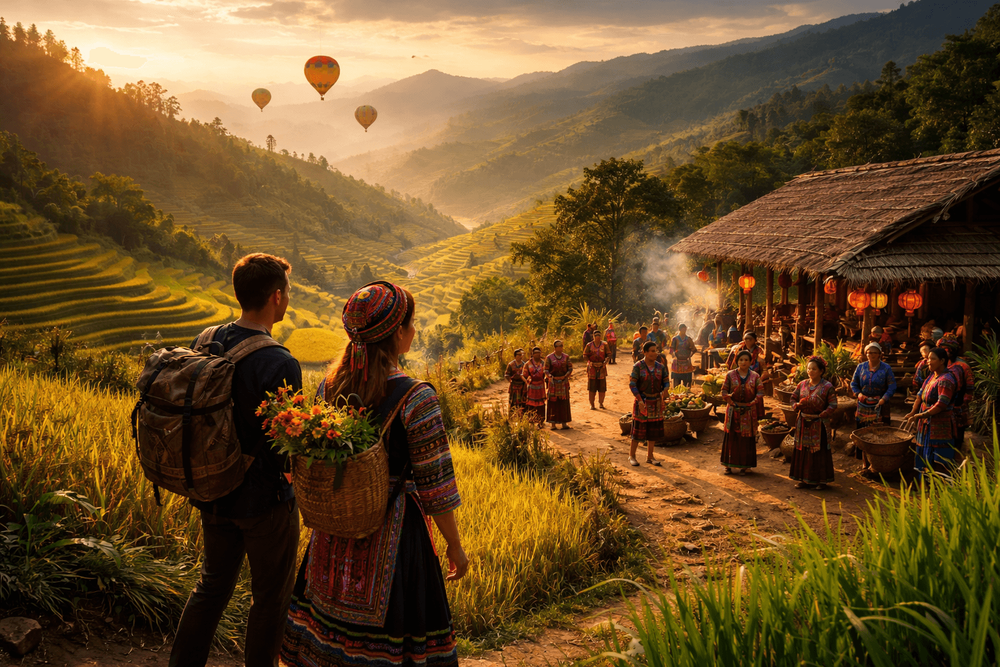
Immersive Cultural Tours in Vietnam: Authentic Homestays, Festivals & Local Traditions
From mountain homestays and lantern-lit festivals to Mekong market mornings, discover how to design cultural tours in Vietnam that are as ethical as they are immersive.
Mood
Cultural Deep-Dive
At first light, a rooster calls across a terraced valley in the north while a cook fans charcoal to life; jasmine-scented steam rises from a pot of sticky rice and a grandmother knots a headscarf before walking to the fields. Far to the south, the Mekong’s brown ribbon stirs awake as canoes glide toward a floating market, the scent of pomelos and pandan leaves perfuming the air. Cultural tours in Vietnam thread these moments together—family kitchens and festival drums, temple courtyards and craft workshops—so that the country’s living traditions are not merely observed, but felt.
Designing Cultural Tours in Vietnam by Region
Vietnam’s cultural mosaic shifts with each bend of the road and river. Choosing the right route is the first act of curation, and the country’s regions offer distinct textures of history, language, foodways, and ritual.
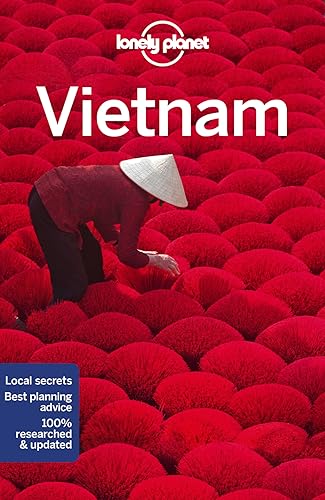
Lonely Planet Vietnam 14 (Travel Guide): Stewart, Iain, Atkinson, Brett, Bush, Austin, Eimer, David, Ray, Nick, Tang, Phillip
<strong>Lonely Planet Vietnam 14</strong> (Travel Guide) [Stewart, Iain, Atkinson, Brett, Bush, Austin, Eimer, David, Ray, Nick, Tang, Phillip] on Amazon.com. *FREE* shipping on qualifying offers. <st
Check Price on AmazonThe North: Mountain Paths and Market Days
In the north, the land rises into granitic folds where ethnic minority communities—Hmong, Dao, Tay, Nung, and Giay among them—have long farmed slopes of maize and rice. Around Sa Pa, Bac Ha, and Ha Giang, weekends mean riotous market days: fabric bolts in celestial indigo, embroidered aprons worked with patient cross-stitch, bundles of fragrant herbs for postpartum baths. Travelers will find homestays that open a door onto family life, where dinner may be corn wine poured into tiny cups, then the creak of bamboo floors as a household settles to sleep.
Beyond the highlands, the Red River Delta shapes an older Vietnamese tale—Confucian temples, pagodas draped in banyan roots, and villages organized around ancient communal houses. Hanoi’s Old Quarter still murmurs with the memory of guild streets: silversmiths, paper-makers, herbalists. Day trips reach Bat Trang, where potters steady vessels on hand-turned wheels, and Duong Lam’s honey-brick lanes, where guardian spirits are honored with incense and fruit.
The Central Coast and Highlands: Imperial Memory and Artisan Hands
Central Vietnam carries imperial pause and seafaring verve. Hue’s moated Citadel and royal tombs record a poetic court culture—the measured cadence of Nguyen dynasty rituals, lacquered palanquins, and mandarin mandarins. In Hoi An’s merchant houses, quayside ledgers once tracked pepper and silk; today, silk weavers, lantern-makers, and tailors sustain that mercantile grace. Just inland, the red-brick towers of My Son whisper of the Cham polities that predated Vietnam’s southward expansion, their Hindu bas-reliefs dappling with forest light.
Turn west to the Central Highlands and the rhythm changes to the gong’s bronze heartbeat—UNESCO-listed intangible heritage among the Bahnar, Ede, and Jarai. Longhouses perch on stilts; communal houses soar with steeply pitched roofs. Coffee estates roll away in precise rows, and ceremonies mark agricultural cycles with music, rice wine, and communal feasts.
The South and the Mekong: River Roads and Khmer Echoes
In the south, the Mekong Delta unspools an aqueous culture: riverine gardens, stilt houses, and canals veining through palms. Cai Rang and Nga Bay stir awake at dawn, when sellers call out mango varieties and fresh noodles steam in boatborne cauldrons. Coconut candy is pulled like taffy in Bến Tre workshops, and rice paper crisps in Sa Đéc courtyards. In Tra Vinh and Sóc Trăng, saffron-robed monks pad barefoot beneath Khmer wats, and November’s Ok Om Bok blesses the moon’s harvest with water-lanterns skittering over ponds.
Ho Chi Minh City frames a contrast: Cholon’s incense-thick temples, vintage shophouses threaded with herbal pharmacies, and Teochew and Cantonese clan halls speaking to a multi-ethnic mercantile past. The south’s energy is kinetic; its rituals are rooted in waterways and migration.
What to Seek: Immersive Experiences That Add Meaning
The most resonant cultural tours in Vietnam are shaped by everyday participation—stirring a pot, tying a loom, learning a greeting—rather than spectating from a van window.
Family Homestays and Village Rhythms
A well-chosen homestay introduces the textures of the day: netting fish at first light, watering a vegetable garden between thunderheads, rolling nem rice paper while stories fold in. In the north, multi-generation wooden houses wrap communal meals around low tables; in the Mekong, breezy riverbank homes hum with hammocks and the slap of laundry.
- Expect simple comforts—mosquito nets, firm mattresses on floor platforms, shared bathrooms kept clean—and genuine hospitality.
- Hosts often speak a few languages; a local guide helps bridge nuance with context around customs, taboos, and the meaning of songs or textiles.
For travelers seeking a nature-framed base with strong community links near Sa Pa, Topas Ecolodge occupies a pair of granite-topped hills, its stone bungalows overlooking terraced folds and minority villages where day treks lead to weavers and tea growers. The views justify every step along its winding approach road.
Hands-On Craft and Cooking Workshops
Across Vietnam, artisanal skills are a living library. In Lao Cai’s valley hamlets, indigo vats breathe like midnight; Hmong dyers stamp beeswax motifs before plunging cloth into the inky bath. In Hue’s Thanh Tien, families coax paper into chrysanthemums for ancestral altars; nearby, Sinh villagers ink woodblock prints with folk deities in poppy reds and pea greens. Hoi An’s craft culture remains tactile—bronze casters in Phuoc Kieu, Thu Bon fishermen knotting nets, and lantern-makers teasing bamboo ribs into glowing orbs.
Cooking classes, when rooted in real markets and grandmotherly technique, illuminate terroir: buffalo mint and sawtooth coriander in the north; turmeric and shrimp paste warming central broths; coconut, lemongrass, and palm sugar rounding out southern stews. The best classes include a market wander, explain ancestral altar offerings, and place dishes in the context of migration and monsoon.
Ceremonies, Festivals, and Ritual Space
Vietnam’s ceremonial calendar is both national and local. Tet, the lunar new year (late January or February), re-knits family bonds amid red envelopes and crackling candied ginger. Perfume Pagoda’s spring pilgrimage perfumes the karst with incense; Hoi An’s monthly Full Moon Festival floats prayers downstream in lantern-lit quiet. In the highlands, Khau Vai’s Love Market (April) gives space to sweethearts separated by clan rules; in Ninh Thuan, the Cham’s Kate Festival (late September–October) honors ancestral kings with drums and temple processions. The Khmer in the Mekong mark Ok Om Bok (November) by thanking the moon for a bountiful harvest.
Ritual spaces—from country pagodas to ancestral houses—ask for modest dress, unhurried attention, and a willingness to listen. A guide who belongs to or works closely with the community ensures presence rather than intrusion.
Markets with Meaning
Market days are archives of taste and texture. In Bac Ha, horse traders gossip near mountains of foraged mushrooms; in Cao Bang, baskets brim with cardamom, bamboo shoots, and river fish. The Mekong’s floating markets are most alive at dawn; small boats called ghe navigate toward sellers whose poles display a sample of what’s onboard—pineapples, watermelons, cabbages—a quiet taxonomy on bamboo.
A thoughtful visit lingers, tastes, and pays fairly. Photograph vendors with consent, purchase directly from farmers and craftspeople, and remember that bargaining is a social dance, not a sport.
For restful nights near Hue’s artistry and imperial ruins, Pilgrimage Village nestles villas beneath frangipani and jackfruit trees, with lacquer and silk details that feel born of local hands. Its quiet gardens make a fitting counterpoint to the day’s sensory richness.
Downriver in the Delta, Azerai Can Tho floats in botanical calm on a private islet, ideally placed for early-morning forays to Cai Rang and for slow afternoons learning to wrap bánh xèo in the shade of a mango tree.
Timing, Pacing, and Practicalities
Thoughtful pacing turns a good trip into a meaningful one. Cultural depth rewards unhurried days and seasonal awareness.
When to Go
- North (Hanoi, Sa Pa, Ha Giang): Best from September to November and March to May, with clear skies and cool-to-mild temperatures. Rice terraces glow chartreuse in June plantings and turn honey-gold at September–October harvest.
- Central Coast (Hue, Hoi An, Da Nang): February to August is generally drier; September to December can bring typhoons and heavy rain. My Son and craft villages are loveliest in early morning light.
- Central Highlands: November to March is dry and clear; gong festivals and coffee harvest activity often cluster in the cool season.
- South (Ho Chi Minh City, Mekong Delta): Dry from November to April; the wet season (May to October) brings emerald paddies and dramatic cloudscapes. Floating markets operate year-round, busiest at dawn.
Festival-focused travelers should anchor trips around Tet (late Jan/Feb), Hue Festival (biennial, typically spring or early summer), Hoi An’s monthly lantern nights, Cham Kate (late Sep–Oct), and Khmer Ok Om Bok (Nov). Dates shift with the lunar calendar; local confirmation is essential.
How Long to Stay
- 7–10 days: A focused sampler—Hanoi and the northern highlands, or Hue–Hoi An paired with the Mekong.
- 12–16 days: North–Central sweep with homestays, a craft corridor around Hue–Hoi An, and a Delta finale.
- 18–21+ days: Add the Central Highlands, extra market days, and time to return to a workshop for a second lesson—the moment when familiarity begins to bloom.
Travelers planning a bespoke route or seeking vetted local experts can lean on this curated overview: Vietnam Unlocked: A Curated Guide to Exclusive, Bespoke Tours. Independent travelers weighing pacing, routes, and safety basics will find further nuts-and-bolts in Vietnam Adventure Essentials: Where to Go, When to Go, and How to Do It Safely and the budget-minded The Essential Vietnam Backpacking Route: 2–6 Week North-to-South Guide.
Getting Around and Comfort Levels
- Trains and flights knit the backbone: Hanoi–Hue–Da Nang–Nha Trang–Ho Chi Minh City runs are frequent; overnight trains add romance and efficiency. The Reunification Express isn’t fast, but it’s a window into daily life.
- Road travel in the far north (Ha Giang Loop) is serpentine and spectacular; travelers prone to motion sickness should brace for switchbacks. Local drivers familiar with village etiquette are strongly recommended.
- Homestays range from rustic to boutique; ask operators to match comfort preferences, dietary needs, and accessibility requirements. Eco-lodges and restored villas offer cultural proximity with soft landings.
Booking Tips
- Choose depth over breadth: prioritize two or three regions, leave white space for serendipity, and schedule workshop time twice—the second visit reveals muscle memory and conversation.
- Market days and festivals set the tempo; book around them. For Sa Pa and Ha Giang, Sunday markets are anchors; in the Delta, plan to arrive at Cai Rang before sunrise.
- Pair licensed, community-rooted guides with specialized hosts (a master weaver, a temple caretaker, a chef trained by a beloved auntie). The best itineraries align personalities as much as places.
Entry, Health, and Safety
- Visas: Vietnam’s e-visa system currently allows many nationalities to apply online for stays up to 90 days, with multiple entry options; always verify the latest rules before travel.
- Health: Standard travel vaccinations, food and water hygiene, and mosquito precautions are part of smart planning; see Vaccinations for Southeast Asia: What You Need Before You Travel for an overview and consult a travel clinic.
- Safety: Vietnam is generally welcoming and safe; petty theft can occur in crowded areas. Respect traffic realities—motorbikes rule the streets. Licensed boats and life jackets are a must for river excursions. Additional advice sits in Vietnam Adventure Essentials: Where to Go, When to Go, and How to Do It Safely.

Sawyer 20% Picaridin Insect Repellent 4-Ounce Twin Pack Lotion and 4-Ounce Premium Pump Spray
View on AmazonTraveling Responsibly: Ethics on the Ground
Cultural tours in Vietnam are most rewarding when benefits reach the custodians of tradition.

GRAYL GeoPress 24 oz Water Purifier Bottle - Filter for Hiking, Camping, Survival, Travel (Bali Blue)
Versatile, fast, and ridiculously easy to use — the 24oz GeoPress Water Filter & Purifier Bottle <strong>requires zero setup, no sucking or squeezing, and makes 24 fl oz (710 ml) of clean purified
Check Price on Amazon- Choose community-based operators who publish fair wages, transparent donations, and training programs. Ask where fees go, who leads, and how communities decide what to share.
- Pay fairly for labor and time—cooking classes, weaving lessons, ceremonial participation. Tipping is appreciated; treat it as gratitude for skill and care rather than bargaining leverage.
- Photograph respectfully. Ask before raising a camera—especially during rituals, in minority villages, and around children. A portrait becomes a conversation, not a commodity.
- Dress modestly in temples and private homes; remove shoes when indicated. Learn basic greetings in Vietnamese and, when possible, in minority languages; even a simple xin chào offered with a bow of the head opens doors.
- Shop with intention. Favor cooperatives and documented provenance: handwoven brocades with natural dyes, carved wooden utensils from certified sources, contemporary ceramics signed by the artist. Skip wildlife products, antiquities of unclear origin, and mass-produced knockoffs. Bargain with a smile; paying a little more than the lowest price is a vote for continuity.
- Tread lightly. Keep music low in villages, minimize plastic, refill water bottles where possible, and choose slower travel modes—train over plane, bicycle over van—when schedules allow.
Crafting a Journey That Lingers
The finest cultural tours in Vietnam feel less like a checklist and more like a conversation carried over many tables—an anchovy-salty bowl of bun bo Hue, a boat ride under nipa palm fronds, a lesson in warp and weft that reveals a grandmother’s patience. They honor place and people in equal measure, and they make room for silences: the hush inside a temple, the thrum of cicadas at dusk, the hush after a gong’s last shimmer fades across a highland lawn.
Long after the passport stamp dries, memory returns to small details: a child’s chalk drawings on a cement stoop, the citrus lift of lemongrass on a cutting board, the slow, precise knot that secures a fisherman’s net. Vietnam’s living culture resides there—in gestures, flavors, and shared time—and the right journey lets those moments widen into understanding.
Recommended Travel Gear
Lonely Planet Vietnam 14 (Travel Guide): Stewart, Iain, Atkinson, Brett, Bush, Austin, Eimer, David, Ray, Nick, Tang, Phillip
<strong>Lonely Planet Vietnam 14</strong> (Travel Guide) [Stewart, Iain, Atkinson, Brett, Bush, Austin, Eimer, David, Ray, Nick, Tang, Phillip] on Amazon.com. *FREE* shipping on qualifying offers. <st
GRAYL GeoPress 24 oz Water Purifier Bottle - Filter for Hiking, Camping, Survival, Travel (Bali Blue)
Versatile, fast, and ridiculously easy to use — the 24oz GeoPress Water Filter & Purifier Bottle <strong>requires zero setup, no sucking or squeezing, and makes 24 fl oz (710 ml) of clean purified
Sawyer 20% Picaridin Insect Repellent 4-Ounce Twin Pack Lotion and 4-Ounce Premium Pump Spray
Sawyer Picaridin repellent is praised by organizations like Consumer Reports and the New York Times WireCutter for its <strong>effective, comfortable protection against mosquitoes that may carry West