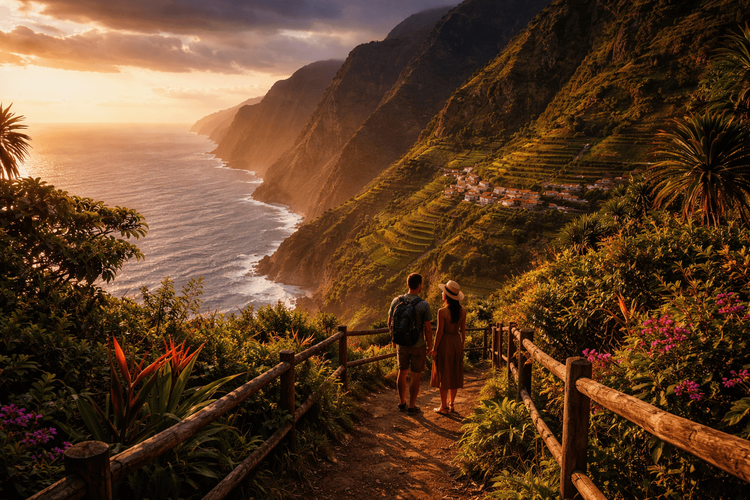

Madeira for Hikers Who Don’t Want to Choose Between Mountains and Wine
Hike ridgelines, trace laurel-forest levadas, and taste volcanic wines on a design-forward 5–7 day Madeira route. This spring-ready guide links cliffs, trails, and cellars.
Trip Length
5-7 days
Best Time
April–June
Mood
adventure
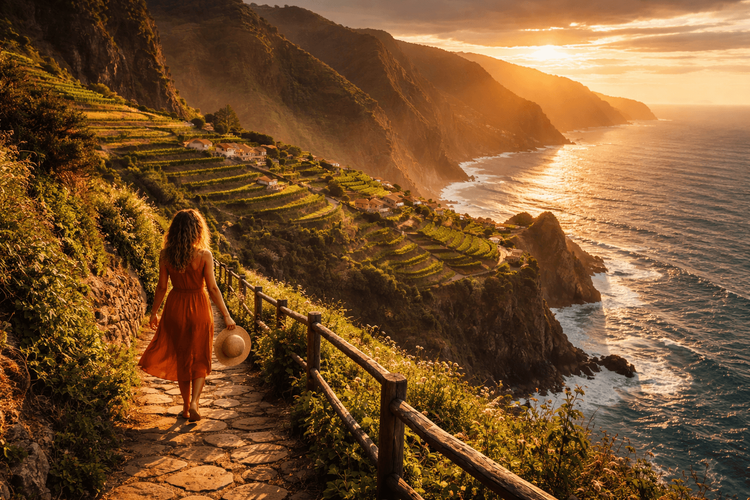
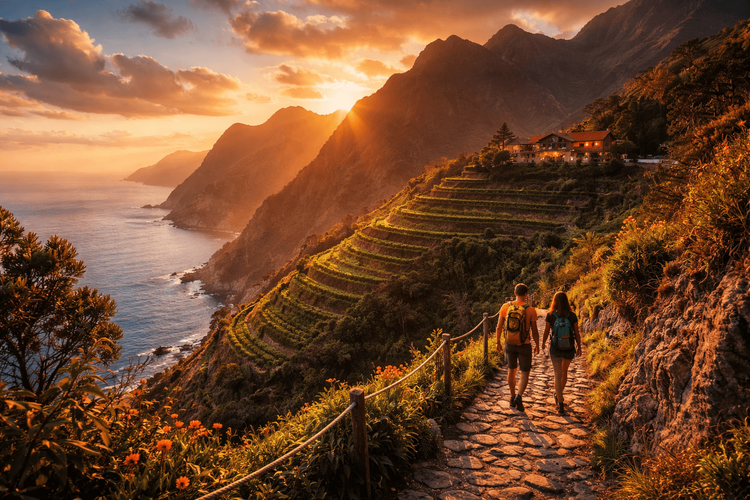
Dawn smolders pink over Pico do Arieiro, and the Atlantic turns to hammered silver a mile below. By mid-morning you’re threading a cool laurel-forest levada where orchids sprout from dripping walls, and by sunset you’re tasting a nutty Sercial poured in a centuries-old lodge. If that sounds like your sweet spot, this Madeira hiking travel guide maps a compact, design-forward route that braids cliffside stays, iconic walks, and volcanic wine country into one week.
Why April–June Works
Madeira’s microclimates reward spring travelers. From April to June, the mountains often sit above a rolling sea of clouds while the levadas—those stone-lined irrigation channels that double as trails—are at their greenest. Wildflowers rim the Paul da Serra plateau, the Ponta de São Lourenço headland shows off its rust-and-ochre ridges without midsummer heat, and the sea is calm enough for post-hike swims on black-sand coves. Daylight stretches long, and you’ll find space on popular routes if you start early.
Getting There and Getting Around
Flights land at Funchal’s Cristiano Ronaldo Madeira International Airport (FNC), with frequent connections from Lisbon and other European hubs. From the airfield, a 20–30 minute drive puts you in Funchal. Taxis and rideshares are easy to find; savvy hikers pick up a compact rental car at the airport—tunnels make driving efficient, though gradients can be steep on older coastal roads.
Trailheads are scattered across the island. Public buses reach some, but schedules can be limiting. For the ridge walk between Pico do Arieiro and Pico Ruivo, pre-arrange a taxi or shuttle to avoid an out-and-back; many drivers know the drill. Parking at popular levadas fills by mid-morning, so start at first light when you can.
What to pack? Keep it specific: a light waterproof for laurel-mist, a headlamp for tunnels, and shoes with confident grip for stone steps. You won’t need technical gear for the classic routes, but you will want layers—trade winds can flip conditions in an hour.
Madeira hiking travel guide: A 5–7 Day Route
This island-scale circuit flows clockwise from Funchal, linking three big experiences—ridgelines, levadas, and wine—while sleeping in design-forward digs with Atlantic views.
Day 1: Funchal Arrival, Coastal Warm-Up Shake off the flight with a shoreline stroll on Funchal’s promenade and a swim off volcanic rocks where ladders dip into clear water. Stay in a cliffside hotel perched above the city—think glass and basalt, a pool set like a lookout, clean lines framing the ocean. As the light fades, sample your first fortified pour in one of the old-town wine lodges; it’s a primer on the island’s grapes (Sercial, Verdelho, Boal, Malvasia) and on the heat-aging methods that give Madeira its signature longevity.
Day 2: Ponta de São Lourenço Ridgeline Start early on the island’s eastmost peninsula for a stark, cinematic hike across windswept ridges where lava flows read like pages in a geology book. The track undulates above coves the color of oxidized copper; lizards skitter over sun-warmed rock; spray freckles your calves. On the return, detour to Machico for a lazy lunch on the waterfront, then drift back to your cliffside base for a plunge and a balcony siesta.
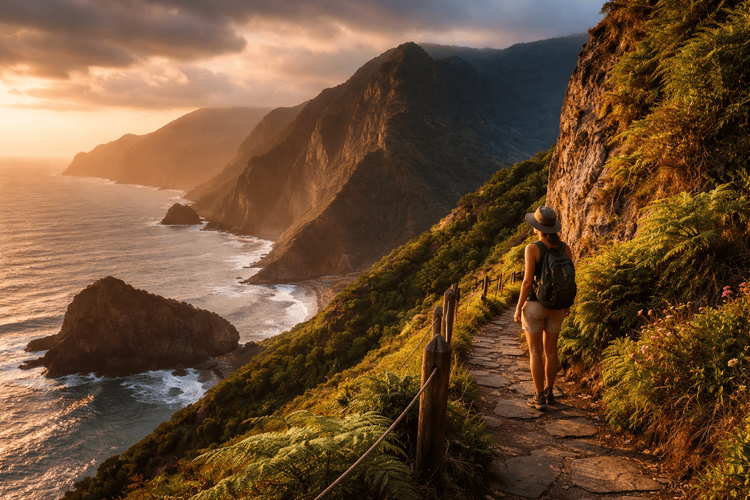
Day 3: Pico do Arieiro to Pico Ruivo This is the headline act: a high-wire traverse along the island’s roof. Stone staircases switchback across sheer faces, tunnels cut through pumice-dark rock, and steel cables guard the most exposed ledges. Start before sunrise at Arieiro to catch cloud inversions turning peaks into islands; finish at Achada do Teixeira after tagging Ruivo’s summit. Sleep in a mountain-facing guesthouse on the island’s north side—wood, slate, and wool throws—with windows that pull the ridgeline into your room.
Day 4: Laurisilva Levada Day Trade drama for immersion in the UNESCO-listed laurel forest. Choose a classic route like the Caldeirão Verde or the Levada do Rei: narrow paths hugging mossy walls, tree ferns like umbrellas, water threading everywhere. Pack a simple picnic—local cheese, sweet bread, oranges from a roadside stand—and let the forest set the tempo. In the afternoon, drive to the north coast for saltwater swims: Seixal’s volcanic-sand beach and nearby natural pools offer an elemental reset. Overnight along this coast, where minimalist inns slip between terraced vines and the sea.
Day 5: Rabaçal Plateau and the West Coast The Rabaçal area delivers the archetypal levada experience with waterfalls, highland meadows, and cool laurel corridors. Go early for quieter paths, then point your car west. The coastal villages of Jardim do Mar and Paul do Mar sit beneath towering cliffs, with basalt promenades ideal for an evening wander. Check into a contemporary, cliff-hugging hideout where balconies seem to hover; sleep to the percussion of waves.
Day 6: Wine Country, North and City Morning light slants across terraces on the north coast near São Vicente and Seixal, where vines climb stone-walled poios and Atlantic spray salts the air. Some growers here produce fortified wines; others experiment with unfortified whites and reds shaped by volcanic soils. Book tastings ahead—rooms are small by design. Return to Funchal for a deeper dive into Madeira’s fortified tradition at downtown lodges, moving from lean, citrus-edged Sercial to richer Boal and Malvasia. Pair sips with laps around tiled courtyards and cellars lined with timeworn barrels.
Day 7 (Optional): Cabo Views or Canyons If you’ve got the extra day, pick your finish: a vertiginous glass platform high above the sea at Cabo Girão, a short spin along the Levada do Norte for mellow, sunlit walking, or a guided canyoning session in a fern-packed ravine if conditions allow. Wrap with a slow dinner back in Funchal; order fish landed that morning, charred simply, and toast the island with a final thimble of Verdelho.
Use this Madeira hiking travel guide as a template—swap days to suit weather, linger where the light is best, and always start early for the big-ticket hikes.
Where Wine Meets Design
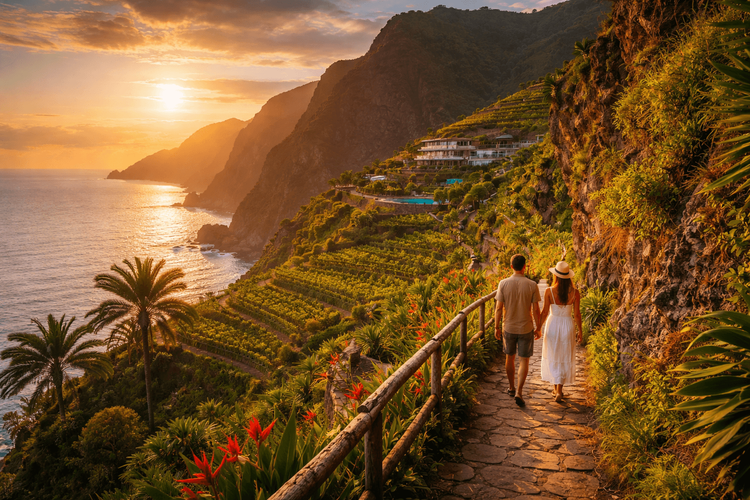
Madeira’s wine story is unlike anywhere else: grapes grown on terraced volcanic soils, fortified with grape spirit, then matured with heat and time until they glow with flavors of citrus peel, walnut, and burnt sugar. The aesthetic mirrors the process—pared-back spaces, dark woods, stone and glass in conversation with the landscape. Seek cliffside stays with floor-to-ceiling windows and infinity pools tucked into basalt outcrops; in Funchal, look for historic buildings refitted with contemporary lines, where lobbies open into tiled courtyards and tasting bars sit steps from city gardens.
For daytime, vineyards on the north flank feel elemental—wind, stone, vine, ocean. Even if you can’t tour a producer, driving the terraces alone teaches you plenty about the island’s grit and grace. In town, tasting flights introduce the island’s matrix of sweetness levels; a small pour goes a long way, so pace your palate between walks.
What to Expect on Arrival
- Trails: Madeira marks many routes clearly, and popular walks are well-trodden. Some levadas have railings; others do not. If exposure isn’t your thing, choose forested sections and ask locally about current conditions or closures after heavy rain.
- Weather: It changes fast. South coast sun can turn to laurel fog an hour later. Carry a light shell, and plan ridges for stable forecasts.
- Driving: Tunnels knit the island together; older cliff roads can be narrow with tight switchbacks. Give yourself time—and daylight—for transfers between trailheads.
- Safety: Tunnels on major hikes are usually passable but dark and wet. A headlamp and a warm layer are not optional extras here; they’re part of the Madeira kit.
The Takeaway
Madeira compresses contrasts—alpine drama above an equatorial-blue ocean, rainforest hush a half-hour from sculptural urban hotels, centuries-old wines poured after salt-stiff swims. Follow this Madeira hiking travel guide in spring, when flowers spike the levadas and the Atlantic behaves, and you’ll touch the island’s edges without ever feeling rushed. The paths are set, the terraces wait, and the next glass is always poured with a view. Time to book the flight and claim your ridge at sunrise.
Where to Stay

Aqua Natura Bay
Aqua Natura Bay is a 4-star Madeira Island hotel known for its scenic location and high guest ratings, offering comfortable stays with easy access to the island’s natural attractions.

Dom Pedro Madeira
Dom Pedro Madeira is a 4-star hotel on Madeira Island, offering easy access to local sights and a comfortable stay, with a guest rating of 8.6/10.

Saccharum - Resort and Spa - Savoy Signature
Clifftop 5-star resort on Madeira Island with Atlantic views, Saccharum - Resort and Spa - Savoy Signature offers a spa, multiple pools, and contemporary design near Calheta’s waterfront.

TURIM Santa Maria Hotel
TURIM Santa Maria Hotel is a 4-star stay in Madeira Island with a central location, modern rooms, and easy access to local sights, dining, and the waterfront, earning a strong 9.1/10 guest rating.

Melia Madeira Mare Hotel
Melia Madeira Mare Hotel is a 5-star stay on Madeira Island with easy access to the coast, offering contemporary rooms, sea views, a pool, spa, and dining options, and it earns an 8.9/10 guest rating.