Puglia’s Masseria Revival: Sleep, Swim, and Dine Between Two Seas
Olive groves, cool pools, and chef-led dinners: Puglia masseria hotels turn farm life into a slow, indulgent stay between the Adriatic and Ionian, best April–June.
Trip Length
5-7 days
Best Time
April to June
Mood
culinary
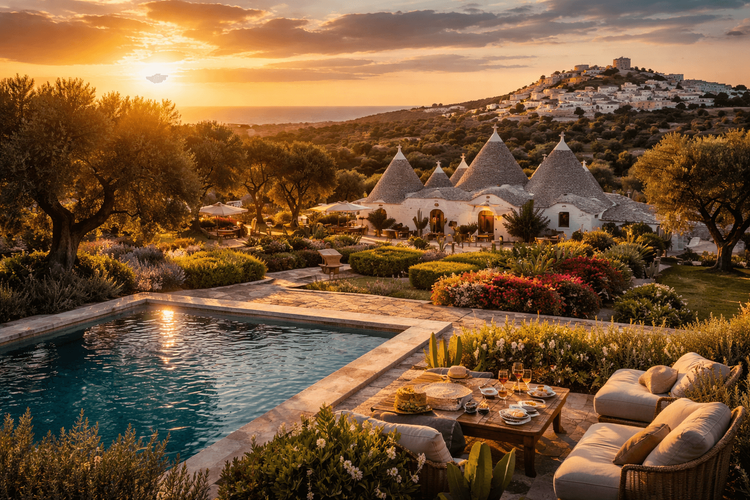
At golden hour, a tray of still‑warm focaccia lands beside your lounger, the scent of tomato leaves mixing with sea breeze and crushed wild thyme. A copper pan of orecchiette will follow, glossy with local olive oil made a stone’s throw from your room. This is the slow, delicious cadence of Puglia masseria hotels—restored farm estates where days pivot between the pool, the table, and short drives to the Adriatic or Ionian for a saltwater reset.
The Allure of Puglia Masseria Hotels
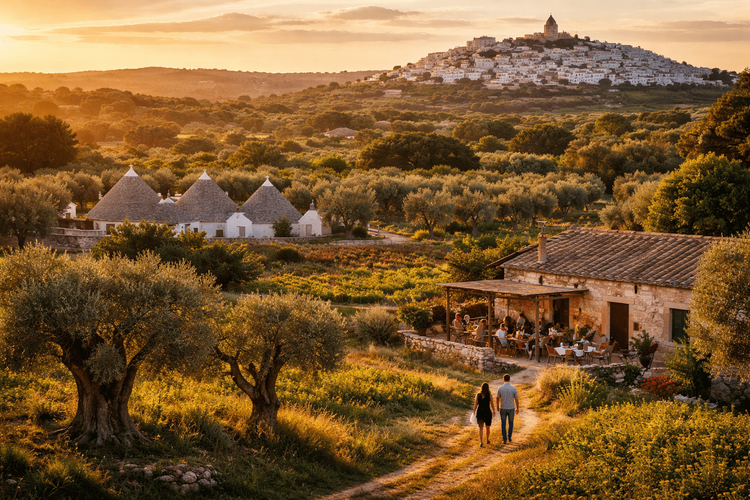
Across the low hills of the Valle d’Itria and down into Salento, these historic farmhouses have been carefully reimagined as discreet retreats. Thick limestone walls hold cool air even in high summer; courtyards open onto cacti and ancient olives; and new life circulates through herb gardens and citrus groves. The shift is subtle but seismic: Puglia masseria hotels treat the region’s agricultural soul not as a backdrop but as the main event.
Expect a gastronomic focus. Breakfast might include ricotta drizzled with last autumn’s oil; lunch, a ribboned salad of fennel and oranges; dinner, seafood kissed by a wood fire. Many masserie partner with local producers for tastings—single‑estate olive oils, primitivo and negroamaro wines, sheep’s‑milk cheeses—and arrange private chef nights under string lights in the aia, the traditional threshing courtyard. You’ll find yourself lingering long after dessert, lulled by cicadas and the occasional distant bell.
Where to Base Yourself: Valle d’Itria, Coast, and Salento
Valle d’Itria: Between whitewashed hill towns like Ostuni, Cisternino, and Martina Franca, masserie dot rolling farmland stitched with dry‑stone walls. It’s ideal for a first‑timer’s base: easy coastal access, ultra‑scenic country lanes, and short hops to daily markets.
Adriatic Coast: Think limestone cliffs, pebble coves, and pretty seaside promenades. Many farmhouses sit within a short drive inland, balancing pool days with sea swims. Morning dips, late lunches, and an afternoon siesta set a pace you’ll quickly adopt.
Salento and the Ionian: South of Lecce, the land flattens and the light softens. The Ionian’s calmer, shallower waters invite long, lazy swims. Olive groves spread in every direction, and masseria stays here often fold in seafood feasts and sunset bike rides through the fields.
A 5–7 Day Culinary Plan
Day 1–2: Valle d’Itria Arrival and Olive Oil Immersion
- Check into your masseria and shake off travel by the pool. As evening cools the courtyards, book an on‑site olive‑oil tasting. You’ll compare varietals, learn to spot peppery finishes, and hear how the harvest shapes local life.
- The next morning, explore a nearby hill town market for seasonal produce—artichokes in spring, cherries by early summer—and return for a light lunch on the terrace. Consider a hands‑on orecchiette lesson with the kitchen team.
Day 3: Adriatic Sea Day and Coastal Lunch
- Drive to a rocky cove along the Adriatic for a swim in clear, chalk‑blue water. Follow with a simple coastal lunch—grilled fish, lemon, a tumble of greens—before retreating to your farmhouse for a shaded nap. Aperitivo at sunset with taralli and olives becomes a ritual you’ll genuinely anticipate.
Day 4: Trulli Landscapes and Wine
- Wander through conical‑roofed trulli hamlets around Alberobello and Locorotondo, then visit a countryside cantina for a tasting of primitivo and crisp local whites. Back at the masseria, an evening garden dinner might feature handmade cavatelli, slow‑cooked ragù, and citrus sorbet.
Day 5–6: South to Salento
- Relocate to a Salento masseria for a different rhythm—larger skies, slower evenings, Ionian beaches. Plan a cooking session focused on seafood and seasonal vegetables. Think zucchini flowers, clams, and the kind of tomatoes that require little more than sea salt.
- Spend a day in Lecce admiring its honey‑stone architecture before returning to your pool for a twilight swim. If you have the energy, join a tarantella‑inflected music night hosted by locals; if not, a nightcap on your terrace under a star‑heavy sky does the trick.
Day 7: Ionian Drift and Farewell Table
- Let your final day unfold with a late morning swim on the Ionian side and a long lunch back at the masseria. A private chef’s tasting menu—olive oil at every turn—makes for a fitting goodbye.
Pool, Sea, Table: The Daily Rhythm
A typical day in Puglia slips into a pattern worth honoring. Wake to espresso and figs, then claim a sun‑striped lounger by the pool. By mid‑morning, drive to the coast for a swim, returning in time for a light masseria lunch—burrata with tomatoes, grilled vegetables, maybe a slice of focaccia barese. Afternoons are for shade and books, or a bike ride between olive trees to catch the breeze. Come evening, a glass of rosato appears as if by instinct. And because Puglia masseria hotels put food at the center, dinners feel like gatherings rather than meals: candlelit, generous, lingering.
How to Get There
Two airports serve the region: Bari (north) and Brindisi (south). Direct flights from elsewhere in Italy and across Europe are common in spring and summer. Trains connect major cities to Bari and Lecce; from there, local lines and buses reach many towns, though you’ll want a rental car for freedom—masserie are, by nature, rural. Roads are straightforward, and drives between the Valle d’Itria and Salento are comfortably within a half‑day, leaving time for a late swim.
If you’re arriving by long‑distance train, plan to pick up a car at Bari Centrale or Lecce. Navigating to countryside properties is part of the charm: whitewashed signposts, stone walls, a glint of sea to one side, silver olive leaves to the other.
What to Expect on Arrival
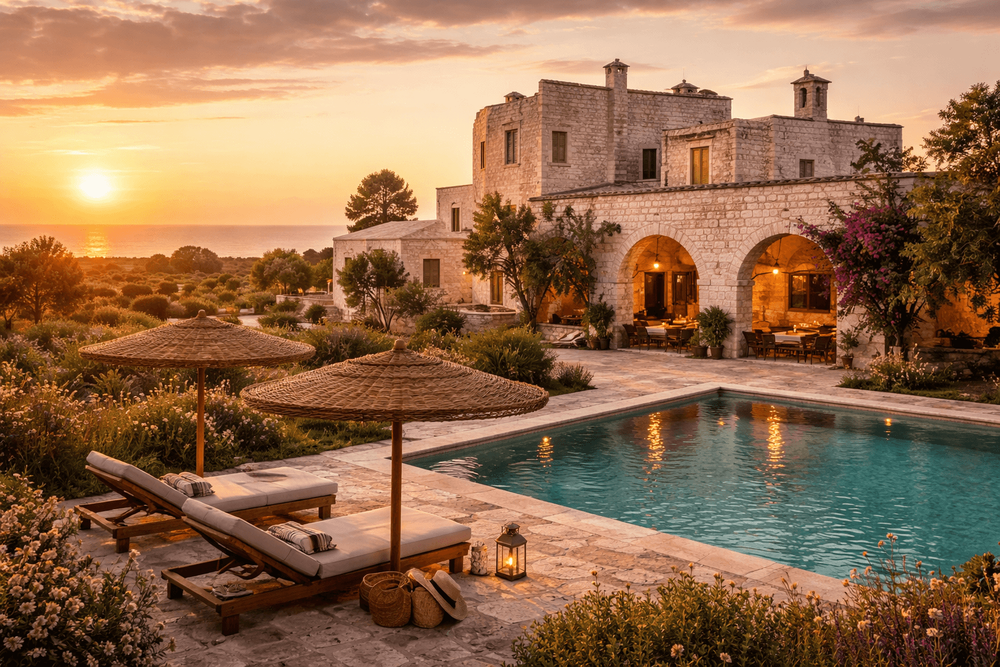
Most masserie are approached via gravel lanes bordered by fig and olive trees. You’ll step into a cool courtyard—sometimes with an ancient olive press on display—and be offered water, an espresso, or perhaps a glass of local wine while staff walk you through the property. Rooms typically feature thick stone walls, vaulted ceilings, and simple, handsome design—linen, pale timber, hand‑thrown ceramics. Many estates have saltwater pools, shaded pergolas, and small wellness corners. Don’t be surprised if breakfast lingers; jam, honey, and oil often come from on‑site or nearby producers.
Dinner arrangements vary. Some masserie host fixed‑menu evenings a few times a week; others coordinate private chefs who cook just for your party in the courtyard or beneath citrus trees. Cooking classes, olive‑grove picnics, and seasonal harvest activities are easy to arrange through the front desk. Bring curiosity; the region’s hospitality shines brightest when you ask questions about the farm, the olives, and the recipes.
When to Go
April through June is the sweet spot. Spring wildflowers paint the fields, markets brim with artichokes and peas, and the water warms enough for comfortable swims by late spring. Days are long and clear without the high‑summer intensity. By June, poolside hours stretch lazily, and evenings are tailor‑made for courtyard dinners. If you favor fewer crowds and still want plenty of sunshine, late September into October also treats travelers well, though the culinary focus of this piece and the brief align squarely with April–June.
Why This Revival Matters
The renaissance of farmhouse stays isn’t simply a design trend; it’s a recalibration. Puglia’s agricultural traditions—olive oil, wheat, vegetables, and coastal fishing—anchor the experience. By choosing this style of lodging, you’re supporting small producers, tasting place with every plate, and finding a slow rhythm that feels authentic to the heel of Italy. Puglia masseria hotels let the land lead, and the pleasure is in following its pace.
Tips for a Seamless Stay
- Reserve early for spring and early summer, especially if you want a room with a private terrace or a courtyard view.
- If food is your focus, ask about on‑site tastings, garden tours, and the possibility of a private chef night before you book; availability varies by property and season.
- Plan your days around the table and the tides: morning swims on the coast, long lunches back at the estate, and restful late afternoons before dinner.
Between two seas, under olive trees, and beside cool stone, Puglia rewards the traveler who likes a chair pulled up to the kitchen pass. The farm and the table are one here. Start sketching your spring dates, and leave room in the margins for one more long lunch—you’ll want it.
Where to Stay

Charming Trulli
Charming Trulli is a 3-star property in Puglia offering traditional stone trulli accommodation close to Alberobello, Ostuni and the Salento coast; it holds a 9.6/10 guest rating and provides easy access to UNESCO sites, regional towns and beaches.

Trulli Soave
Trulli Soave is a 3.5-star trulli-style property in Puglia, rated 8.6/10, offering traditional stone rooms and a convenient base for exploring Alberobello, Ostuni and the towns and coastline of the Salento region.

Masseria Pentima Vetrana Resort
Masseria Pentima Vetrana Resort is a 4-star stay in Puglia, set between Alberobello, Ostuni, and Salento. It offers a countryside base for exploring the region and earns an 8.5/10 guest rating.

Romantic Trulli
Romantic Trulli is a 4-star stay in Puglia’s Alberobello, Ostuni, and Salento area, offering easy access to the region’s trulli villages, Adriatic beaches, and hill towns, with a 9/10 guest rating.

Hotel Ramapendula
Hotel Ramapendula is a 4-star stay in Puglia, near Alberobello, Ostuni and Salento, with a guest rating of 8.8/10. It offers a convenient base for exploring the region's trulli towns, countryside and Adriatic coast.