
Belarus’ Must-See Landmarks: Castles, Memorials & Natural Wonders
UNESCO castles, solemn memorials, and a primeval forest: a cultured, practical guide to Belarus’s most emblematic landmarks—and how to visit them well.
Mood
Cultural Deep-Dive
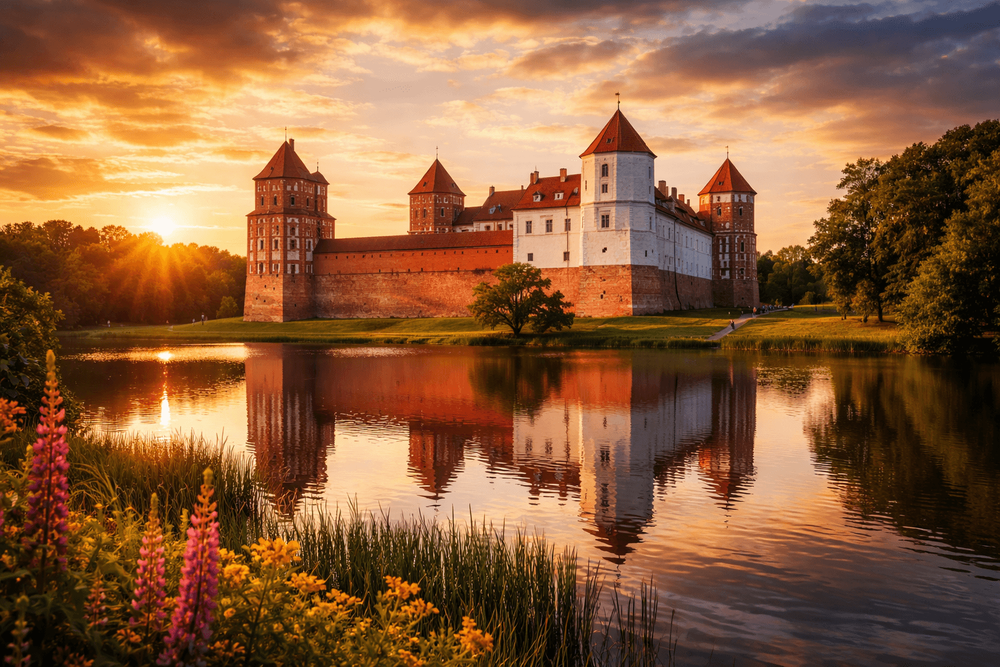
At sunrise, Mir Castle’s red-brick towers glow like embers, their reflections stitching a perfect bastion across a still moat. Swallows skim the water; dew beads the grasses; a faint bell drifts from the village. Here, in one frame, the famous landmarks in Belarus resolve into a story of resilience and refinement—fortresses against invasion, palaces of aristocratic ambition, sanctuaries of faith, and a forest so old its oaks once shaded medieval riders. Travelers will find a compact country of big narratives, where World Heritage castles share the stage with solemn memorials and a primeval woodland haunted by bison.
For a broader snapshot of what else to see between these icons, browse our guide to the Top Attractions in Belarus — Must‑See Sights & Unique Experiences.
Famous Landmarks in Belarus: The Icons

Belarus: Roberts, Nigel
This new, thoroughly updated edition of Bradt’s Belarus remains <strong>the only full-blown standalone guide to the most westerly of the constituent republics that formed the Soviet Union prior to the
Check Price on AmazonMir Castle (Mir)
A UNESCO World Heritage site, Mir Castle is Belarus’s Gothic-Renaissance star. The Radziwiłł princes began it in the early 16th century as a bastion of brick and battlements; later generations softened its martial silhouette with palatial wings and an Italianate garden. Today, its five towers rise above a mirror-still lake and a ribbon of lime trees, offering a study in symmetry and sovereignty. Inside, museum rooms track the Radziwiłł legacy through portraits, armory, and courtly décor.
Historical resonance: Mir has endured sieges, partitions, and wars. The layers show: arrow slits in one wing, stucco frills in another—Belarus’s tumult and tastes fossilized in brick.
Nesvizh Castle & Park (Nesvizh)
Twenty miles east, Nesvizh Castle—also UNESCO-listed—unfurls as a princely residence and landscaped fantasy. The Radziwiłłs moved their main seat here, commissioning a grand palace complex whose courtyard glints with heraldry. The surrounding parkland curls around lakes, alleys of old lime trees, and island pavilions where couples idle on benches. Baroque flourishes frame courtyards; galleries glide into orangeries; the estate church across the road shelters Radziwiłł tombs.
Cultural note: Nesvizh was a nerve center of the Polish–Lithuanian Commonwealth. Its library, ateliers, and political salons shaped the region’s intellectual climate.
Brest Hero-Fortress (Brest)
At the border city of Brest, the fortress is more than a landmark—it’s a national shrine. The monumental “Courage” sculpture thrusts from earth like a hewn cliff, its grim face set against the sky. Arched gates and battered ramparts recall the 1941 defense against the Nazi invasion, a siege etched into Soviet and Belarusian memory alike. Eternal flames flicker; names are carved in stone; the river murmurs past.
Why it matters: The site condenses the country’s World War II ordeal into a visceral topography, where music of marching feet is stilled by silence and swallows nesting in brick vaults.
Belovezhskaya Pushcha National Park (near Kamenyuki)
In the southwest, the Belarusian half of the Białowieża Forest—also a UNESCO World Heritage site and Biosphere Reserve—preserves a slice of Europe’s last primeval lowland forest. Moss cloaks fallen trunks; wolf tracks stitch sandy paths; European bison browse in shadows like relics from cave art. Boardwalks slip into fern labyrinths; foresters point out oak patriarchs whose boles have witnessed centuries.
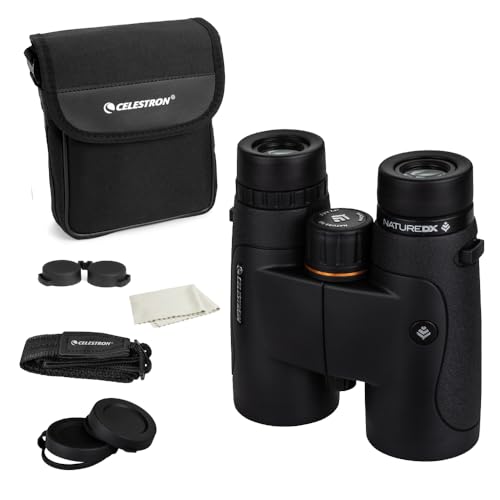
Celestron - Nature DX 8x42 Binoculars – Ideal for Birding and Outdoors – 42mm Objective Lenses – Wide 7.4° Field of View – BaK-4 Prisms – Fully Multi-Coated – Waterproof and Fogproof : Celstron Nature Dx : Electronics
View on AmazonSense of place: The Pushcha is a living time capsule where wind through canopy speaks older dialects than cities can hear.
Khatyn Memorial Complex (near Logoisk)
Khatyn is a landscape of absences made eloquent. After a WWII atrocity erased the village, Belarus built a memorial where chiming bells toll from ghostly chimneys; bronze figures, a man and his dying child, stand against blank fields. Pathways outline former lanes; benches face nothing, inviting hard reflection. Memorial plaques list hundreds of other villages destroyed and never rebuilt.
Cultural weight: Khatyn universalizes loss while particularizing it to Belarus’s wartime trauma—solemn, spare, and profoundly moving.
St. Sophia Cathedral (Polotsk)
On the Dvina River, St. Sophia stakes Polotsk’s ancient claim alongside Kyiv and Novgorod. Founded in the 11th century and later reshaped in Baroque lines, the cathedral gleams white against river light. Inside, a museum of sacred art and an organ—famous for its sonority—animate services and concerts, sending sound like silk through the nave.
Historical arc: The cathedral’s evolution mirrors Polotsk’s fortunes, from princely hub to a crucible of learning and faith.
National Library of Belarus (Minsk)
A rhombicuboctahedron of glass and steel, the National Library is Minsk’s most futuristic silhouette. LED facets glow after dark like a pixelated planet; by day, the building’s geometry refracts clouds. An observation deck crowns the upper floors, where city grids, rivers, and broad, leafy avenues map out below.
Why it’s iconic: It reframes Belarus not only as a keeper of memory but as a builder of modern forms, a counterpoint to castles and cathedrals.
Island of Tears (Minsk)
Set in the Svislach River, the Island of Tears remembers Belarusian soldiers who died in Afghanistan. A small chapel holds weeping angels; bronze figures of mothers, sisters, and widows gather in eternal vigil. Tourists cross a low bridge and instinctively hush—the rituals here are quiet: a hand on a bronze shoulder, a coin left on stone.
Memory in the city: The island weaves personal grief into civic space, an urban punctuation of empathy.
How to Visit: Practical Intelligence for Each Landmark
Mir Castle
- Best time: Late spring to early autumn for gardens and reflections; winter snow is photogenic but icy.
- Hours/tickets: Museum wings and towers keep standard daytime hours; last entry is typically late afternoon. Confirm current openings online or by phone.
- Accessibility: Cobblestones and stairs; limited elevator access in museum areas. The lake path is fairly level.
- Getting there: About 95 km from Minsk; buses and tours run to Mir village. Driving allows pairing with Nesvizh.
- Duration: 2–3 hours on-site.
- Day-trip cluster: Combine with Nesvizh for a full-day castle circuit.
Nesvizh Castle & Park
- Best time: May–October for gardens and lakes; golden leaves in October are sublime.
- Hours/tickets: Palace museum and park sell separate or combo tickets; check for guided tour times in English.
- Accessibility: Elevators in main palace sections; park paths are mostly flat; some heritage rooms have thresholds.
- Getting there: 120 km from Minsk; frequent minibuses to Nesvizh, then local taxis or a 20-minute walk.
- Duration: 3–4 hours including park.
- Day-trip cluster: Pair with Mir; add a village lunch between stops.
Brest Hero-Fortress
- Best time: Year-round; mornings are quieter and softer for photos.
- Hours/tickets: Open-air complex is generally accessible daily; museum buildings have set hours and separate tickets.
- Accessibility: Broad, flat alleys suitable for wheelchairs; some bunker exhibits involve steps.
- Getting there: A 10–15 minute taxi from Brest Railway Station; Brest is 3.5–4 hours by train from Minsk.
- Duration: 2–4 hours depending on museum visits.
- Day-trip cluster: Combine with Belovezhskaya Pushcha as an overnight from Brest.
Belovezhskaya Pushcha National Park
- Best time: Late spring for wildflowers, autumn for bison rut and color, winter for snow tracks; summer is lush but buggy.
- Hours/tickets: Park entry and bison enclosures have ticketed gates; guided walks require advance booking in high season.
- Accessibility: Boardwalks and graded trails exist; deeper forest excursions involve uneven ground.
- Getting there: Buses from Brest to Kamenyuki; best visited with a guide or rental car.
- Duration: Half day to two days.
- Day-trip cluster: Pair with Brest Fortress; overnight in or near the park for dawn wildlife.
Khatyn Memorial Complex
- Best time: All seasons; winter lends stark power.
- Hours/tickets: Open-air memorial accessible daily; onsite exhibitions have daytime hours.
- Accessibility: Flat paths throughout; benches are placed for contemplation.
- Getting there: About 60 km north of Minsk; tours or private taxis are most efficient.
- Duration: 1–2 hours.
- Day-trip cluster: Combine with the Hill of Glory mound or a return to Minsk’s museums for context.
St. Sophia Cathedral (Polotsk)
- Best time: Warmer months for river strolling; check schedules for organ concerts year-round.
- Hours/tickets: Cathedral museum and concert tickets are sold on-site; hours vary by season.
- Accessibility: Steps at entrances; interior aisles are wide.
- Getting there: Polotsk is 3–4 hours by train from Minsk; the cathedral is a short taxi ride or 20-minute walk from station.
- Duration: 1–2 hours; add time for Polotsk’s historic quarter.
- Day-trip cluster: Make it a Polotsk day with riverfront walks and local cafés; consider overnight if pairing with Vitebsk.
National Library of Belarus (Minsk)
- Best time: Sunset to nightfall for illuminated façades; midday for the observation deck’s clear views.
- Hours/tickets: Observation deck has separate tickets and extended evening hours; check current schedule.
- Accessibility: Elevators to the deck; wide ramps at entrance.
- Getting there: Northeast Minsk; easy by metro (Uschod/“Uskhod” station) or taxi.
- Duration: 45–90 minutes.
- Day-trip cluster: Pair with a modern architecture loop and riverside parks.
Island of Tears (Minsk)
- Best time: Early morning or twilight; winter adds a piercing beauty.
- Hours/tickets: Open-air, always accessible.
- Accessibility: Short pedestrian bridge and flat island paths.
- Getting there: A brief walk from Nemiga metro and the Old Town.
- Duration: 20–40 minutes.
- Day-trip cluster: Combine with Upper Town churches, riverside promenades, and the National Library for a Minsk day of memory and modernity.
On-the-Ground Tips and Enriching Experiences
Photography and Viewpoints
- Mir Castle: The classic postcard comes from the opposite bank of the moat—arrive just after sunrise or before golden hour for perfect stillness. From the corner bastion, frame towers with willow branches.
- Nesvizh: Shoot the palace from the causeway for sweeping symmetry, then circle into the park to catch the castle reflected in curving lakes. Misty mornings are magic.
- Brest Fortress: Stand beneath the Kholm Gate at dawn to catch first light igniting the “Courage” monument. Long shadows dramatize inscriptions.
- Belovezhskaya Pushcha: Keep lenses ready for bison at forest margins; use longer focal lengths and stay on trails. Drones require permits.
- St. Sophia, Polotsk: Best angles are riverside—reflections of white Baroque tiers in the Dvina are especially elegant at dusk.
- National Library: Photograph after dark from the forecourt to capture full LED patterns; the observation deck offers city panoramas.

Peak Design Travel Tripod, Carbon Fiber, Compact Design, Quick Setup and Takedown, Pro-Level Stability, Ergonomic Ball Head, Compact and Portable Travel Tripod for Camera and Phone, 20 lb Capacity : Electronics
Amazon.com : Peak Design Travel Tripod, Carbon Fiber, <strong>Compact Design, Quick Setup and Takedown, Pro-Level Stability, Ergonomic Ball Head, Compact and Portable Travel Tripod for Camera and Phon
Check Price on AmazonGuided Tours and Language Notes
- English-speaking guides are available at Mir and Nesvizh; pre-book in high season. Signage is usually in Belarusian/Russian with some English.
- Brest Fortress’s museum tours add gripping narrative context; ask for English audio guides if live tours are full.
- In the Pushcha, certified rangers unlock wildlife sightings and forest lore; independent hikers should carry paper maps or GPS.
- In churches like St. Sophia, respect services in progress—photography may be limited or fee-based.
For travelers keen to fold these sites into deeper traditions and crafts, see our guide to Authentic Cultural Experiences in Belarus: Traditions, Castles, and Contemporary Life.
Seasonal Events and Subtle Rituals
- Nesvizh hosts classical concerts and historical reenactments in summer; evening courtyard music turns stone façades into resonant chambers.
- Belovezhskaya Pushcha stages winter festivities at the Ded Moroz (Father Frost) compound; children adore it, while birders favor April–May and September migration windows.
- Polotsk’s organ recitals cloak St. Sophia in sound; book ahead for weekend performances.
- At Khatyn and Brest Fortress, commemorations on WWII anniversaries bring wreaths, uniforms, and choirs—somber, dignified, and crowded.
Where to Eat and Stay Near the Landmarks
- Between Mir and Nesvizh, farmhouse cafés plate draniki (crisp potato pancakes) with sour cream and dill; in castle cafés, try borsch and local kvass.
- In Brest, hearty canteens serve pelmeni and local fish; leave room for honey cake.
- Minsk has an increasingly sophisticated dining scene—consider an evening around chef-driven spots highlighted in Luxury Dining in Belarus: Top Tasting Menus, Chef Experiences & Booking Tips.
Curated stays to anchor the journey:
- In Minsk’s historic Upper Town, the Hotel Europe (booking-url) pairs parqueted rooms with balconies overlooking Baroque spires—perfect after an evening at the National Library’s glowing façade.
- For a base near Brest Fortress and the Pushcha, the Hermitage Hotel Brest (booking-url) occupies a pre-war building dressed in warm wood and brass; generous breakfasts fortify early memorial visits.
- At Nesvizh, the Palace Hotel at Nesvizh Castle (booking-url) places travelers within the estate’s landscaped hush; dawn walks in the park are reason enough to splurge.
For alternative splashes of style and service, browse the countrywide picks in Best Luxury Hotels in Belarus — Top Places to Stay for Style, Service & Local Experiences.
Safety, Etiquette, and Respectful Travel
- Memorials: Keep voices low, remove hats in chapels, and refrain from posing atop statues or sculptural elements. Candles should be placed only where permitted.
- Churches: Modest attire is appreciated; avoid flash during services.
- Forest: Stay on marked trails; do not feed wildlife; carry repellant in summer and traction cleats in winter ice.
- Photography: Military installations are sensitive—stick to posted guidelines at borders and fortifications.
- Logistics: Belarus’s climate runs continental; winters are cold, summers warm and humid. Always verify opening hours and any permit requirements before you go, and monitor current travel advisories.
Conservation, Memory, and Meaningful Encounters
Two of the country’s crown jewels—Mir and Nesvizh—stand on UNESCO’s list, their restorations balancing patina with preservation. Walking the castles with a guide reveals how paint stratigraphy and brickwork chronicle five centuries of change. In the Belarusian half of the Białowieża Forest, UNESCO and national protections aim to maintain old-growth complexity: lichens as air-quality barometers, fallen wood as nurseries for beetles and fungi, wolf territories that self-regulate herbivore numbers. Visitors help by keeping to boardwalks, supporting scientific tours, and choosing accommodations that minimize footprint.
At sites of remembrance, conservation is ethical as well as architectural. Khatyn’s spare design steers focus to lives lost rather than spectacle, and caretakers meticulously maintain bell mechanisms and stonework. Brest Fortress’s ongoing restoration navigates ruin and reverence—stabilizing cracked casemates without erasing the scars that give them meaning. Simple rituals deepen connection: laying a carnation at an eternal flame, standing still to hear the interval bell at Khatyn, or reading a single name aloud on a plaque.
In cities, the National Library’s prisms and the Island of Tears’ chapel remind travelers that heritage is a living argument—between forgetting and remembering, between yesterday’s style and tomorrow’s ambition. To travel among the famous landmarks in Belarus is to travel a continuum: from primeval canopy to polished parquet; from river-borne hymns to the hush under monumental stone; from private grief to public commemoration.
As the day closes on Mir’s moat and the last swallows draw circles over water, a final thought settles: Belarus’s landmarks are not just stops on an itinerary but pages in a shared European chronicle. Step carefully, listen closely, and they will speak.
For travelers building a broader circuit—with spa interludes, manor stays, and greener choices—consider our roundups of Eco-Friendly Hotels in Belarus: Green Stays from Minsk to the National Parks alongside the cultural icons above.
Recommended Travel Gear
Belarus: Roberts, Nigel
This new, thoroughly updated edition of Bradt’s Belarus remains <strong>the only full-blown standalone guide to the most westerly of the constituent republics that formed the Soviet Union prior to the
Celestron - Nature DX 8x42 Binoculars – Ideal for Birding and Outdoors – 42mm Objective Lenses – Wide 7.4° Field of View – BaK-4 Prisms – Fully Multi-Coated – Waterproof and Fogproof : Celstron Nature Dx : Electronics
Amazon.com : Celestron - Nature DX 8x42 Binoculars – <strong>Ideal for Birding and Outdoors – 42mm Objective Lenses – Wide 7.4° Field of View – BaK-4 Prisms – Fully Multi-Coated – Waterproof and Fogpr
Peak Design Travel Tripod, Carbon Fiber, Compact Design, Quick Setup and Takedown, Pro-Level Stability, Ergonomic Ball Head, Compact and Portable Travel Tripod for Camera and Phone, 20 lb Capacity : Electronics
Amazon.com : Peak Design Travel Tripod, Carbon Fiber, <strong>Compact Design, Quick Setup and Takedown, Pro-Level Stability, Ergonomic Ball Head, Compact and Portable Travel Tripod for Camera and Phon