
Historic Hanoi: Must‑See Sites, Stories & Smart Visitor Tips
Imperial courtyards, revolutionary addresses, and lakeside legends—Hanoi’s history breathes through five essential sites, with smart tips for seeing them well.
Mood
Cultural Deep-Dive
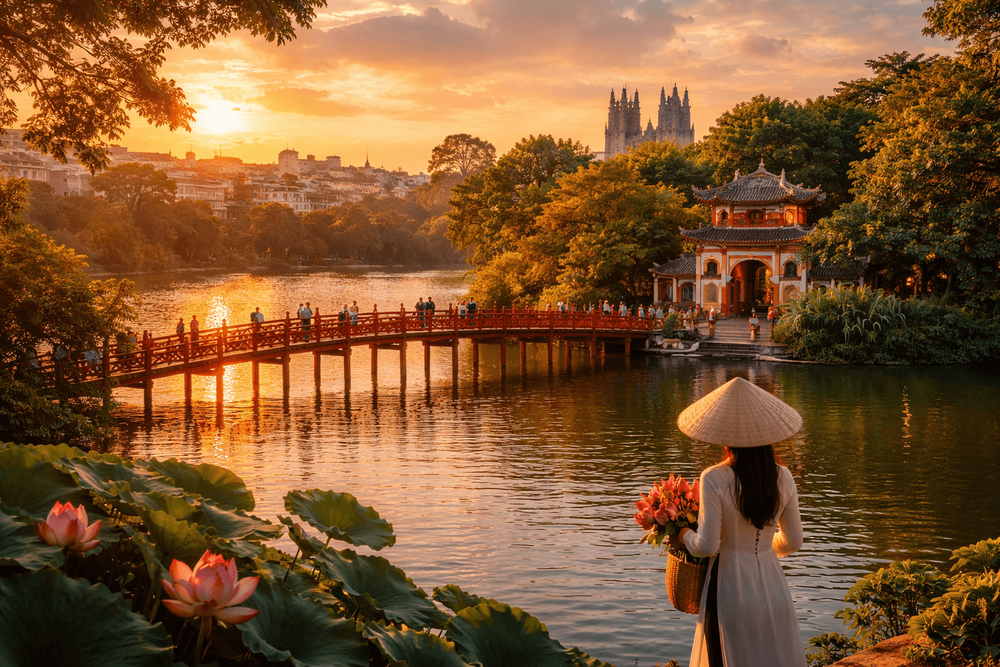
At daybreak, a silver mist hangs over Hoàn Kiếm Lake as tai chi practitioners move in slow unison, the red lacquer of The Huc Bridge warming under first light. Temple bells chime somewhere down a lane scented with star anise and coffee. Here, the past is not a backdrop—it is the city’s pulse. For travelers seeking the most resonant historic sites in Hanoi, the capital offers a living archive: imperial courtyards, colonial façades, revolutionary addresses, and intimate shrines where legend and memory meet.
Hanoi in Four Acts: A Quick Historical Primer
Hanoi—once Thăng Long, the “Ascending Dragon”—rose from the Red River’s floodplains as a royal citadel in the 11th century. Under the Lý and Trần dynasties, Confucian learning and Buddhist devotion intertwined with pragmatic governance. Scholars trained at the Temple of Literature advised emperors; mandarins penned edicts beneath the Khue Van pavilion’s stylized sun. While the Nguyễn dynasty eventually moved its imperial capital to Huế in the 19th century, Hanoi retained strategic and cultural gravity.
French colonial administrators then recast the city with grand boulevards, the Opera House, and that unmistakable cream-and-emerald palette. The aesthetic charm belied an extractive system: prisons like Hỏa Lò held dissidents, and resistance simmered in alleyways and tea stalls.
The 20th century brought war, division, and reunification. Hanoi became a crucible of independence under Ho Chi Minh; bomb shelters and command bunkers threaded beneath ancient bricks. Today, the city’s heritage sites reveal all these layers at once—the dragon’s spine still visible beneath the asphalt.
Must‑See Historic Sites in Hanoi
Temple of Literature (Văn Miếu–Quốc Tử Giám)
Walk through Văn Miếu Gate and time seems to slow. Five courtyards unfold like chapters: pools reflecting frangipani blossoms; stone turtles bearing the stele of laureates; the Khue Van pavilion, whose cutwork windows frame small squares of sky. Founded in 1070 and expanded into Vietnam’s first national university, the Temple of Literature honors Confucius and centuries of scholars who shaped the nation’s bureaucracy and philosophy.

Happyluxe Travel Shawl Wraps for Women - 68x35in Wrap. Lightweight Pashmina, Airplane Travel Blanket Scarf. Made In USA at Amazon Women’s Clothing store
View on AmazonWhat to notice:
- The 82 stone stelae (UNESCO Memory of the World) list names and hometowns of doctoral laureates from 1442 to 1779; trace the calligraphy carved into blue-grey stone.
- Incense offerings and quiet corners where modern students pray for exam luck—a living tradition that keeps the site tenderly human.
Visitor intel:
- Hours typically run from morning to late afternoon (roughly 8:00–17:00); a modest entrance fee applies. Arrive at opening for gentle light and fewer tour groups. Dress modestly; shoulders and knees covered are appreciated.
- Accessibility: expect steps and uneven thresholds between courtyards; wheelchair access is limited. Photography is welcome, but be discreet around private prayers and during festivals.
Cultural connection:
- Around Tết (Lunar New Year), calligraphy masters set up red-paper stalls along the perimeter—an elegant chance to commission your auspicious character for the year.
Where to stay nearby:
- The Sofitel Legend Metropole Hanoi, a storied grande dame in the French Quarter, occupies a restored colonial landmark whose bomb shelter tours connect directly to Hanoi’s 20th‑century narrative.
Imperial Citadel of Thăng Long (Hoàng Thành Thăng Long)
Beneath the modern city lies a palimpsest of palaces, wells, and kiln fragments. The Imperial Citadel—now a UNESCO World Heritage site—reveals 13 centuries of power, from early Dai Viet rulers to the Nguyễn. In the American War period, this same ground hid the D67 bunker and conference room where General Võ Nguyên Giáp directed campaigns, a stark counterpoint to the stately Flag Tower and ceremonial gates above.
What to notice:
- The excavation zone at 18 Hoàng Diệu showcases layers of ceramics, foundations, and drainage systems—architecture as archaeology.
- D67’s steel doors, wall maps, and field telephones evoke a visceral, war‑room hush.
Visitor intel:
- The site is generally open daily except Mondays; mornings are cooler and quieter. A combined ticket grants access to exhibition spaces. Keep to marked walkways to protect fragile digs. Tripods may require permission.
- Accessibility varies: broad lawns and paved paths give way to uneven surfaces and narrow stairs in historical rooms.
Cultural connection:
- Seasonal exhibitions animate recent finds and conservation work, offering a dynamic portrait of the citadel as a research site as much as a monument.
Hoàn Kiếm Lake & Ngọc Sơn Temple (Đền Ngọc Sơn)
Legend casts the lake as the place where Emperor Lê Lợi returned a divine sword to a golden turtle after driving out Ming forces in the 15th century. Cross The Huc Bridge—its vermilion arcs like a brushstroke across jade water—and Ngọc Sơn Temple opens onto a mellow world of scholars’ altars and incense curls.
What to notice:
- A preserved specimen of the revered soft‑shell turtle underscores the lake’s mythology and the modern push for ecological guardianship.
- Weekend evenings, when the streets close to traffic, the lake becomes a salon of music, dance, and families strolling beneath lamp-lit trees.
Visitor intel:
- Ngọc Sơn Temple charges a small fee; the surrounding lake is free. Visit at dawn for local life or at dusk when Turtle Tower flickers into silhouette. Photography is generally allowed; avoid flash in interior rooms and around relics.
- Accessibility is moderate; the bridge has steps.
Where to stay nearby:
- The Apricot Hotel skims the lake’s edge with rooftop views that make sunrise walks irresistible and place you within minutes of the Old Quarter’s guild streets.
Ho Chi Minh Mausoleum & Ba Đình Complex
In austere marble and granite, the mausoleum enshrines an era as much as a leader. Queues move quietly through the chilled interior to view Ho Chi Minh’s preserved body—an experience that is equal parts pilgrimage and civic rite. Outside, the flag flutters over Ba Đình Square, where the 1945 Declaration of Independence was read. Nearby, Ho’s wooden stilt house and the Presidential Palace grounds offer a humbler counterpoint to the mausoleum’s monumentality.
What to notice:
- The early‑morning flag‑raising ceremony, a daily ritual that frames the square in solemn choreography.
- In the stilt house: simple furnishings and a bookshelf that speaks volumes about the values of a new state.
Visitor intel:
- The mausoleum keeps tightly controlled, typically morning‑only hours and closes for annual maintenance, often in autumn; check current schedules. Dress conservatively; hats off inside. Security is rigorous: no bags or cameras inside the viewing hall, and movement must be continuous.
- Accessibility: the square and grounds are navigable; the mausoleum interior involves ramps and controlled pacing—ask attendants for assistance if needed.
Cultural connection:
- On national holidays, the complex becomes a focal point for commemorations; visiting then offers potent context, though crowds swell.
Where to stay to balance gravitas with glamour:
- The Capella Hanoi, a short ride away in the Opera District, riffs on art‑deco drama and opera‑house decadence—an urbane foil to the square’s quiet rigor.
Hỏa Lò Prison (Maison Centrale)
Behind neoclassical arches, Hỏa Lò’s corridors confront a difficult past. Built by the French to detain Vietnamese revolutionaries, it once held prisoners in ankle stocks and dark isolation cells; the guillotine stands as a brutal artifact. In later years, it confined American POWs—dubbed the “Hanoi Hilton”—their stories presented in exhibits that juxtapose narratives.
What to notice:
- The heavy metal doors and narrow openings that regulate air, light, and hope.
- Personal mementos: letters, hand‑stitched items, and reconstructed cells that focus attention on individual endurance.
Visitor intel:
- Open daily with a straightforward ticket office; mid‑mornings are calmer than late afternoons. Photography is permitted in most areas, but avoid intrusive flash.
- Accessibility: narrow corridors and steps can be challenging; staff are helpful, and interpretive displays include English.
Cultural connection:
- Hỏa Lò’s programming of themed exhibitions and talks (often in Vietnamese with English summaries) continues to evolve, inviting reflection rather than spectacle.
Planning Your Visits to Historic Sites in Hanoi
A thoughtful rhythm—early starts, meaningful pauses, and well‑chosen guides—will deepen every encounter with historic sites in Hanoi.
DK Vietnam (Travel Guide): DK Travel
- Expert advice: honest recommendations for getting around safely, when to visit each sight, what to do before you visit, and how to save time and money. - <strong>Colour-coded chapters to every part
Check Price on Amazon- Best times and crowd patterns: Visit major sites at opening time to catch soft light and local rhythms. The mausoleum draws peak queues on weekends and national holidays; the lake’s pedestrianized weekends are festive but busy. Summer afternoons are hot; plan indoor exhibits then.
- Tickets and multi‑site efficiency: Carry small bills for entry fees; some sites accept digital payment but not all. Combine the Temple of Literature and the Imperial Citadel in a single morning; pair Hỏa Lò with the French Quarter’s boulevards.
- Dress and conduct: Modest attire is respectful at religious and state sites. Remove hats inside solemn halls; keep voices low. Incense is common—those sensitive to scent might bring a mask.
- Photography rules: Look for posted signs; no photography inside the mausoleum’s viewing chamber; no flash around sensitive artifacts and manuscripts. Drones are prohibited around government complexes.
- Accessibility and comfort: Pavements can be uneven; comfortable closed shoes are wise. Many sites offer partial wheelchair access but include steps or tight corridors; call ahead if mobility is a concern.
- Guided tours: A knowledgeable guide can connect dates with lived experience and architecture with symbolism. For travelers who value context-rich storytelling and seamless logistics, consider an expert-led option through Vietnam Unlocked: A Curated Guide to Exclusive, Bespoke Tours.
- Safety and seasons: Northern Vietnam has distinct seasons—misty winters, humid summers, luminous springs and autumns. For timing advice and essentials, see Vietnam Adventure Essentials: Where to Go, When to Go, and How to Do It Safely.
Practical note: Hours and fees change occasionally for ceremonies or maintenance; always check official notices or your hotel concierge the day before.
Living Heritage: Rituals, Festivals, and Everyday Culture
Hanoi’s past breathes through the present. Around Tết, the Temple of Literature hosts a calligraphy fair; scholars grind ink and brush auspicious characters onto crimson paper, a ritual that threads from imperial exams to modern hopes. On weekend nights, Hoàn Kiếm’s walking streets pulse with community—kite sellers, folk music troupes, couples practicing ballroom steps. Inside Ngọc Sơn Temple, families light incense for ancestors before strolling to egg‑coffee cafés that hum with conversation.
At the Imperial Citadel, rotating exhibits spotlight recent digs and conservation craft, while cultural troupes occasionally stage courtly dances on festival days. The Ba Đình complex anchors national remembrance; school groups in neat uniforms add a modern cadence to a ceremonial square.
Those wishing to go deeper—into village festivals, ancestral rites, and craft lineages—will find compelling, responsible options in Immersive Cultural Tours in Vietnam: Authentic Homestays, Festivals & Local Traditions. Pair a day of monuments with an evening of ca trù (chamber singing) in a heritage house, or visit a calligrapher’s studio to learn brushwork basics; these living practices illuminate the stones.
Respect and Preservation: How to Support Hanoi’s Heritage
Historic sites in Hanoi are resilient, but they are not invincible. Preservation demands a partnership between caretakers and visitors.

Vapur Flexible, Collapsible Wide Mouth Anti-Bottle with Detachable Carabiner, 34 Ounce, Admiral Blue, Pack of 1
View on Amazon- Follow the line: Stay on marked paths at the Imperial Citadel; even light foot traffic can erode exposed foundations and compact soils around ancient wells.
- Hands off: Oils from fingertips can stain stone stelae and lacquer; resist the urge to trace calligraphy or touch relics.
- Give where it matters: Consider contributing to site donation boxes or joining conservation-focused tours that channel funds to preservation and research. Hiring licensed local guides invests in professional stewardship.
- Shop smart: Support artisans who carry forward traditional crafts—lacquerware, silk weaving, paper calligraphy. Many museum shops and vetted studios ensure fair compensation and cultural integrity.
- Be a quiet witness: In solemn spaces like the mausoleum or Hỏa Lò, keep conversation hushed and photography within posted rules. Ask permission before photographing people at prayer.
- Tread lightly: Bring a refillable water bottle, avoid single-use plastics, and choose walking or electric carts over taxis inside pedestrian zones. For broader low-impact strategies, see Sustainable Travel Options in Vietnam: Eco Transport, Community Stays & Responsible Tours.
Staying somewhere that honors place matters, too. The Sofitel Legend Metropole Hanoi preserves wartime shelters and archives; the Capella Hanoi champions Vietnamese artisanship through custom design; the Apricot Hotel spotlights local art. Each, in its own way, turns a night’s sleep into a chapter of the city’s story.
The Image to Carry Home
As evening gathers, a breeze ripples Hoàn Kiếm’s surface; somewhere a monochord hums. Lanterns pick out the red sweep of The Huc Bridge, and the temple bells are soft as breath. In this city where incense mingles with French patisserie and the echo of a drum seems to come from a thousand years away, historic sites in Hanoi are not museum pieces but companions—places where memory, myth, and everyday life move in step. Walk them with care, and the city will answer in kind.
Recommended Travel Gear
DK Vietnam (Travel Guide): DK Travel
- Expert advice: honest recommendations for getting around safely, when to visit each sight, what to do before you visit, and how to save time and money. - <strong>Colour-coded chapters to every part
Happyluxe Travel Shawl Wraps for Women - 68x35in Wrap. Lightweight Pashmina, Airplane Travel Blanket Scarf. Made In USA at Amazon Women’s Clothing store
Buy <strong>Happyluxe Travel Shawl Wraps</strong> for Women - 68x35in Wrap. Lightweight Pashmina, Airplane Travel Blanket Scarf. Made In USA: Shop top fashion brands Wraps & Pashminas at Amazon.co
Vapur Flexible, Collapsible Wide Mouth Anti-Bottle with Detachable Carabiner, 34 Ounce, Admiral Blue, Pack of 1
Lightweight Wide Mouth Design: Our collapsible water bottle is <strong>designed with a wide mouth opening making it easy to fill and is lightweight weighing under 2 ounces when empty</strong> · Easy t