The Island of Fire and Forest: A First-Timer’s Spring Trip to Madeira’s Cliff Paths and Wine Terraces
Walk cliff paths and levadas, taste terrace-grown wine, and check into stylish small hotels. A first-timer’s spring plan to see Madeira’s forests, coasts, and gardens in 5–7 days.
Trip Length
5-7 days
Best Time
March to June
Mood
adventure
You hear the island before you truly see it: water ticking through stone channels, Atlantic swell thudding against black cliffs, wind combing slopes of fennel and bay. On a spring morning, the levada ahead turns into laurel shade, and a ribbon of path leads you along terrace walls bright with nasturtiums. This is the Madeira travel guide I wish I’d had for a first week: a plan to follow the island’s cliff paths and wine terraces, with time to linger in small hotels that understand the art of welcome.
Cliffs, Forests, and the Levada Thread
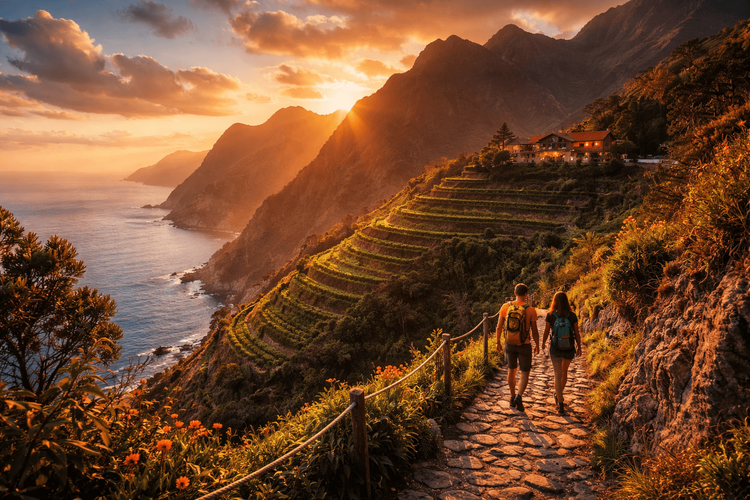
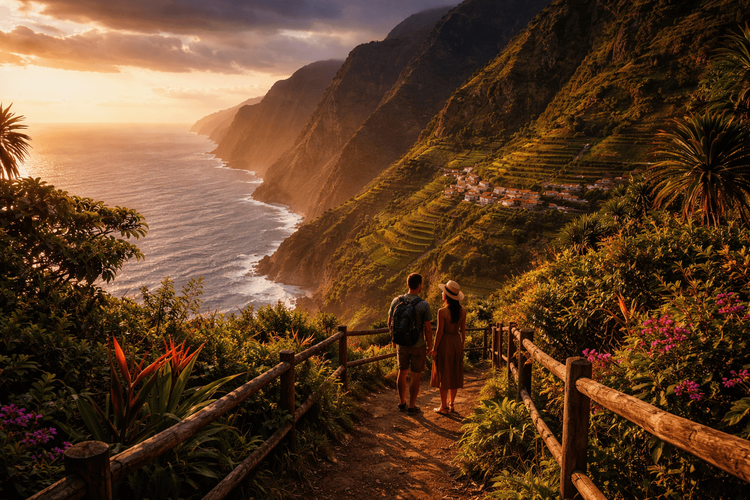
Madeira is an island of edges—sea meeting lava, subtropical gardens spooling into high ridges, sunlit vineyards stopping just short of cloud. The levadas—centuries-old irrigation channels—stitch these zones together. Walk beside them and you move through microclimates in an hour: banana groves, cool laurel forest, open ridgeline. The Laurisilva, Madeira’s ancient laurel woodland protected by UNESCO, feels especially alive in spring: damp moss luminous, tree heathers flowering, waterfalls fuller after winter rain.
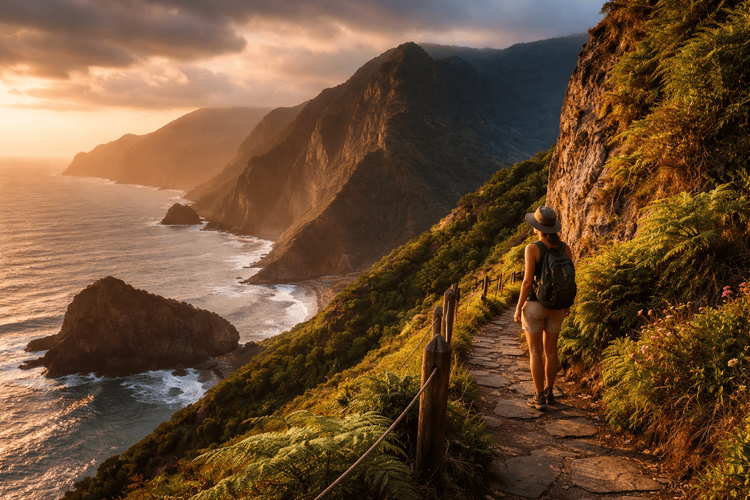
Not every path is a levada. The island’s high spine delivers the drama many hikers come for, with knife-edged stairways and tunnels chiseled through rock connecting windswept peaks. Clear mornings can place you above a sea of cloud, with the Atlantic only a suggestion at the horizon. Back down at sea level, cliff paths wrap around headlands and descend to pebble coves where swimmers greet the day. The pleasure is in the contrasts, and in how close they sit to each other.
A Madeira travel guide for 5–7 days
Think of a week here as a circle rather than a line, with Funchal as an anchor and the north and west coasts as counterpoints. Spring gives you long enough days to sample each mood without rushing.
Days 1–2: Funchal and the hills above it. Ease in with garden time: ride up to the hillside neighborhoods for botanical collections and views that stack orange roofs against the sea. In the afternoon, walk an accessible levada close to town to tune your pace, then wander Funchal’s old lanes and taste the island’s fortified wine in a historic warehouse. Evenings belong to waterfront promenades and the glow of terraced neighborhoods climbing the amphitheater around the bay.
Day 3: High ridge sunrise. Arrange an early transfer to one of the island’s lofty trailheads and follow a well-marked path along steps, tunnels, and airy traverses connecting the central peaks. The route undulates, so allow the day; if cloud builds, the light shifts fast and the granite shoulders take on new character. Return to sea level for a late swim and a plate of grilled limpets or scabbardfish—flavors that taste like place.
Day 4: Waterfall valley in the west. Drive to the plateau’s edge and descend into a green amphitheater of cascades and ferny ravines. Levada paths here hug the contour lines; you’ll pass through short tunnels and along stone parapets slick with spray. It’s the day to move slowly and notice orchids and moss gardens that appear out of shade. Finish in a village where poncha—citrus and sugarcane firewater—warms tired legs.
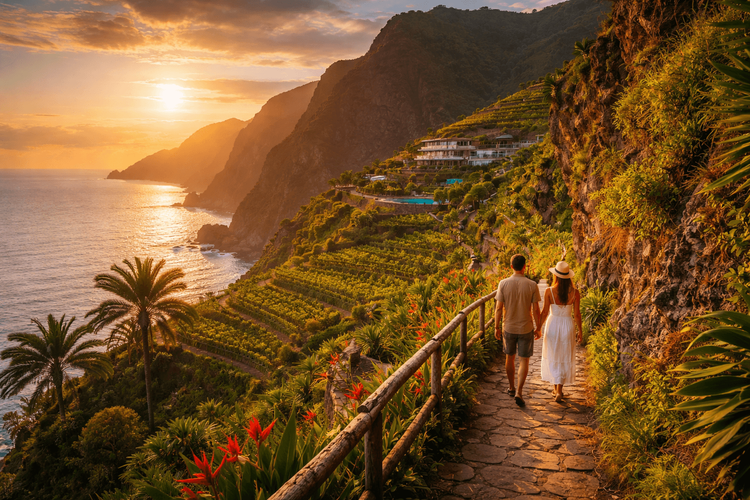
Day 5: North coast lava and natural pools. The island tightens on the north side; roads thread through tunnels and open to sudden headlands with old terraces and white chapels. Spend an afternoon where lava has formed sheltered sea pools, letting the Atlantic do its thing on the far side of the rocks while you float in calm water. If the swell is up, it’s a show worth lingering over.
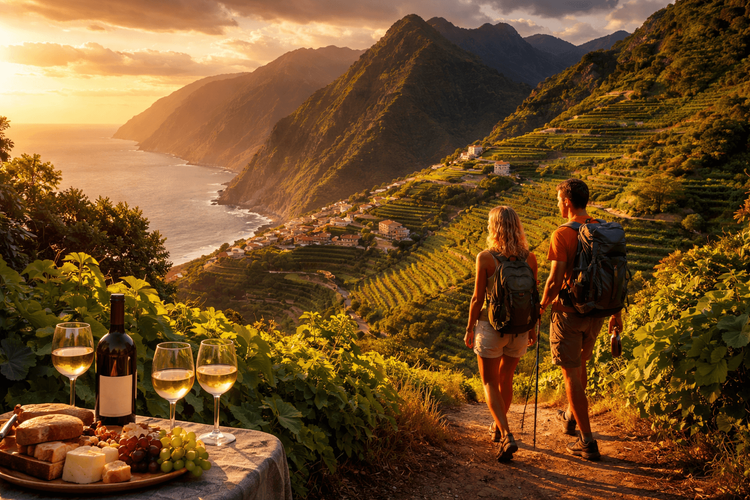
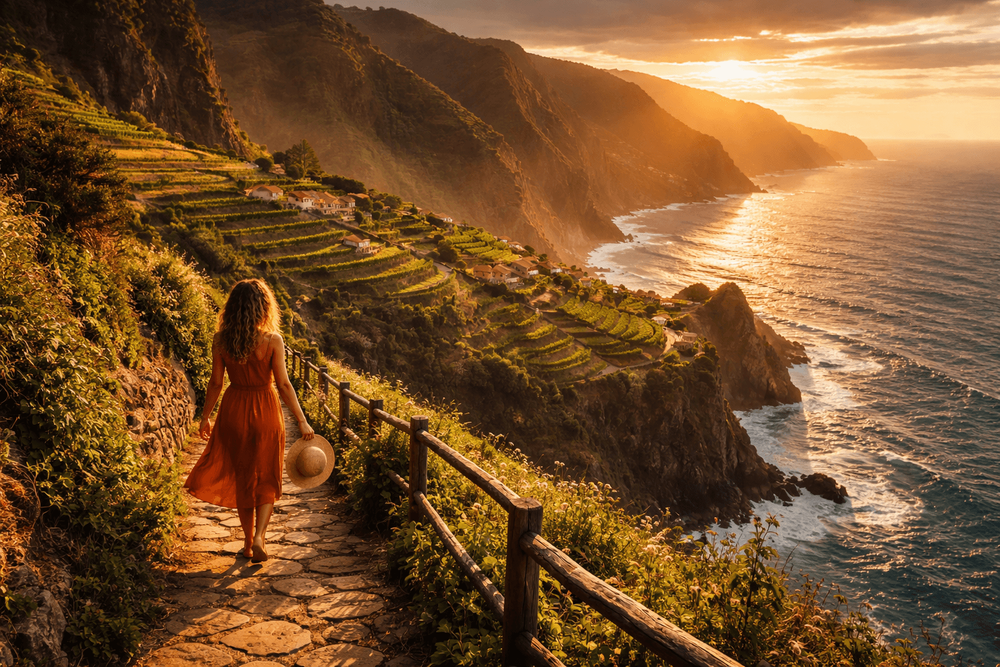
Day 6: Wine terraces and south-facing villages. West of Funchal, stepped vineyards climb warm slopes; in spring the terraces glow with new growth. Arrange a guided tasting in town or on an estate; Madeira wine’s spectrum—from dry, nutty apéritifs to deep, caramelized sips—makes sense when you’ve seen the vertiginous plots it comes from. Pair it with island bread griddled with garlic butter and a dish of marinated tuna or espetada—beef skewers traditionally grilled over laurel wood.
Day 7 (optional): Ocean day. Board a small boat for dolphin-watching in calm conditions or take a quick flight to Porto Santo for pale sand and island-contrast before you loop back to Funchal.
Use this Madeira travel guide as a framework, not a checklist. Weather, light, and appetite will nudge your days into their best shape.
Where to Stay: Stylish Small Hotels and Quintas
Madeira’s hospitality sweet spot right now is small-scale: restored farmhouses and manor homes (quintas) with terraced gardens; contemporary guesthouses dropped onto cliffs with clean lines and big windows; design-forward eco-retreats tucked along the north coast valleys. These places tend to serve generous breakfasts—think seasonal fruit, local cheeses, honey cake—and offer direct access to trails or views you can read by for hours.
For a first visit, split your stay: base in Funchal for two or three nights so you can wander on foot, sample wine, and ride up to the hill gardens; then move to the north or west coast for two or three nights of cliff-and-forest immersion. If you prefer to unpack once, choose a hillside address within Funchal’s amphitheater and plan day trips; the island’s network of tunnels makes cross-island driving faster than the coastline suggests.
Wine Terraces and Atlantic Tables
Madeira wine is a story of patience—grapes grown on terraces like contour lines of a topographic map; barrels aged and blended into styles that range from bracingly dry to dessert-rich. Tasting rooms in Funchal’s old quarter demystify the terminology and history. Outside town, narrow lanes climb past green staircases of vines and kiwis; look up from the glass and you’ll see where the structure in the wine comes from.
Eating well is straightforward. Markets are bright with passion fruit and island bananas; fishing boats bring scabbardfish and tuna; mountain grills scent the air with laurel from espetada. In simple taverns, bolo do caco—soft, round bread cooked on a hot stone—arrives with garlic butter before anything else, and it’s worth the trip alone. On the coast, some villages offer lava-rock sea pools; late afternoons here feel earned after a day on the trail.
Practicalities: Getting There, Getting Around, What to Expect
Arrival: Fly into Cristiano Ronaldo International Airport (FNC), about a short drive east of Funchal. The approach, with runway on pylons over the sea and mountains shouldering close, can feel dramatic—landings are routine. Baggage claim is compact; car rentals and ATMs sit inside the terminal. Taxis and shuttles meet arrivals; to Funchal it’s roughly a 20-minute drive depending on traffic and hotel location.
Getting around: A rental car offers the most flexibility for trailheads and terrace villages. Roads are well engineered with many tunnels; some older coastal stretches are narrow and steep. Public buses link major towns; guided hikes and transfers are easy to arrange if you’d rather not drive. Parking in old centers can be tight; hotels often help with solutions nearby.
Trail sense specific to Madeira: Many levada paths run beside open water channels with drop-offs. Some sections are protected by railings; others are not. Surfaces can be wet with spray, and tunnels are common—carry a headlamp and expect dripping ceilings. Weather turns quickly at altitude; start early, carry a light waterproof, and respect posted closures.
Money and language: Euro is the currency. Cards are widely accepted in Funchal; smaller village cafés may prefer cash. Portuguese is the official language; English is commonly spoken in hotels and by guides.
Connectivity: Mobile coverage is strong along the south side and major routes, but mountain tunnels and high ridges can cut signal. Download offline maps before long hikes.
When to Go: March to June
Spring is when the island feels newly minted: hillsides greened by winter rain, orchids and wildflowers on show, waterfalls lively, seas gradually calming. Days are long enough for ambitious ridge walks and balcony hours back at your hotel. It’s also shoulder season in many places, with a gentler tempo in villages and on trails than in the height of summer. Pack for contrasts—warm sun at the coast, cool cloud along the peaks—and you’ll move happily through them.
The Takeaway
Madeira rewards curiosity. Follow a levada until it becomes a stairway in the sky; taste a wine that has waited longer than your travel plans; check into a terrace-sided hotel that makes you feel part of a garden. Bookmark this Madeira travel guide, then pick a week between March and June and let the island’s edges pull you around their circle. The path, and the welcome, are the point.
Where to Stay

Aqua Natura Bay
Aqua Natura Bay is a 4-star Madeira Island hotel known for its scenic location and high guest ratings, offering comfortable stays with easy access to the island’s natural attractions.

Dom Pedro Madeira
Dom Pedro Madeira is a 4-star hotel on Madeira Island, offering easy access to local sights and a comfortable stay, with a guest rating of 8.6/10.

TURIM Santa Maria Hotel
TURIM Santa Maria Hotel is a 4-star stay in Madeira Island with a central location, modern rooms, and easy access to local sights, dining, and the waterfront, earning a strong 9.1/10 guest rating.

Santa Cruz Village Hotel
Santa Cruz Village Hotel is a 4-star stay in Madeira Island with easy access to Santa Cruz and the island’s eastern coast. It offers comfortable rooms, an outdoor pool, and a guest rating of 8.8/10.

Quinta Da Penha De Franca
Quinta Da Penha De Franca is a 4-star Madeira Island hotel offering a convenient base for exploring the island, with comfortable accommodations and a strong 8.9/10 guest rating.