
Festival Trail Nepal: How to Experience Nepal’s Rich Cultural Celebrations
From lamp-lit Tihar nights to Kathmandu’s masked Indra Jatra, this guide maps Nepal’s festival calendar—what to see, when to go, and how to join respectfully.
Mood
Cultural Deep-Dive
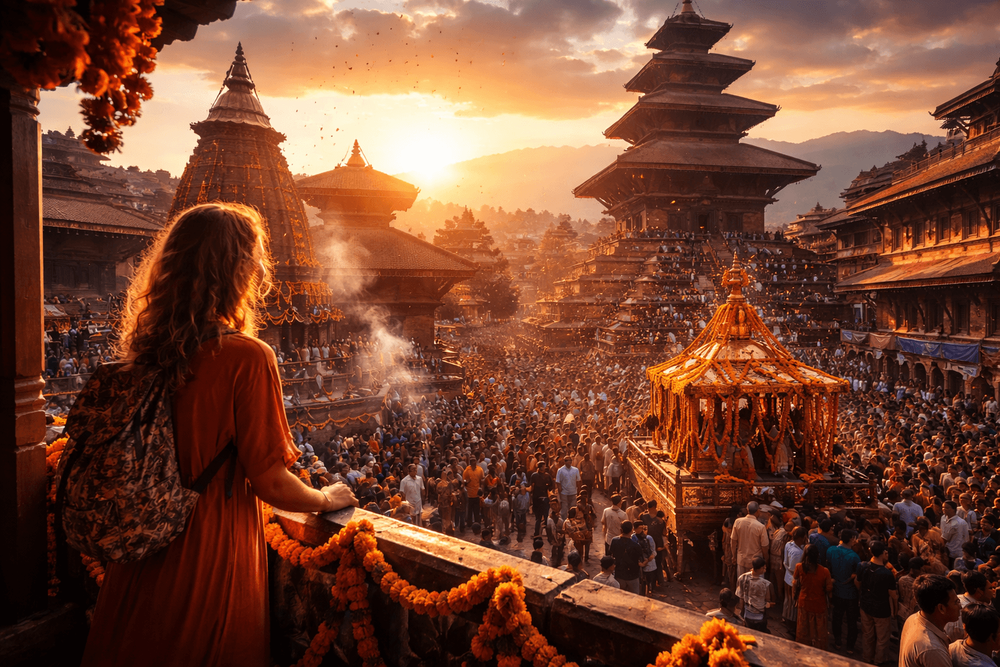
As dusk falls over Kathmandu, the air swells with drumbeats and sandalwood smoke. Butter lamps flutter along brick lanes, marigold garlands glow like topaz, and a masked Lakhey demon lurches out of the crowd to the delight of squealing children. This is the living theater of cultural festivals in Nepal—an unfurling calendar of devotion and joy where deities ride chariots through medieval squares, sisters bless brothers with vermilion, and powder-bright spring rains down on jubilant streets.
Cultural Festivals in Nepal: The Living Calendar
Across Nepal’s valleys, hills, and high Himalaya, festivals mirror the country’s cultural mosaic. Hindu, Buddhist, and Indigenous Newar traditions overlap and converse, producing celebrations that are as much about kinship and harvest as they are about gods and kings. The following guide maps the major festivals—who celebrates them, the meanings behind key rituals, and where to witness their most evocative expressions.
Dashain (Vijaya Dashami): Homecoming, Blessings, and Renewal
- When: September/October (Ashwin), over 15 days
- Who: Predominantly Hindu communities nationwide; among Newars known as Mohani
- Where: Everywhere, with especially atmospheric scenes in the Kathmandu Valley and hill towns
Dashain is the grand Nepalese homecoming. Families return to ancestral houses to receive tika—vermilion and yogurt pressed onto the forehead—and jamara, tender barley shoots grown for days on a household shrine. Animal sacrifice persists in some communities (goat and buffalo), symbolizing the goddess Durga’s triumph over evil; others mark the feast with vegetarian offerings. Temporary bamboo swings (ping) rise in village fields, children arc through the air under cobalt skies, and kites stitch color across the wind. Markets brim with new clothes and steel plates; elders bless younger relatives with grains of rice and whispered hopes for prosperity.
Distinctive notes in the Kathmandu Valley include Newar devotional processions, while in the hills the emotional center is the family courtyard—long hours of storytelling, sel roti frying in nutty-scented coils, and the faint ring of temple bells drifting down terraced slopes.
Tihar (Deepawali): Light, Lakshmi, and the Bonds of Kin
- When: October/November (Kartik), five days
- Who: Hindu communities across Nepal; shared with Maithil, Tharu, and other Terai cultures
- Where: Kathmandu, Bhaktapur, Patan; Terai towns glow with expansive rituals
Tihar is a festival of light with a uniquely Nepalese cadence. Over five days, reverence extends to crows (messengers), dogs (guardians), and cows (prosperity), each honored with marigold malas and vermilion tika. On Lakshmi Puja night, doorways bloom with rangoli and oil lamps to welcome the goddess of wealth. Youth troupes sing deusi-bhailo from house to house, an antiphonal exchange of songs and blessings rewarded with sweets and small donations. The final day, Bhai Tika, sees sisters bestow protective multicolored tika on brothers, a tender rite of mutual guardianship.
In the Terai, rangoli designs spiral larger, Deusi-bhailo swells into communal street parties, and the euphoria of light ripples through entire neighborhoods.
Holi (Fagu Purnima): Color, Spring, and Playful Transgression
- When: March (Falgun), one day in the hills and a day earlier in the Terai
- Who: Mainly Hindu and broader communities; universally embraced as a playful spring rite
- Where: Kathmandu Durbar Square, Thamel, Patan, and Terai cities like Birgunj and Janakpur

JOTO 2 Pack Waterproof Phone Pouch Case Up to 7", IPX8 Underwater Phone Case Cellphone Dry Bag for iPhone 17/Air 16 15 14 13 12 Pro Max Xs Max XR X 8 7 6S Plus SE/Galaxy S24 S23 S22 -Black : Cell Phones & Accessories
View on AmazonHoli shatters winter’s gray with jubilant color. Families and friends chase each other with abir powders and water, laughter punctuated by the thump of dhol drums. In Kathmandu, a ceremonial bamboo pole (chir) rises days prior, symbolizing winter’s hold; its later felling marks the turn of the season. Travelers should join respectfully—use herbal, non-toxic powders, protect eyes and electronics, and remember that consent is the brightest color of all.
Indra Jatra (Yenya): Chariots, Masks, and the City as Stage
- When: August/September (Bhadra), eight days
- Who: Newar communities of the Kathmandu Valley; open-heartedly observed by the entire city
- Where: Kathmandu Durbar Square and surrounding lanes
Indra Jatra is the Kathmandu Valley’s operatic heartbeat. The living goddess Kumari’s gilded chariot judders through the old city, accompanied by flutes, cymbals, and the thunder of masked Lakhey dancers. Giant ritual poles rise; sacred images unfurl from palace windows; samay baji platters—beaten rice, smoked meat, ginger, and home-brew—anchor communal tables. The festival honors Indra, god of rain, and threads stories of kingship and city guardianship with unmistakably Newar artistry: lacquered chariots, copper lamps, and a choreography practiced for centuries.
Teej: Red Saris, Fasting, and Devotion at the Temple
- When: August/September (Bhadra)
- Who: Hindu women across Nepal
- Where: Pashupatinath Temple in Kathmandu is the spiritual epicenter
On Teej, streets stream with crimson. Women in red saris gather for group dances and songs that braid joy and longing; many fast for marital harmony and express solidarity across generations. At Pashupatinath, waves of worshipers move through incense and bell-chime. Non-Hindus may not enter the inner sanctum of Pashupatinath but are welcome to witness respectfully from the outer courtyards and riverfront ghats.
Losar: New Year Across Himalayan Communities
- When: Varies by community—Tamu (Gurung) Losar in December; Sonam (Tamang) Losar in January/February; Gyalpo (Sherpa) Losar in February/March
- Who: Tibetan Buddhist communities—Gurung, Tamang, Sherpa, and others
- Where: Kathmandu’s Boudhanath and Swayambhunath; Himalayan regions like Solukhumbu and Langtang
Losar welcomes the lunar new year with butter lamps, juniper smoke, and the bright whine of ghyaling horns. Families prepare khapse pastries and exchange khata scarves, while monasteries host cham mask dances—slow, deliberate, and mesmerizing. In Kathmandu, monasteries around Boudhanath glow with prayers and tea stalls; in the highlands, dawn breaks over white peaks as villagers circle prayer flags and greet the year with laughter and bowls of salty butter tea.
Seasons and Regions: When and Where to Join In
Festival rhythms follow both the moon and the land. The same holiday can look—and sound—very different from the cobblestones of Bhaktapur to the mango groves of the Terai or the yak-pastures of the high Himalaya.
Kathmandu Valley: Processions and Pageantry
The Kathmandu Valley is Nepal’s stage for processional dramas. Indra Jatra’s chariot runs feel cinematic amid the tiered temples of Hanuman Dhoka; Teej turns the city into a red-swathed dance floor. Dashain and Tihar transform urban life as shops close early, courtyards glow, and families reunite. Bhaktapur, in particular, keeps medieval tempo—its brick plazas are ideal vantage points for rituals and musicianship passed down through artisan guilds.
Travelers combining festivals with heritage exploration will find helpful context in our guide to Top Tourist Spots in Nepal: Kathmandu, Pokhara, Everest & Beyond.
The Terai: Luminous Nights and River Devotions
In the southern plains, festivals stretch into the streets. Tihar dazzles with expansive rangoli and fervent deusi-bhailo troupes; Holi arrives a day earlier than in the hills, with water guns, musical processions, and full-town participation. In some Terai communities, the post-monsoon months also bring riverbank rituals that pair beautifully with Tihar’s lamps—an evocative tableau of light mirrored on slow water.
Hill Country: Courtyard Rituals and Swinging Skies
In the middle hills, Dashain is intimate and agrarian. After the monsoon, terraces flush green; families string bamboo swings and fly kites against clean blue. Tihar’s dog and cow worship feel village-close—garlands hand-tied, lamps placed on packed-earth thresholds. Holi is playful but tends to be more contained than the capital’s exuberance, with neighbors gathering in squares to smear abir and share sweets.
Himalayan Highlands: Monasteries and Mountain Horizons
Losar is the highlands’ signature, whether in Sherpa villages of Solukhumbu or Tamang hamlets along the Langtang trails. Expect monastery courtyards hung with new prayer flags, the scent of butter lamps, and families in traditional dress. Snow-bright mornings frame processions; evenings hum with drums and long horns.
Planning a Festival-Focused Journey
Timing and logistics for cultural festivals in Nepal require a little lunar literacy and a lot of advance planning—especially for autumn’s marquee celebrations.

Anker Power Bank(PowerCore 10K), Compact Travel-Ready 10,000mAh Battery Pack with PowerIQ Charging Technology, 5V/3A High-Speed Charging for iPhone, iPad,and More (1, Black) : Cell Phones & Accessories
View on Amazon
Lonely Planet Nepal: Detailed Itineraries | Travel Like a Local | Insider Tips | Covers Kathmandu, Pokhara, Terai, Mahabharat Range, and more (Travel Guide): Mayhew, Bradley, Bindloss, Joe, Brown, Lindsay, Butler, Stuart, Lama, Tsering
Lonely Planet's Nepal is <strong>our most comprehensive guide that extensively covers all the country has to offer, with recommendations for both popular and lesser-known experiences</strong>. Ex
Check Price on AmazonFestival calendar at a glance:
- Dashain: late Sept–Oct; family reunions, tika, swings
- Tihar: Oct–Nov; oil lamps, deusi-bhailo, Bhai Tika
- Indra Jatra: Aug–Sept; Kathmandu chariots and mask dances
- Teej: Aug–Sept; women’s fasts and temple gatherings
- Holi: March; colors in hills, a day earlier in Terai
- Losar: Dec–March; dates vary by community
Booking and availability:
- Autumn (Sept–Nov) is peak season; book flights and rooms weeks in advance. Government offices and many shops close for Dashain and Tihar, and domestic transport sells out as Nepalis travel home.
- Trekking itineraries can be affected: guides and porters may return to villages for Dashain/Tihar. If your route hinges on those weeks, confirm staff availability. For broader adventure planning, see Adventure Nepal: Treks, Peaks, Rivers & Responsible Thrills.
Getting around:
- During chariot pulls (Indra Jatra) and big temple days (Teej at Pashupatinath), roads close and detours spring up. Walk or use short taxi hops; expect to move with the crowd.
- In the Terai, Holi parades can suspend bus services for a few hours—plan arrivals and departures around mid-day peaks.
Where to stay (curated picks):
- For a front-row seat to Kathmandu’s pageantry, Dwarika’s Hotel (booking-url) occupies a hand-carved Newar courtyard complex where the woodwork alone feels ceremonial; its location and heritage sensibility justify every penny during Indra Jatra and Teej.
- In Patan, The Inn Patan (booking-url) tucks into a restored brick mansion near Patan Durbar Square, ideal for wandering out at dusk to watch Tihar lamps bloom and to slip back for a quiet courtyard tea.
- If you’re pairing festivals with a Terai sojourn, Tiger Tops Tharu Lodge (booking-url) threads cultural immersion into its design and community links—think thatched roofs, local dance evenings, and easy access to riverlight rituals around Tihar.
Budget and social stays:
- Festival weeks fill fast; book early, and consider characterful hostels and guesthouses that foster community around shared celebrations. For solid, traveler-trusted options, see Hostel Recommendations in Nepal: Best Picks for Trekkers, Backpackers & Budget Travelers.
Eating and drinking:
- Festival snacks are irresistible: sel roti, yomari, laddus, samay baji, and sweet, spiced chiya. To deepen the culinary context of what you’re tasting in the lanes, look to Taste Nepal: Must-Try Street Foods, Where to Find Them and How to Eat Like a Local and consider a guided ramble from Gourmet Food Tours in Nepal: Taste, Learn, and Shop Your Way Through Kathmandu & Beyond.
What to pack:
- Modest, breathable clothing; a scarf for temples; slip-on shoes; a small power bank (lights may dim during mass celebrations); zip bags for phone/wallet; and for Holi, a light rain jacket, sunglasses, and herbal color powders.
Crowd expectations and vantage points:
- Arrive at least an hour early for Indra Jatra chariots; position at Maru tole or near Kumari House for processions. In Bhaktapur during Tihar, climb to Bhaktapur Durbar Square’s periphery for a river of lamps flowing through alleys. Always heed rope lines and marshals.
Etiquette and Cultural Context for Respectful Participation
Festivals are sacred theater—joyful, yes, but underwritten by devotion. A few courtesies carry travelers a long way.
Dress and demeanor:
- Cover shoulders and knees; choose reds or jewel tones if participating in Teej or Tihar evenings, but avoid costumes. Move patiently; do not push through lines for a better photo.
Temples and sanctums:
- Remove shoes before stepping into temple platforms. At Pashupatinath, non-Hindus may explore outer courtyards but not the inner shrine. Leather items can be frowned upon in certain spaces—keep belts and bags discreet.
Photography:
- Always ask before photographing people receiving tika or engaged in prayer; a small head tilt and raised camera go a long way. Avoid flash in monasteries and do not block processional routes. Many festivals restrict drone use—assume no-fly unless you have explicit permission.
Participation boundaries:
- Do not climb on chariots or tug ropes unless invited by organizers. Never touch the Kumari (living goddess) or performers in trance. During animal sacrifice rituals at Dashain, witness from a respectful distance; refrain from sensational images.
Offerings and gifts:
- If invited to a home, bring fruit, sweets, or tea leaves—present and receive with the right hand (or both hands). When accepting tika or prasad (blessed food), do so with gratitude; a dab of tika on the forehead is a welcome sign of inclusion.
Cleanliness and care:
- Do not step on rangoli designs or stray oil lamps; skirt them carefully. Dispose of plastic responsibly—better yet, bring a reusable bottle and cloth bag.
Responsible, Authentic Ways to Experience Festivals
Travelers keen to experience cultural festivals in Nepal can do so in ways that center local voices and sustain heritage.
Go with local hosts:
- Community homestays and neighborhood-led walks—especially around Patan, Bhaktapur, and Boudhanath—offer invited windows into household rituals: barley sprouting for Dashain, candle-lighting patterns for Tihar, khapse frying for Losar. Ask hotels to connect you with resident-led experiences rather than large commercial tours.
Support artisans and musicians:
- Bhaktapur’s mask carvers, Patan’s metalworkers, and Newar drummers keep festivals resonant. Purchase directly from workshops and cooperatives; commission small pieces rather than bargaining to the bone.
Choose ethical tours:
- Look for guides who brief guests on etiquette, limit group size in narrow lanes, and contribute a portion of fees to festival committees or heritage conservation. Avoid any operator advertising “close-up access” to Kumari or trance rituals.
Safety and sustainability notes:
- In dense crowds, keep valuables zipped and carry minimal cash. For Holi, use plant-based powders, apply coconut oil to skin and hair to ease cleanup, and never throw color at non-participants or police. Respect animal welfare: don’t pet garlanded dogs against their handler’s wishes, and avoid pressuring working animals for photos.
Extend your stay with purpose:
- Consider arriving a few days early or lingering after the main festival date. Many rituals unfold over multiple days—preparations, family feasts, and community cleanups that reveal the festival’s quiet spine.
The festivals of Nepal are not side-shows to a bucket-list trek; they are the country’s pulse—seasonal hymns to light, kinship, rain, and renewal. Stand at the edge of a lamp-lit alley in Bhaktapur or beneath prayer flags at dawn in Solukhumbu, and the motif is unmistakable: a culture that gathers, sings, and gives thanks in radiant color. Carry that glow onward, and the calendar will begin to arrange itself around lamp flames, drumbeats, and the soft press of tika on the brow.
Recommended Travel Gear
Lonely Planet Nepal: Detailed Itineraries | Travel Like a Local | Insider Tips | Covers Kathmandu, Pokhara, Terai, Mahabharat Range, and more (Travel Guide): Mayhew, Bradley, Bindloss, Joe, Brown, Lindsay, Butler, Stuart, Lama, Tsering
Lonely Planet's Nepal is <strong>our most comprehensive guide that extensively covers all the country has to offer, with recommendations for both popular and lesser-known experiences</strong>. Ex
JOTO 2 Pack Waterproof Phone Pouch Case Up to 7", IPX8 Underwater Phone Case Cellphone Dry Bag for iPhone 17/Air 16 15 14 13 12 Pro Max Xs Max XR X 8 7 6S Plus SE/Galaxy S24 S23 S22 -Black : Cell Phones & Accessories
Amazon.com: <strong>JOTO 2 Pack Waterproof Phone Pouch Case Up to 7", IPX8 Underwater Phone Case Cellphone Dry Bag for iPhone 17/Air 16 15 14 13 12 Pro Max Xs Max XR X 8 7 6S Plus SE/Galaxy S24 S
Anker Power Bank(PowerCore 10K), Compact Travel-Ready 10,000mAh Battery Pack with PowerIQ Charging Technology, 5V/3A High-Speed Charging for iPhone, iPad,and More (1, Black) : Cell Phones & Accessories
Anker Portable Charger, <strong>10,000mAh 30W Power Bank, USB-C in and Out Fast Charging Battery Pack, Travel Essential Phone Power Bank, for iPhone 17/16, Galaxy and More</strong> (Black, 10000.00, M