Hokkaido’s Quiet Winter: Onsen Towns, Snowy Farm Stays and Coastal Seafood Trails
Between January and March, trade Niseko’s lifts for quiet valleys, farm kitchens, and seafood-rich ports. A 5–7 day Hokkaido winter travel loop of onsen and coast.
Trip Length
5-7 days
Best Time
January to March; late January to early March for clear, cold days and quieter inns
Mood
wellness
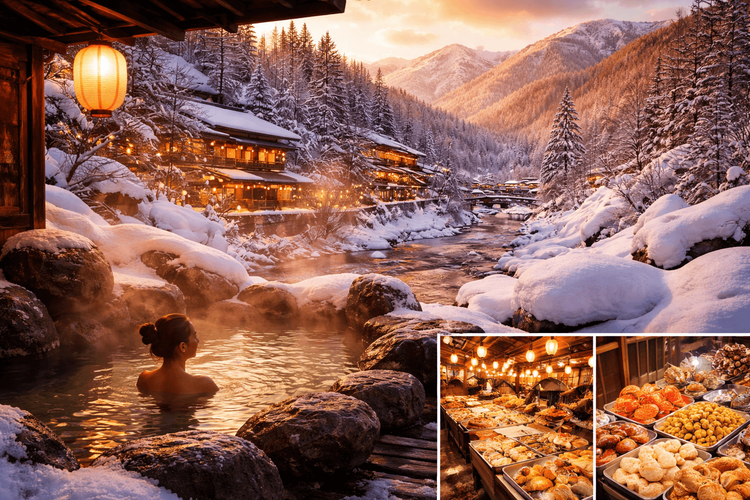
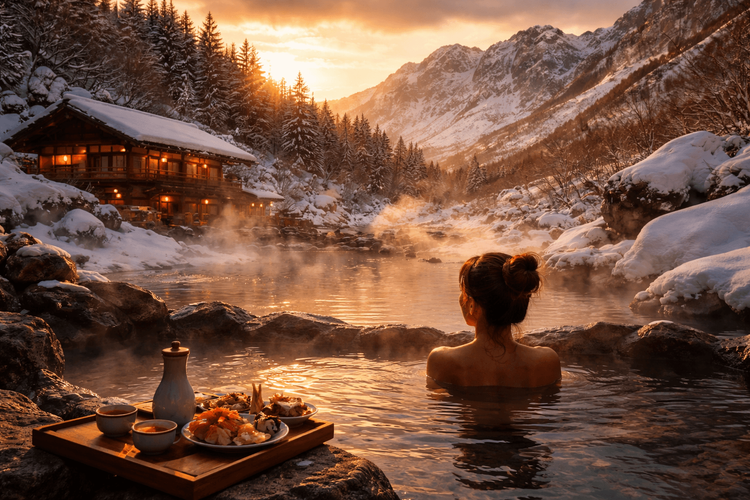
Steam beads on your eyelashes as snow folds the valley into silence. The only sound is water—mineral-rich, rising from the earth and slipping over cedar. This is Hokkaido winter travel at its gentlest: the season when roads lead to small onsen towns, farm kitchens warm with slow-cooked suppers, and the coast trades summer surf for the ritual of hot crab and cold air.
Steam, Snow, and the Pace You’ve Been Missing
Winter on Japan’s northern island favors those who like their wellness tangible. You feel it in the contrast: an outdoor bath where flakes dissolve on your shoulders; a tatami room where a kettle mutters beside a shoji window glazed with frost. Onsen towns like Noboribetsu, Jozankei, Sounkyo, and Tokachigawa have been perfecting the art for generations. Each valley has its personality—sulfur-scented pools beside volcanic cliffs, cedar tubs tucked under eaves, tea-colored moor springs that leave skin impossibly soft.
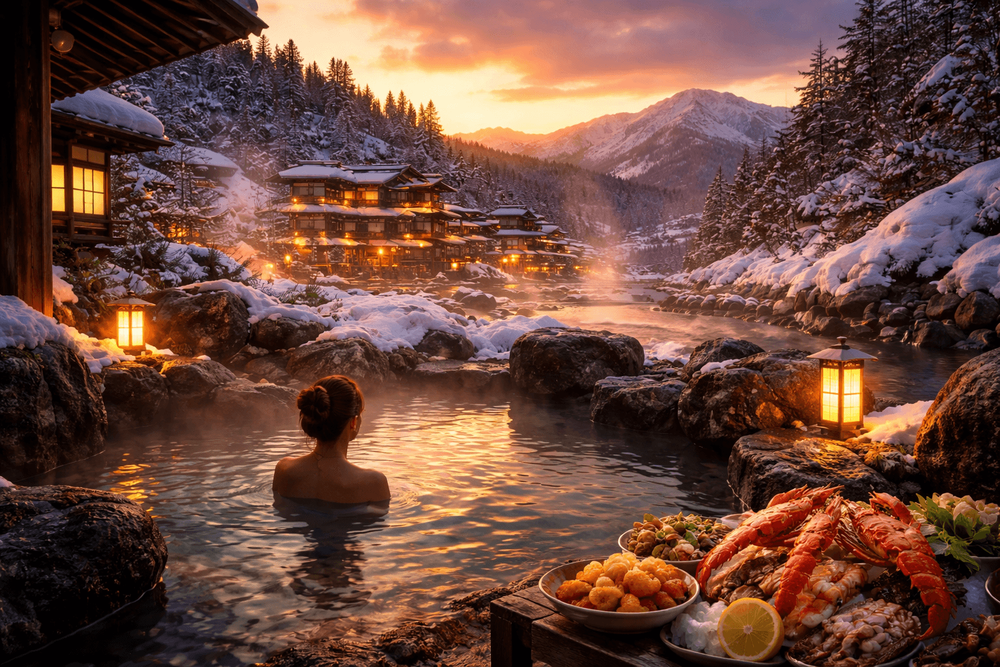
Evenings unfold in a rhythm you’ll quickly adopt. Soak. Yukata and socks. A many-dish dinner built on what the season allows: river fish, root vegetables, mountain herbs preserved for winter, and, on the coast, proud towers of crab. When the sky clears, walk out to the rotenburo and watch steam drift into the Milky Way.
A 5–7 Day Wellness Route for Hokkaido winter travel
This shoulder-season itinerary keeps you beyond Sapporo and Niseko while using their airports and rail lines as springboards. You can drive the whole route (winter-ready rentals are common) or stitch it together with express trains and local buses. Either way, use the snow as your metronome and build in time to linger.
Days 1–2: Sink into an Onsen Valley Land at New Chitose Airport and head straight for hot water. Within a few hours in any direction, valleys brim with inns and public baths. Choose based on what calls you: the dramatic volcanic landscape and milky pools of a southern onsen town, the forested baths near a river gorge, or the unusual plant-derived moor springs on the Tokachi plain. Two nights gives you time for multiple soaks and a walk among frozen waterfalls or along a quiet lakeshore as ravens trace black arcs over the snow.
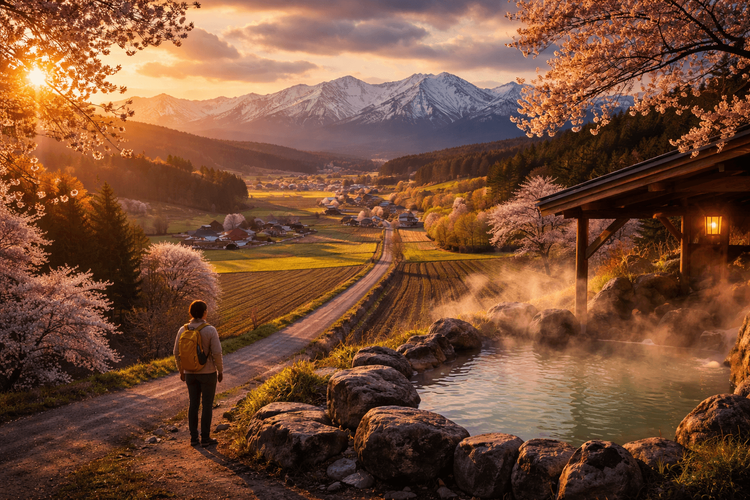
Days 3–4: Farms Under Snow in the Heartland Point the car—or the train—toward Hokkaido’s agricultural heart: the undulating fields around Biei and Furano, or the broad Tokachi plain. Winter lays the land bare and elegant, all swales and hedgerows lifted by snow. Rural inns here are tranquil by design. You’ll find rooms scented with cypress, stoves stacked with birch, and hosts who know their cheeses, grains, and dairy like family. Join a snowshoe ramble between windbreaks, try hands-on butter or soft-cheese making if offered, and let the quiet of a white morning reset your breathing.
This is where the wellness piece deepens. Meals lean on what’s local and warming: thick-cut toast from flour milled down the road, milk so fresh it tastes like memory, root vegetables roasted until sweet. If you chose the Tokachi area, the moor hot springs there—naturally filtered through ancient plants—are unlike anywhere else in Japan, and they pair beautifully with clear, starry nights.
Days 5–6: Choose Your Coast, Follow the Seafood
- Westward Option: Aim for Hokkaido’s west coast and the small port city famed for its canal and old warehouses. In winter, the town glows in the early evening; icy ropes braid the moorings and the air smells faintly of smoke and sea. Seafood is the point: scallops that snap, crab rich with brine, and bowls of cod with creamy roe that locals swear by when the wind bites. Continue along the peninsula for cliff-top views where the water turns steel-blue and roadside eateries serve whatever the boats landed that morning.
- Eastward Option: If the call of sea ice tempts you, steer for the Sea of Okhotsk. In late winter, floes drift down the coast and fishing towns ring with the work of the season. Nearby wetlands and lakes shelter wintering birds, and the air tastes different here—colder, mineral, a little wild. Ports along this coast put crab, scallops, and oysters center stage. You’ll eat simply and well: grilled shellfish, hot pots that cloud your glasses, and rice sweet enough to go plain.
Day 7: One Last Soak, Slow Trip Home Loop back toward your departure city. If you took the western route, break the drive with a final hour in an outdoor bath overlooking a snowbound lake. If you went east, stop for a daylight walk among wind-bent pines along the coast and a last seafood lunch. However you route it, arrive at the airport carrying the calm of hot water and winter light.
The Salt of the Sea: Eating with the Weather
Hokkaido’s winter table is a lesson in place. Cold seas turn shellfish sweet and concentrate flavor—especially crab, scallops, and oysters. In coastal markets and small eateries, menus are short and direct: grilled scallop on the half shell with a knob of butter; steamed crab you crack yourself, dipping meat into its own rich tomalley; a miso-based hot pot bobbing with cod and silky roe. Inland, dairy and grains shoulder the season—thick yogurts, farmhouse breads, buckwheat noodles, and potatoes that taste like sunshine saved.
The etiquette is simple: eat what the day gives. Ask what’s best right now and you’ll hear about the morning’s catch or the farmer two roads over. On a winter road trip, this becomes a rhythm—markets in the late morning, a seafood lunch that carries you to dusk, a ryokan dinner that feels like a conversation with the landscape.
Practicalities: Getting There, Getting Around, and Soaking Well
- Getting there: New Chitose Airport is the main gateway for Hokkaido, with frequent domestic flights from Tokyo and other Japanese cities. Secondary airports like Asahikawa, Kushiro, and Memanbetsu put you closer to farm country and the Sea of Okhotsk. Regular limited express trains connect key hubs; local buses reach most onsen towns.
- Getting around: Winter driving is common here and roads are well-maintained, but snow and wind can slow progress. Reserve a car equipped for winter, keep itineraries flexible, and check conditions each morning. If you prefer rail, plan a loop using express trains and short taxi or bus hops to your inn. Luggage-forwarding services are widely available and make transfers blissfully light.
- On arrival: Expect dry air, snowbanks higher than your shoulders, and indoors that are properly heated. Many towns clear sidewalks promptly; some side streets stay snowy. At onsen, rinse thoroughly before entering the bath, leave swimsuits in the locker, and keep towels out of the water. Tattoos are handled case by case; private or family baths are common if you prefer more privacy.
When to Go: January to March
The heart of Hokkaido winter travel runs from January through March. January brings crisp, short days and deep snow—ideal for long soaks and early nights. February often delivers the clearest cold and, along the Okhotsk coast, the drama of drift ice. March stretches the light and can be delightfully calm, with good road conditions persisting in many regions even as the sun lingers longer in the afternoon.
Shoulder season here means quieter inns, easier dinner reservations, and a landscape fully committed to winter without the peak-season frenzy. Pack for real cold and plan your days to warm up often—in a café with steamed milk, in a museum learning the island’s natural history, and, always, in the bath.
A Different Kind of Souvenir
Wellness trips can be intangible, but this one leaves traces you can name: the clean weightlessness after a hot-cold-hot cycle; the way a silent field recalibrates your sense of time; the sweet fatigue after a long walk through powder; the memory of cracking crab as snow taps the window. Hokkaido in winter rewards travelers who match its pace.
If your calendar has a window between January and March, this is your cue. Build a loop of hot springs, farm stays, and seafood-sane port towns. Leave room for weather and serendipity. And let the island show you what it does best when the crowds thin and the steam rises.
Where to Stay

Vessel Hotel Campana Susukino
Vessel Hotel Campana Susukino is a 4-star hotel in Sapporo's Susukino district offering modern rooms, easy access to nightlife, dining and public transit, and ties to sister properties in Furano and Noboribetsu; guests give it a 9/10 rating.

La'Gent Stay Sapporo Odori Hokkaido
La'Gent Stay Sapporo Odori is a 4-star hotel in central Sapporo by Odori Park, offering a convenient base for exploring Hokkaido, including Furano and Noboribetsu, and holding a 9/10 guest rating.

karaksa hotel Sapporo
karaksa hotel Sapporo is a 4-star property in Sapporo, part of a Hokkaido group with locations in Furano and Noboribetsu; guests rate it 9.1/10, and it offers comfortable rooms and practical amenities as a convenient base for exploring the city and region.

GRANBELL HOTEL SUSUKINO
Granbell Hotel Susukino is a 4-star, design-oriented hotel in Sapporo’s Susukino district with an 8.8/10 guest rating, offering modern rooms, an on-site restaurant and easy access to public transport and nightlife, with sister properties in Furano and Noboribetsu.

Vessel Inn Sapporo Nakajima Park
Vessel Inn Sapporo Nakajima Park is a 3-star hotel with a 9/10 guest rating, located steps from Nakajima Park and providing a convenient base for exploring central Sapporo and day trips to Furano and Noboribetsu.