Japan’s Most Underrated Winter Escape: Hokkaido’s Hot Springs, Seafood Markets, and Snowy Farm Towns
Soak in steaming outdoor baths, feast at dawn markets, and roam Hokkaido’s snowy farm towns. Here’s how to spend 7–10 winter days across Japan’s far north.
Trip Length
7-10 days
Best Time
December to March
Mood
adventure
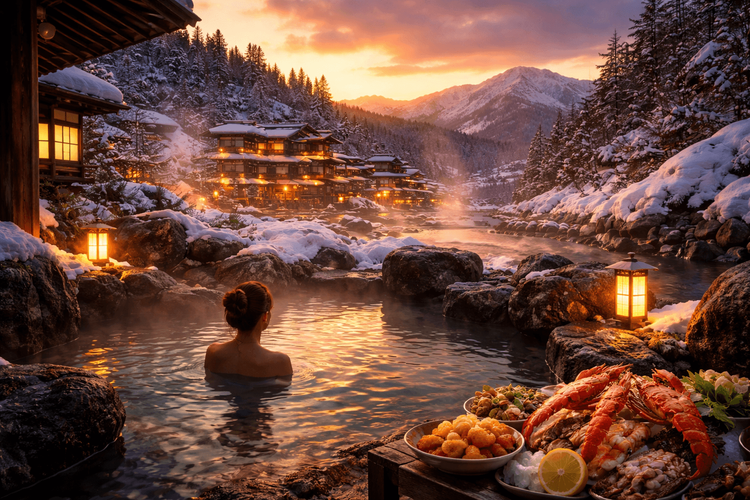
Snow sifts down like salt, whispering against cedar as you lower into an outdoor onsen. Steam blurs the night and distant pines, and the only sound is snow settling on your shoulders. Minutes later you’re back in your boots, walking to a tiny counter for a lacquered bowl of crab and salmon roe that tastes like the ocean drew itself a little closer. This is the cadence of Hokkaido winter travel: hot spring to market to quiet countryside, a rhythm that rewards those who come north when the island is blanketed in white.
Why Hokkaido in Winter Works Now
Hokkaido isn’t just a ski trip—though its powder days are the stuff of mythology. The island is a winter culture: outdoor baths carved into rock faces, fishmongers hauling gleaming scallops at dawn, farm towns that unspool into white fields and cobalt shadows. In December through March, the air turns crisp, the horizon widens, and the pace slows. You’ll find room to breathe—whether that’s a lantern-lit alley serving charcoal-grilled seafood, a snowshoe track across open hills, or a silent local train edging along a frozen river.
Hokkaido Winter Travel: A 7–10 Day Blueprint
Use this as a framework and let weather and whim lead the details.
Days 1–2: Sapporo and the coast
- Land at New Chitose Airport and ride the train into Sapporo. Warm up with soup curry or a seafood rice bowl at a central market, then wander Odori and Susukino in the evening when ice and neon share the streets. If your dates align in February, snow sculptures transform the city’s parks.
- Day-trip to Otaru for glass ateliers, a canal trimmed with snow, and confectioners turning out feather-light pastries. The harbor brings in fresh catch; lunch is best kept simple and sea-sweet.
Days 3–4: Mountains and hot springs
- Aim for a ski area or an onsen valley within a few hours of Sapporo. You could mix half a day of powder or sledding with long soaks in sulphur-scented baths. After dark, the milky pools feel otherworldly with snow curling off the eaves.
Days 5–6: Asahikawa, Biei, or Furano
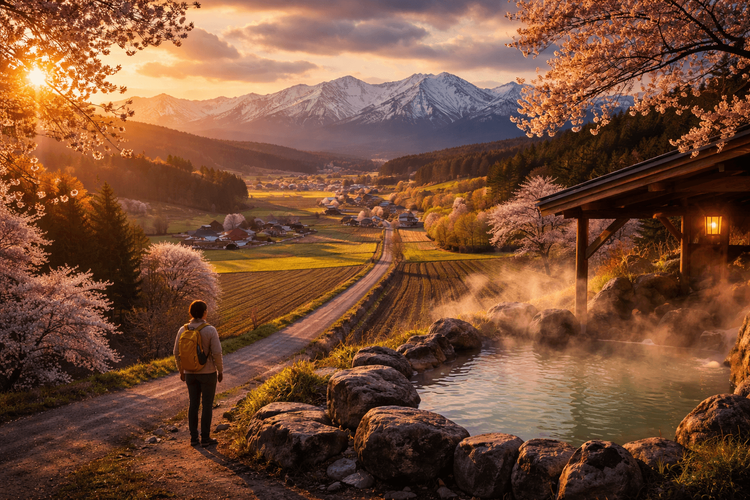
- Asahikawa’s dry cold sharpens the air. Head south to the patchwork hills around Biei and Furano, where trees stand like ink strokes on paper. Snowshoe a farm lane, visit a small creamery, and let the day end at a family-run inn with a stove ticking in the corner.
Days 7–9 (or 10): Eastern horizons or the Tokachi plains
- If you crave empty roads and big sky, go east. In good conditions, the Okhotsk coast reveals drift ice and wild sea winds; when tours are operating, ice-breaking boats hum through the floes. Closer in, the Tokachi region offers wide rivers, agricultural towns, and hot springs known for mineral-rich, tea-colored water that leaves skin impossibly soft.
This arc balances Sapporo’s energy, coastal markets, mountain baths, and the solitude of open country—exactly what a winter here does best.
Onsen Etiquette and the Joy of the Soak
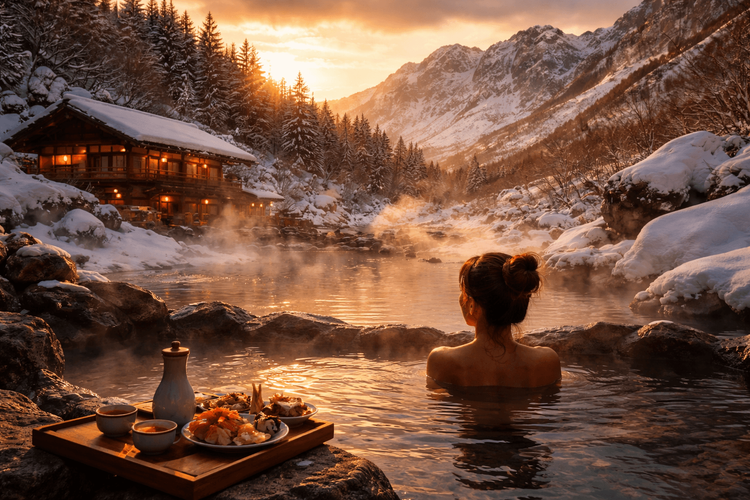
Hokkaido’s onsen culture feels tailor-made for subzero days. Many baths are outdoors (rotenburo), where snowflakes land and vanish on the surface as you sink deeper into heat. A few pointers keep it easy:
- Rinse and wash thoroughly before entering the pools.
- Soak without swimsuits unless signage clearly allows them.
- Keep conversation soft; the magic here is quiet.
- Bring a small towel to the edge; it stays out of the water.
Looking for variety? Mountain valleys near Sapporo, volcanic areas with mineral-rich waters, and towns along the coast all host public baths and ryokan with day-use options. Seek out morning soaks when steam meets pale winter light, or go late at night when snow muffles every footstep.
Seafood Markets: Breakfast of Cold Seas
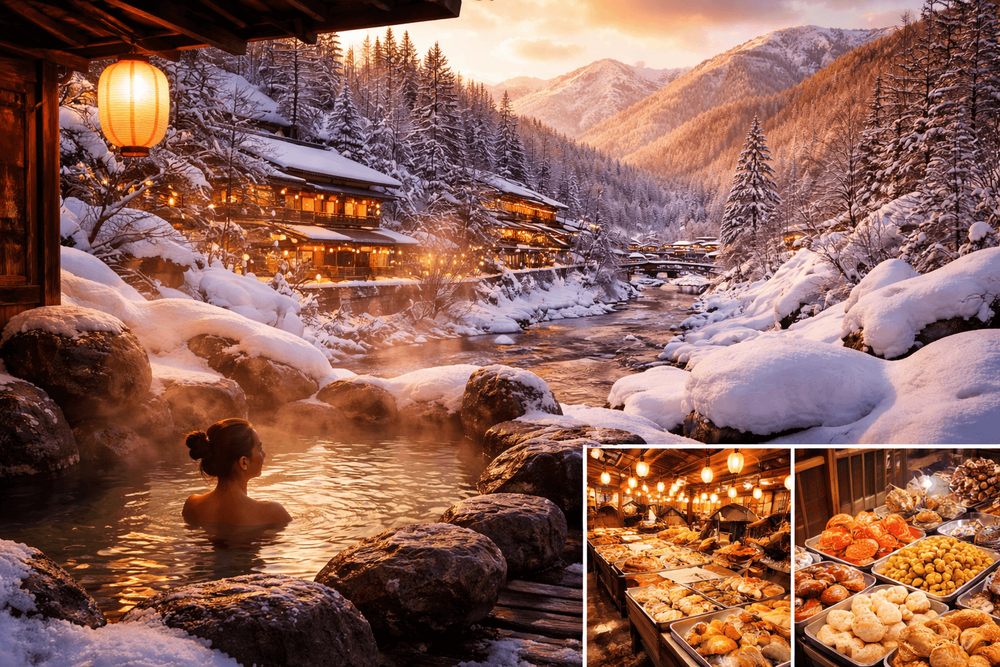
Winter concentrates flavor in these waters. In Sapporo, central markets wake early with kaisendon—bowls crowned with crab leg, uni, salmon roe, and slices of just-cut fish. At the old port city to the south, the morning market buzz brings grilled scallops on the half shell, hot miso crab, and hand rolls made to order. Vendors call out quietly, weighing shimmering fillets and cracking icicles from crates. Take cash for small stands; sit at a counter where steam fogs the window and order something you can point at. A cup of hot tea or local sake can chase the chill.
Evenings, follow the glow down narrow alleys near stations where seafood skewers sizzle and tiny izakaya tuck ten people at the bar. The best meals are often the simplest: charcoal-singed hokke, sweet shrimp that snap with every bite, a soup enriched with kelp and root vegetables grown in the frozen fields.
Snowy Farm Towns: Space, Silence, and Soft Light
Move inland and the scenery opens into paper-white valleys. Around Biei and Furano, low farmhouses dot curves of hill that hold blue shadows by afternoon. Power lines cut single strokes through otherwise empty vistas; on certain days you’ll swear the horizon is a pencil drawing. Tokachi feels even broader: windbreaks of poplar, drifted lanes, smoke rising from bakeries using the region’s butter and wheat. This is where Hokkaido winter travel hits its stride—quiet roads, family-run cafés, and long pauses between sights.
The simplest pleasures land hardest in this landscape: a thermos of sweet, strong coffee on a snowbank; the crunch of snowshoes on hoarfrost; a convenience-store custard bun that tastes indecently good in the cold. Photographers will find soft pastels at daybreak and deep cobalt at blue hour; non-photographers will still watch the light like a show.
Getting There and Getting Around
- By air: New Chitose Airport, south of Sapporo, is the main gateway with frequent domestic flights from Tokyo and other Japanese hubs, plus seasonal international routes. There’s a direct rail link into Sapporo Station and beyond.
- By train: The Hokkaido Shinkansen reaches the Hakodate area (Shin-Hakodate-Hokuto). From there, limited express trains connect to major cities including Sapporo and Asahikawa. Local lines knit together coastal towns and inland valleys.
- By car: Winter driving is entirely doable if you’re confident. Rentals typically come with studless winter tires; roads are cleared quickly after snow, but whiteouts happen. Build in extra time, keep headlights on, and refuel before long stretches.
- By bus: Highway and regional buses complement the rail network, often reaching onsen valleys and ski areas without the need to drive.
IC transit cards are widely accepted in larger cities and on many trains; smaller towns may still prefer paper tickets and cash. Major stations offer coin lockers for stashing bags while you explore.
What to Expect on Arrival
- Efficiency meets warmth: Stations hum along even in heavy snow, and buildings are heated well—dress in layers you can peel off indoors.
- Gear on demand: Convenience stores sell kairo (hand warmers), merino socks, and good umbrellas. Outdoor shops in Sapporo stock snowshoe rentals and last-minute gloves.
- Luggage and logistics: Airport buses and trains handle ski bags and large suitcases. Taxis queue with snow-ready vehicles. If you’re linking multiple towns, consider forwarding a bag between hotels so you can travel light—services are reliable and easy to arrange.
- Dining rhythm: Breakfast at markets is early and hearty; many rural cafés keep limited hours. Reserve dinners at ryokan if you’re staying in onsen towns, or aim to eat before the last local train.
When to Go
December to March is the heart of the season. Early winter brings fresh snow and lively markets around New Year. Midwinter deepens the cold and the powder. By March, days lengthen, ski hills stay soft, and countryside roads become easier to navigate. Align the order of your route with local conditions; Hokkaido’s weather can swing dramatically in a day, and that’s part of the charm.
Adventure, With Room to Breathe
The gift of this island is contrast: heat and frost, sea and field, city sparkle and silence. A week to ten days lets you feel those shifts—steam rising from a stone bath, fishmongers at dawn, a farmhouse half-buried in snow, your own breath in the night air. Plan the arc, then leave space for the unscripted: a detour to an extra onsen, a last bowl at a counter that looked promising, a side road that opens onto a ridge of untracked snow. Hokkaido winter travel rewards curiosity and patience, and it sends you home with a warmth that lasts long after the snow melts from your coat.
Where to Stay

Vessel Hotel Campana Susukino
Vessel Hotel Campana Susukino is a 4-star hotel in Sapporo's Susukino district offering modern rooms, easy access to nightlife, dining and public transit, and ties to sister properties in Furano and Noboribetsu; guests give it a 9/10 rating.

La'Gent Stay Sapporo Odori Hokkaido
La'Gent Stay Sapporo Odori is a 4-star hotel in central Sapporo by Odori Park, offering a convenient base for exploring Hokkaido, including Furano and Noboribetsu, and holding a 9/10 guest rating.

karaksa hotel Sapporo
karaksa hotel Sapporo is a 4-star property in Sapporo, part of a Hokkaido group with locations in Furano and Noboribetsu; guests rate it 9.1/10, and it offers comfortable rooms and practical amenities as a convenient base for exploring the city and region.

GRANBELL HOTEL SUSUKINO
Granbell Hotel Susukino is a 4-star, design-oriented hotel in Sapporo’s Susukino district with an 8.8/10 guest rating, offering modern rooms, an on-site restaurant and easy access to public transport and nightlife, with sister properties in Furano and Noboribetsu.

Vessel Inn Sapporo Nakajima Park
Vessel Inn Sapporo Nakajima Park is a 3-star hotel with a 9/10 guest rating, located steps from Nakajima Park and providing a convenient base for exploring central Sapporo and day trips to Furano and Noboribetsu.