
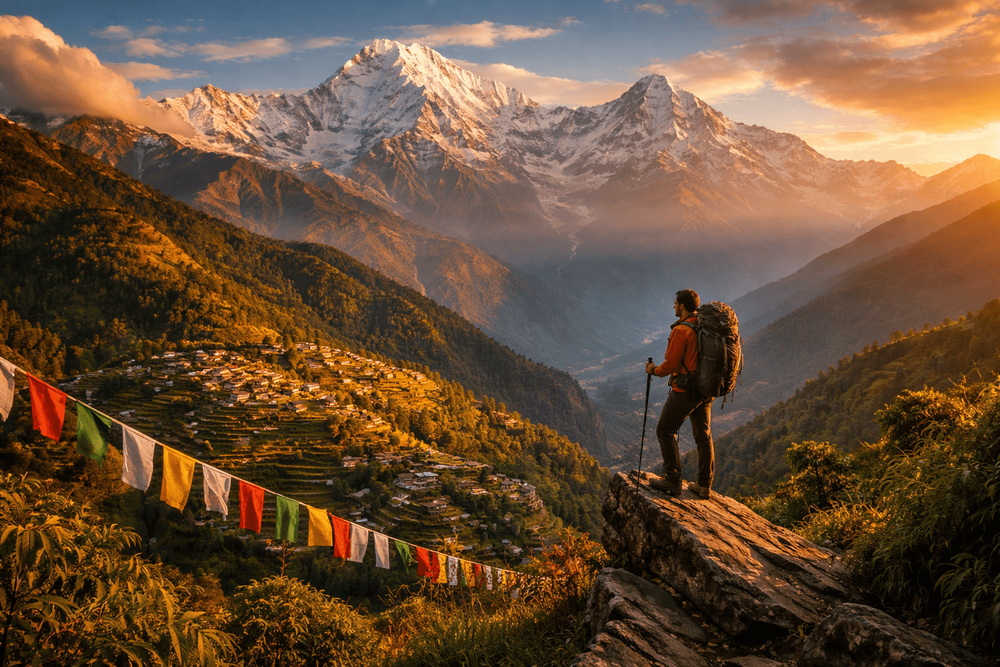
Best Time to Explore Nepal: Season-by-Season Guide for Treks, Culture & Wildlife
From crystal autumn peaks to winter wildlife and spring blossoms, this season-by-season guide reveals the best time to explore Nepal for every style of traveler.
Mood
Seasonal Playbook
At dawn in the Kathmandu Valley, incense curls from temple courtyards as the Himalaya sharpen against a milk-blue sky. By midday, the air warms and a veil of haze drifts in from the plains. Across a single day, Nepal reveals how profoundly season shapes experience. Knowing the best time to explore Nepal is the difference between cloud-snagged summits and crystalline horizons, between leopard tracks pressed in winter dust and monsoon-jungle crescendos alive with birdsong.
When Is the Best Time to Explore Nepal? A Season-by-Season Look
Nepal’s year falls into four practical travel windows—pre-monsoon spring, monsoon, post-monsoon autumn, and winter. Each shifts visibility, temperatures, flora, fauna, and trail conditions in ways that suit different goals.
Lonely Planet Nepal: Detailed Itineraries | Travel Like a Local | Insider Tips | Covers Kathmandu, Pokhara, Terai, Mahabharat Range, and more (Travel Guide): Mayhew, Bradley, Bindloss, Joe, Brown, Lindsay, Butler, Stuart, Lama, Tsering
Lonely Planet's Nepal is <strong>our most comprehensive guide that extensively covers all the country has to offer, with recommendations for both popular and lesser-known experiences</strong>. Ex
Check Price on AmazonPre-Monsoon Spring (March–May)
Spring is the season of bloom and gradual build. Hillsides ignite with rhododendrons from mid-March through April, and terraced fields glow chartreuse as new rice settles into paddies in the lowlands.

Kahtoola MICROspikes Footwear Traction for Winter Trail Hiking & Ice Mountaineering : Clothing, Shoes & Jewelry
View on Amazon- Visibility and weather: Mornings can be brilliantly clear, but afternoons often soften into a photogenic, golden haze. Temperatures rise steadily—pleasant at mid-elevations, hot and humid in the Terai by late May. High passes can hold lingering snow through April.
- Trails and treks: Tea houses are fully open, and classic treks (Everest Base Camp, Annapurna Circuit/Annapurna Sanctuary, Langtang) run smoothly. Expect some slush on shaded sections and snow on high passes early in the season; microspikes can be useful. This is prime time for botanists and trekkers who favor flowers over ultra-crisp horizons.
- Wildlife: As heat builds, animals concentrate around water. In Chitwan and Bardia, tall grasses begin to be cut back in February–March, improving visibility. Birdlife peaks with migrants on the move.
- Adventure sports: Rivers swell in late spring, bringing punchier rapids for intermediate rafters. In Pokhara, stable mornings deliver superb paragliding thermals; afternoons may bring cumulative haze.
Monsoon (June–mid-September)
The monsoon arrives like a drumroll, painting valley walls every shade of green. It is atmospheric and elemental—spectacular for those who lean into weather.
- Visibility and weather: Expect dramatic cloudscapes, moody light, and generous rain, especially in the afternoons and at night. Leeches are commonplace on forested trails; leech socks and salt are effective.
- Trails and treks: Landslides can disrupt roads and footpaths, especially in the middle hills. Many high-country routes are not advisable. Exceptions shine in the rain shadow: Upper Mustang, Manang, and Dolpo remain largely dry and walkable, their ochre canyons and fortress towns radiant after a wash of rain across the rest of the country.
- Wildlife: Jungles thrum with life, but vegetation is dense and sightings in the tall grass are fewer. Birding is outstanding; amphibians vocalize; butterflies proliferate.
- Adventure sports: Big, muddy rivers sharpen whitewater, but only advanced rafters should consider monsoon runs with top outfitters. Paragliding is highly weather-dependent; expect frequent cancellations.
Post-Monsoon Autumn (mid-September–November)
Autumn brings Nepal’s celebrated clarity. Rains rinse the air; mountains stand in sharp relief above bronze rice fields and clean-swept terraces.
- Visibility and weather: This is the photogenic sweet spot. Skies are at their most dependable from mid-October through November. Temperatures are ideal for trekking—cool nights, warm days.
- Trails and treks: It’s peak season for the Everest and Annapurna regions and for high passes like Thorong La and Cho La. Trails are lively; tea houses are well-stocked. Book early to secure preferred lodges and guides.
- Wildlife: With grasses trimmed and riverbanks exposed, autumn safaris in Chitwan and Bardia can be excellent. Gharials bask on sandy spits; crocodile-dotted oxbows glint in strong light.
- Adventure sports: Rivers are full but clearing—outstanding for multi-day classics. Pokhara’s paragliding is at its most reliable. Mountain flights operate frequently with clearer windows.
Winter (December–February)
Winter trades alpine ambition for silvered horizons and quiet cultural time.
- Visibility and weather: December and January mornings can be glass-clear, with long sight lines from low and mid-elevation ridges. Days are crisp and dry; nights bite at altitude, with sub-zero temps above 3,000 meters.
- Trails and treks: High passes can snow in; some remote lodges close. But lower-elevation routes—Ghorepani–Poon Hill, Helambu, lower Langtang foothills, and Kathmandu Valley rim walks—are sublime with fewer crowds.
- Wildlife: This is peak wildlife season in the Terai. Cooler, drier air thins vegetation and drives animals to water—ideal for tracking one-horned rhino and, with luck, Bengal tiger.
- Adventure sports: Winter thermals still deliver in Pokhara on bright mornings. Rafting scales down to friendlier day trips on the Trishuli and Seti.
Best Months by Region and Activity
Kathmandu Valley for Culture, Food, and Heritage
- Best: October–November for festivals and clear light; late February–April for bloom and milder days.
- Also good: December–January for quiet temples, crisp mornings, and intimate museum visits; fewer crowds and off-season hotel rates.
- Notes: Late monsoon/early autumn can bring dengue outbreaks—use repellent and cover up at dusk.
Insider stay: Dusk lamps flicker against carved Newar windows at the storied Dwarika’s Hotel, a heritage sanctuary with courtyards that feel timeless after a day in Patan’s workshops.
For culinary travelers, winter and spring are ideal for street eats and food tours—cooler temperatures make wandering easy. See local picks in Taste Nepal or consider a guided feast via Gourmet Food Tours in Nepal: Taste, Learn, and Shop Your Way Through Kathmandu & Beyond.
Everest and Annapurna Treks
- Best: Mid-October–November and March–April for stable weather and open passes. April serves flowering forests en route to Annapurna Base Camp; November offers razor-sharp peaks in the Khumbu.
- Shoulder season: Early December can be brilliantly clear with fewer trekkers—just colder nights. Late May trades haze for rhododendron-laced paths, with some residual snow higher up.
- Exceptions: During monsoon, consider the lower Annapurna foothills for short village walks between showers, or shift to the rain-shadow must-sees of Upper Mustang and Dolpo.
- Logistics: Guided trekking is now required across most regions; check current rules with your outfitter. TIMS cards and area permits (e.g., ACAP, Sagarmatha National Park, and/or Khumbu local permits) are essential. Restricted areas (Upper Mustang, Manaslu, Dolpo) require additional permits and a licensed guide through a registered agency.
Lower Terai Wildlife: Chitwan, Bardia, and Koshi Tappu
- Best: Late November–March. Cooler air, short grass, and dry river corridors mean better visibility for rhino, deer, and—if fortune smiles—tiger.
- Also good: April–early May is hot but productive for sightings as waterholes shrink; go out at dawn and late afternoon.
- Monsoon caveat: Lush and dramatic, but vegetation is high and road access can be muddy or flooded; some lodges limit activities.
For conservation-forward comfort on the Rapti River, Tiger Tops Tharu Lodge pairs naturalist-led walks with ethical wildlife viewing—no elephant riding, just quiet immersion. For those who prefer creature comforts with a view, Luxury Safaris in Nepal: Private Drives, Rare Wildlife & Sustainable High-End Lodging outlines standout camps and lodges.
Rafting, Paragliding, and Adrenaline Sports
- Rafting: Peak flows with clear water arrive September–November for multi-day epics on the Sun Kosi and Karnali; spring (March–April) softens conditions for first-timers on the Trishuli and Seti.
- Paragliding (Pokhara): Best October–April, especially mornings before winds kick up; summer monsoon brings frequent weather holds.
- Biking and bungee: Year-round, with the sharpest skies in winter and autumn.
For gear, timing, and where to go, see Nepal for Adrenaline: Top Thrills, Where to Go, and How to Prepare.
Microclimates and Smart Shoulder-Season Calls
- Mustang and Dolpo: Ideal June–September thanks to the Himalayan rain shadow; Tiji Festival in Lo Manthang (usually May) is a cultural jewel.
- Manang Valley: Often drier than neighboring slopes; a good hedge in shoulder months.
- Eastern Hills (Ilam, Taplejung): Rain arrives earlier and lingers longer; tea estates are atmospheric in mist, but plan for showers.
- Koshi Tappu: Winter (December–February) is peak for migratory birds.
Down by Phewa Lake, The Pavilions Himalayas Lakeview offers villa privacy with wide-sky sunsets—perfect in winter’s luminous light or spring’s soft mornings before the haze settles.
Festivals and Events That Shape Your Calendar
Nepal’s festivals are not background color but the country’s living pulse. Timing a visit around them can elevate a trip from memorable to indelible.
- Dashain (Sept/Oct): Families reunite across the country; cities quiet as kites dance above rooftops. Book domestic flights and buses early—seats fill fast.
- Tihar (Oct/Nov): Five luminous nights of oil lamps, marigolds, and music. Kathmandu and Patan are radiant; hotel rates trend high.
- Indra Jatra (Aug/Sept): Kathmandu’s old city thrums with masked dancers and chariot processions; roads close, crowds swell—arrive early.
- Holi (March): Powder-bright exuberance in the Terai and Kathmandu; carry a phone sleeve and wear clothes that can stain.
- Bisket Jatra (April): Bhaktapur’s chariot tug-of-war doubles as New Year revelry; accommodation near Durbar Square sells out months in advance.
- Losar (Jan/Feb): Tibetan New Year observed in monasteries across the high country and Kathmandu.
- Mani Rimdu (Oct/Nov): Masked-dance festival at Tengboche in the Everest region—combine with an autumn trek.
- Rato Machindranath (April/May): Patan’s rolling chariot and rain-invoking rites usher in planting season.
For dates, etiquette, and where to stand when the drums start, bookmark Festival Trail Nepal: How to Experience Nepal’s Rich Cultural Celebrations.
Timing, Safety, and Logistics
- Altitude and acclimatization: For treks above 3,000 meters, plan conservative ascent rates (no more than 500–600 meters sleeping elevation gain per day once past 3,000m) and schedule acclimatization nights (e.g., Namche Bazaar, Dingboche). Autumn and spring offer the most stable windows for high passes; winter brings cold stress; monsoon adds avalanche and rockfall risk.
- Flights and buffers: Lukla, Jomsom, and mountain airstrips are weather-sensitive year-round, with heightened monsoon cancellations. Build at least one buffer day at both ends of your trek; two in peak seasons is wise.
- Permits and regulations: Carry your passport for permits (TIMS; national park/conservation permits such as Sagarmatha and ACAP). Restricted areas require special permits and a licensed guide via a registered agency; rules evolve, so verify before booking.
- Monsoon hazards: Landslides and washouts can close highways; always check local advisories. Forest trails teem with leeches—light gaiters and repellent help. Afternoon storms are common; start early.
- Health: In late monsoon and early autumn, dengue can flare in Kathmandu and the lowlands; use DEET or picaridin, cover up at dusk, and choose lodging with screens or AC. Malaria risk is low and very localized but consult a travel clinic. Year-round: purify water, respect the sun at altitude, and carry basic meds for GI upsets.
- Seasonal pricing and availability: October–November and March–April see peak rates and limited availability for guides, flights, and lodges; book 3–6 months ahead for popular routes. Shoulder and winter seasons can deliver value and quieter trails; some remote tea houses close in deep winter and mid-monsoon.

GRAYL GeoPress 24 oz Water Purifier Bottle - Filter for Hiking, Camping, Survival, Travel (Bali Blue)
Versatile, fast, and ridiculously easy to use — the 24oz GeoPress Water Filter & Purifier Bottle <strong>requires zero setup, no sucking or squeezing, and makes 24 fl oz (710 ml) of clean purified
Check Price on AmazonQuick Picks: Choose the Right Month for You
- Trekkers chasing peak views: Mid-October to late November. Crisp, dry, photogenic. For rhododendron drama and milder temps, aim for April.
- Photographers craving clarity: Late November–January for long-range sight lines at low and mid elevations; expect cold nights.
- Wildlife lovers: December–March in Chitwan and Bardia for open grasslands and riverbanks. Pair with cool-weather cultural days in Kathmandu and Bhaktapur.
- Families: December–February for gentle valley walks, sunlit winter days, and easy logistics. Consider short treks like Poon Hill or the Kathmandu rim.
- Budget travelers: June and early September for bargains—shift to rain-shadow regions (Mustang) to dodge monsoon downpours.
- Luxury seekers: November for the cleanest skies; combine a few lodge-to-lodge trekking days with a lowland safari. Browse inspiration in Top Tourist Spots in Nepal: Kathmandu, Pokhara, Everest & Beyond and then stitch together a custom arc.
- Adrenaline hounds: Raft the Sun Kosi or Karnali September–November; paraglide in Pokhara October–April. For a one-stop briefing on gear and timing, see Nepal for Adrenaline: Top Thrills, Where to Go, and How to Prepare.
The Image to Take with You
Picture a late-autumn morning on the Annapurna Sanctuary trail: frost still laces the stone, prayer flags crack like sails, and every ridge line stands clean against cobalt. Or a winter dawn in Bardia, where the river makes a thread of silver through bleached grass and a rhino loosens a puff of steam. The best time to explore Nepal depends on the story a traveler wants to tell—wildflower color or high-contrast peaks, festival lanterns or tiger tracks. Choose the month that matches the mood, and Nepal will meet it—fully, vividly, on its own elemental terms.
Recommended Travel Gear
Lonely Planet Nepal: Detailed Itineraries | Travel Like a Local | Insider Tips | Covers Kathmandu, Pokhara, Terai, Mahabharat Range, and more (Travel Guide): Mayhew, Bradley, Bindloss, Joe, Brown, Lindsay, Butler, Stuart, Lama, Tsering
Lonely Planet's Nepal is <strong>our most comprehensive guide that extensively covers all the country has to offer, with recommendations for both popular and lesser-known experiences</strong>. Ex
Kahtoola MICROspikes Footwear Traction for Winter Trail Hiking & Ice Mountaineering : Clothing, Shoes & Jewelry
SPIKE DESIGN: <strong>12 heat-treated stainless-steel corrosion resistant spikes per foot</strong>. 8 spikes at the forefoot, and 4 spikes at the heel ensure optimal traction that aggressively bites i
GRAYL GeoPress 24 oz Water Purifier Bottle - Filter for Hiking, Camping, Survival, Travel (Bali Blue)
Versatile, fast, and ridiculously easy to use — the 24oz GeoPress Water Filter & Purifier Bottle <strong>requires zero setup, no sucking or squeezing, and makes 24 fl oz (710 ml) of clean purified