
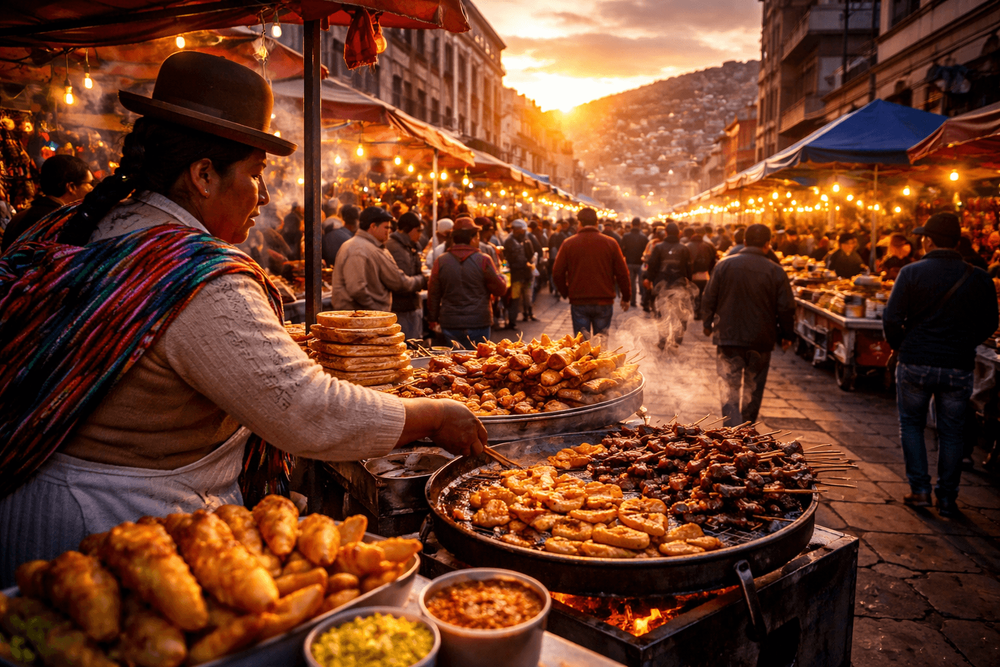
Taste Bolivia: Street Foods to Try in La Paz, Sucre & Beyond
From salteñas at sunrise to anticuchos at dusk, graze Bolivia’s markets and night grills with an expert’s eye—what to try, where to find it, and how to eat like a local.
Mood
Street Food Odyssey
The first spoonful is velvety and violet—spiced with cinnamon and clove, warm against the Andean chill. Dawn lifts over La Paz’s steep streets as a caserita slides a sugar-dusted pastel across the counter and steam wreathed in anise drifts into the crowd. For travelers tracing the most compelling local street foods to try in Bolivia, mornings begin like this: a glow of api morado in hand, a city waking to the sizzle of grills and the rustle of paper napkins.
Essential local street foods to try in Bolivia
Salteñas (Baked, Brothy Empanadas)
Bolivia’s emblematic mid-morning snack is a masterclass in balance: a slightly sweet, burnished crust cradling a savory, gelatin-set stew that liquefies as it bakes. Chicken, beef, or vegetarian fillings carry cumin, ají, and a hint of sugar, studded with potatoes, peas, olives, and often a slice of hard-boiled egg or raisin. The technique is its own ritual—eat upright, nibble, and sip; never lay a salteña on its side. Regional spins abound: in Sucre they often run sweeter with more raisin and gentle spice; Cochabamba leans hearty and peppery; La Paz versions skew spicier, with a cleaner, brothier jus.
For a wider flavor compass beyond the street, see our guide to must-try Bolivian dishes.
Anticuchos (Smoky Skewers at Dusk)
When night falls, the city exhales charcoal. Anticuchos—typically skewers of marinated beef heart—char and hiss over curbside grills, brushed with oil and ají as they sear. The texture is tender yet springy, the smoke threaded with garlic and vinegar. They’re served with a boiled potato and, in many stands, a ladle of ají de maní (peanut sauce) and a spoon of bright, tomato-locoto llajua. In La Paz and Cochabamba, anticucho alleys ignite around 7 p.m., feeding late-night wanderers until the embers die.
Api con Pastel (Purple Corn and Airy Fritter)
Api morado is a pre-Columbian elixir born of purple maize, thickened to a custardy pour, scented with orange peel, cinnamon, and clove. It pairs with pastel de queso—a crackling, blistered, helium-light fritter with a heart of salty Bolivian cheese. Dawn and dusk are prime; the pairing is breakfast, winter comfort, and afternoon pick-me-up in one.
Tucumanas and Empanadas (Fried, Golden, Abundant)
Cochabamba’s tucumana, kin to the empanada, is deep-fried and generously filled—beef or chicken with potato, egg, and herbs, sometimes studded with olive. A condiments altar awaits: spoon on llajua, salsa de maní, and cebollita (vinegary onion-tomato relish). In Santa Cruz and Sucre, look for empanadas de queso o charque (cheese or dried beef) in the mornings; they’re smaller, crisp, and made to vanish in two or three bites.
Sandwich de Chola (La Paz’s Iconic Pork Sandwich)
In La Paz, cholitas—women in bowler hats and voluminous skirts—stack crackling pork, ribbons of pickled carrot and onion, and a glint of llajua into a crusty roll. The meat is slow-roasted until the edges shatter, the interior silky and rich. It’s a lunchtime tradition, best eaten leaning over the paper to catch every drip of escabeche.
Trancapecho and the Silpancho-to-Go
Cochabamba’s love affair with abundance spills into the street with trancapecho—silpancho’s handheld cousin. Think an avalanche of pounded beef, rice, fried potatoes, and egg cradled in bread. Vendors wrap it tight and hot; it’s messy, magnificent, and tailor-made for appetite.
Humintas and Tamales (Altiplano Comforts)
Humintas—sweet corn parcels wrapped in husks—come a la olla (steamed, tender, and custardy) or al horno (baked, lightly caramelized at the edges). Many tuck in fresh cheese; some are faintly sweet, others savory. Tamales, often with a streak of ají colorado, offer a richer, spicier counterpart. Both pair beautifully with coffee or a warm api blanco (white corn version).
Cuñapé and Sonso (Cheese and Yuca in the Lowlands)
In Santa Cruz and the eastern lowlands, the air smells of fresh yuca and cheese. Cuñapé—springy, gluten-free balls made from yuca starch and queso—emerge warm from street ovens by mid-morning. Sonso mixes yuca purée with cheese, molded on a stick and kissed by coals until smoky and elastic. Eat them hot, when the cheese still pulls in ribbons.
Choripán and Salchipapas (Late-Night Staples)
Game nights and plazas swarm with choripán—grilled sausage tucked into bread with chimichurri, mustard, or llajua. Salchipapas, a riot of fries and sliced sausage under a drizzle of sauces, are Bolivia’s democratic comfort food, beloved by students and taxi drivers alike.
Amazonian Bites: Masaco, Tacacho, and Juane Variants
In Beni and Pando, the street stalls tilt tropical. Masaco—yuca or plantain mashed with charque or cheese—is rolled into hefty orbs and eaten as breakfast or snack. Cross-border Amazon influences surface in tacacho (green plantain mashed with pork fat and chicharrón, shaped and grilled) and juane-style parcels of seasoned rice and meat wrapped in bijao leaves. Names and recipes drift with the river, but the profile is unmistakable: smoky, herbaceous, and deeply satisfying. To understand how these flavors connect Bolivia’s high plains to the rainforest, see our panorama of authentic culinary experiences from Altiplano to Amazon.
Sips and Sweets (Refrescos and Plaza Treats)
Mocochinchi—iced, amber, and perfumed with cinnamon—is brewed from dried peaches and sold from glass urns that catch the sun. Somó, a creamy corn refresco, soothes after spice. In Sucre, seek out helado de canela (spiced cinnamon ice) spun in metal tubs, and vendors with trays of coconut cocadas and sesame turrón.
Where and when to find the best stalls
Streetside eating is a choreography of hours and neighborhoods. Markets hum at sunrise, plazas thrum at lunch, grills ignite at dusk. For deeper navigation of produce halls and prepared-food corners, browse our local’s guide to the best food markets in Bolivia.
La Paz
- Early morning: Find api con pastel and humintas at Mercado Rodríguez and around Mercado Lanza. Caseritas ladle from enamel pots as delivery boys and office workers jostle for space.
- Mid-morning: Salteñas sell out fast between 10 and 11 a.m. around Sopocachi, Miraflores, and near Plaza San Francisco. Look for bakeries with trays cooling in the window and queues snaking to the curb.
- Lunch: Sandwiches de chola appear along Avenida Mariscal Santa Cruz and in San Pedro. Follow the glass cases crowded with glistening pork.
- Night: Anticucho clusters bloom near the San Francisco church and in Sopocachi side streets from 7 p.m. onward, smoke curling against the cold.
A well-placed base helps when streets are steep: the Hotel Rosario, set in a restored Andean mansion near Mercado Rodríguez, offers the perfect jump-off for morning grazing and late-night anticuchos without long climbs.
Sucre
- Early: Mercado Central and Mercado 25 de Mayo brim with api, pasteles, cheese empanadas, and helado de canela. Go before 9 a.m. for the widest spread.
- Late morning: Salteñas are a civic obsession; most panaderías sell fresh trays by 10 a.m. Sweet-leaning versions with raisin and a gentler spice heat are common.
- Evening: Food carts ring Parque Bolívar and Plaza 25 de Mayo with choripanes, salchipapas, and occasional anticucho grills.
For colonial ambiance between bites, the Parador Santa María La Real occupies a 17th-century mansion where rooftop views make an elegant palate cleanser.
Cochabamba
- Dawn to mid-morning: La Cancha—one of South America’s largest markets—unfurls breakfast stands of tamales, humintas, and somó. Multiple salteñerías compete across the city; many close by noon once the last tray empties.
- Midday: Trancapecho and tucumanas rule around university corridors and near Plaza Colón; watch for condiment bars with fresh cebollita and ají de maní.
- Night: Anticuchos and picantes emerge along Avenida Heroínas and around plazuelas, often until late.
Santa Cruz de la Sierra
- Morning: Lowland staples like cuñapé and sonso appear in kiosks across Equipetrol and the old center. Mercado Los Pozos and 7 Calles showcase an eastern pantry—yuca, cheese, plantains—transformed into portable snacks.
- Afternoon to evening: Choripán vendors orbit plazas; juice bars blend maracuyá and acerola into tart refreshers.
For a breezy base with a resort feel, the palm-fringed Los Tajibos Hotel blends comfort with proximity to Equipetrol’s cafés and street kiosks.
The Amazon: Rurrenabaque, Trinidad, and Beyond
- Mornings in Trinidad (Beni): Masaco, bollo de yuca, and regional tamales appear in Mercado Campesino and around central squares.
- Evenings in Rurrenabaque: Stalls near the riverfront grill freshwater fish, skewer meats, and occasionally offer tacacho; festival days bring juane-style bundles wrapped in bijao.
- Border towns like Cobija (Pando) echo Peruvian and Brazilian influence, with vendors selling tacacho and juane variants—ask for “tacacho con cecina” or “arroz en hoja.”
Cultural context, names, and how to eat like a local
Street food here is a story told in ingredients and hands.
- Salteñas trace to 19th-century La Paz, where a Salta-born entrepreneur popularized a juicier, stew-filled pastry that demanded an upright bite; the name nods to her Argentine origins.
- Anticuchos honor Andean thrift and flavor, elevating offal into evening ritual. The broom of smoke at dusk is as much social hour as sustenance.
- Api morado distills pre-Columbian maize into a modern comfort; its spice cabinet—clove, cinnamon, orange peel—travels centuries.
- In the lowlands, cuñapé and sonso celebrate yuca, a staple with deep Indigenous roots that yields breads and grilled snacks without wheat.
Knowing a few local terms helps ease the exchange:
- Llajua (or llajwa): The essential fresh chili-tomato sauce, often with quirquiña (Bolivian coriander). Try a dab first; heat levels vary wildly.
- Caserita/caserito: A warm, respectful way to address a vendor (female/male). Open with “Buenos días, caserita.”
- Yapa: A little extra, sometimes offered when you’re a loyal customer or when produce is small; in snack terms, it can mean a bonus spoon of cebollita or a second ladle of sauce.
- Para llevar / para comer aquí: For takeaway / to eat here. Many stands serve food on reusable plates; return them with thanks.
Festivals—Alasitas in La Paz, Gran Poder processions, and regional ferias—amplify street-eating, with pop-up grills and sweet carts packed shoulder to shoulder. If heritage and context call louder than calories, consider joining authentic cultural tours that thread cuisine with ritual and community.
Street-smart tips: hygiene, prices, and ordering with confidence
Eating well on the street in Bolivia is equal parts appetite and savvy.

Wet Ones Antibacterial Hand Wipes, Fresh Scent, 20 Wipes (Pack of 10)
View on Amazon
GRAYL GeoPress 24 oz Water Purifier Bottle - Filter for Hiking, Camping, Survival, Travel (Bali Blue)
Versatile, fast, and ridiculously easy to use — the 24oz GeoPress Water Filter & Purifier Bottle <strong>requires zero setup, no sucking or squeezing, and makes 24 fl oz (710 ml) of clean purified
Check Price on Amazon- Hygiene cues: Choose stalls with brisk turnover and food cooked to order. Sizzle and steam are your allies. Avoid pre-cut garnishes baking in the sun; seek covered cebollita. Look for vendors wearing aprons, using tongs, and handling money with a separate hand or helper.
- Water and ice: Stick to beverages you watch being boiled (api, coffee) or poured from sealed bottles. If ordering jugos (fresh juices), request sin hielo (without ice) if unsure about water quality.
- Typical prices (approximate, city-dependent): Salteñas 7–15 BOB; tucumanas/empanadas 8–12 BOB; api con pastel 8–12 BOB for the pair; anticuchos 8–15 BOB per skewer; sandwich de chola 15–25 BOB; cuñapé 3–5 BOB; sonso 5–10 BOB; choripán 10–15 BOB; salchipapas 10–18 BOB. Most are hearty snacks; two items comfortably make a meal.
- Ordering phrases: “Uno, por favor” (one, please). “Con/ sin llajua” (with/without chili sauce). “Poco picante” (a little spicy). “Bien cocido” (well-cooked). “Para llevar, por favor” (to go, please). “Gracias, caserita.”
- Etiquette: Pay in small bills and coins; many stands make change reluctantly. Share counter space gracefully; step aside to eat. Return plates or cups; vendors appreciate care.
- Dietary notes: Peanut sauce (ají de maní) appears with anticuchos and some empanada bars—ask “¿Tiene maní?” if allergic. Salteñas and tucumanas often include egg; humintas, cuñapé, and sonso contain dairy. Gluten-free options include cuñapé, sonso, and many yuca- or corn-based sweets. Vegetarians can zero in on empanadas de queso, humintas, papas rellenas (request sin carne), and masaco de yuca con queso.
- Pairings: Match spice with refrescos—mocochinchi with anything fried; somó with salty cheese breads; a cold Paceña beer with anticuchos (where alcohol is permitted). Mornings belong to api; evenings to smoke and citrusy llajua.
Curious to go beyond the curb? Guided tastings let travelers meet the makers and decode sauces and spices without guesswork. See what to expect on culinary tours and food experiences across the country.
Planning your graze
Bolivia rewards early birds and night owls. Plan mornings around salteñas, humintas, and api; save evenings for anticuchos, choripanes, and plaza snacks. Build routes through markets and neighborhoods rather than ticking dishes off a list—flavor lives at the corner of time and place. If the aim is discovering the most authentic local street foods to try in Bolivia, the surest path is to follow the smoke, the laughter, and the line.

Lonely Planet Bolivia (Travel Guide): Albiston, Isabel, Grosberg, Michael, Johanson, Mark
Lonely Planet's Boliviais <strong>your passport to the most relevant, up-to-date advice on what to see and skip, and what hidden discoveries await you</strong>. Explore the world's largest s
Check Price on AmazonBy the time stars prick the Andean sky, grills spit sparks in Sopocachi and a vendor’s radio hums over the square in Sucre. Fingers smell faintly of locoto and charcoal; pockets hold a few crumpled napkins and the memory of purple maize clove-sweet on the tongue. In cities and river towns alike, Bolivia’s street food is less a meal than a map—one you read with your senses as the country writes itself, bite by generous bite.
Recommended Travel Gear
Lonely Planet Bolivia (Travel Guide): Albiston, Isabel, Grosberg, Michael, Johanson, Mark
Lonely Planet's Boliviais <strong>your passport to the most relevant, up-to-date advice on what to see and skip, and what hidden discoveries await you</strong>. Explore the world's largest s
GRAYL GeoPress 24 oz Water Purifier Bottle - Filter for Hiking, Camping, Survival, Travel (Bali Blue)
Versatile, fast, and ridiculously easy to use — the 24oz GeoPress Water Filter & Purifier Bottle <strong>requires zero setup, no sucking or squeezing, and makes 24 fl oz (710 ml) of clean purified
Wet Ones Antibacterial Hand Wipes, Fresh Scent, 20 Wipes (Pack of 10)
Wet Ones Antibacterial Hand Wipe, Travel Packs- <strong>Tropical Splash Scent, 20 Count (Pack of 10), 200 Wipes</strong>